Available 24/7 | 0800 088 4170

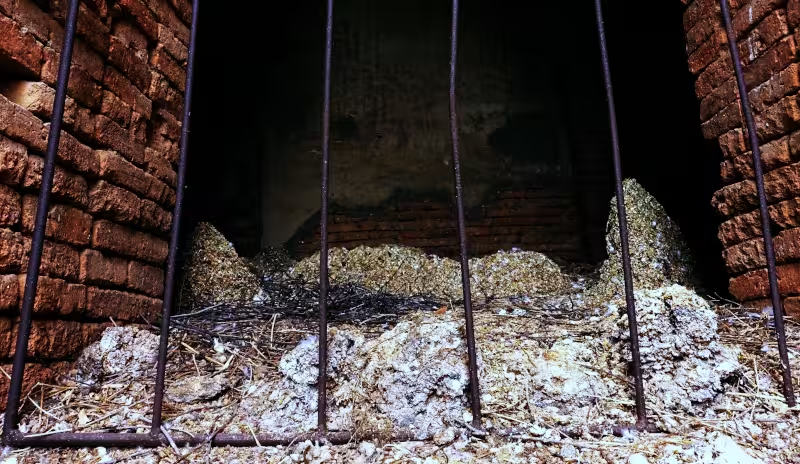
The immediate requirement was practical: the restoration team needed a stable floor inside each of the four roundels so internal birdcage scaffolding could be erected. Existing accumulations of pigeon guano, hay, masonry units and general debris prevented that next phase from starting.
Access added another complication. One roundel could not initially be entered because an oil storage tank obstructed the doorway, while the wider work had to be coordinated around an active farm environment and the planned scaffolding programme.
Before clearance began, the project required more than a cleaning method. An environmental methodology had to be agreed with an ecologist, supported by RAMS and a construction-phase plan. Welfare and decontamination facilities were established for the workforce, temporary Heras fencing controlled the working area, and task lighting was provided inside the work zones.
The team also liaised with the tenant farmer so the specialist cleaning activity, waste movements and restoration preparations could be coordinated around the site.
The physical work began with the drying deck. Deposited material was scraped and cleared from the upper area before the surface was sanitised, creating a cleaner starting point for the work below.
The team then progressed through the four roundels and the internal space between them, removing pigeon guano together with hay, loose masonry and other accumulated debris. The objective was not simply to make the interiors look cleaner: the floor had to be revealed sufficiently to provide the stable base required for the incoming scaffolding.
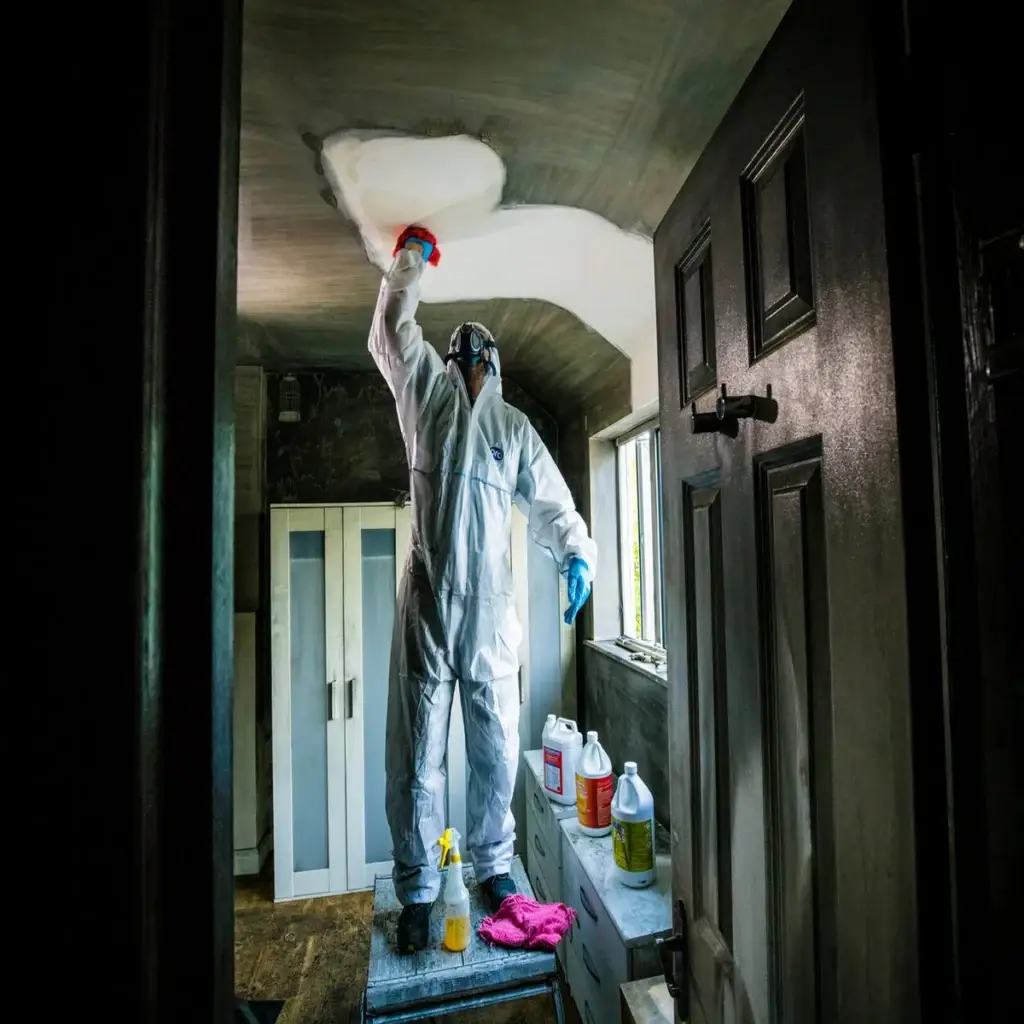
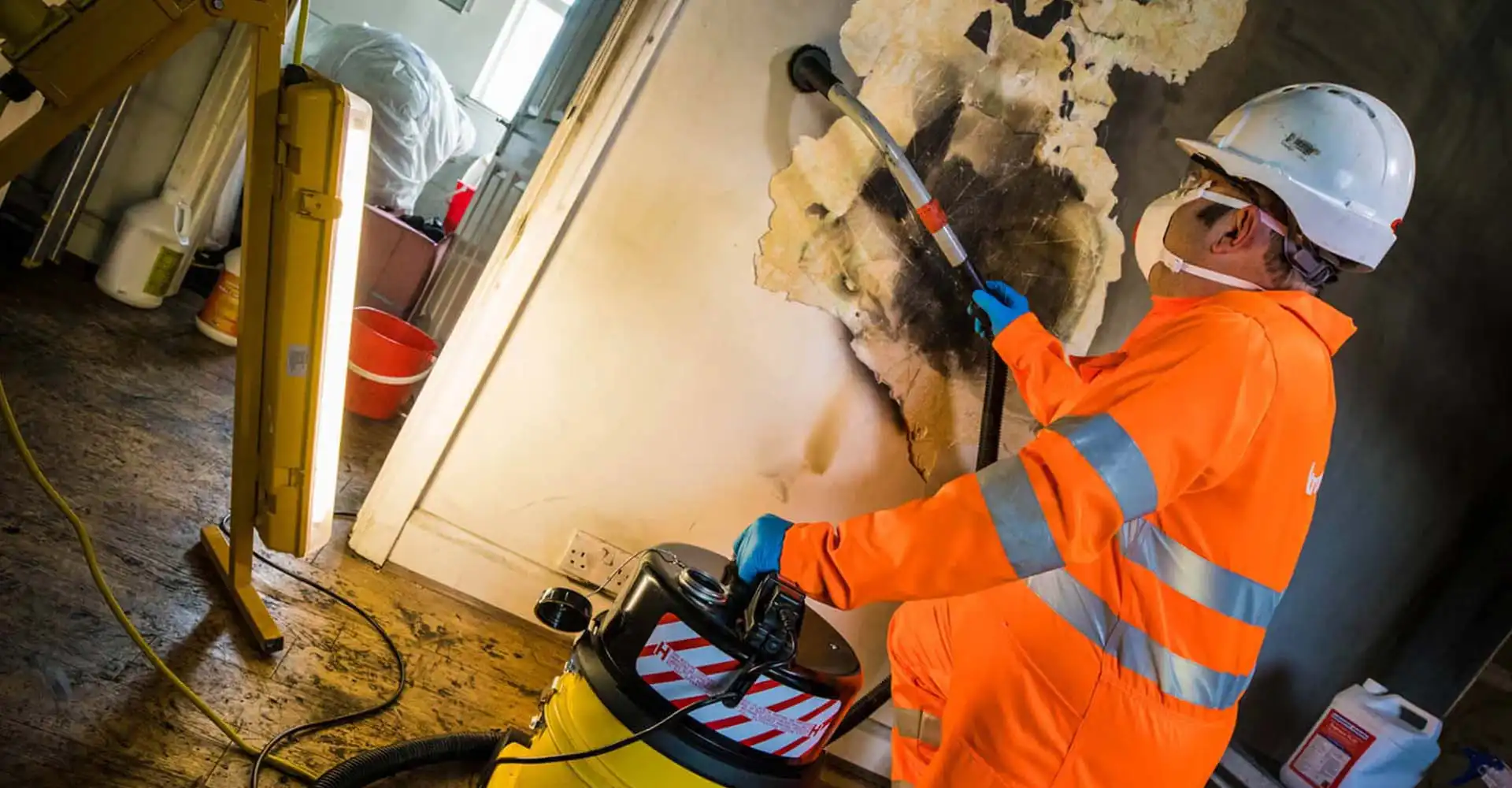
Because the work involved disturbing accumulated bird droppings and debris in enclosed internal spaces, respiratory protection formed part of the planned controls. Powered respirator helmets with appropriate combination and particulate filtration were provided for the technicians carrying out the clearance.
The documented decontamination products used on the project supported the hygiene-cleaning stage after bulk material had been removed. Public-facing treatment descriptions are kept generic here because the important point is the sequence: remove the accumulated material first, then cleanse and sanitise the exposed working surfaces.
After the principal clearance, Ideal Response returned under a follow-on scope at the same site. This covered additional guano-waste disposal, an extra skip, further cleansing and bird-proofing measures around the oast.
Treating the follow-on work as a separate phase allowed the immediate scaffolding-enabling clearance to remain focused while the remaining waste and prevention measures were dealt with as the restoration programme progressed.
The clearance removed the material obstructing the four roundels and exposed the floors required for internal scaffolding. The top drying-deck clean was completed in early October, following the main September clearance and recorded waste removals.
For a heritage project like this, that handover point matters. Specialist cleaning was one part of a larger restoration sequence, and its purpose was to leave the building ready for the scaffolding team to carry the project forward.