Water damage restoration summary
Service
Water damage restoration
Recent water damage restoration projects
Cost depends on the type of water, how far it has spread and what it has soaked into. After the survey you receive a detailed, itemised quote.
| TYPE | TYPICAL SOURCE | HOW INSURERS USUALLY TREAT IT |
|---|
| Sudden escape of water | Burst pipes, failed appliances,tanks, heating systems | Usually covered under buildings orcontents cover; check your excess |
| Gradual leak | Slow leaks over weeks ormonths | Often excluded as wear and tear |
| Trace and access | Finding a hidden leak andgetting to it | Often covered, sometimes with a limit |
Insurance and escape of water claims
The class tells us how much water there is and how far it has soaked in, which decides the drying equipment and how long it takes. We assess both category and class at the survey.
What we restore
Water damage restoration after a burst loft pipe in Margate
Related services and guides
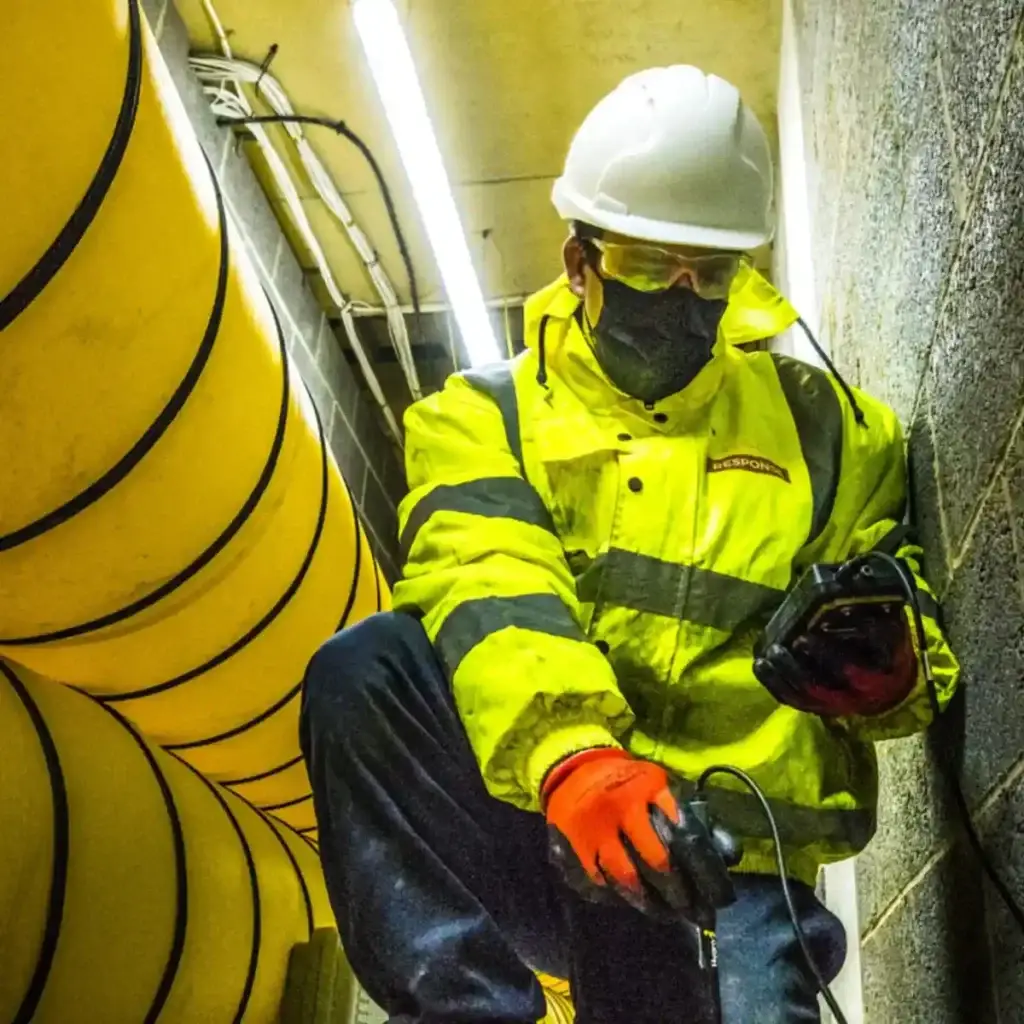
A burst loft pipe spread water through eight rooms across two floors. The team found moisture trapped in ceiling voids, wall cavities and floors, removed unsalvageable materials, extracted the water and installed drying equipment, monitoring moisture until the house was dry and habitable.
A burst pipe in the loft of a detached home in Margate sent water through eight rooms across the ground and first floors.
| Cost factor | Why it matters |
|---|
| Category of water | Contaminated water needs more decontamination than clean water |
| Extent and class | How much water there is and how far it has spread |
| Materials | Plasterboard, flooring, insulation and contents dry differently |
| Drying time | Longer drying means equipment on site for longer |
Where our work stops
We dry, clean and decontaminate, and our leak detection team can find the
source of a hidden leak. We do not carry out building repairs or reinstatement. Once the property is dry, it is handed back ready for your builder or your
insurer's contractor
A guide to common floor coverings after clean water damage:
Policies differ, so always check your own wording.
Assessment
After drying, we sort what can be saved from what cannot.
Cleaning and drying
Salvageable items cleaned, deodorised and dried in controlled conditions.
Storage
We can arrange safe storage for unaffected items while work goes on.
Escape of water is one of the most common home insurance claims in the UK. Our paperwork is built around what insurers and loss adjusters need.
| CLASS | EXTENT OF WATER | WHAT IT MEANS FOR DRYING |
|---|
| 1 | A small amount, absorbed by a small area of
porous material | Fastest to dry |
| 2 | A larger area, soaked into carpets, walls and
structural materials | More equipment and time |
| 3 | A large amount, often from above, saturating
ceilings, walls and floors | Extensive structural drying |
| 4 | Water held deep in dense materials such as
hardwood, plaster or concrete | Specialist methods over a
longer period |
Homes and flats
After burst pipes, appliance leaks and water coming through a ceiling.
Rental and social housing
With records landlords and housing providers can keep on file.
Commercial buildings
Offices, shops and schools, planned to keep downtime to a minimum.
Floors, walls and ceilings
Including hidden areas such as floor voids and wall cavities.
Contents and belongings
Furniture, documents and items that can be dried and saved.
01
Truck-mounted and portable extractors
Remove standing water fast
02
LGR dehumidifiers
Dry rooms efficiently at normal
temperatures
03
Desiccant dehumidifiers
Dry cold or very wet areas and dense materials
04
Air movers
Speed evaporation from walls and
floors
05
Moisture meters and hygrometers
Measure materials and air to track
drying
06
Thermal imaging cameras
Find water behind walls and under
floors
A pipe, tank or radiator has burst or leaked
A washing machine, dishwasher or water heater has failed
Water has come through a ceiling from the floor above
Floors, walls or ceilings are stained, soft or swollen
Your insurer or loss adjuster needs drying records and a certificate
Step 1Stop and assessOnce the leak is fixed, we measure how far water has travelled using moisture meters and thermal imaging, and classify the water.
Step 2ExtractStanding water is removed fast; every hour it sits, it soaks deeper into the structure.
Step 3Remove what cannot be driedSaturated plasterboard, insulation or flooring that will not dry is removed, so the structure can.
Step 4Dry and monitorDehumidifiers and air movers are positioned around the readings and moved as areas dry.
Step 5CertifyWhen readings reach a dry standard, we issue a drying certificate for your insurer.
Equipment we use
- What it is
- Extraction, drying and decontamination after water escapes inside a building ("escape of water")
- Typical time
- A few days for a minor leak caught early; a week or more of monitored drying for saturated structures
- Water damage survey
- A surveyor inspects, measures and records the damage, with a written report for your insurer
- Paperwork
- Moisture readings, photos, a drying certificate and a list of items beyond economic repair
- Not included
- Building repairs and reinstatement. Hidden leaks are traced by our leak detection team
When you need water damage restoration
How we carry out water damage restoration
Signs of water damage
Water damage is not always obvious. Some signs appear suddenly; others build slowly behind walls and under floors. The earlier it is caught, the quicker and cheaper it is to put right.
Common causes of water damage
Water damage surveys and reports
If you notice more than one of these and the cause is unclear, a damp survey identifies where the moisture is coming from.
Categories of water: how contaminated it is
Classes of water damage: how much water and how deep
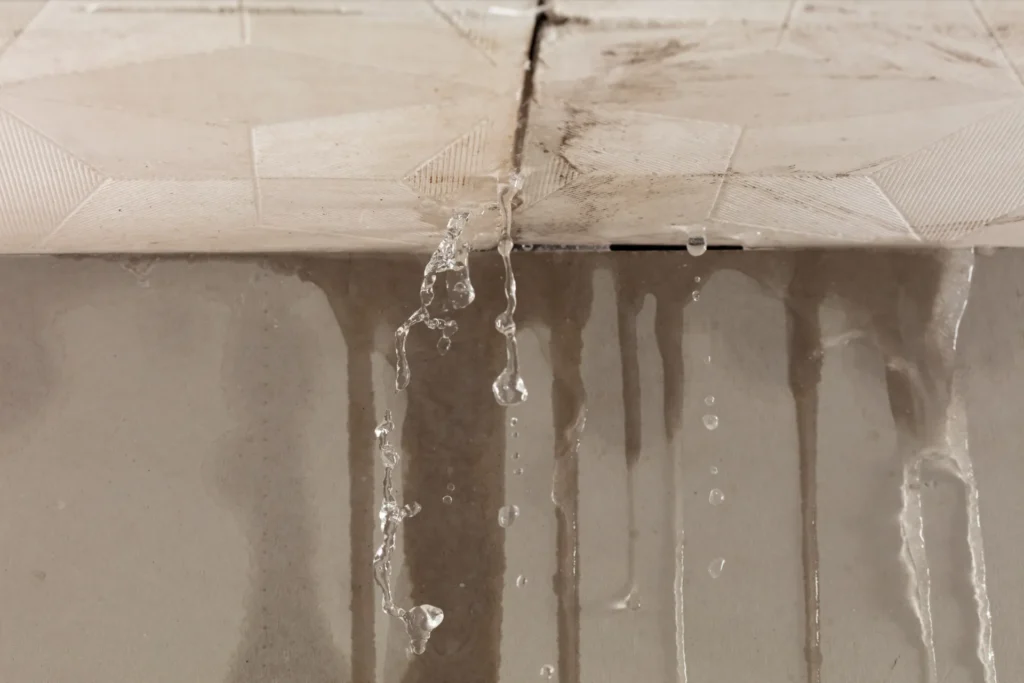
Water damage comes from inside the building, which is what separates it from a flood. Insurers call it 'escape of water'.
| CAUSE | TYPICAL TRIGGER | WHAT IT MEANS FOR RESTORATION |
|---|
| Burst or leaking pipes | Frozen pipes, corrosion or
failed joints | Often hidden in walls and floors; once a plumber
has repaired it, we carry out targeted drying |
| Appliance leaks | Washing machines,
dishwashers or water
heaters | Usually clean or grey water; fast extraction
limits the spread |
| Heating leaks | Radiator, valve or pipework
failure | Can soak floors and ceilings below; structural
drying needed |
| Overflowing baths, sinks and toilets | Blockages or taps left
running | A toilet overflow can be category 3 and needs
decontamination |
| Blocked drains and gutters | Debris backing water up into
the property | Can bring contaminated water in; may need
sewage cleaning |
| Roof and rainwater leaks | Failed flashing, cracked tiles
or blocked downpipes | Slow ingress often found only when damp or
mould appears |
Restoring belongings and contents
The category of water decides how a property can be cleaned and made safe. Even clean water degrades into category 2 or 3 if left, which is why speed matters.
Escape of water: what insurers usually cover
| CATEGORY | ALSO KNOWN AS | WHERE IT COMES FROM | RISK |
|---|
| 1 | Clean
water | Burst supply pipes,
overflowing sinks and baths,
water heaters | Low, but degrades
quickly if left |
| 2 | Grey water | Washing machines,
dishwashers and other
appliances | Contains contaminants
and may cause illness |
| 3 | Black water | Toilet overflow, sewage and
drain backups | High: bacteria, viruses
and chemicals |
Can wet flooring be saved?
How much does water damage restoration cost?
Detailed evidence
Moisture readings, photographs and full reports from day one.
Beyond economic repair (BER) list
Items that cannot be restored are documented and valued, to settle the contents part of a claim.
Drying certificate
Confirms the property has been dried to a safe standard, which insurers often require before sign-off.
Loss adjuster liaison
We can deal with your loss adjuster directly.
Building and contents
Damage to both is documented, to support the right parts of your policy.
What happens when you contact us
Escape of water covers sudden leaks and burst pipes; flooding from outside is covered separately. Gradual or long-unresolved leaks may be treated differently, so check your policy.
Furniture, documents and appliances suffer too once water sets in. Where we can, we recover them.
Escape of water is one of the most common home insurance claims. How it is usually treated:
| Floor covering | What usually happens |
|---|
| Carpet and underlay | Carpet often dried in place if treated quickly; underlay usually replaced |
| Engineered and solid wood | Can sometimes be dried with specialist mats if caught early |
| Laminate | Usually replaced; the core swells |
| Vinyl and LVT | Often lifted to dry the subfloor beneath |
| Tiles | Survive, but grout and the screed below may hold water |
Why choose Ideal Response for water damage restoration
Accredited specialists
BDMA and IICRC accredited water damage and drying specialists
Rapid response
Our emergency teams are available 24/7 across the UK, ensuring a rapid response to prevent further secondary damage
Paperwork that stands up
Insurer-ready paperwork: moisture readings, photographs and a drying certificate
24/7 emergency line, UK-wide
From our head office in Maidstone and our London office, with ISO 9001, 14001 and 45001 certified systems
Independently reviewed
Read what customers say on Trustpilot, where we invite every customer to leave a review.
Typical timescales
| Situation | Typical time on site |
|---|
| Minor leak caught early | 3–5 days drying |
| Several rooms, soaked floors | 1–2 weeks |
| Saturated structure or dense materials | 2–4 weeks or more |
Standards we work to: BDMA practice guidance, HSE and COSHH regulations
Stains or discolouration on ceilings, walls or floors
Peeling, bubbling or flaking paint and wallpaper
A musty or damp smell
Soft or sagging patches in ceilings, walls or floorboards
Warped, swollen or lifted flooring
Black, green or white patches of mould
A sudden, unexplained rise in your water bill
A water damage survey records exactly what has been damaged, how badly and what it will take to put right. It gives you, your insurer or your loss adjuster an independent, documented starting point.
Maps how far water has spread, including behind walls and under floors
Identifies the category of water (clean, grey or contaminated) and how deeply it has soaked in
Damp patches, stains or mould appear with no visible cause
Lists contents and materials that cannot be saved
A written report and scope of works for drying and restoration
Evidence your insurer or loss adjuster can use for the claim
Before making an insurance claim, or when a claim is disputed
For landlords and managing agents who need a record of the damage
When you want to know the full extent before any work starts
The survey is paid for when you book. If we go on to carry out the restoration, the survey cost is deducted from the work.
Step 1Tell us what is happeningCall or send details and photos. If water is still coming in from a hidden source, our leak detection team can find it.
Step 2SurveyFor most jobs we recommend a survey first. It is paid for upfront and then scheduled. We assess the damage and the category and class of water. In an emergency, the team comes to site to deal with the water first.
Step 3Report and scopeYou receive a written report and scope of works you can share with your insurer. If you go ahead, the survey cost is deducted, and the work is paid for upfront before it is scheduled.
Step 4Drying and monitoringWe dry the property and keep monitoring moisture levels until it is back to a dry state, then issue a drying certificate. Before-and-after photos record the work.