Mercury clean-up overview
How we carry out mercury clean-up
Related services and guides
How much does mercury clean-up cost?
What happens when you contact us
Recent mercury clean-up projects
Mercury spill assessment after a broken thermometer in Ilford
- What it is
- Collection of spilled mercury, decontamination of affected surfaces and lawful disposal of mercury waste
- Vapour detection
- Mercury vapour surveys with a calibrated detector: to find hidden droplets, confirm a clean, or check a room where a spill is suspected
- Who we help
- Homeowners, landlords, schools, laboratories, dental and healthcare settings, and workplaces
- Common sources
- Thermometers, barometers, fluorescent tubes, dental amalgam and older laboratory or electrical equipment
- What you receive
- Vapour readings before and after the work, a written record of what was removed, and waste documents
- Response
- 24/7 line; we confirm an attendance time when you call
- Not included
- Building repairs, and replacing carpets, furniture or fittings that have to be removed
Step 1Call and photosWe ask where the spill is, roughly how much and what broke. Photos help us plan.
Step 2PlanA clean-up plan for your property, following UK health, safety and environmental guidance.
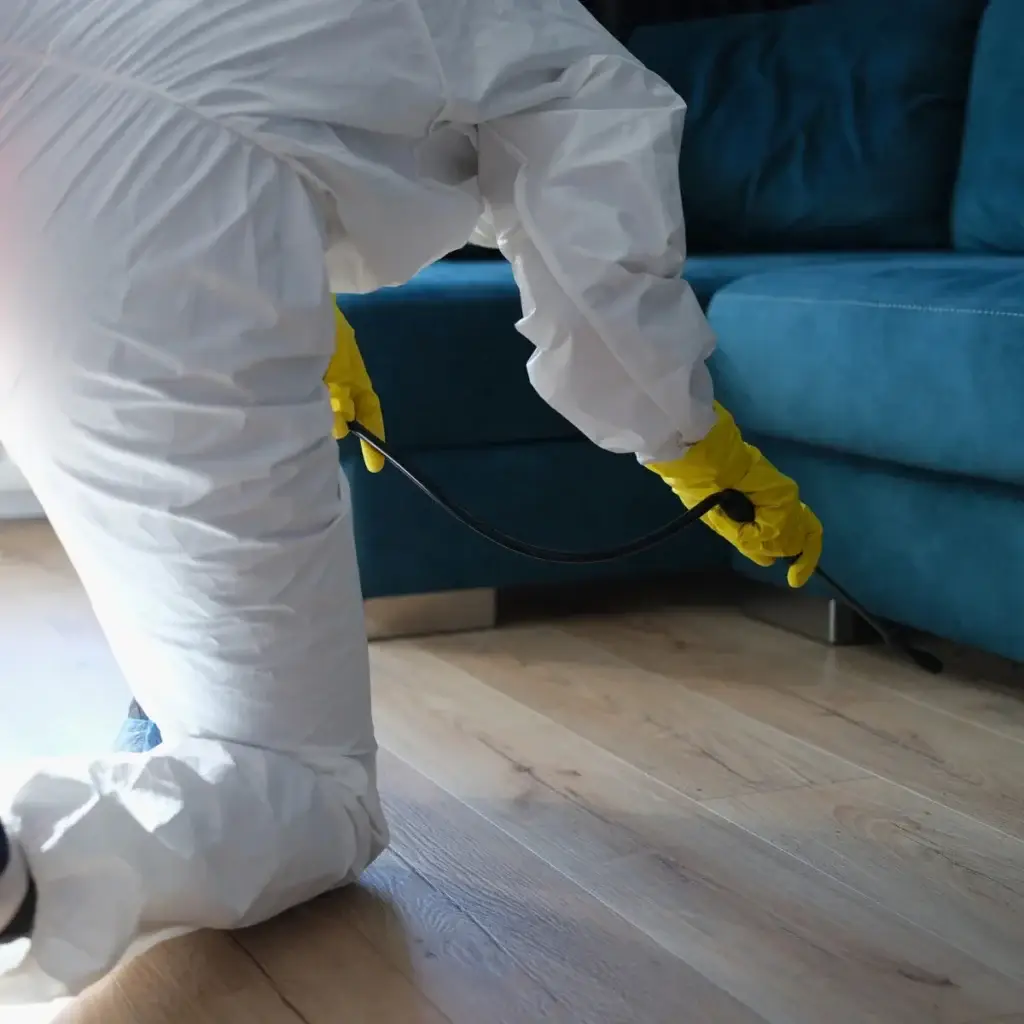
Step 3Contain and collectTechnicians in protective equipment seal off the area, find visible and hidden droplets with vapour detectors and collect them with mercury vacuums and specialist tools. Materials too contaminated to clean are removed.
Step 4DecontaminateAmalgamating agents bind residual mercury; vapour suppressants and air treatment reduce vapour.
Step 5 Test and disposeFinal vapour readings, taken at breathing height and close to the floor, confirm levels are below the exposure limit. Waste is packaged, labelled and taken for licensed disposal, with documents for your records.
01
Mercury vapour detector
Calibrated instrument that measures vapour in the air to find contamination and confirm the clean.
02
Mercury vacuum
Filtered, designed for mercury collection
03
Amalgamating powders
Bind small droplets so they can be
collected
04
Vapour suppressants
Gloves, overshoes and respiratory
protection
05
Protective equipment
Confirm and measure pressure loss
06
Sealed waste containers
Package mercury waste for disposal
Typical equipment used for a mercury spill
Mercury vapour detection and air testing
Mercury vapour is invisible and odourless, so you cannot tell by looking whether a room is safe. We measure it with a calibrated mercury vapour detector e.g. AMETEK Brookfield Jerome J405 Mercury Vapour Analyser, and give you the readings in writing. Vapour detection is part of every clean-up, and you can also book it on its own.
Suspected spill
You think mercury may have been spilled, for example from an old thermometer or barometer, and need to know whether vapour is present before anyone uses the room.
Finding hidden mercury
Readings close to floors, gaps and furnishings show where droplets have lodged, so nothing is missed.
Before people go back in
Readings at the end of a clean-up show levels are below the exposure limit.
Schools, laboratories and dental settings
Checks after an incident, or before a room is reopened, with a written record for your health and safety file.
Old buildings and equipment
Surveys where old barometers, gauges or laboratory equipment have been kept, broken or removed.
Readings depend on temperature and ventilation, so we record the conditions at the time of testing. Where levels are raised, we explain what is needed next.
Risks and legal responsibilities
Mercury gives off vapour even at room temperature. Breathing it in can affect the brain, nervous system and kidneys, and even a small spill can raise vapour levels in an enclosed room. Vacuuming, sweeping or heating mercury spreads it further. Employers must control exposure to mercury under COSHH, and waste containing mercury is hazardous waste. Householders are not legally required to use a contractor, but we advise professional clean-up for anything beyond a small thermometer spill on a hard floor.
Common sources of mercury
Mercury is still found in many older items at home and at work:
Why professional mercury clean-up matters
Old glass thermometers
Tilt switches and old electrical relays
Fluorescent tubes and older energy-saving bulbs
Medical and laboratory equipment
Antique barometers and clocks
Specialist recovery
Technicians understand how mercury behaves and use
equipment designed to collect it.
Air testing
Vapour readings show when levels are below UK exposure limits, before you go back in.
Lawful disposal
Mercury waste is packaged, labelled and taken to licensed
facilities.
Hard-to-reach droplets
Mercury lodges in carpet, floorboard gaps and porous
materials that ordinary cleaning cannot reach.
Peace of mind
You get a record of what was found, removed and tested.
Spill size and what it needs
The response depends on how much mercury there is and where it has gone.
| SITUATION | WHY IT MATTERS | WHAT IT NEEDS |
|---|
| Thermometer broken on a hard floor | Small amount, but droplets scatter | Professional advice; usually one visit |
| Thermometer or barometer on carpet or wood | Droplets lodge in fibres and gaps | Collection, removal of contaminated material, air testing |
| Laboratory or school spill | Larger quantities and more people affected | Containment, decontamination, vapour monitoring before reopening |
| Mercury vacuumed or heated | Vapour spread through the room and the equipment | Urgent professional clean-up; the vacuum becomes hazardous waste |
Why choose us for mercury clean-up
Highly trained experts:
Our technicians receive rigorous training and have earned numerous industry standard certifications - and have years of experience.
Rapid response
Every second counts. That’s why our teams are available 24/7 and can be on site in a matter of hours.
Paperwork that stands up
Written mercury vapour readings and disposal records for insurers, schools and employers.
Tailored approach
Every situation is different, that's why we tailor our approach to suit your needs.
Independently reviewed
Read what customers say on Trustpilot, where we invite every customer to leave a review.
Typical timescales
| Situation | Typical time on site |
|---|
| Spill at home | Usually 1 day |
| Laboratory or school | 1 to 2 days |
| Large or complex contamination | Several days, with clearance testing |
Every job is different; you get a timeline after the assessment. Standards we work to: COSHH, Hazardous Waste Regulations 2005, Environment Agency guidance.
Where our work stops
We collect the mercury, decontaminate and test. We do not replace carpets, furniture or fittings
that have to be removed, and we do not carry out repairs.
Mercury clean-up is priced after we understand the spill, from photos or a visit. You receive a fixed quote before work starts. Typical costs for professional-grade emergency remediation can start from around £1,000.
| COST FACTOR | WHY IT MATTERS |
|---|
| Amount of mercury | A single thermometer is quicker than a barometer or laboratory spill |
| Surfaces | Porous surfaces such as carpet and wood take longer |
| Materials removed | Contaminated items that cannot be cleaned are removed as hazardous waste |
| Vapour testing | Readings before and after the clean are included; a vapour survey on its own is quoted separately |
| Waste | Packaging and licensed disposal |
Step 1Tell us what has happenedBy phone or the form: what spilled or what you need, roughly how much, and where. Photos help.
Step 2AssessmentThe team confirms the scope, often from photos or a site visit (for large scale spills).
Step 3Quote, payment and bookingYou receive a fixed quote and agree access and timing. Work is scheduled once payment is arranged.
Step 4 Clean-up and wasteWe carry out the work, then remove waste as a registered waste carrier, with waste transfer or consignment notes.
Step 5 Check and handoverBefore-and-after photos and a written record of the work.
The cleanup focused on the workbench, where mercury from the broken thermometer had reportedly entered cracks in the surface. The team treated the accessible areas as far as practicable, then used a Jerome analyser to check mercury vapour levels at different points around the workbench. Post-treatment readings were 0.70 µg/m³ and 0.76 µg/m³.
Steve Kiddell
Lead Technician
“Once mercury has entered a crack, the absence of visible droplets does not necessarily mean the area is clear. Mercury vapour monitoring helps us assess the affected area after treatment, including around points that are difficult to access, rather than relying on appearance alone.”