Available 24/7 | 0800 088 4170

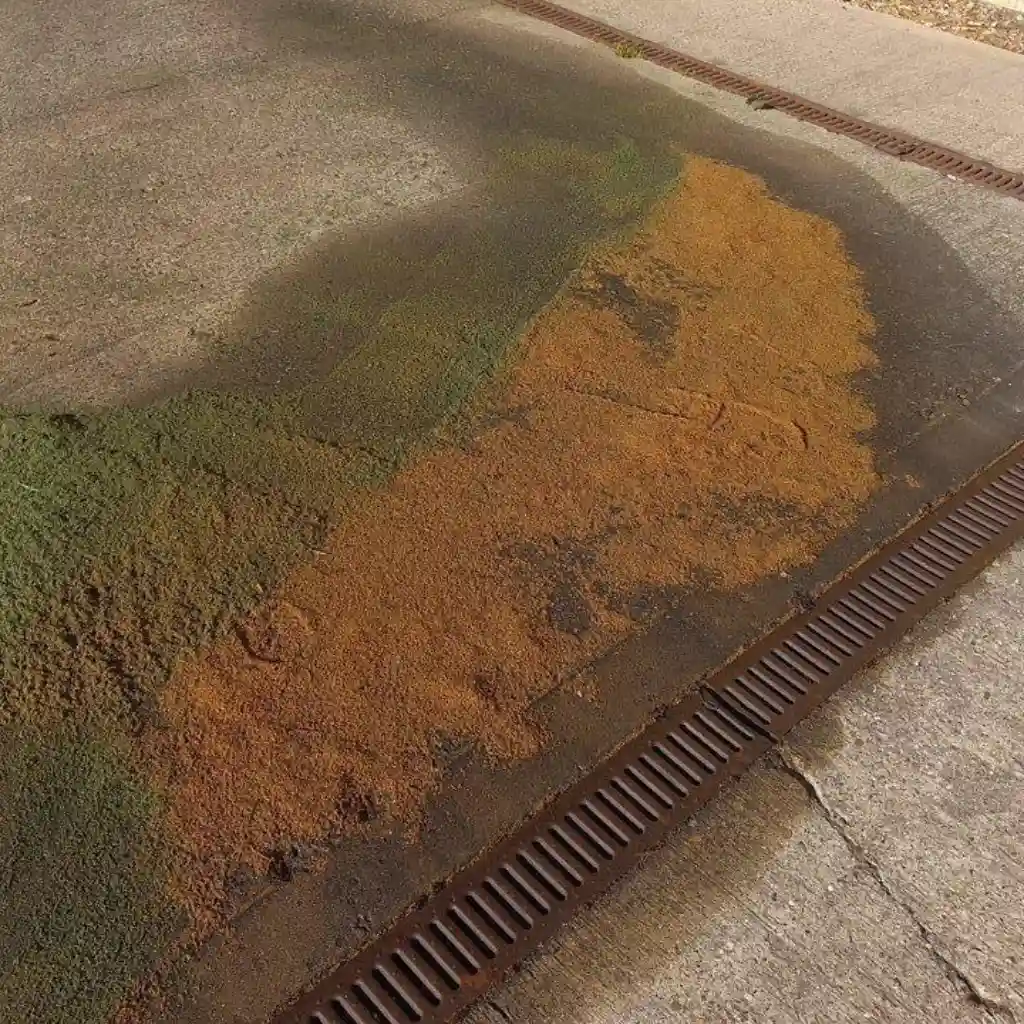
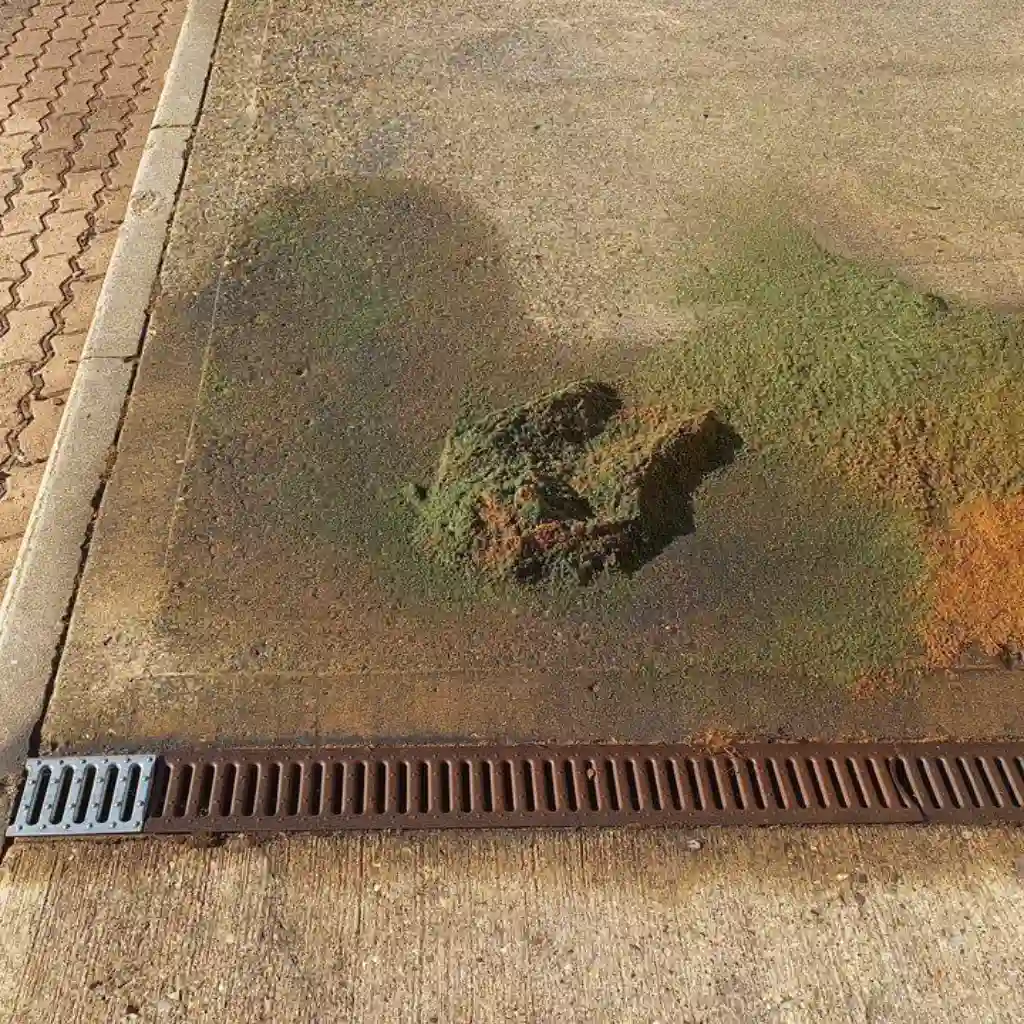
The business had already taken sensible first steps by applying absorbent material to the spill. That helped control free oil on the surface, but absorbents cannot draw back contamination that has already soaked into porous concrete, hardstanding or brickwork.
By the time Ideal Response attended, dark staining extended across the parking surface and towards the adjacent masonry. The job had therefore shifted from initial spill containment into remediation: reducing contamination held within the surface as well as removing what remained on top.
The affected area was also part of an active commercial site. Keeping the treatment controlled mattered because foot traffic and vehicle movements can transfer oily residue beyond the original spill area if the response is not properly managed.
Technicians attended in specialist PPE and concentrated first on the areas carrying the heaviest oil loading. A bio-enzyme treatment was applied across the contaminated surface and worked into the hardstanding using road-sweeping brushes.
Mechanical agitation was an important part of the process. Rather than leaving the treatment sitting on the surface, brushing increased contact between the cleaning solution and oil held within the texture and pores of the substrate.
Industrial cleaning chemicals and absorbent materials supported the remediation as the team progressed, helping control contamination released during treatment. The next stage combined that chemistry with high-pressure jet washing to lift and remove emulsified and remaining surface contamination.
The Dirt Driver gave the team an independent source of the power and water needed for the high-pressure cleaning system. That removed the need to rely on suitable site utilities being available exactly where the remediation was taking place.
For an external commercial spill, that self-sufficiency has a practical advantage: equipment can be positioned around the contamination and the treatment can progress without the response being dictated by the customer's infrastructure. On a one-day programme, reducing those dependencies helped keep the remediation moving.
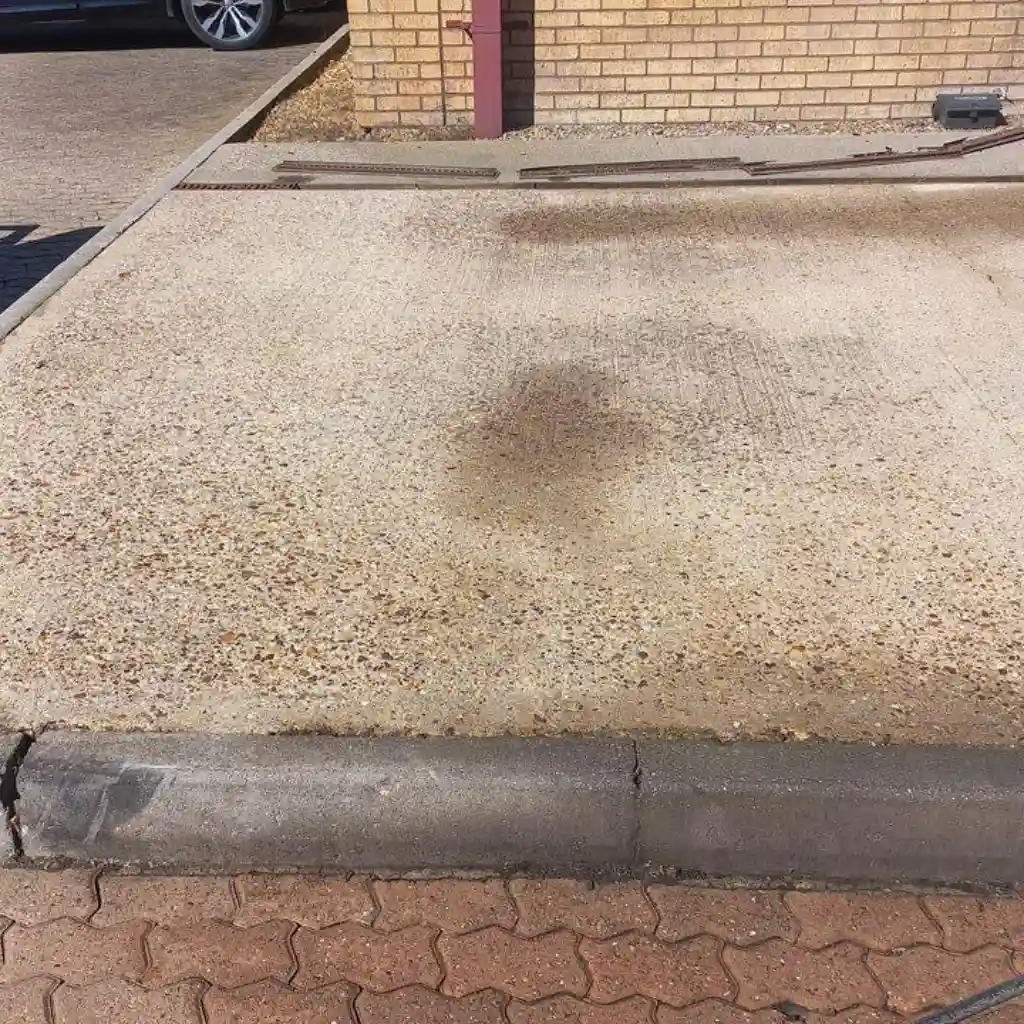
The one-day remediation removed the surface oil and substantially reduced the deeper staining that had developed after the spill was left before specialist treatment.
The hardstanding was visibly cleaner and more uniform after treatment, although some tonal variation remained within the porous surface. That is an important distinction in oil-spill remediation: staining can persist within concrete or masonry even after the active surface contamination has been removed and the deeper contamination significantly reduced.
The objective was therefore not to disguise the substrate with an unrealistic cosmetic promise. It was to treat the contamination properly, improve the affected hardstanding and return the operational area to practical use.
Once the remediation was complete, contaminated material was removed and the parking area was reopened for the business immediately. The customer also reported being very happy with the speed and quality of the result.