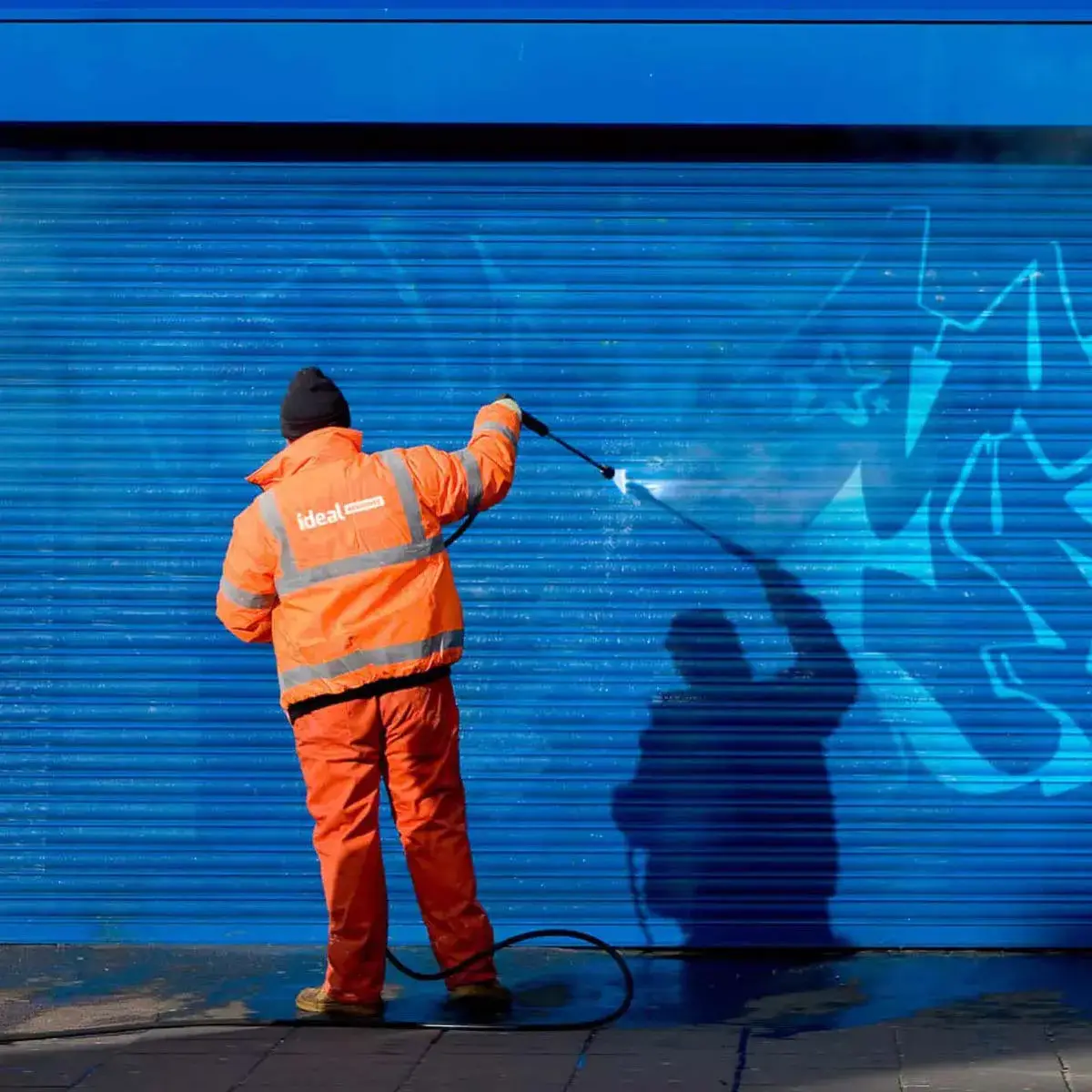
Graffiti is easiest to remove before the paint cures into the surface. Ideal Response removes graffiti for businesses, councils and heritage owners across London, Kent and the South East, matching the method to the surface: low-pressure steam, the DOFF system or specialist gels, with anti-graffiti coatings where they suit the building.
Step 1Identify paint and surfaceSpray paint, marker and ink behave differently on brick, stone, metal and glass.
Step 2TestTrial the remover on a small area.
Step 3RemoveGels, steam or DOFF, matched to the surface.
Step 4Rinse and neutraliseResidue removed so it does not stain or ghost.
Step 5ProtectAnti-graffiti coating if wanted, so future tags wash off.
Equipment we use
01
Graffiti removal gels
Lift paint from porous surfaces with
controlled dwell times
02
DOFF steam system
Removes paint from masonry without abrasion
03
Hot-water pressure washers
For robust, non-porous surfaces
04
Poultices
Draw ghosting out of stone
05
Anti-graffiti coatings
Protect surfaces after cleaning
Why remove graffiti quickly
Visible graffiti damages how a business looks and tends to attract more tags. Fresh paint is also far easier to remove before it cures into the surface, so quick removal costs less.
Surfaces and sectors
Surfaces we clean
Brick, stone, concrete and masonry
Glass, metal shutters, signage and plastics
Heritage and listed buildings
Painted surfaces, render and cladding
Spray paint, permanent marker, ink and solvent-based coatings
Who we work for
Offices and business parks
Councils and housing associations
Schools, colleges and universities
Shops, shopping centres and high streets
Transport, car parks and public spaces
Industrial sites and warehouses
Methods matched to the surface
The wrong method can permanently damage brick, stone or coatings, so we assess the surface first.
Modern brick, concrete and cladding
Controlled pressure, steam or specialist chemicals.
Painted and coated surfaces
Gentle removal that preserves the finish.
Heritage and older masonry
Low-impact techniques that protect historic material.
Techniques we use
Low-pressure steam and superheated water
Controlled non-abrasive or abrasive cleaning where appropriate
Specialist graffiti removal gels and chemicals
Anti-graffiti coatings to make future removal easier
What affects the cost
Cost factor
Why it matters
Surface
Glass and metal are quick; porous brick and stone need careful methods
Size
A small tag is quicker than widespread vandalism
Access
Graffiti at height may need MEWPs, rope access or traffic management
Age
Fresh paint is easier; old graffiti has weathered into the surface
Method
DOFF or poultices take more time and equipment
Protection
An anti-graffiti coating is optional and makes future removal cheaper
Anti-graffiti coatings: which type?
A coating makes future graffiti quicker and cheaper to remove.
Type
How it works
Best for
Trade-off
Sacrificial
Wax or polysaccharide layer removed with the graffiti
Heritage and porous masonry
Reapplied after each removal
Semi-permanent
Survives several removals
Busy commercial sites
Needs periodic top-up
Permanent
Hard non-stick coating
Non-heritage surfaces with frequent tagging
Can change the surface and appearance
Why choose Ideal Response for graffiti removal
Removed quickly
Graffiti left in place tends to attract more, so prompt removal matters.
Method matched to the surface
Brick, stone, render or paint, cleaned without damage.
No ghosting
The wrong method leaves a shadow of the graffiti; the right one doesn’t.
CHAS certified
Vetted for health and safety, so we’re cleared to work on your site.
Part of an exterior team
Brick, stone and facade cleaning from the same team.
Typical timescales
Situation
Typical time on site
Single tag
A few hours
Shopfront or wall
1 day
Large or heritage site
Planned after test patches
Standards we work to: Historic England guidance, Work at Height Regulations
Where our work stops
We clean and protect surfaces. We do not carry out repointing, stone repairs or redecoration. On listed buildings, you may need consent for some methods; we can advise, and the decision rests with the owner and the local authority.
What happens when you contact us
Step 1Tell us about your buildingSend photos, the surface type and access details.
Step 2Survey and test patchWe assess the substrate and, where needed, trial the method on a small area first.
Step 3Quote, RAMS and bookingA fixed quote with risk assessments and method statements. Work is scheduled once payment is arranged.
Step 4CleaningThe agreed method, from DOFF steam to TORC or specialist gels, with access by MEWP, rope or scaffold.
Step 5HandoverBefore-and-after photos and a final inspection with you.
Recent graffiti removal projects
Specialist graffiti removal from St Paul's Cathedral
St Paul's Cathedral required urgent removal of graffiti from sensitive external stonework, where standard cleaning methods risked permanently damaging the surface. The scale and visibility of the incident meant restoration needed to be both effective and carefully controlled. Our teams implemented a specialist cleaning approach using low-pressure, high-temperature steam systems alongside targeted paint removal techniques to safely break down and lift the graffiti without impacting the underlying material.
For an emergency, call us. Otherwise send a few details and photos, and the team will get back to you.
0800 088 4170
Available 24/7
We’ll use your details to respond to your enquiry. View our Privacy Policy
Graffiti removal: Frequently asked questions
How quickly should graffiti be removed?
+
Ideally, graffiti should be removed as soon as possible. UK councils often prioritise offensive graffiti within 24 hours and aim for removal of other graffiti within a few days of reporting, helping deter repeat vandalism and reduce long‑term costs.
Can all graffiti be safely removed?
+
Most graffiti can be effectively removed, but the best method depends on the surface. Specialists choose techniques based on the material. For example, porous brick may need gentler chemicals, while metal shutters respond well to solvent or pressure cleaning.
What factors affect the cost of graffiti removal?
+
Costs vary by surface type, size, and location. Smooth, non‑porous surfaces are typically cheaper to clean than porous brick or stone, and larger or harder‑to‑access areas increase labour and equipment needs.
Is graffiti removal damaging to buildings?
+
When carried out correctly by trained professionals, graffiti removal should not harm the underlying surface. Using controlled techniques matched to the material helps prevent damage to brick, stone, render, glass or painted finishes.
Do I need permission to remove graffiti from my property?
+
If the graffiti is on your own property, you generally have the right to arrange removal. For council‑managed sites or public structures, you may need to report it and gain permission before work can be carried out. Local authorities often require owner consent before removal.
Can graffiti return after it’s been cleaned?+
Yes. Unless preventative measures are taken. Applying anti‑graffiti coatings or surface protectants can make future graffiti easier to remove and help discourage repeat vandalism, saving time and money in the long run.