Available 24/7 | 0800 088 4170

Available 24/7 | 0800 088 4170
As a landlord, your obligations are wide-ranging, and if one of your properties suffers flood or fire damage, it will be your responsibility to repair and restore the home to a habitable condition. Before an incident occurs, though, you’ll also have to meet specific guidelines to reduce the chances of a fire or other devastating events taking hold.
In this guide, we explore your legal obligations before and after an incident, what you should do when your property is flood or fire-damaged and what maintenance can keep tenants safe and the property compliant.
Skip to:
Are landlords responsible for fire and flood damage?
What are a landlord's legal obligations?
Landlord responsibilities after a fire or flood
What to do immediately after flood or fire damage
How much does fire or flood damage cost to repair?
How can a landlord reduce flood or fire risk at a rental property?
What insurance do a landlord and tenant need?
Protect your home and tenants
FAQs
In most cases, yes. Landlords are usually responsible for covering the cost of repairs after fire or flood damage. Additionally, any costs for restoring the structure, exterior and essential services to make the property safe to live in again will also fall to the landlord.
There is an exception, though. Tenant negligence, such as leaving the taps running, careless use of cooking equipment or tampering with wiring or pipework, can mean responsibility for repairs moves from the landlord to the tenant.
As a landlord, you’ll find the list of legal responsibilities isn’t short! You’ll find that in terms of safety and repairs, they fall into two distinct groups. The safety obligations that you must meet before and during the tenancy, and the repair obligations for after damage occurs.
Your fire safety obligations are the most specific legal duties you carry as a landlord.
You must:
If the property is an HMO, there are further rules surrounding fire alarms, extinguishers and fire doors.
In a building such as a block of flats, where communal areas are contained, a fire risk assessment must also be conducted and then reviewed if refurbishment or material changes are made.
The core duties are the same wherever you let property in the UK (working alarms, safe electrics, annual gas checks, etc). However, there are some small differences across the nations.
| Nation | Smoke alarms | Carbon Monoxide alarms | Notes |
|---|---|---|---|
| England | At least one per storey, does not need to be interlinked | Rooms with a fixed combustion appliance (excl. gas cookers) | EICR every 5 years |
| Wales | Mains-powered, interlinked, at least one per storey | Rooms with a gas, oil or solid-fuel appliance | Register with Rent Smart Wales. EICR every 5 years |
| Scotland | Interlinked: Living room & every hall/landing, plus an interlinked heat alarm in the kitchen | Where there is a carbon-fuelled appliance or flue | Meet the repairing standard. EICR every 5 years |
| Northern Ireland | Interlinked smoke & heat, the living room, every circulation space & the kitchen | Rooms/spaces with a fixed combustion appliance or flue | Register with the Landlord Registration Scheme |
Repairs after an incident, such as a flood or fire, are set by housing laws across the UK: The Landlord and Tenant Act 1985 and the Homes (Fitness for Human Habitation) Act 2018 in England, with equivalent standards such as the Renting Homes fitness rules in Wales and the Repairing Standard in Scotland. These rules require you, as the landlord, to keep the structure and property exterior in good repair. This means that walls, drains, the roof and the installations for gas, water and electricity must be maintained and repaired when necessary, to ensure the home is fit to live in.
Any repair must be carried out within a reasonable time once the tenants have notified you. In most cases, tenants won’t have to move out while repairs take place, but if part of the property were to become unusable for an extended period, they could request a temporary rent reduction. The easiest way to avoid losing rental income and spending additional costs on repairs is to remain compliant and be prompt with any repairs that need addressing.
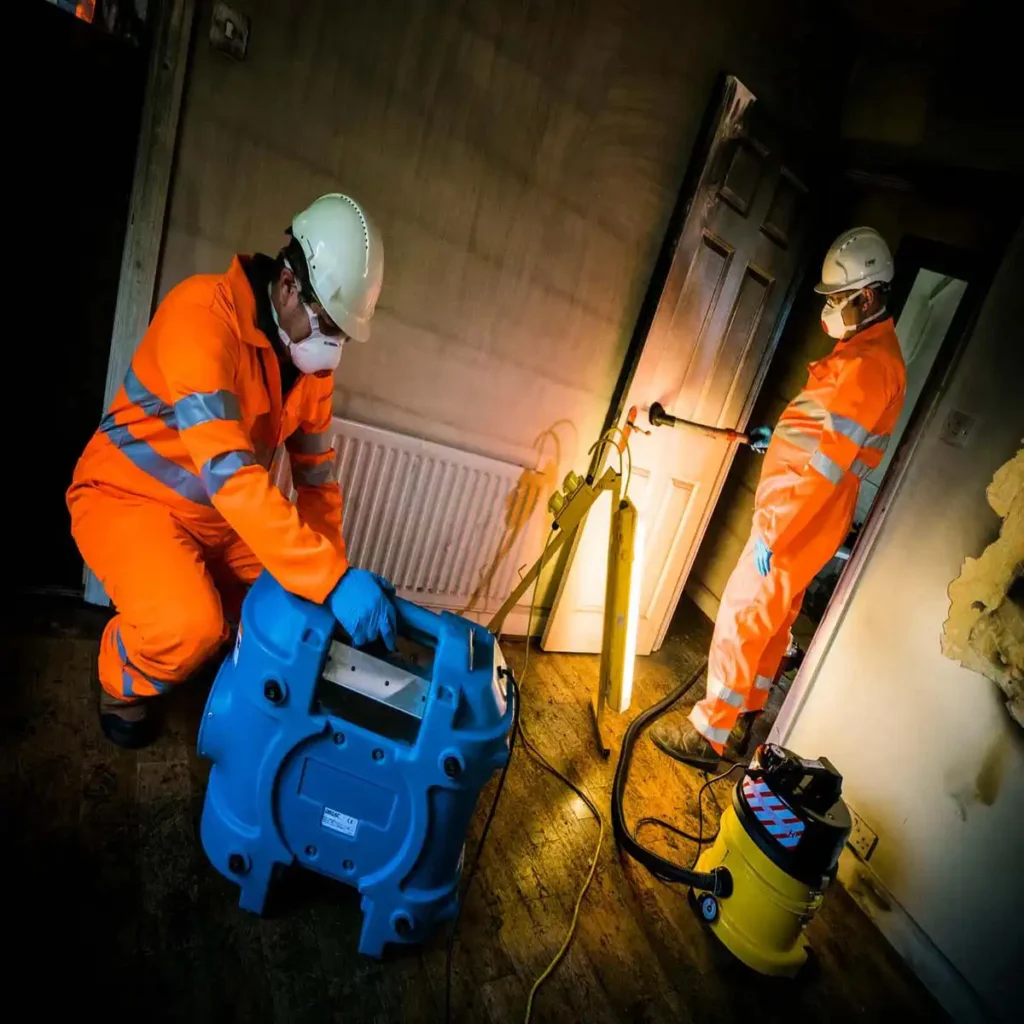
Acting quickly limits how far the damage spreads and aids any insurance claim you make. Follow these steps to help get the situation under control and resolved:
Fire and flood damage are, unfortunately, two of the most expensive events a landlord may have to cover. A report from the NRLA in 2024 took data from more than 20,000 policyholders and found that the average insurance claim was in excess of £20,000.
| Cause | Average insurance claim |
|---|---|
| Fire | £21,451 |
| Flood | £21,104 |
| Subsidence | £21,000 |
Actual restoration costs vary significantly depending on the level of damage a property has suffered. Checkatrade regularly calculate the average costs of a host of repairs and found that for fire or flood damage, you could spend anything from £152 to more than £70,000.
| Restoration work | Typical cost range |
|---|---|
| Fire damage restoration | £609-£70,753 |
| Fire damage clean-up | £2,279-£21,840 |
| Smoke damage cleaning | £152-£761 |
| Water removal | £500-£5,000 |
| Flood/water damage restoration | £500-£5,000 |
The wide range between prices shows why prevention and speed pay off. Catching a small problem early, such as a leak, can be the difference between a quick and low-cost repair and a significant repair at great expense. It is worth noting that these prices are based on Checkatrade data, and the actual costs you are quoted may differ based on the scale of the job.
Reducing the potential for costly repairs and lengthy restoration starts with compliance, preparation and common sense before, during and after a tenancy.
Many of these may seem like common sense, but fire and rescue services attended almost 176,000 fires in England in the year ending December 2025, including more than 40,000 building fires. Furthermore, the Environment Agency estimates that around 6.3 million properties in England are at risk of flooding.
Landlord insurance is essential and helps turn a huge repair bill into something much more manageable. Buildings insurance will cover the structure, while contents insurance covers the items you provide the tenants with. This is important to note as some tenants may think their items are covered too. They are not, and this should be relayed to them so they can organise cover for their belongings.
This table should help clarify where responsibility lies.
| Responsibility | Landlord | Tenant |
|---|---|---|
| Repairing the structure, walls, roof, and windows | Yes | No |
| Restoring water, gas, and electricity | Yes | No |
| Damage caused by tenant negligence | No | Yes |
| Insuring tenant possessions | No | Yes |
| Reporting damage promptly | No | Yes |
| Arranging repairs and funding restoration | Yes | No |
Insurance documents can often be confusing and may contain specific exemptions that may not have featured in policies you have held before. Check for exclusions, as some policies treat storms and flood damage differently.
Fire and flood damage is stressful for landlords and tenants. Staying compliant, maintaining the property and acting fast when something happens reduces that stress and minimises the expense. If damage does occur, contacting a professional damage restoration and specialist cleaning company like Ideal Response is essential. We offer 24/7 availability nationwide, dispatching specialist teams to all types of properties. Fully insured, accredited and trusted, our experienced technicians are on call now. Request a quote now or call us on 0808 303 1170 .

Chris Hedges is Head of Marketing at Ideal Response and the author of every article published on this site. With over 25 years of senior marketing experience across property, legal, and professional services sectors, Chris brings a clear, evidence-led approach to writing about fire damage, flood restoration, and specialist property remediation. His philosophy is simple: cut through the noise, respect the reader's time, and give people the information they actually need.
Explore more articles about damage restoration, specialist cleaning and what we do



If you’re dealing with fire damage, flooding, or an environmental incident, our team is ready to respond. No matter if you have a question or have an emergency that you need help with, call:
If you’d prefer to drop us a message, use our main contact form and upload any pictures of the incident. Would you like us to call you? Fill out the short ‘Request a call back’ form.