Available 24/7 | 0800 088 4170

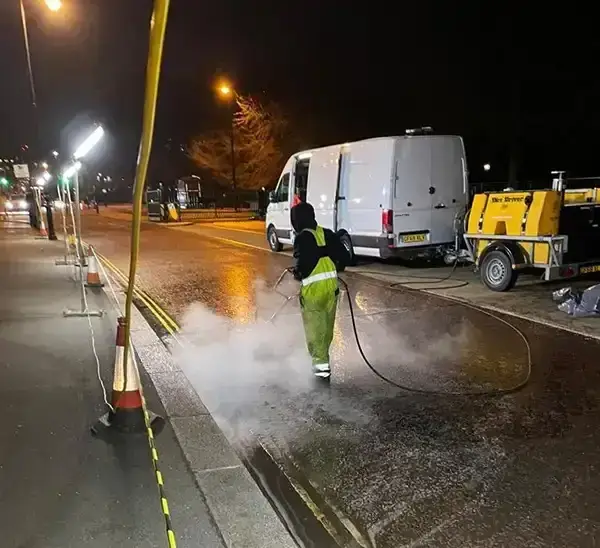
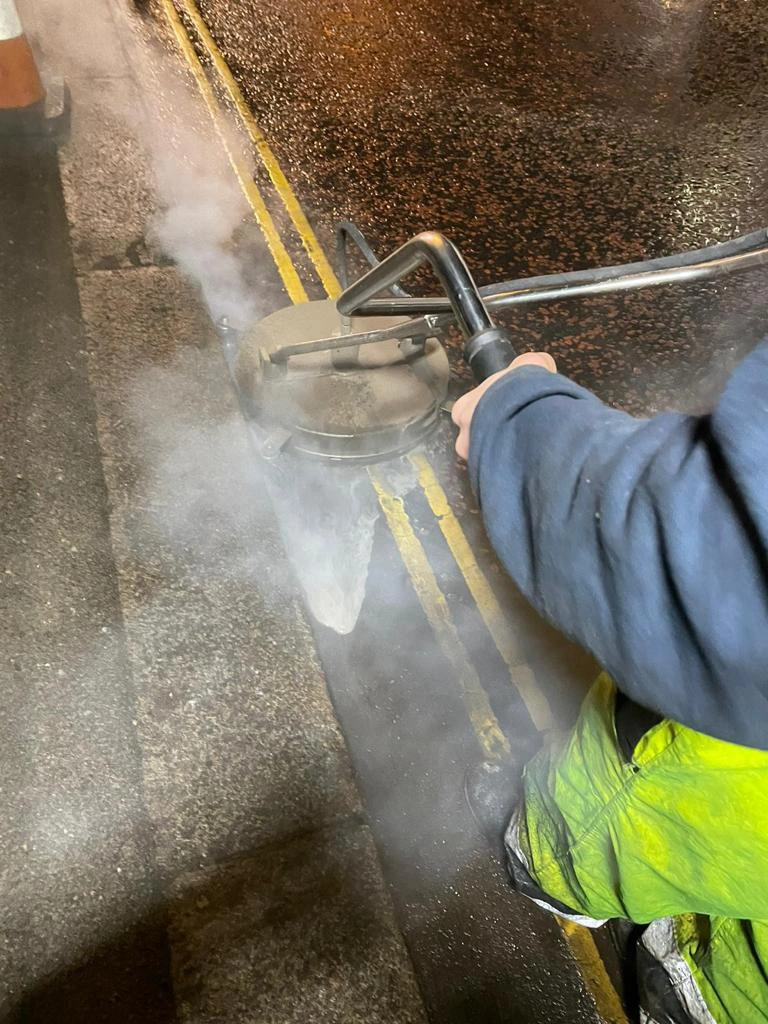
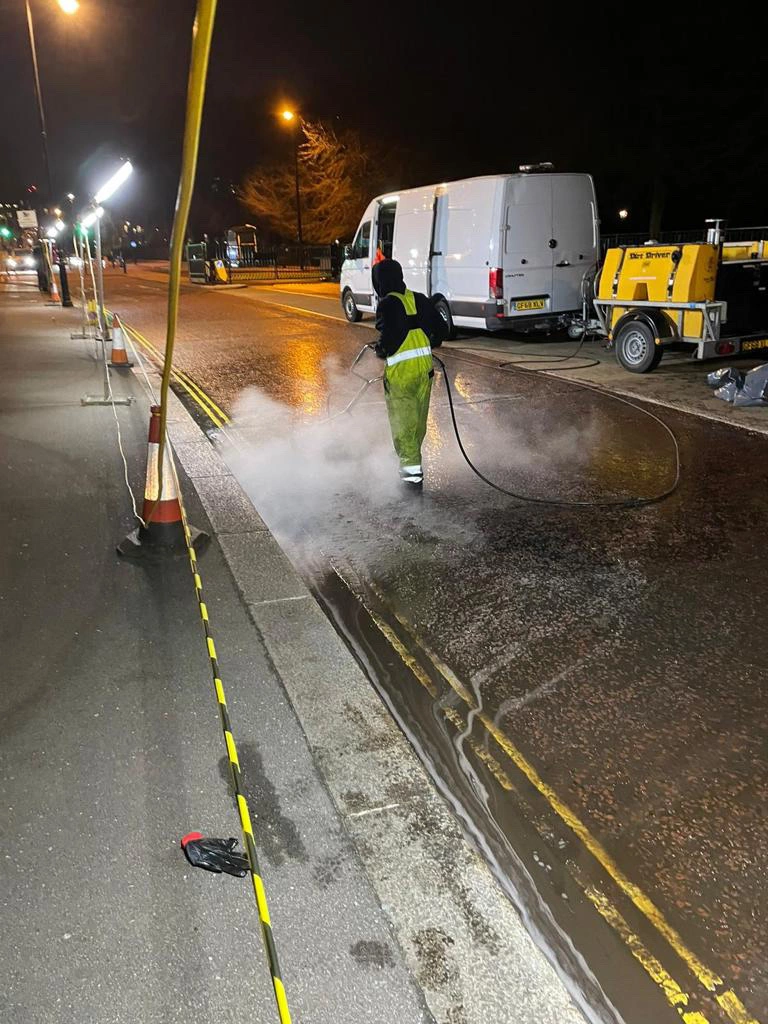
The two-team night response was built around a self-contained Dirt Driver system, which supplied hot water, steam and power where no utilities were available. Rotary surface cleaning, wet vacuum recovery and floodlighting allowed the road to be treated through the night under a police roadblock.
The diesel had spread across a road used within Hyde Park. Beyond the immediate slip and contamination risk, any uncontrolled movement of oil or wash-water had the potential to extend the affected area.
At the same time, the production team was working to a fixed filming schedule. The clean-up therefore needed enough resource to move quickly without compromising the controls required in a public setting.
A two-team response was deployed. With assistance from local police, the road was closed to create a secure working zone around the spill and separate the night-time operation from other road and park users.
There was no usable power or water at the spill location, so the response had to bring both. A diesel-powered Dirt Driver became the hub of the operation. It supplied the hot water and steam required for cleaning while also providing power for supporting equipment. Floodlights were run through the night so technicians could maintain visibility across the carriageway and work safely in the dark.
Applying water and chemistry to an oil spill is only part of remediation. Once contamination has been lifted from the road surface, the resulting liquid still has to be controlled.
Wet-vac recovery was therefore an important stage in the Hyde Park process. It allowed the team to collect the dislodged diesel and contaminated cleaning liquid as work progressed, reducing the risk of simply moving the problem from one part of the road to another.
The original scope also set a realistic expectation around staining. Diesel and other oils can absorb quickly into road surfaces, so complete cosmetic stain removal cannot always be guaranteed. The priority was to remediate the spill, minimise residual staining and return the affected road to a safe, acceptable condition.
The teams worked through the cold Friday night and completed the clean-up by 3am on Saturday.
The diesel contamination was cleared from the affected road area, contaminated liquid and waste were recovered for appropriate disposal, and the road was returned to operational use. The Netflix documentary was able to proceed with filming as planned, avoiding the disruption that a prolonged road closure could have caused.
For Hyde Park, the overnight response meant the affected area could return to normal use for the weekend. For the production, it meant an environmental incident that could have stopped filming was dealt with before the cameras needed to roll.