Available 24/7 | 0800 088 4170

The incident had taken place within a residential block, with contamination affecting the communal stairwell. Unlike a contained room that can simply remain closed, a shared stairwell forms part of the everyday environment used by other residents, making discretion and control of the affected area particularly important.
Body fluids and forensic dust remained after the emergency and investigative response. The requirement was therefore not a conventional communal-area clean: the team needed to work around an active incident environment, respect the cordon and coordinate with the Scene of Crime Officers already involved.
The call reached Ideal Response at approximately 12:30am on a bank holiday. A specialist team was deployed to the residential block and began work during the night.
That timing formed an important part of the response. The contamination was in a communal area used by residents, so completing the specialist work promptly reduced the time that the aftermath of the incident remained within the shared part of the building.
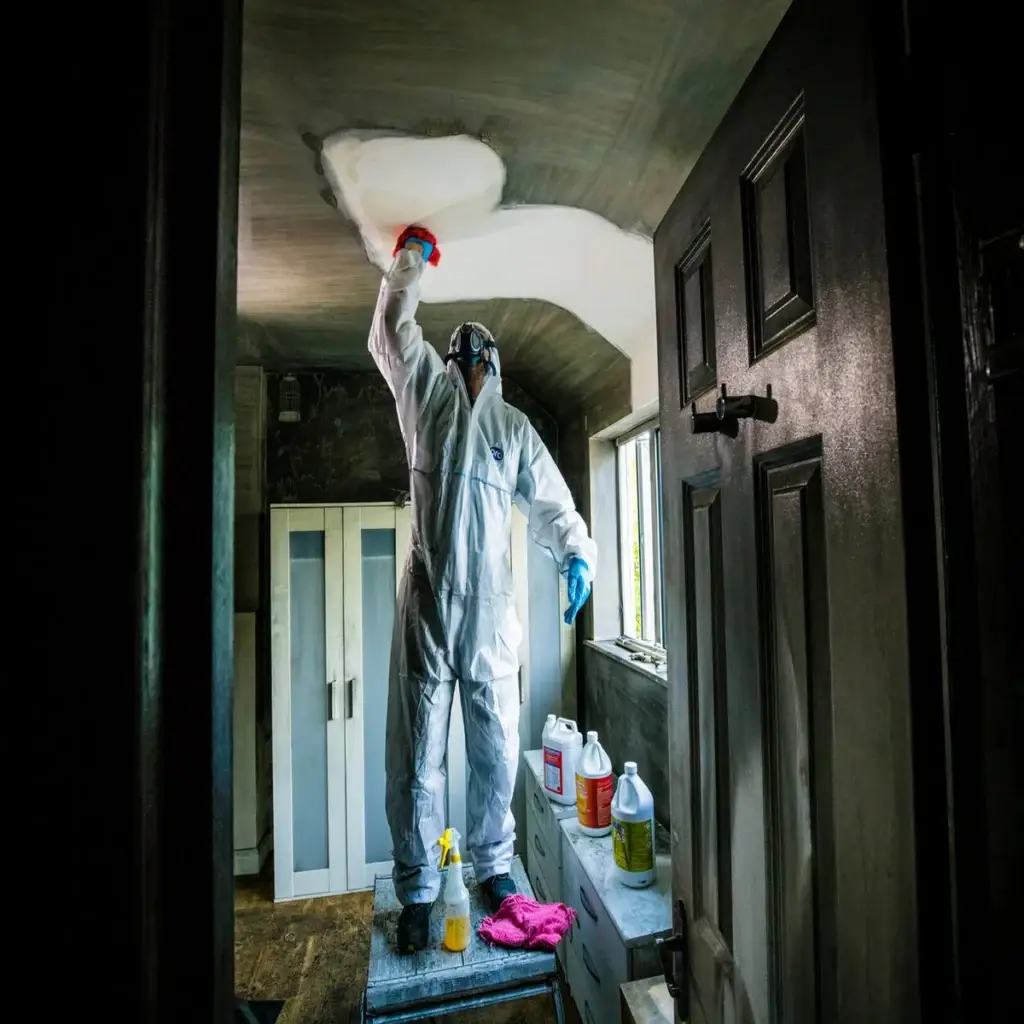
Within that area, the team dealt with body-fluid contamination, forensic dust and associated hazardous material. Hazardous waste was removed discreetly, while personal possessions were handled carefully and restored where possible.
On arrival, the technicians worked within the cordoned-off area alongside Scene of Crime Officers. The cordon provided a defined working zone around the affected stairwell while the specialist clean progressed.
Within that area, the team dealt with body-fluid contamination, forensic dust and associated hazardous material. Hazardous waste was removed discreetly, while personal possessions were handled carefully and restored where possible.
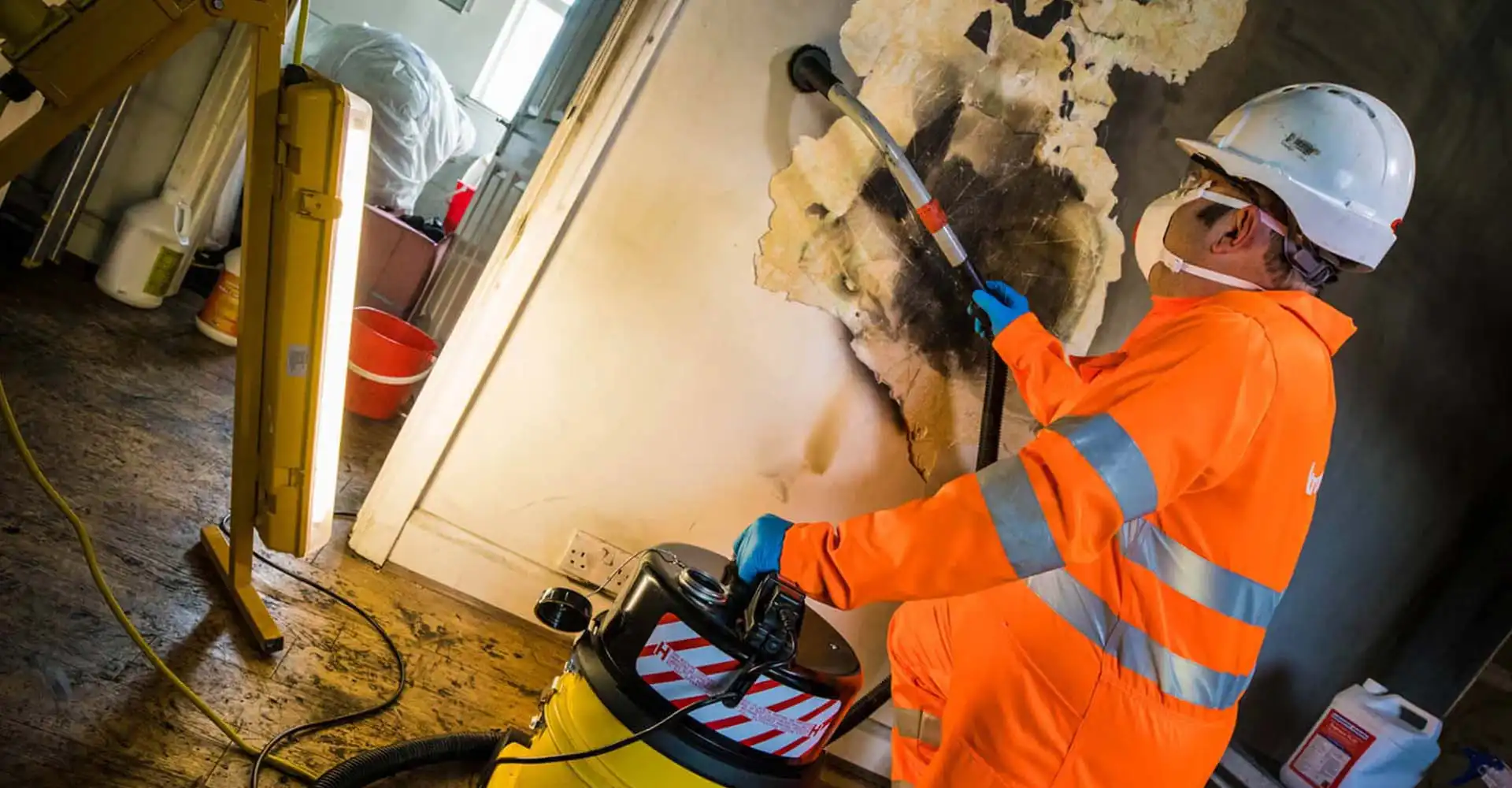
Once access to the affected stairwell was available, the team worked methodically through the cordoned area, removing the biological contamination and forensic residues left after the incident. The response also included the controlled removal of hazardous material and discreet waste handling in a building that remained home to other residents.
Working alongside Scene of Crime Officers meant the clean had to fit around the investigative environment rather than interrupt it. The affected stairwell remained controlled while the team dealt with the contamination, handled affected possessions carefully and progressed the area through the specialist cleaning stage during the overnight attendance.
A trauma scene can contain more than biological contamination. In this case, forensic dust left by the investigative process also had to be addressed before the communal area could move beyond the police response.
That distinction matters because the specialist cleaner is working after, and sometimes alongside, other professionals whose priorities are different. The cleaning programme has to respect the investigative environment first, then deal with what remains once access is available.
By the early hours of the morning, the specialist clean had been completed. Body-fluid contamination, forensic dust and hazardous material had been dealt with, bringing the overnight response to a close and allowing the communal stairwell to move beyond the immediate aftermath of the incident.
For the client, the response was defined as much by availability as by the clean itself. Calling unexpectedly after midnight on a bank holiday, the team needed specialist support there and then, something reflected directly in the feedback from Graeme Findlay, Project Manager for the London Borough of Hammersmith & Fulham.