Available 24/7 | 0800 088 4170

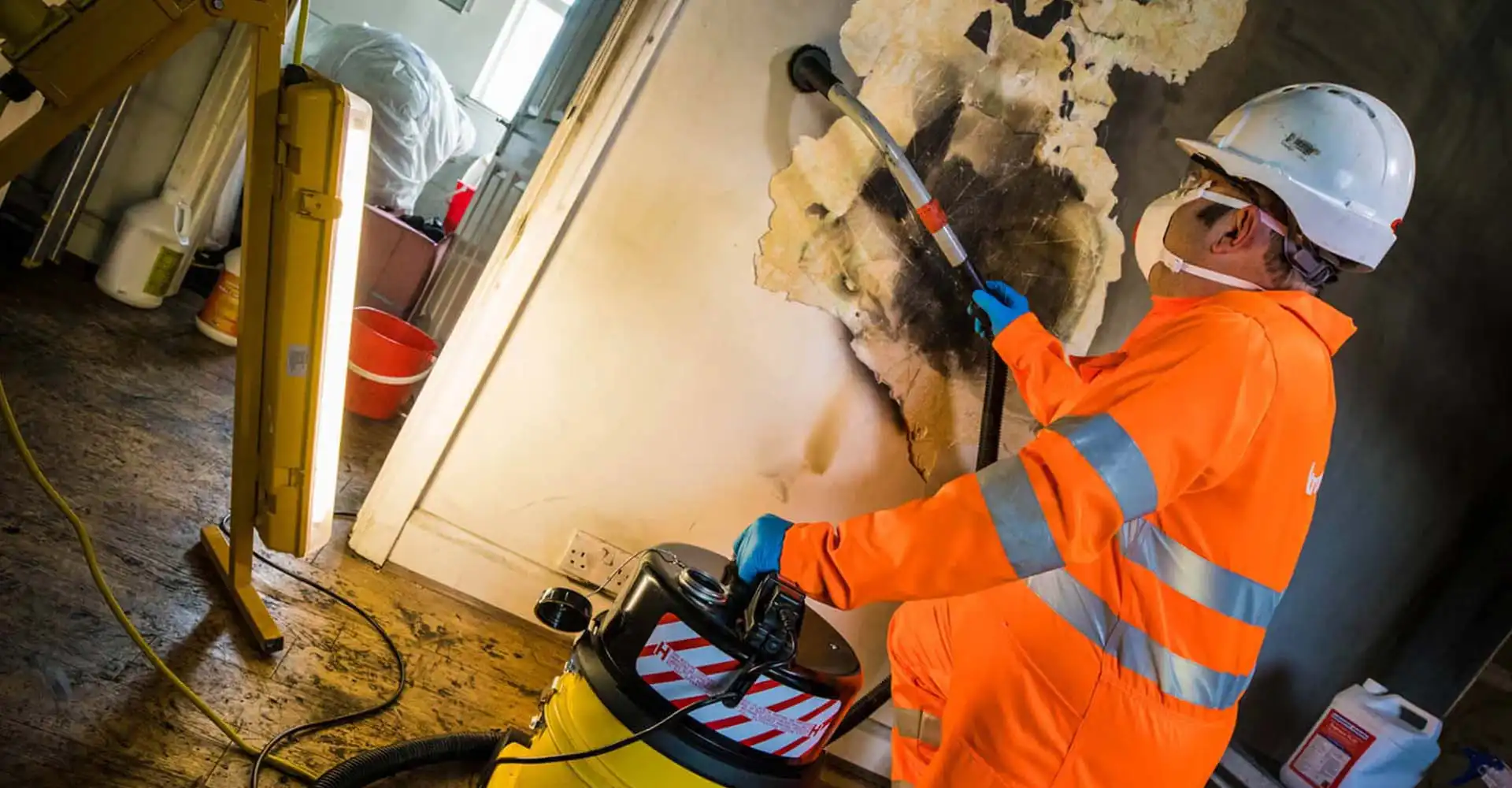
The industrial fire clean was scaled only after the method had been proven. A test clean established the achievable finish, then day and night teams used multiple DOFF systems and specialist access arrangements to clean machinery, conveyors and high-level surfaces, supported by chloride testing as part of verification.
This was not a conventional commercial fire clean. The building was an industrial processing environment filled with machinery, conveyor systems and high-level surfaces, all of which influenced access, cleaning sequence and the amount of resource needed to keep the programme moving.
The agreed plan allowed for approximately ten technicians on the day shift and six at night. Four DOFF systems were specified alongside heavy-duty degreasing chemistry, fogging and wastewater tankering. Rather than relying on one large team working conventional hours, the programme was designed to maintain progress across extended shifts.
Scope control mattered too. The pre-clean of contaminated waste associated with approximately 250 conveyors was identified separately from the core restorative-clean price, while later requirements were handled through a further package of additional works. On a project of this size, defining what sits inside and outside the main clean is part of keeping the recovery under control.
Before committing the full resource, a test clean was used to demonstrate the achievable finish and help establish how the wider programme should be approached. That gave the project team a practical reference point before the methodology was scaled across the facility.
Once the programme was underway, the work combined specialist surface cleaning with the logistical demands of a live recovery environment. The cleaning programme was coordinated with Viridor and engineering contractors while scaffolding, welding, plant reinstatement, fire-alarm work and lighting replacement progressed around the clean.
The key measure of success was not simply how quickly an individual surface could be cleaned. Viridor needed the facility recovery to keep moving. Cleaning therefore had to be sequenced around access, high-level plant, engineering activity and the next stages of repair.
That is where the extended-shift model added value. Maintaining cleaning output across day and night reduced the risk of the restorative clean becoming the critical path for electrical and plant recovery. It also gave the project enough capacity to deal with a large contamination footprint without reducing the work to a rushed cosmetic clean.
The main fire-cleaning programme was completed in just over five weeks against an original estimate of approximately six weeks. Finishing the main clean ahead of the original allowance allowed electrical repairs to progress sooner, helping the wider recovery move forward ahead of the initial cleaning allowance.
Chloride testing was also used as part of the verification process. On an industrial fire loss, that matters because corrosive residues can present a risk to machinery and electrical infrastructure even when the most obvious visible soot has already been removed.