If you’re asking ‘Why is my wall damp inside?’, you’re not alone. Damp internal walls are one of the most common and frustrating problems faced by homeowners, landlords and property managers across the UK.
The short answer is this:
An internal wall becomes damp when excess moisture is present and cannot escape either because water is entering the building, rising through the structure, being generated inside the home, or leaking from internal systems.
At Ideal Response, damp and moisture-related issues are assessed and resolved daily across residential and commercial properties nationwide. This guide explains exactly why internal walls become damp, how to identify the cause, and what to do next, before the problem escalates.
Skip to:
Quick answer – The 5 main reasons internal walls get damp
What does it actually mean when a wall is damp?
Condensation: The most common cause of damp inside walls
Penetrating damp: Moisture entering from outside
Rising damp: Moisture from the ground
Structural & environmental contributors
How to identify damp wall problems and why early action matters
Conclusion: Why is my wall damp inside and what should you do next?
Quick answer – The 5 main reasons internal walls get damp
In UK properties, internal wall damp is almost always caused by one (or more) of the following:
- Condensation: Moist air settling on cold walls
- Penetrating damp: Rainwater entering from outside
- Rising damp: Ground moisture travelling upward
- Leaks: Plumbing, bathrooms or appliances
- Structural or environmental factors: Insulation, ventilation or historic salts
Each cause requires a different solution. Treating the wrong one wastes time and money.
What does it actually mean when a wall is damp?
A damp wall isn’t just surface moisture. It usually means:
- Moisture is present within the wall fabric
- Evaporation is restricted
- Salts or mould may be forming
- Plaster, insulation or timber may be degrading
Many UK homes, particularly older properties, were not designed for modern living patterns that generate high levels of indoor moisture combined with sealed windows and intermittent heating.
Condensation: The most common cause of damp inside walls
Why does condensation occur?
Condensation occurs when warm, moisture-laden air meets a cold surface, turning water vapour into liquid. This is common in UK homes due to:
- Cold external walls
- High outdoor humidity
- Limited ventilation
- Everyday activities such as cooking, showering and drying clothes indoors
Why does condensation appears on walls?
Although windows are obvious targets, condensation often forms on:
- External-facing walls
- Corners and ceilings
- Areas behind furniture
- Poorly insulated rooms
Over time, moisture is absorbed into plaster and paint, leading to damp patches and mould.
What are the common signs of condensation damp?
- Black mould growth
- Damp worsening in winter
- Musty smells
- Walls that feel cold or clammy
Condensation is frequently misdiagnosed as structural damp. Ideal Response damp surveys consider humidity, airflow, insulation performance and thermal bridging to ensure accurate diagnosis.
Penetrating damp: Moisture entering from outside
What is penetrating damp?
Penetrating damp or water ingress occurs when rainwater passes through the external structure of a building and reaches internal walls. This can happen at any height.
Common entry points
- Cracked brickwork or defective pointing
- Damaged render or cladding
- Blocked or leaking gutters and downpipes
- Faulty window and door seals
- Roof or chimney defects
How to recognise penetrating damp
- Damp patches worsen after rainfall
- Localised staining
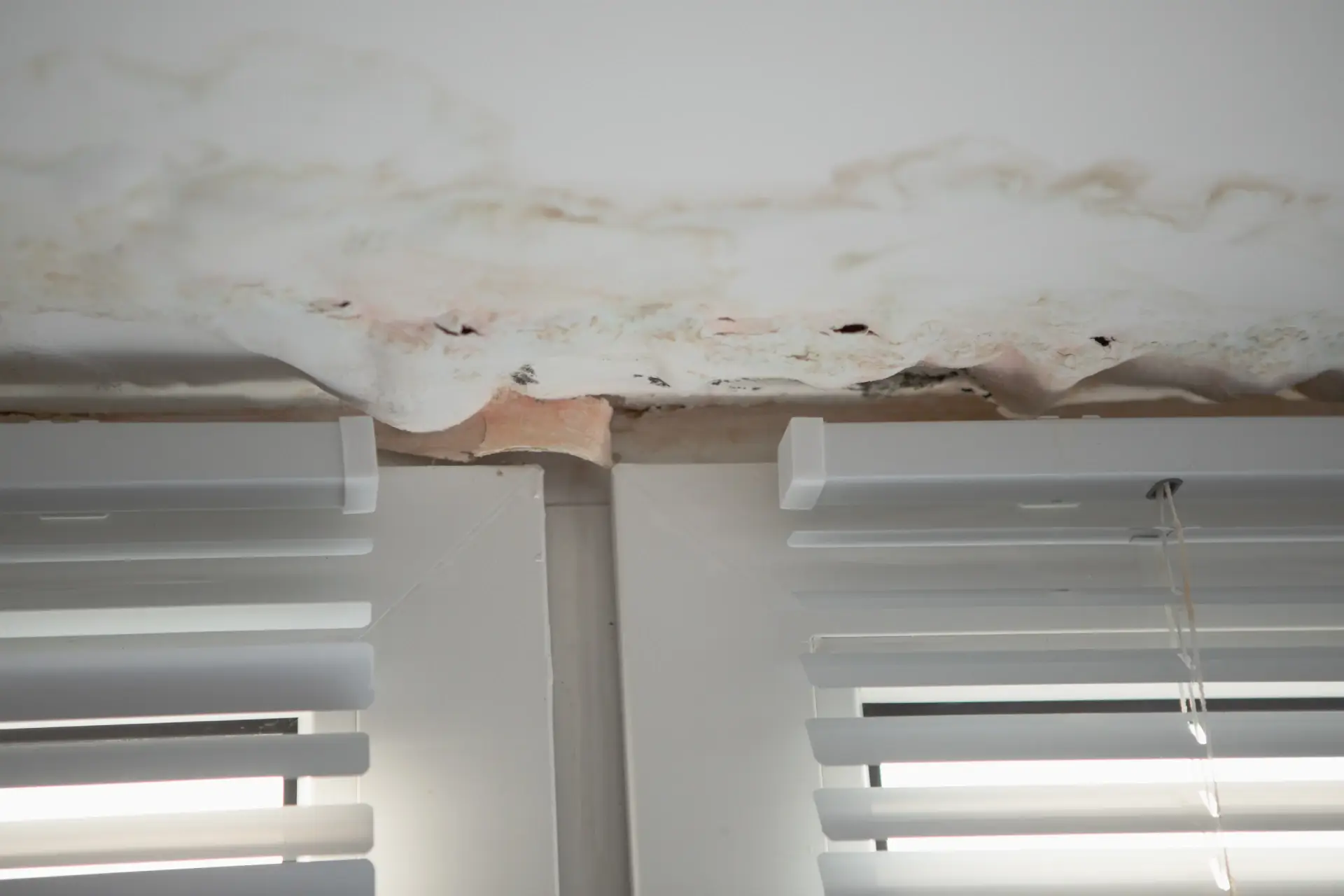
- Peeling paint or blistering plaster
- External defects near the affected area
Rising damp: Moisture from the ground
What rising damp is
Rising damp occurs when ground moisture travels upward through masonry, usually due to a failed or missing damp-proof course (DPC).
Typical signs of rising damp
- Damp up to around 1 metre from floor level
- Tide marks
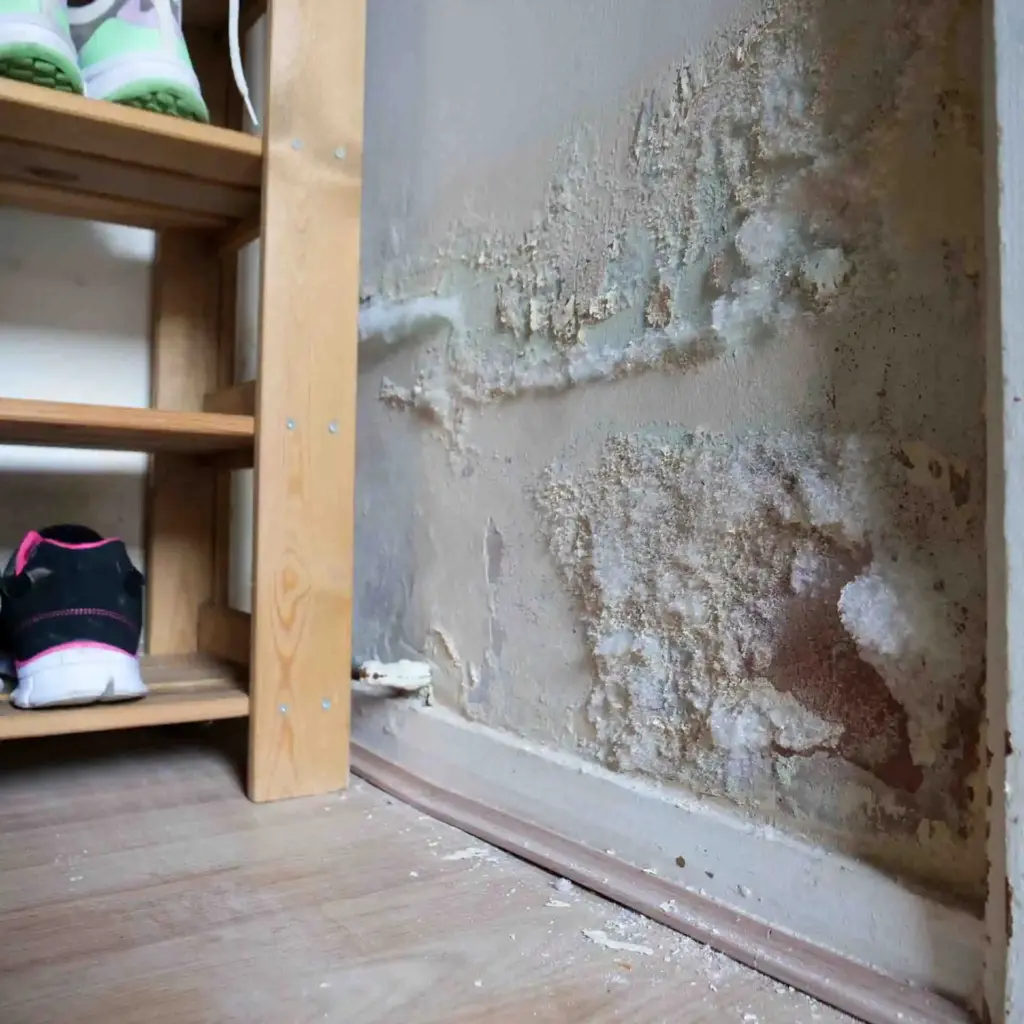
- White salt deposits (Efflorescence)
- Crumbling plaster and rotting skirting boards
It’s important to note that true rising damp is far less common than many homeowners are told and is often confused with condensation or penetrating damp.
Leaks and hidden water damage
Not all damp walls are caused by weather or humidity.
Common internal sources
- Leaking pipes within walls or floors
- Failed bathroom or shower seals
- Overflowing appliances
- Condensation forming on cold pipework
Warning signs
- Damp that doesn’t change with the weather
- Sudden appearance of staining
- Localised damage
- Persistent odours
Unchecked leaks are a major cause of secondary mould growth and structural damage, particularly in flats and managed properties. Over 1 metre squared of mould usually requires professional mould cleaning and removal.
Structural & environmental contributors
Even after moisture sources are addressed, walls may remain damp due to:
- Poor insulation
- Cold bridging
- Historic salt contamination
- Inadequate ventilation design
These issues require whole-property assessment, not surface-level fixes.
How do you identify signs of damp early?
If you’ve noticed a damp internal wall, the most important step is understanding what type of moisture issue you’re dealing with and why treating the symptom alone doesn’t work. Check out our Construction Drying for Major Development case study to see how we successfully restore safe moisture levels to properties through professional surveying and specialist drying.
Key questions to help identify the cause
Ask yourself:
- Does the damp worsen after rainfall?
- Is it seasonal or present all year round?
- Is the damp concentrated low down or spread across the wall?
- Is mould visible?
- Are plumbing pipes, bathrooms or appliances nearby?
These questions can help indicate whether the issue is condensation, penetrating damp, rising damp or a leak. However, symptoms often overlap and if the answer isn’t clear, a professional diagnosis via a damp survey provider is essential.
Why painting or sealing damp walls fails
Painting over damp or using sealants may hide the problem temporarily, but it does not address the cause.
In many cases, it actually makes things worse by:
- Trapping moisture within the wall
- Accelerating plaster and finish failure
- Creating ideal conditions for mould growth
- Delaying proper investigation and repair
At Ideal Response, decorative repairs are only carried out after moisture sources are fully resolved, ensuring the problem does not return. Please note that we do not undertake decoration following remedial work.
The health and property risks of ignoring damp
Persistent damp is not just a cosmetic issue. Left untreated, it can lead to:
- Black mould and respiratory health problems
- Decay of timber and internal finishes
- Reduced property value
- Escalating repair costs
- Insurance and compliance complications
This is why early, accurate intervention is always the most cost-effective and least disruptive option.
Summary: Why is my wall damp inside and what should you do next?
If your wall is damp inside, it is never random and it should never be ignored.
In UK homes, internal wall damp means moisture is entering, forming, rising, or leaking and cannot dry out properly. While the symptoms may look similar, the underlying cause can vary significantly, and treating the wrong issue often leads to recurring damage, unnecessary cost, and ongoing disruption.
The most important thing to understand is that there is no universal ‘damp treatment’ – only correct diagnosis followed by the right solution.
Quick fixes and guesswork may hide symptoms temporarily, but they rarely resolve the problem and can sometimes make it worse. Long-term results come from understanding how moisture is behaving within the property, why it is present, and what needs to change to prevent it returning.
What to do if you’re unsure about the cause
If you are unsure why your wall is damp or if the problem keeps coming back, the next step is a professional assessment.
Ideal Response provides UK-wide specialist support for damp investigation, moisture diagnostics and water damage issues. Each assessment is evidence-led, focusing on identifying root causes and recommending appropriate, proportionate solutions not assumptions or unnecessary treatments.
Speak to a specialist before the problem escalates
Whether you are a homeowner, landlord, managing agent or insurer, early expert advice can prevent:
- Worsening mould growth
- Structural damage
- Escalating repair costs
- Health risks for occupants
If you’ve noticed a damp internal wall and want clarity, contact Ideal Response to discuss your situation and arrange a professional assessment.
Addressing damp early is always simpler, safer and more cost-effective than waiting until the damage spreads.
FAQs about damp internal walls
Why is my internal wall damp but there’s no visible leak?
Moisture can come from condensation, penetrating damp, rising damp or historic salts, even when no active leak is present.
How can I tell if the damp is condensation or penetrating damp?
Condensation is usually seasonal and widespread, often with mould, while penetrating damp is more localised and typically worsens after rainfall.
Is a damp wall always serious, or can it wait?
Some damp issues start small, but all should be addressed early as moisture problems tend to worsen and become more expensive if left untreated.
Will painting or sealing the wall stop the damp?
No. Painting over damp traps moisture, accelerates damage and masks the real issue without resolving the cause.
Can damp inside walls affect health?
Yes. Damp and mould are linked to respiratory problems, asthma symptoms and poor indoor air quality, particularly for vulnerable occupants.
Will a dehumidifier fix a damp wall?
A dehumidifier may help manage condensation but will not stop water ingress, fix leaks or resolve structural moisture problems.
Is damp my responsibility as a homeowner or landlord?
In most cases, damp caused by structural issues or water ingress is the responsibility of the property owner or landlord.
Will damp come back after treatment?
Damp should not return if the true cause has been correctly identified and resolved; recurring damp usually indicates misdiagnosis or incomplete repair.

Chris Hedges - Head of Marketing
With over 25 years' experience, Chris is adept at defining and driving strategy, while also enjoying hands-on operational delivery. He believes in an equal blend of creativity and analytical scrutiny, always finding inventive ways to achieve objectives, underpinned by evidence. Chris’s philosophies are simple: don't overcomplicate, always prioritise customer experience, and bend the rules just enough to cut through the noise and drive momentum and growth.