Leak Detection & Trace and Access | Ideal Response

Available 24/7 | 0800 088 4170

Leak detection services

A hidden leak keeps soaking floors, walls and ceilings until its source is found. Ideal Response traces leaks in water supply pipes, heating systems, underfloor heating, roofs and drainage using non-invasive methods, so the leak can be fixed with as little disruption as possible, and the property dried afterwards.
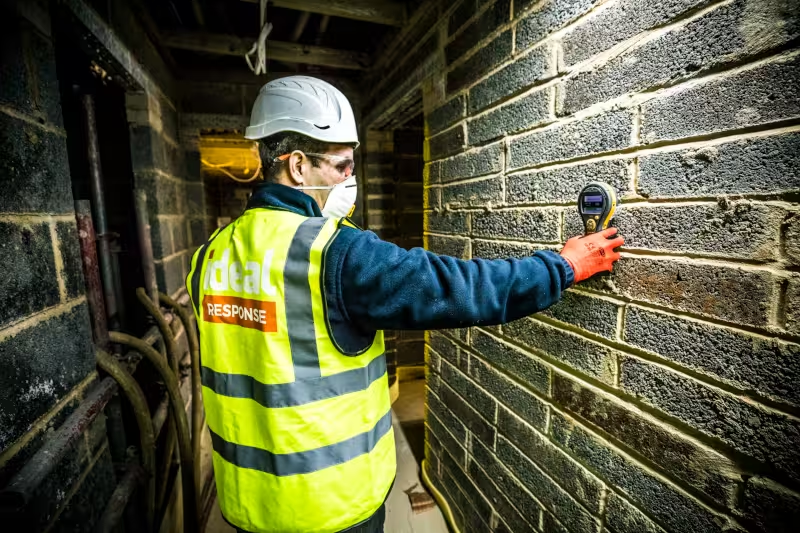
Measuring moisture of a wall as part of leak detection

Coverage: London, Kent and the South East

Leak detection at a glance

Types of leak we trace

Equipment we use

Leak detection methods compared

Need help now?

Call the team any time.

0800 088 4170
Available 24/7
CALL FOR IMMEDIATE HELPREQUEST A QUOTE
What it is
Locating the source of a hidden water leak with non-invasive equipment, before any floors or walls are opened
Examples
Mains and supply pipes, heating and underfloor heating, bathrooms, flat roofs and external water ingress
Typical time
Most domestic leak searches take half a day to a day. Commercial leak detection is often longer depending on size of site
Paperwork
A written findings report with photographs, for your insurer and plumber
Not included
Building repairs and reinstatement
TYPE OF LEAKWHERE IS IT OFTEN FOUNDUSUAL METHOD
Mains and supply pipe leaksUnder floors, in walls, outsideAcoustic detection, tracer gas
Heating and boiler leaks Radiator pipework, boilersThermal imaging, pressure testing
Underfloor heating leaks Within screed Thermal imaging
Bathroom and shower leaksSeals, wastes and trays Moisture mapping, visual inspection
Roof and external ingressFlat roofs, walls, windowsMoisture mapping, tracer methods

When to call us

Your water bill has risen for no clear reason
The boiler keeps losing pressure
Damp patches, stains or mould appear with no visible cause
A ceiling is stained below a bathroom or flat roof
Your insurer has asked for a leak to be traced before a claim proceeds

How we carry out leak detection

Step 1Gather the evidenceHistory, water bills, boiler pressure readings and where damage appears to narrow the search area. If you send photos with your enquiry, that helps our specialists.
Step 2Confirm the leakPressure testing and meter checks confirm a system is losing water before searching.
Step 3Survey non-invasivelyThermal imaging, acoustic detection and moisture mapping follow the water back to its source.
Step 4PinpointTracer gas or targeted testing locates the leak precisely, so any opening up is as small as possible.
Step 5ReportThe location, method and evidence are recorded in a findings report.

Leaks in the UK: the numbers

01
Thermal imaging cameras
See temperature differences where water escapes
02
Acoustic leak detectors
Hear water escaping from pressurised pipes
03
Tracer gas equipment
Pinpoint leaks under solid floors and outside
04
Moisture meters
Map how far water has spread
05
Pressure testing kit
Confirm and measure pressure loss
06
Inspection cameras
Look inside voids with minimal disruption

We choose the method to suit the system and the building, often combining two or more.

METHODHOW IT WORKSBEST FOR
Thermal imagingShows temperature differences where warm or cold water escapesHeating pipes, underfloor heating, hot water
Acoustic detection Listen for the sound of water escaping under pressureMains and supply pipes
Tracer gasA safe gas is pushed through the pipe and detected where it escapesPipes under solid floors and outside
Moisture mapping Measures moisture to follow water back to its sourceWalls, floors and roofs
Pressure testingShows whether a system is losing pressureConfirming a leak on heating or supply systems

Trace and access: what your insurer may cover

Many buildings insurance policies include 'trace and access' cover: the cost of finding a hidden leak and of gaining access to it, sometimes with a limit. Cover and limits vary, so check your policy. Our findings report gives your insurer the evidence it needs.

46.4 litres are lost per person every day before reaching a tap in England (Ofwat).
43%of domestic properties in the UK have suffered water leaks (Go.Compare).
30%of water lost via internal hidden leaks in businesses (Commercial Smart Meter Flow Assessments).
£2,638 average insurance claim cost for 'escape of water' (Association of British Insurers).

Why choose Ideal Response for leak detection

Accredited specialists
BDMA and IICRC accredited water damage specialists, so finding the leak and drying the property sit with one team.
Non-invasive first
Thermal imaging, acoustic detection and tracer gas before anything is opened up.
Paperwork that stands up
A findings report with photographs, ready for a trace and access claim.
One call, start to finish
Leak traced, then the property dried and cleaned if water has spread.
Standards we work to
BDMA practice guidance, IICRC, Water Supply (Water Fittings) Regulations 1999
Typical timescales
SituationTypical time on site
Domestic supply or heating leakHalf a day to a day
Underfloor heatingHalf a day to a day
Commercial or complex systemsPlanned after initial assessment

Where our work stops: We locate the leak and can dry and clean the property afterwards. We currently do not carry out building repairs or reinstatement.

Recent leak detection projects

Flooded basement within a London property
Thermal imaging of water ingress

The flooded basement within a London property along with a thermal image of where water is entering.

Recent leak detection projects

Tracing foul water ingress into a London cellar

Location
London
Duration
1 Day
Service
Leak Detection
Sector
Residential
Unexplained, foul-smelling water was collecting in the cellar of a London property. Ideal Response used systematic pipework checks, tracer dye and thermal imaging to trace the ingress to a damaged soil pipe at foundation level, giving the owner a clear diagnosis to arrange targeted repairs.

Leak detection is priced by the property and the type of system being tested. You receive a fixed quote before the visit.

COST FACTORWHY IT MATTERS
Type of systemSupply pipes, heating, underfloor heating, or roofs need different methods
Size and accessLarger buildings and restricted access take longer
Methods neededTracer gas or pressure testing adds time
Report A written findings report for your insurer is included

Related services and guides

Talk to the team

For an emergency, call us. Otherwise send a few details and photos, and the team will get back to you

Available 24/7

JPG, JPEG, PNG, WEBP, HEIC, MP4, MOV, PDF — up to 5 files

We’ll use your details to respond to your enquiry. View our Privacy Policy

Leak detection questions

How do you find a hidden leak without damaging my property?
We use non-invasive methods: thermal imaging to see temperature differences, acoustic detection to hear escaping water, tracer gas to pinpoint pipes under floors, and moisture mapping to follow the spread.
Will my insurance pay for leak detection?
 Many buildings policies include 'trace and access' cover for finding a leak and the damage caused getting to it. Check your policy, and keep our findings report for your claim
Can you find leaks in underfloor heating
Yes. Thermal imaging and pressure testing can locate leaks in underfloor heating pipes.
What happens after you find the leak?
You receive a findings report. The leak is then repaired, and if water has spread we can dry and clean the property.
Do you trace leaks in roofs and walls?
Yes, including flat roofs and water coming through walls, using moisture mapping and, where suitable, tracer methods.