Finding unwanted “street art” on your property is more than just an eyesore; it’s a race against time. The longer paint sits on a surface, the deeper it penetrates, especially on porous materials like brick or stone.
If you are wondering how to clean graffiti without causing permanent damage to your building’s facade, this guide covers the essential methods, from DIY tips to the gold standard of professional restoration.
Skip to:
Why speed is key for graffiti removal
Why speed is key in successful graffiti removal
Graffiti acts like a magnet. Statistically, if a tag is removed within 24–48 hours, the likelihood of a “re-tag” decreases significantly. Beyond aesthetics, many spray paints contain corrosive solvents that can degrade the structural integrity of certain substrates over time.
How to clean graffiti: The risks of DIY vs. Professional care
1. The DIY approach (Proceed with caution)
If the graffiti is on a smooth, non-porous surface like metal, glass, or plastic, you may be able to handle it yourself using:
Solvents: Isopropyl alcohol or specialised “graffiti wipes” can work on small, fresh areas.
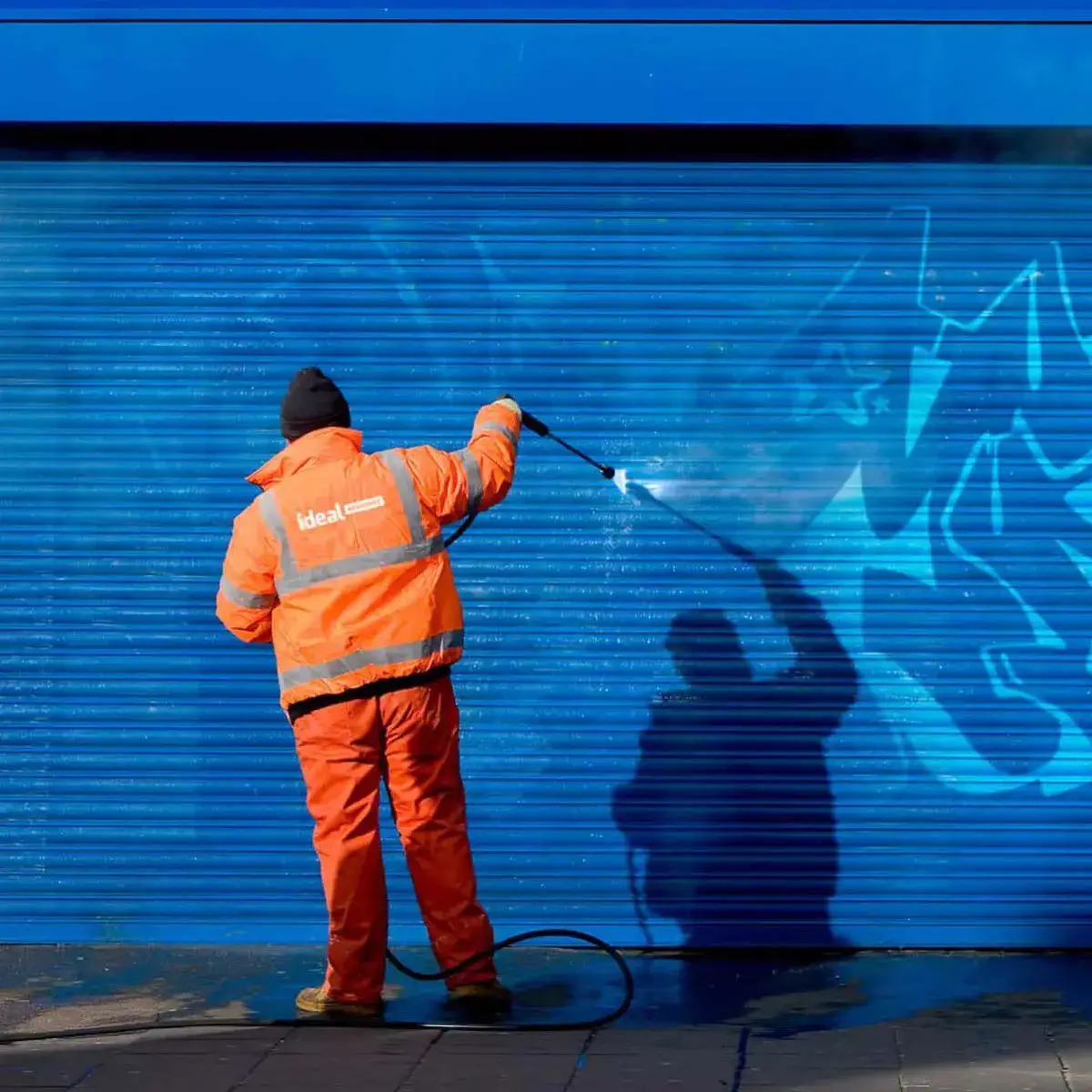
Domestic pressure washing: While a standard pressure washer may remove fresh paint from metal fences, be extremely careful, excessive pressure can easily strip underlying powder coatings or protective layers.
2. The professional alternative: Chemical poultices
For stubborn tags, professional graffiti removal involves specialised cleaning agents that break the bond between paint and substrate. Unlike DIY store-bought chemicals, professional solutions are often pH-neutral and biodegradable, ensuring the paint is “lifted” without etching the stone or harming the surrounding environment.
3. Steam cleaning: The “Gold Standard”
When dealing with delicate or heritage masonry, high-temperature steam is the only safe solution. This is where technology like the DOFF system excels. Unlike high-pressure washers that use force (which can shatter old brickwork), the DOFF system uses superheated steam (up to 150°C).
This heat softens the paint, allowing it to be washed away at very low pressure, preserving the delicate stone beneath. You can learn more about this process in our comprehensive guide to DOFF cleaning.
The importance of hiring a professional
While the temptation to scrub away graffiti yourself is high, the risks often outweigh the rewards. Amateur removal attempts frequently result in:
Ghosting: A permanent “shadow” where the pigment is forced deeper into the pores of the brick.
Surface scarring: Blasting stone with high-pressure water can remove the protective outer layer of the masonry, leading to accelerated weathering and damp issues.
Chemical staining: Using the wrong solvent can cause a chemical reaction that leaves a permanent, unsightly stain far worse than the original graffiti.
We recently handled a high-profile project involving graffiti removal at St Paul’s Cathedral in London. This project required a meticulous, professional approach to ensure the historic stone remained intact while completely erasing the vandalism. A feat only possible with expert knowledge of substrate chemistry and specialised equipment.
Summary: Restore your property today
Don’t risk permanent damage to your property with quick fix DIY methods. Graffiti removal on porous surfaces requires a delicate balance of heat, chemistry, and low-pressure application to ensure a shadow-free finish. Whether you are dealing with a small tag or widespread vandalism, professional intervention is the only way to guarantee the structural and aesthetic integrity of your building.
Wipe the slate clean with the experts. Contact Ideal Response today for a free, no-obligation quote and let our specialist teams restore your property to its original condition.
Call our emergency response team 0800 088 4170
Graffiti removal FAQs
Will the graffiti removal process damage my brickwork?
Not when performed by professionals. Standard high-pressure washing can “etch” stone or strip the face off old bricks. At Ideal Response, we use the DOFF Steam Cleaning system, which relies on high temperatures (150°C) rather than high pressure. This safely melts the paint away without compromising the structural integrity of the masonry.
Can you remove graffiti from "shadowing" or "ghosting"?
Yes. Ghosting occurs when paint pigments penetrate deep into the pores of a substrate, often caused by previous amateur removal attempts. We use specialised, pH-neutral chemical poultices designed to draw these deep-seated pigments to the surface, followed by a steam rinse to ensure a shadow-free finish.
How soon should I have graffiti removed?
As soon as possible. We recommend removal within 24 to 48 hours. Not only does this prevent the paint from fully curing and bonding with the surface, but it also acts as a deterrent; vandals are less likely to return to a site that is maintained promptly.
Is the cleaning process environmentally friendly?
Absolutely. By using the DOFF system, we significantly reduce the need for harsh chemicals, often using only superheated water. When cleaning agents are required, we use biodegradable, EN-compliant products that are safe for both the environment and public spaces.
Can you remove graffiti from heritage or listed buildings?
Yes, this is one of our specialties. Because our methods are non-abrasive and avoid high-pressure force, they are approved for use on delicate heritage sites and listed buildings. Our work at St Paul’s Cathedral is a testament to our ability to handle the nation’s most sensitive stone surfaces.
Do you offer graffiti removal for commercial properties and local authorities?
Yes. We work with property managers, local councils, and commercial business owners across the UK. We can provide one-off emergency removals or ongoing maintenance contracts to keep your building facades pristine.
Why shouldn't I just paint over the graffiti?
Painting over a tag is often a temporary “fix” that leads to long-term issues. Layers of paint trap moisture within the brickwork, which can lead to “spalling” (where the brick face flakes off) during freeze-thaw cycles. Furthermore, the texture of the graffiti often remains visible beneath the new paint, resulting in an unprofessional finish.
How much does professional graffiti removal cost?
The cost depends on several factors, including the size of the area, the type of surface (porous vs. non-porous), and the age of the graffiti. We provide free, no-obligation quotes and can often provide an estimate based on photos of the damage.