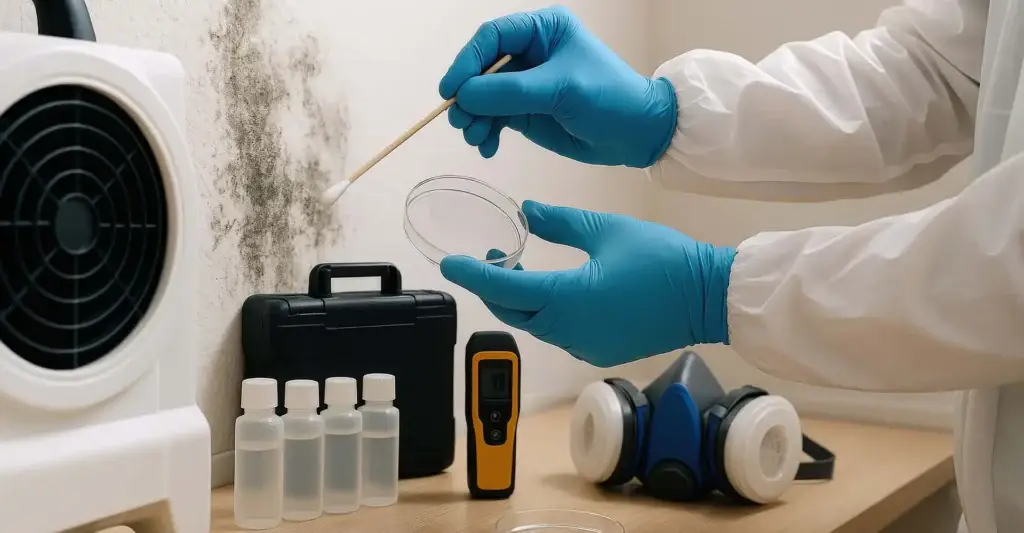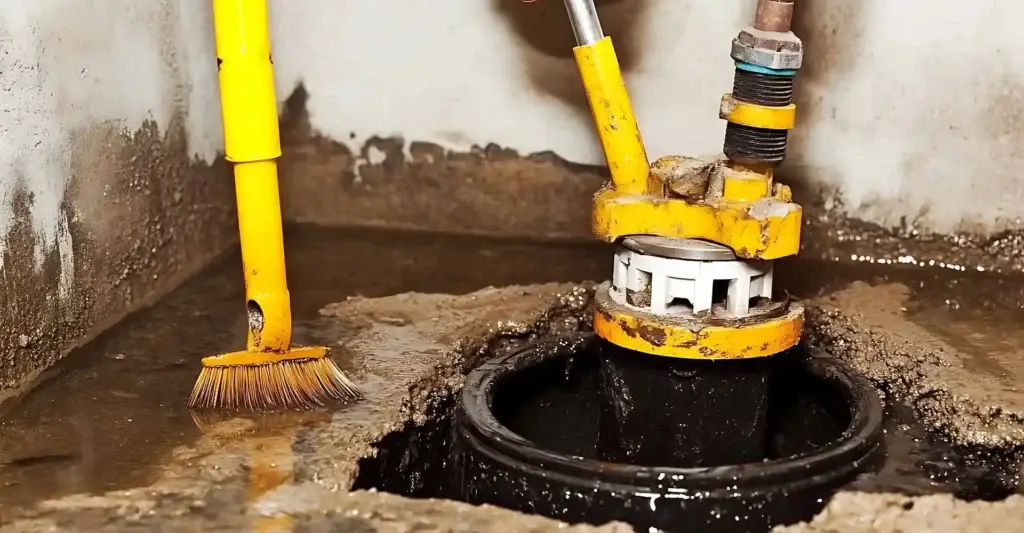
Mould growth of any type can be harmful to your home and your health, and white mould is no exception to this rule. While many homeowners or businesses consider black mould the ‘worst’ type of mould, white mould can also be very damaging if left unchecked and often goes unnoticed for longer because it contrasts less with light-coloured walls.
If you want to know what causes white mould on walls and the steps to take, read on. If you have spotted white mould in your home and need mould cleaning services, contact our specialist team on 0800 088 4170.
Skip to:
What does white mould look like?
How to remove while mould on walls
What is white mould?
Like black mould, white mould is a collection of different types of fungi. Spores create colonies of fungus that appear white, off-white, green or yellow and typically have a fluffy or powdery texture. These fungus types include:
- Penicillium: a fungus that grows best on organic materials such as wood, insulation or paper.
- Cladosporium: a fungus that can be found on fabrics, wood and other organic materials in moist areas.
- Aspergillus: a fungus that grows on foods and in warm, damp areas such as bathrooms and around window frames with heavy condensation.
White mould spores are microscopically tiny, which means you can’t see that colonies are growing in your home until they are much larger. This mould typically lives on harder surfaces, feeding on the cellulose in wood or plasterboard. This is why this fungus is often found on walls, behind furniture or around windows.
What causes white mould?
Mould is a naturally occurring fungal colony often found in damp parts of woodlands or gardens. The initial cause of white mould entering your home is the distribution of spores from existing colonies, which can gain access through windows, doors or any ventilation system because of how tiny they are.
The real problem occurs when you have spaces that are perfectly suited to white mould growth. In your home, this means any surface that has high humidity levels and poor ventilation, allowing white mould to grow rapidly. Any damp patches, whether due to condensation, a leak or rising damp, provide the perfect opportunity for white mould spores to take root.
If white mould goes unnoticed, colonies will continue to grow and release their own spores. This means white mould can expand to other, damp areas of your home at a faster rate, leading to a larger infestation.
Is white mould dangerous?
If white mould is left unchecked, it can be damaging to both your health and the structural soundness of your property. Many people make the mistake of assuming white mould isn’t harmful compared to black mould, but certain strains of fungus, such as some species of Aspergillus, can be seriously damaging.
Some of the health issues that can occur because of white mould include:
- Respiratory problems: Mould spores irritate the airways and lungs, particularly in vulnerable people such as small children and the elderly, which can lead to serious respiratory conditions.
- Toxicity: Some Aspergillus species produce mycotoxins, which can cause mould toxicity, leading to headaches, fatigue and even neurological conditions over time.
- Allergies: Coughing, sneezing and skin rashes can occur if you have an allergy to any kind of white mould.
- Infections: People with weakened immune systems or a history of lung conditions may be at risk of conditions such as Aspergillosis, causing shortness of breath, temperature and even coughing up blood.
Alongside these concerning health issues, white mould can also be the cause of structural damage in your home, which can be costly to fix. For example, you may need to throw out furniture and clothing or rip up carpets. Mould can also indicate a level of dampness that will rot wood and damage insulation if not managed promptly.
What does white mould look like?
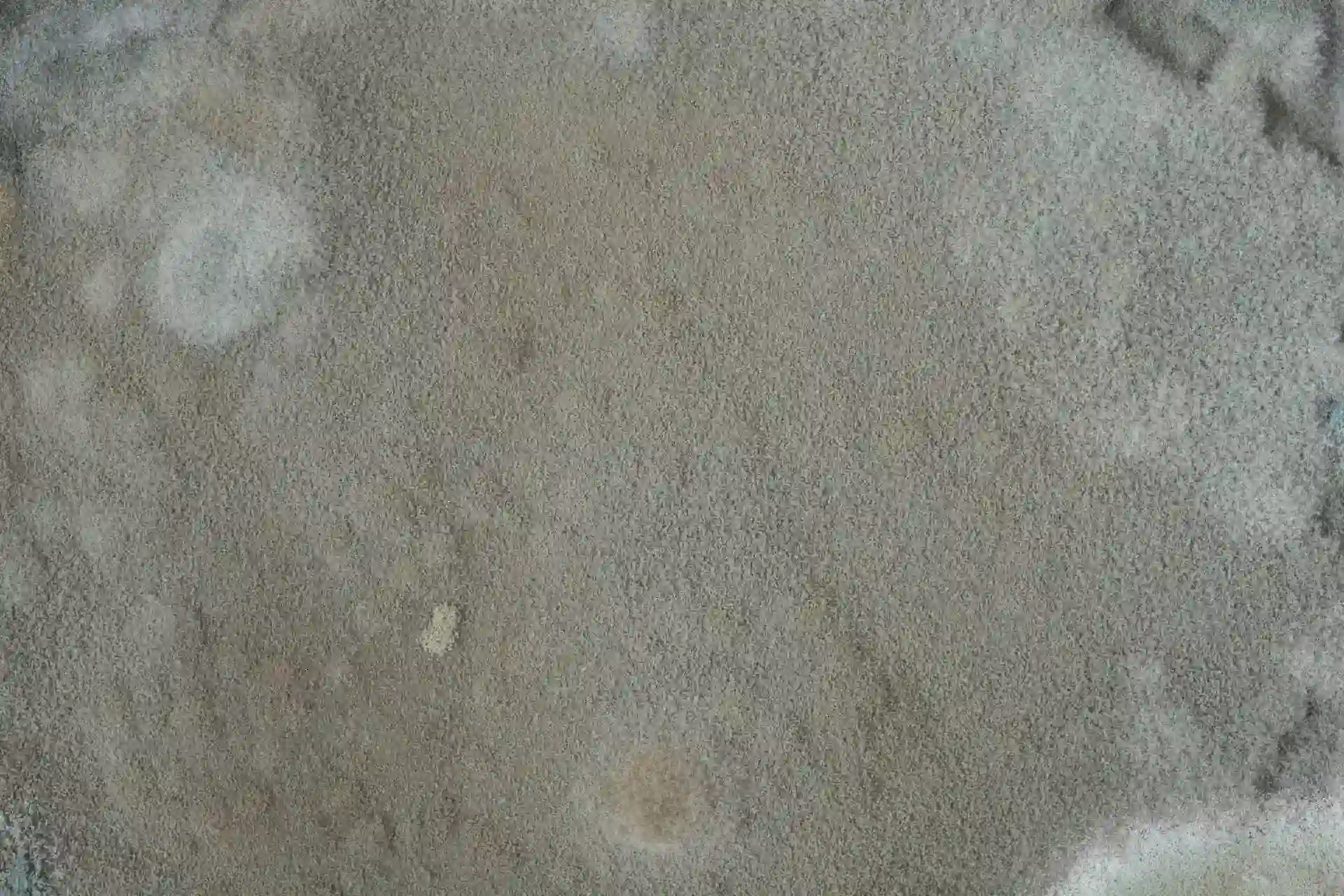
The appearance of white mould can vary, as the composition of each colony can differ depending on the particular species of fungus. Generally, white mould on walls or other surfaces is a white to light grey colour and has a fuzzy or powdery texture.
In some cases, it can appear slimy or have filaments that look like cobwebs, particularly in very high-humidity areas. Over time, white mould can change colour and may even begin to appear black. Whatever the colour of your mould, it’s important to remove it properly as swiftly as possible after you discover it.
White mould vs black mould
Both black and white moulds thrive in areas of your home with high levels of moisture. Both grow most effectively on wood and plasterboard surfaces, like furniture and walls. However, white mould tends to grow on textiles more than black mould, including leather.
The most obvious difference when comparing white mould vs black mould is their appearance – you can spot black mould by its dark green or black colour, which often means it is noticed sooner. However, colour identification doesn’t tell you which species of mould is growing in your property.
Black mould is also more harmful to your health, with exposure causing a range of serious symptoms, including body aches, nosebleeds and memory loss. It is important to remove mould as quickly as possible with a professional mould removal service, whatever its colour. Without proper testing, it is very difficult to tell how harmful specific mould colonies are.
White mould vs efflorescence
From a distance, it may appear that you have fluffy white mould on walls in your home, but close up, it may not resemble typical colonies. If this is the case, you may have efflorescence on your walls.
Efflorescence is a non-harmful deposit of salts migrating to the surface of building materials such as concrete. While the presence of minerals themselves isn’t dangerous, it can be an indicator of a moisture problem, which could lead to mould issues later on.
Efflorescence is typically white, yellow or grey and appears as a powdery, fluffy residue, which is why it may be mistaken for certain kinds of white mould. This substance is not a living organism like mould, and can be relatively easily removed.
However, you shouldn’t ignore signs of efflorescence on your walls as this can indicate unseen moisture issues. Leaks, condensation and damp ingress can all cause efflorescence.
How to remove while mould on walls
While some kinds of surface-level mould are relatively easy to remove with DIY tricks, we recommend that white mould removal be handled by professionals. Colonies of this fungus are often well-established before they are found, resulting in deeper contamination.
At Ideal Response, we follow a six-step removal process, with an optional moisture and damp survey, to remove mould from your property swiftly and effectively. We are a trusted company for the professional removal of mould, ensuring your property is safe for occupation and preventing structural damage without delay. Our removal process includes:
- HEPA vacuuming to capture mould spores
- Targeted fungicidal treatment on affected areas
- Manual washdowns of walls and furniture
- ULV fungicide fogging to eliminate any remaining spores
- Final inspections to confirm mould has been eradicated
Failing to remove white mould thoroughly can result in it growing back swiftly or even contaminating other items in the case of textiles such as clothes. Ideal Response offers a comprehensive removal service for all mould types, protecting your property and your health with rapid removal at the source.
Where is white mould commonly found in the home?
White mould can proliferate in many different areas of the home, some more visible than others. This makes it important to regularly check for mould in damp areas you can access. Some areas where white mould can be commonly found include:
- In attics: Wood and insulation provide plenty of food for growing fungal colonies, particularly where there is a leak or condensation from changes in temperature.
- In basements: Damp, cool basements provide the perfect dark breeding ground for mould of all types, due to higher levels of condensation where warm air comes into contact with cold walls.
- On carpets: A wet carpet makes an ideal home for white mould following a flood or leak, resulting in a strong musty odour.
- In bathrooms: Bathrooms are prime spots for mould due to the damp conditions, particularly in poorly ventilated bathrooms that experience large amounts of condensation.
- In garages: Like basements, garages often attract mould, especially as external buildings that are less thoroughly checked than the rooms within your home.
- On clothing: White mould, in particular, grows on textiles and leathers in damp, dark spaces such as wardrobes and built-in cupboards.
- On wood: From hardwood floors to furniture, wood in your home is a strong target for white mould spores as it has plenty of material for them to consume.
Choose Ideal Response for mould removal
If you have found white mould in your property, it’s important to remove any colonies and spores as soon as possible. Ideal Response can help with professional mould removal services, ensuring your property is mould-free and safe for habitation.
We offer a range of comprehensive water damage restoration services, including basement flooding, general flooding, sewage cleaning and specialist drying. Our team of qualified BDMA & IICRC-certified specialists has the necessary experience to effectively eradicate mould and restore your property following flooding or damp issues. Contact us today to start the mould removal process or call us on: 0800 088 4170.
Call our emergency response team 0800 088 4170
Frequently asked questions about white mould
What causes white mould on walls?
White mould on walls is typically caused by excess moisture combined with poor ventilation. Mould spores are naturally present in the air and can enter homes through windows, doors or ventilation systems. When these spores land on damp surfaces such as plasterboard, wood or wallpaper, they can grow and form visible colonies. Common moisture sources include condensation, leaking pipes, rising damp and water damage.
What does white mould on walls look like?
White mould usually appears as white, off-white or light grey patches with a fluffy, powdery or fuzzy texture. In some cases it may resemble cobwebs or cotton-like growth on walls, ceilings or furniture. Over time, white mould colonies may darken or change colour as they mature.
Is white mould dangerous?
Yes, white mould can pose health risks and property damage if left untreated. Exposure to mould spores can cause respiratory irritation, allergic reactions, coughing, sneezing and skin irritation. Certain mould species can also produce mycotoxins, which may lead to more serious health issues for vulnerable individuals such as children, the elderly or those with weakened immune systems.
Why is white mould growing on my walls?
White mould grows on walls when there is persistent dampness and organic material for mould to feed on, such as plasterboard, wood or wallpaper. Homes with high humidity, poor airflow or unresolved leaks are particularly susceptible. Areas behind furniture, around windows and in poorly ventilated rooms are common locations.
What is the difference between white mould and efflorescence?
White mould is a living fungus, while efflorescence is a harmless salt deposit left behind when water evaporates from building materials such as concrete or brick. Efflorescence usually appears as a dry, powdery residue and does not grow or spread like mould. However, its presence can still indicate a moisture problem that may eventually lead to mould growth.
Where does white mould commonly grow in homes?
White mould can develop in many areas where moisture accumulates, including:
- Bathrooms with heavy condensation
- Basements and cellars with damp conditions
- Around windows and window frames
- Behind furniture placed against external walls
- In attics with poor ventilation
- On carpets, fabrics and wooden furniture
These areas provide the humidity and organic material mould needs to grow.
Can you remove white mould from walls yourself?
Small areas of surface mould may sometimes be removed with household cleaning products. However, DIY removal often fails to address the root moisture problem, allowing mould to return quickly. Professional mould remediation ensures spores are properly removed, contaminated materials are treated safely and the underlying moisture issue is resolved.
How do professionals remove white mould?
Professional mould removal typically involves a multi-step remediation process designed to eliminate spores and prevent regrowth. This may include HEPA vacuuming, specialist fungicidal treatments, surface cleaning, fogging to remove airborne spores and a final inspection to confirm the mould has been fully eradicated.
How can you prevent white mould from returning?
Preventing white mould involves reducing moisture and improving ventilation in your home. Effective steps include:
- Using extractor fans in kitchens and bathrooms
- Opening windows regularly to improve airflow
- Repairing leaks or damp issues quickly
- Using dehumidifiers in high-humidity rooms
- Keeping furniture slightly away from external walls
Addressing moisture problems is the most important step in preventing mould growth.
When should you call a professional for white mould?
You should contact a professional mould removal specialist if:
- The mould covers a large area
- It keeps coming back after cleaning
- It appears after flooding or water damage
- It is causing health symptoms in occupants
- The underlying moisture source is unknown
A professional inspection can identify the cause of the problem and ensure the mould is removed safely and permanently.

Chris Hedges - Head of Marketing
With over 25 years' experience, Chris is adept at defining and driving strategy, while also enjoying hands-on operational delivery. He believes in an equal blend of creativity and analytical scrutiny, always finding inventive ways to achieve objectives, underpinned by evidence. Chris’s philosophies are simple: don't overcomplicate, always prioritise customer experience, and bend the rules just enough to cut through the noise and drive momentum and growth.