You walk into a room. Someone smoked there an hour ago. The windows are open, there’s a breeze, and it still smells. Sound familiar?
That lingering cigarette smell isn’t just unpleasant. It’s a sign that smoke particles have already settled into every porous surface in that room. The question most people have isn’t just why it smells. It’s how long they’re actually going to be dealing with it.
The honest answer depends on a few things: how much smoking happened, how well-ventilated the space is, and what surfaces are involved. This guide breaks it all down.
How long does cigarette smell last in a room?
In a well-ventilated room where a single cigarette was smoked, the airborne smell will typically clear within a few hours. In a room with poor ventilation, soft furnishings, and regular smoking, the odour can linger for days without cleaning, and potentially for months or years if the residue is left untreated.
That range matters, because most people underestimate how long they’re actually dealing with. The visible smoke disappears within minutes. The smell that follows it is a different problem entirely.
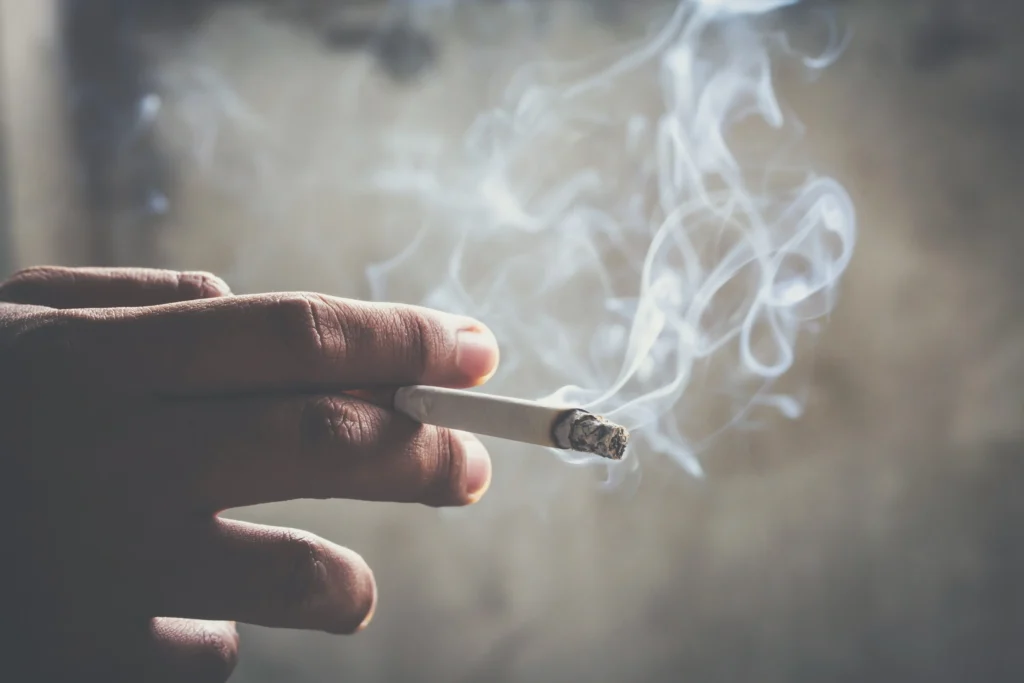
Cigarette smoke contains over 7,000 chemicals. Many of them are tiny enough to pass straight through fabrics, carpets, and painted walls. In a room with good ventilation and minimal soft surfaces, the smoke might clear within a few hours. In an enclosed space with lots of fabric and poor airflow, the smell and residual chemicals can linger for days or longer.
What most people don’t account for is third-hand smoke. This is the toxic residue that settles onto surfaces after the visible smoke has gone. Once it’s there, it doesn’t just evaporate. It continues to emit odour as long as it’s present, which brings us to why properties can still smell of cigarettes years after anyone last lit up.
Why does cigarette smell last so long?
The science behind this is well established. According to the Thirdhand Smoke Resource Center, studies have found high levels of third-hand smoke on surfaces more than five years after the last known cigarette was smoked. In one case, a home was cleaned and left empty for months after a smoker moved out, yet surface residue levels remained similar to those found in homes where people actively smoke.
The smoke particles themselves are part of the problem. They measure between 0.01 and 1 micron in size, small enough to penetrate deep into porous materials like drywall, plaster, and carpet fibres. Once they’re in, they react with other compounds in the air and actually become more harmful over time, not less.
This is also why painting over nicotine-stained walls doesn’t solve the problem. The residue sits in the substrate beneath the paint. During periods of humidity, it off-gasses back through the surface, and the smell returns.
How long does cigarette smell last on clothes, hair, breath and skin?
The duration varies by body part and surface, but none of them hold the smell for as long as a room does. On clothes, the smell typically lasts hours to a few days. On hair, a few hours to a couple of days. On breath, several hours. On skin, around two to four hours for most people. Fingers take longest due to direct contact with the cigarette.
Clothes can hold cigarette smell for several hours after brief exposure, or for days if worn in a heavily smoked environment. Washing removes the surface residue, though heavily contaminated fabrics may need multiple washes.
Hair holds odour for a few hours to a couple of days, depending on texture and length. Fine, porous hair tends to hold smell longer than coarser hair. Shampooing removes it effectively.
Skin typically releases cigarette odour within two to four hours through natural processes. According to SMOKO’s research summary, a heavy smoker may notice lingering scent on their skin for up to 24 hours. Cigarette breath can linger for several hours after smoking, depending on oral hygiene and how much was smoked.
Fingers hold smell the longest of any body part due to direct contact with the cigarette. Washing with warm water and soap, ideally with a small amount of baking soda, removes the residue effectively.
The pattern here is consistent: on the body and on washable fabrics, the smell is manageable and temporary. In a building, it’s a far more stubborn problem.
Does opening windows actually get rid of cigarette smell?
Ventilation helps with the airborne smoke from a freshly lit cigarette, but it doesn’t touch third-hand residue. This is one of the most common misconceptions people have about dealing with cigarette smell.
Opening windows improves airflow, which dilutes and disperses the particles still suspended in the air. For a single cigarette in a well-ventilated room, that may be enough to clear the smell within a few hours. For a room where someone has smoked regularly, the airborne element is the smallest part of the problem.
The residue in the walls, carpet, and furniture will continue to off-gas regardless of how long the windows are open. You can air a room out for a week and still smell cigarettes the moment the windows are closed, because the source of the smell hasn’t been addressed.
This is the same reason air fresheners and scented candles don’t solve the problem. They mask the smell temporarily, but the moment they wear off, the residue carries on doing what it was doing before.
For a full breakdown of what actually works, our smoke odour elimination guide covers the DIY methods that can genuinely reduce the smell, and where their limits are.
Will cigarette smell in a house ever go away on its own?
According to Hunker’s guide on smoke residue, smoke residue can become embedded in surfaces for weeks, months, or even years, and it will continue to smell for as long as it’s present. It’s not possible to remove it simply by airing out the space, vacuuming, or using an air freshener.
What does change it is physical removal. That means cleaning walls, ceilings, and hard surfaces with the right products, steam cleaning or replacing soft furnishings, and in more severe cases, using professional-grade treatments like ozone generation or hydroxyl technology to neutralise the compounds at a molecular level.
The severity of the problem depends on how long and how heavily a property was smoked in. A room where someone smoked occasionally for a few months is a very different situation from a property where someone smoked a pack a day for twenty years. In the latter case, the residue will be embedded not just in the décor but in the structure itself, including the drywall, insulation, and ventilation system.
When is professional odour removal the right call?
There are specific situations where professional treatment is the only realistic route to a clean result.
Buying or selling a property. A home with a cigarette smell will put buyers off and affect the asking price. If you’re buying a property from a smoker, understanding the extent of the contamination before you commit is important. If you’re selling, addressing the smell before listing makes a meaningful difference. Our guide on cigarette odour removal for UK properties covers this in detail.
Tenancy disputes and end-of-tenancy cleans. Where a tenant has smoked in a property contrary to their agreement, the level of remediation required will often exceed what standard cleaning companies can achieve. A specialist service provides documentation and guaranteed results that hold up to scrutiny.
Properties with vulnerable occupants. If there are young children, elderly residents, or anyone with a respiratory condition in the property, the health case for proper remediation is clear. Third-hand smoke has been linked to respiratory issues and other adverse health effects, particularly in children.
When DIY has already failed. If you’ve cleaned, aired out, and repainted, and the smell has come back, that’s a reliable sign the residue is embedded deeper than surface cleaning can reach.
We’ve worked with clients across the UK in exactly these situations. One client in Essex came to us after inheriting a one-bedroom flat where daily indoor smoking had taken place for over thirty years. Standard cleaning and repainting would not have resolved it. After professional treatment with BIOSWEEP technology, the property was fully restored to a clean, odour-free condition.
If you’re dealing with something similar, our professional smoke odour removal service is available across London, Kent, and the wider UK.
The smell won’t wait. Neither should you.
The key takeaways are straightforward. Cigarette smell from a single cigarette in a ventilated room will typically clear within hours. In a property where smoking happened regularly, the smell is embedded in the fabric of the building and will not go away without intervention.
Ventilation and DIY cleaning can reduce the intensity of the smell, but they don’t remove the source. The longer third-hand residue is left untreated, the harder and more expensive it becomes to address.
If you’re dealing with a persistent cigarette smell in a property, whether you’re a homeowner, landlord, or buyer, contact Ideal Response for a professional assessment. We’ll tell you exactly what you’re dealing with and what it takes to fix it properly.
Call us on 01622 926 505 or get in touch via our website for a no-obligation assessment.