Available 24/7 | 0800 088 4170

Available 24/7 | 0800 088 4170
Smoke smell gets into plaster, insulation, fabrics and ventilation, so cleaning surfaces alone rarely removes it. Ideal Response removes smoke odour after a fire, and from years of cigarette smoke, in homes and businesses across the UK. Most treatments take between 3 and 12 hours.
Coverage: UK-wide, including London, Kent and the South East

“Persistent cigarette-smoke odour can linger in residues on walls and ceilings. Treating the air alone leaves those deposits in place, allowing the smell to persist. In a property like this, the first step is to expose and thoroughly clean the affected surfaces, then tackle any remaining odour.”
Call the team any time.
Residue holding the smell is removed first, including nicotine and tar film from walls and ceilings.
Ozone breaks down odour molecules in the air and on surfaces. The area must be empty of people and pets during treatment.
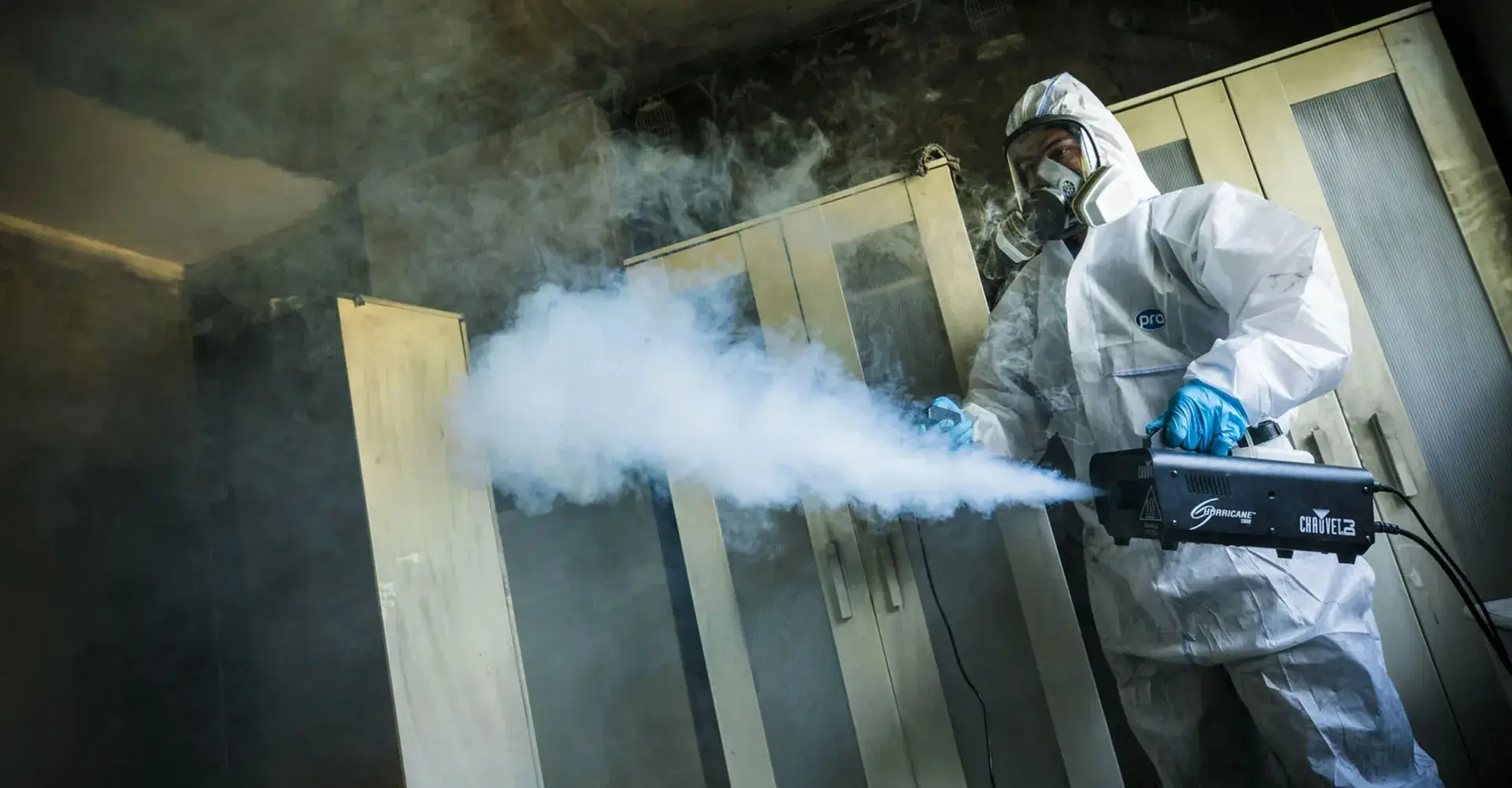
A deodorising fog reaches into porous materials the way smoke did.
Captures fine particles and odour-causing gases in the air.
Nicotine and tar build up over years as a sticky film that holds the smell. It must be cleaned off before odour treatment works, as on our Essex flat project.
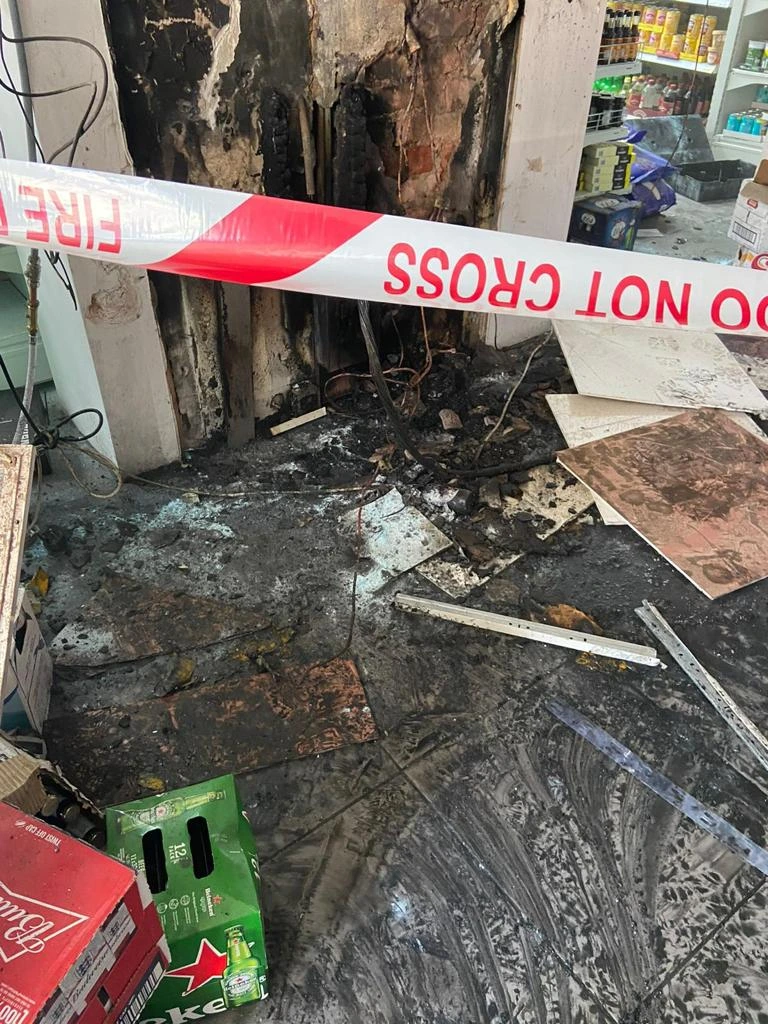
Smoke from burnt materials gets into walls, insulation and fabrics, so the smell remains after visible cleaning.
Burnt food and oil leave a greasy film in kitchens, restaurants and homes; thermal fogging is usually effective.
Heavier, more toxic smells from boilers, furnaces or industrial fires, which need filtration as well as treatment.
The source of the smoke decides how deeply the smell has penetrated and which treatment will work.
Each method works differently; most jobs combine two or more.
| METHOD | HOW IT WORKS | BEST FOR | LIMITATIONS |
|---|---|---|---|
| Thermal fogging | Penetrates porous materials like smoke did | Fire smoke in fabrics and soft surfaces | Short ventilation period afterwards |
| Ozone | Breaks down odour in the air and on surfaces | Persistent fire or tobacco smell in empty rooms | Rooms must be empty of people, pets and plants |
| HEPA and carbon filtration | Captures particles and odour gases | Running alongside cleaning, occupied areas | Slower on its own |
| Cleaning residue | Removes the source of the smell | Always needed first, especially for nicotine | None |
| Situation | Typical time on site |
|---|---|
| Single room | 3 to 6 hours |
| Whole flat or house | 6 to 12 hours |
| Heavy long-term tobacco | Cleaning first, then treatment over 1 to 2 days |
Every job is different; you get a timeline after the assessment. Standards we work to: HSE guidance on ozone use, COSHH.
We remove smoke odour and the residue that causes it. We do not redecorate: heavily nicotine-stained walls may still need a stain-blocking primer and repainting. Soft furnishings that hold smoke deeply can sometimes only be replaced, not treated.
Cost depends on the size of the area, the type of smoke and how long the smell has been there. We can often quote from photos; larger jobs need a visit.
Professional smoke odour elimination services use a combination of advanced tools and methods to neutralise smoke at a molecular level. These techniques are designed to seek out and destroy odours wherever they’re hiding.
| COST FACTOR | WHY IT MATTERS |
|---|---|
| Size of the area | A single room costs less than a whole building |
| Type of smoke | Long-term tobacco residue usually needs more cleaning than a recent fire smell |
| Soft furnishings | Fabrics may need separate cleaning or replacing |
| Ventilation | Systems that recirculate the smell need cleaning too |




| Technique | Benefit |
|---|---|
| HEPA vacuuming | This is the crucial first step. While a normal vacuum will just blow fine soot particles back into the air, a HEPA vacuum is designed to capture 99.97% of these tiny particles. This safely removes the loose, odour-causing soot from all surfaces, including walls, ceilings, and floors. |
| Ozone treatment | Ozone is a powerful gas that breaks down odour-causing molecules at their source. It’s often used in a sealed room to neutralise smells in hard-to-reach places like inside walls and furniture. BioSweep is an advanced, safer alternative that uses a special light and gas to attack and eliminate odours and harmful bacteria. Both are highly effective for fire, cigarette smoke, or protein-based odours. |
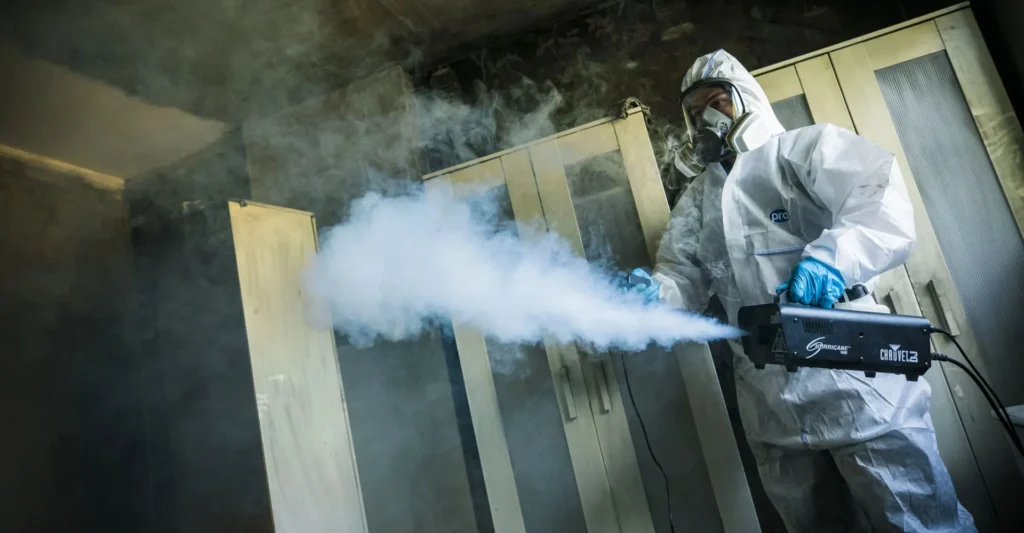
| Thermal fogging | This method is designed to mimic how smoke travels. A professional technician uses a special machine to heat and release a deodorising fog. This fog penetrates every crack, crevice, and porous surface, just like the original smoke, but it actively neutralises the odour particles it comes into contact with. |
For an emergency, call us. Otherwise send a few details about the smoke odour issue with photos of the affected space, and the team will get back to you.
Available 24/7
We’ll use your details to respond to your enquiry. View our Privacy Policy