Available 24/7 | 0800 088 4170

The remediation was split into distinct stages so that airborne particulate, settled soot and residual odour were not treated as the same problem. Physical contamination was addressed first; odour neutralisation followed only after the soot-cleaning work had been completed.
Dustcontrol Air Cube 500 air scrubbers were installed on the shop floor for the duration of the structural and contents cleaning. Their role was to help control airborne particulate generated or disturbed during remediation rather than to act as a substitute for physically cleaning contaminated surfaces.
This was particularly relevant in a large open retail environment where soot had affected multiple surface types and could be disturbed as technicians progressed through the unit.
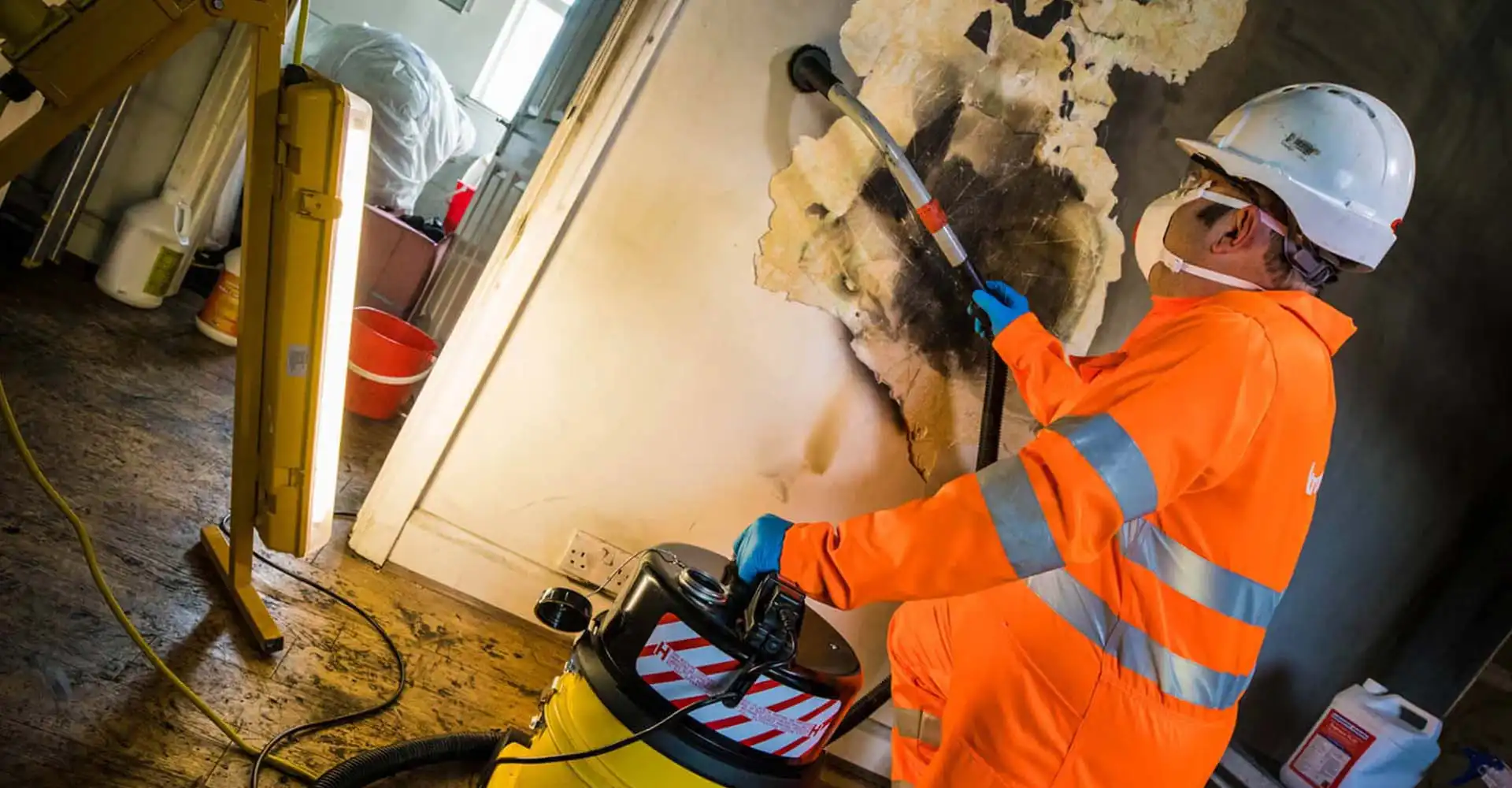
HEPA-filtered vacuuming was used to remove fine, loose soot before more detailed cleaning began. Bagged and boxed items from the stockroom were individually cleaned using a Numatic HEPA HZ570-2 vacuum, while HEPA equipment was used throughout the works to reduce the risk of contaminant migration into unaffected areas.
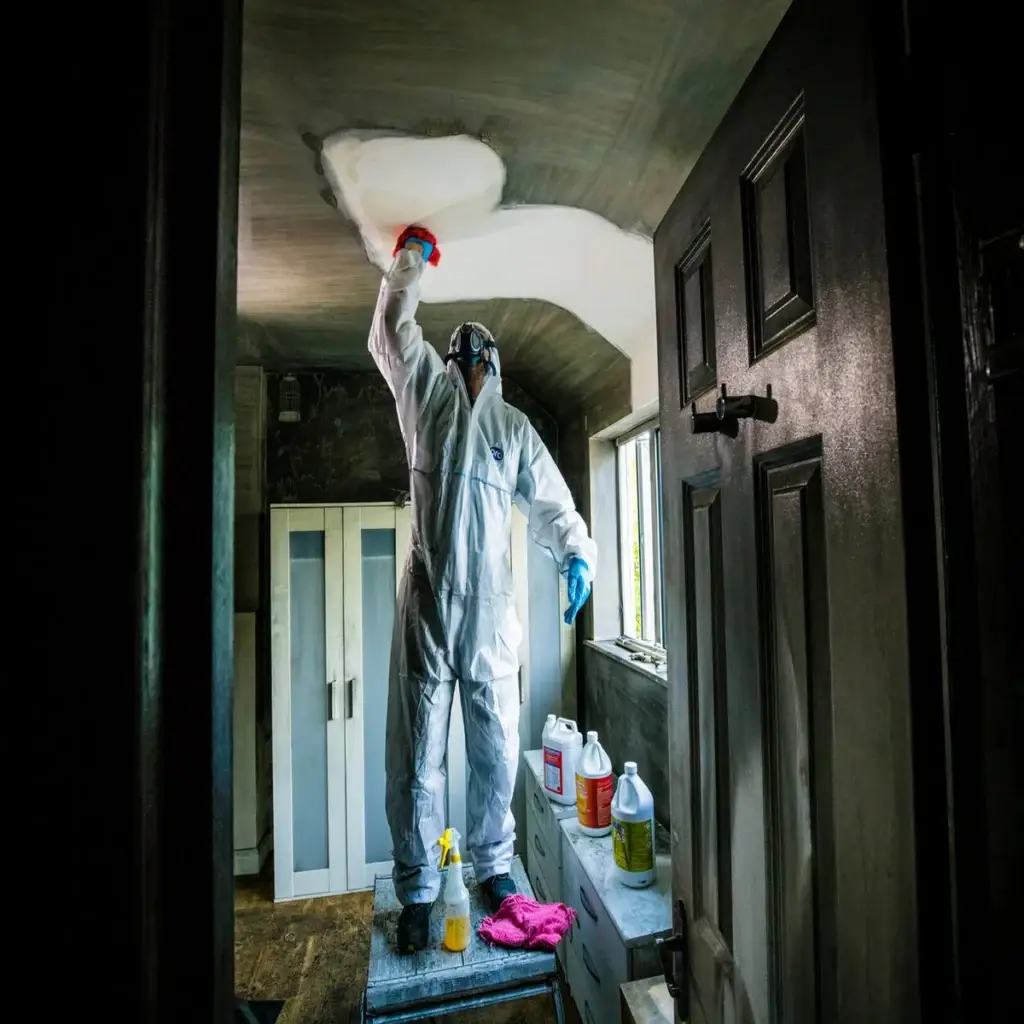
The 60m² stockroom received a structural smoke-damage clean. UBIK 2000 and Viro-SOL were used within a multi-stage wash, dwell, cleanse and rinse process, with a pH 10-12 alkaline solution used to counter acidic soot residues. Soot sponges provided a dry pre-clean on suitable delicate surfaces before wet treatment, while detailed manual cleaning allowed technicians to work methodically around individual surfaces, edges and fittings.
This physical cleaning stage was fundamental. Smoke odour treatment could address the remaining smell, but it could not replace the removal of soot deposits that were still present on the structure and contents of the retail environment.
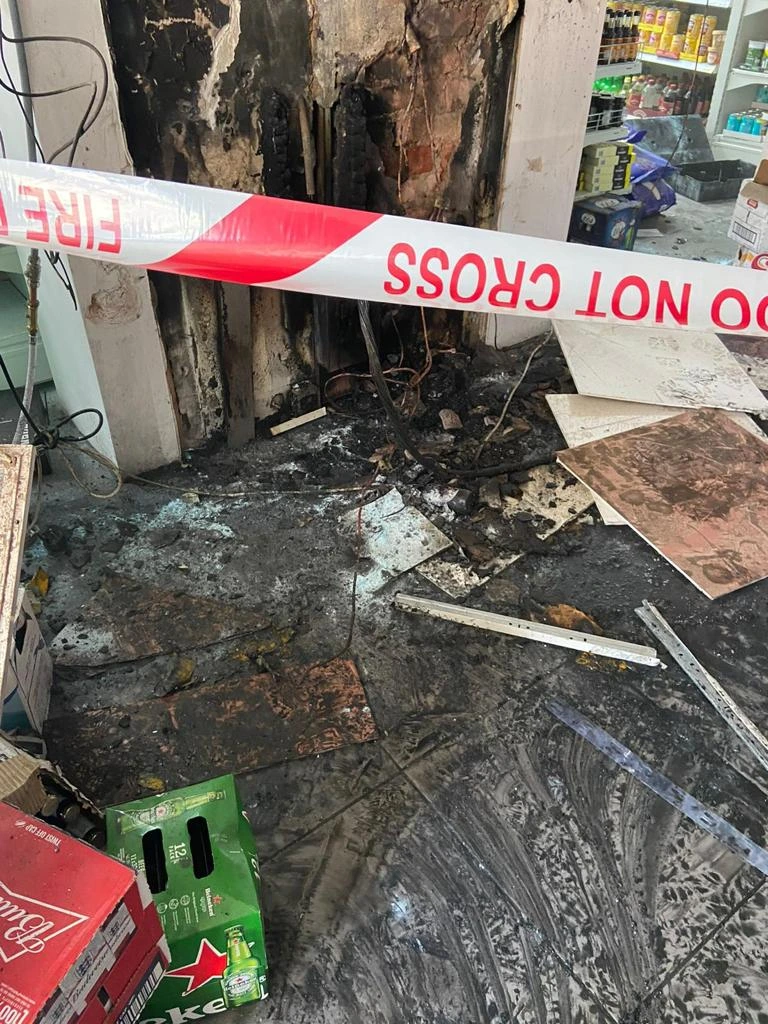
Although the fire started in the adjoining property, its effects travelled into the retail store. Soot had settled across the shop floor and stockroom, while a persistent smoke odour remained throughout the unit.
That created two related but different problems. The deposited soot needed to be physically removed from the building surfaces, while the residual smoke odour required a further treatment stage once the source contamination had been dealt with.
The retailer's own general cleaners had already attended before Ideal Response was brought in. That meant the specialist scope was not a first-pass general clean: it focused on controlling airborne particulate, removing remaining soot contamination from the structure and stockroom contents, checking selected electrical items for non-visible chloride contamination, and then treating the residual smoke odour.
Selected electrical items in the stockroom were also chloride-swabbed to check for contamination that was not necessarily visible on the surface. This added an assessment step alongside the physical cleaning, helping the team identify whether fire-related residues had affected items beyond what could be judged by appearance alone.
Once the structural and contents cleaning had been completed, the team moved to the separate smoke-odour treatment stage. Ozone generators were deployed across the stockroom and shop floor, treating an overall volume of approximately 1,200m³. The treatment environment was controlled while the equipment was operating.
The important distinction was the order of work: ozone treatment followed the physical removal of soot rather than being used in place of it. Removing deposited contamination first reduced the source material within the unit, allowing the subsequent treatment to focus on the residual smoke odour.
The soot cleaning and smoke-odour treatment were completed over the weekend, allowing the retailer to progress towards reopening without a prolonged specialist-cleaning programme.
The finished response addressed both sides of the fire impact: visible and deposited soot was physically cleaned from the affected retail surfaces, while the persistent smoke odour was treated separately after the cleaning stage.
This sequencing is what made the response more than a surface clean. The team first removed the contamination that could be physically recovered and then addressed the residual odour within the treated environment.