Available 24/7 | 0800 088 4170

The roof fire had occurred in May. By late August, the bedroom and en-suite were still affected by soot and had been kept out of use while the homeowner waited for the insurance position to be resolved and arranged his own specialist contractor.
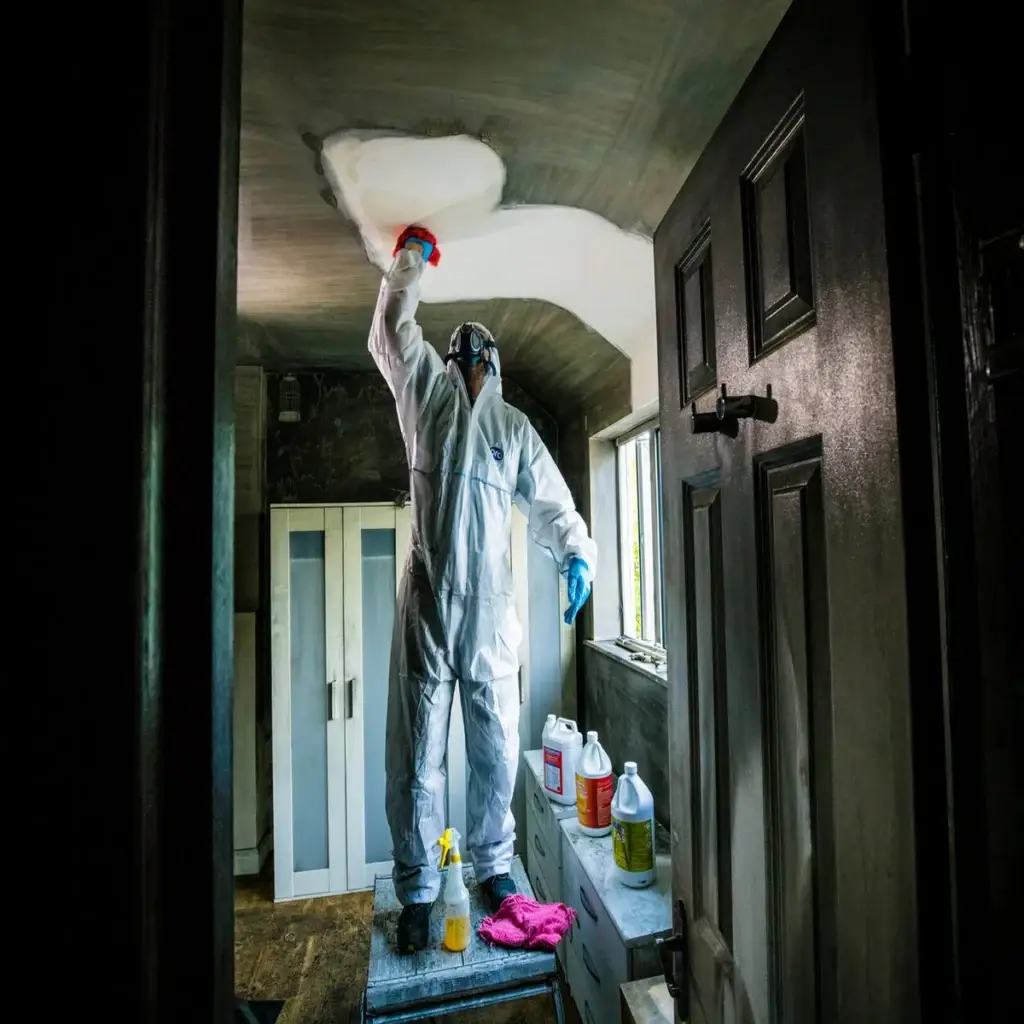
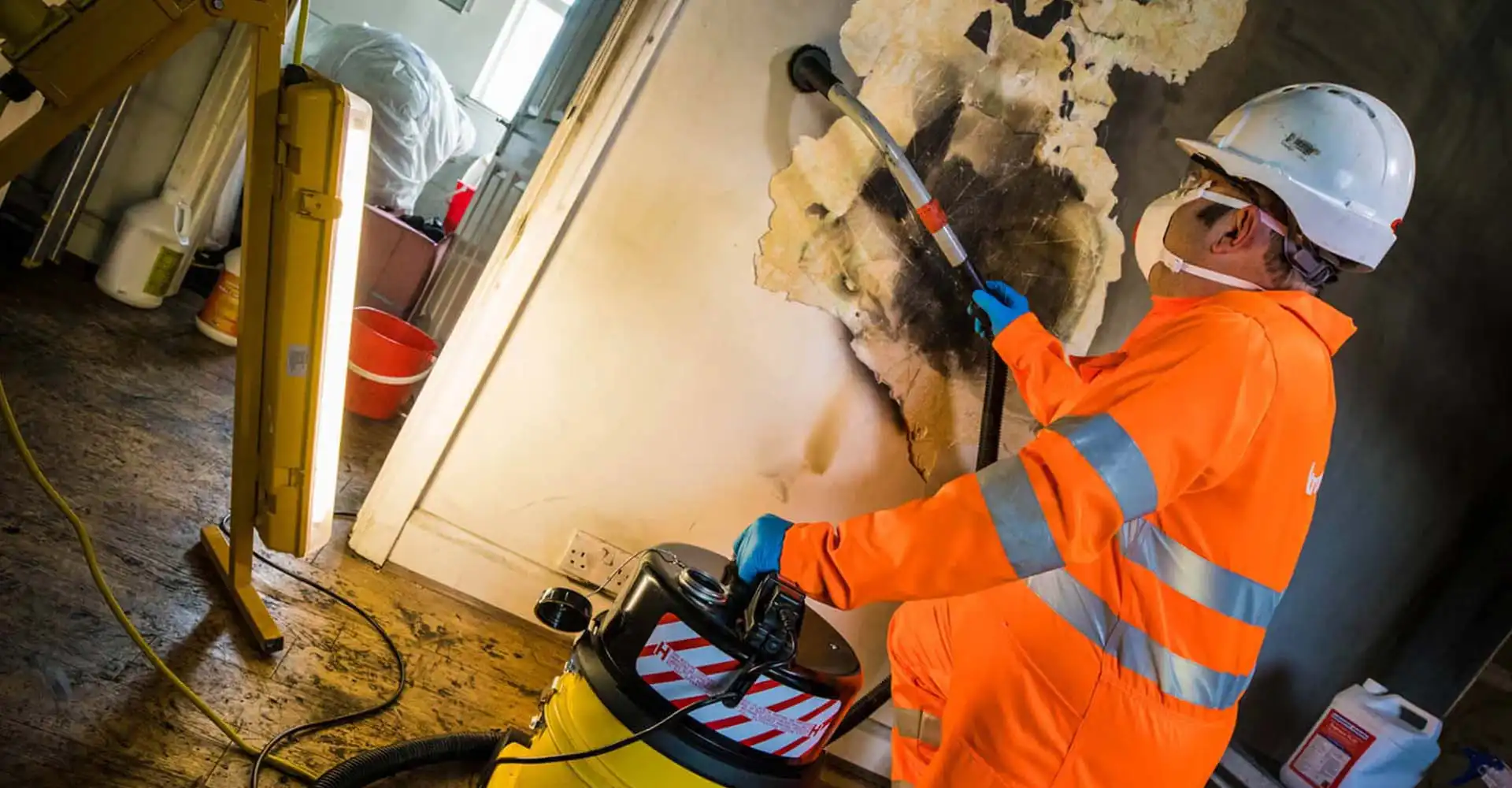
The immediate objective was practical: remove the soot contamination from the affected structure so the rooms could move on to redecoration. This was a structure-cleaning project rather than a contents-restoration job, and painted surfaces were being cleaned to prepare them for subsequent decorative work by another contractor.
Because smoke and soot can travel beyond the area where the heaviest deposits are visible, the quoted response included an on-site assessment before the team committed to the original two-room scope.
The technicians started at the area of greatest contamination and worked outwards through the property. That approach established the extent of the soot spread before the cleaning programme was finalised.
The bedroom and en-suite were affected as expected, but the staircase had also become contaminated. Leaving that area untreated would have meant completing the two rooms while soot residues remained elsewhere on the same circulation route.
The finding changed the programme from the planned single attendance. The team began the cleaning on day one, explained the additional requirement to the homeowner and returned the following day with the access equipment needed to complete the staircase and its high-level surfaces.
The length of time between the May fire and the August clean added another complication. Soot had remained on the affected surfaces for several months, and some areas showed substantial residual staining.
That distinction matters in fire restoration. Removing soot residue does not necessarily return every underlying finish to its pre-fire appearance. Painted surfaces can be left clean but still require repainting, particularly where smoke residues have interacted with the coating or staining has developed over time.
The team's role was therefore to carry out the specialist soot clean thoroughly, identify the full affected area and leave the structure ready for the next stage of the homeowner's recovery rather than disguising staining with an unsupported promise of complete cosmetic restoration.
The staircase became the defining technical challenge. Its high ceiling meant the additional soot contamination could not be safely or thoroughly addressed using the same access arrangements as the bedroom and en-suite.
The team returned with a tower to provide controlled access to the high-level staircase surfaces, allowing the additional area identified during assessment to be incorporated into the cleaning programme.
By the end of the second day, the documented soot cleaning had been completed across the bedroom, en-suite and staircase, leaving the cleaned painted surfaces ready to move on to redecoration.