Available 24/7 | 0800 088 4170

The most severe fire damage affected the loading bay, CCTV room and bakery at the rear of the supermarket. Brickwork, electrical equipment, cabling, furnishings and flooring were all badly affected, while smoke contamination extended beyond the areas directly damaged by the fire.
Standing water from the firefighting operation added another layer to the recovery. Before smoke remediation and refurbishment preparation could progress, the building also needed a drying strategy appropriate to the conditions on site.
As a result, the project required several disciplines to work in sequence: making the working area accessible, removing water and moisture, stripping out unsalvageable materials, treating smoke and soot residues, dealing with regulated refrigeration equipment and preparing the remaining structure for the next stage of reinstatement.
A full risk assessment was completed before the main works began and safety precautions were put in place to allow controlled access to the affected area.
With services disconnected, temporary infrastructure was needed to keep the programme moving. The response included scaffolding, a generator and temporary lighting so that teams could work effectively while the damaged areas were being cleared and remediated.
Desiccant dehumidifiers were installed as part of the drying programme. Remote monitoring allowed the technical team to follow moisture conditions, water-vapour removal and equipment performance while drying progressed.
Once the working environment had been established, damaged elements were removed to expose the surfaces that needed further treatment. A lean-to outbuilding and the breeze-block CCTV room were dismantled and removed, while partition walls and fire-damaged timber were stripped back.
Floors and walls were cleared of damaged material so that the remaining structure could be accessed for smoke and soot remediation. This was an important transition in the programme: heavily damaged materials that could not be retained were removed first, leaving the salvageable structure ready for specialist cleaning.
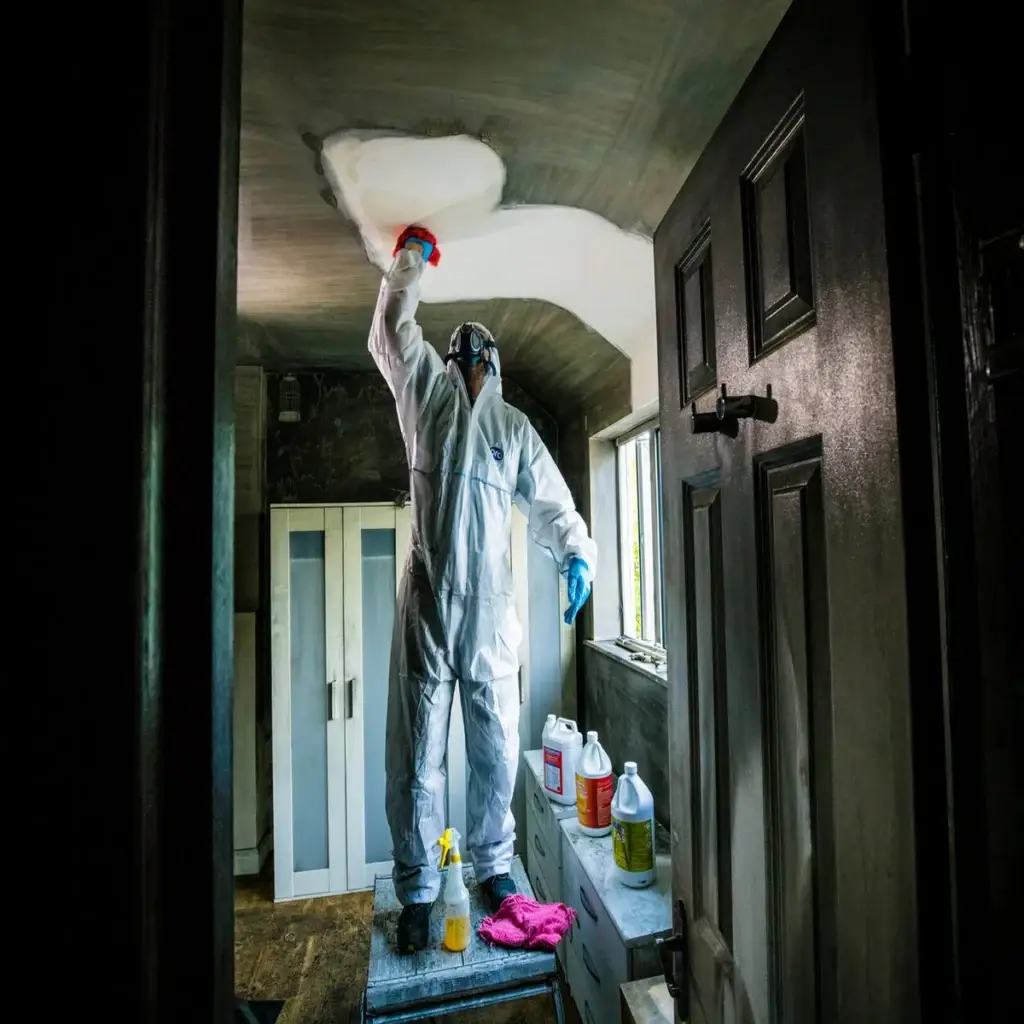
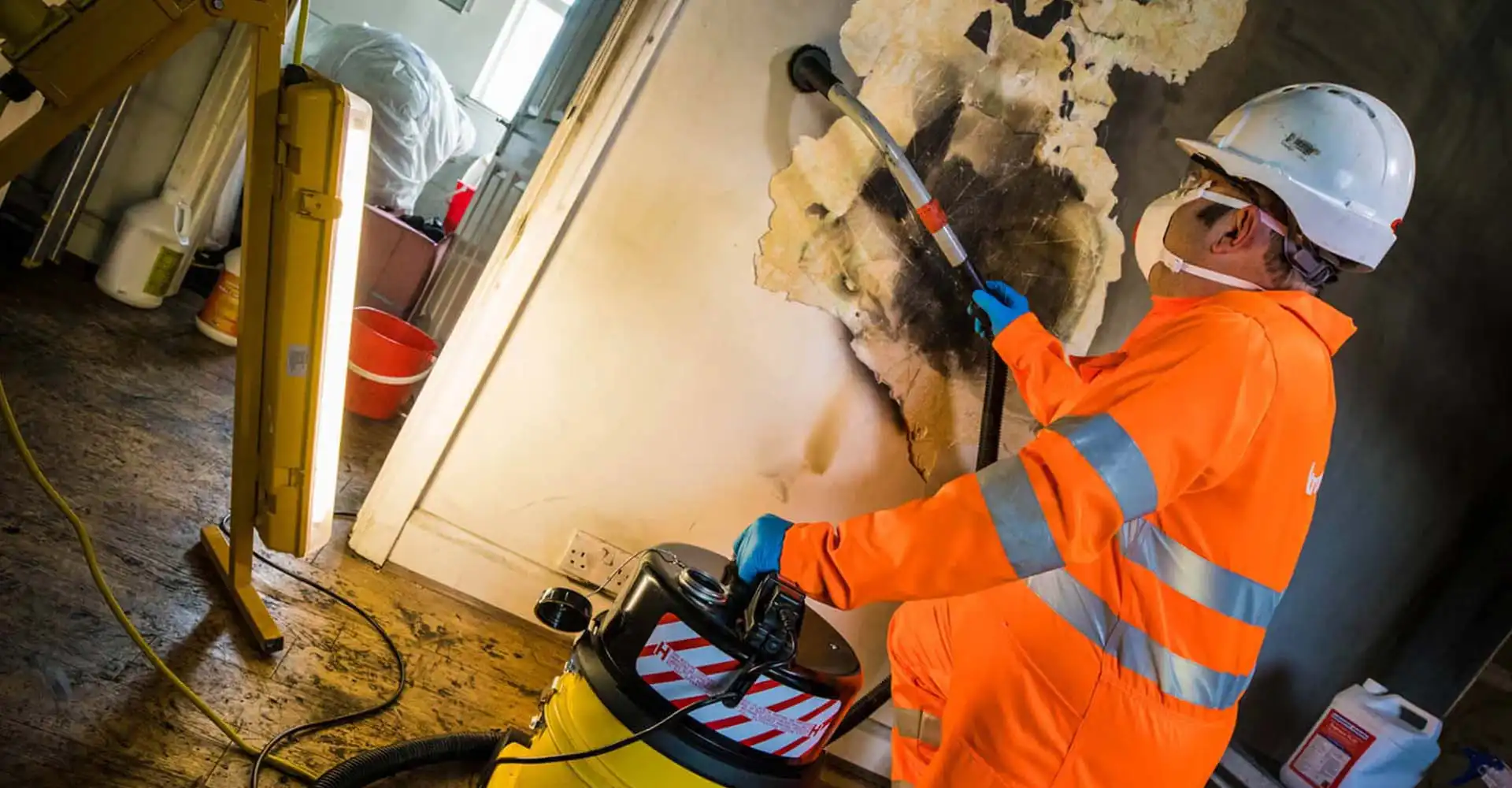
Soda blasting was selected for the smoke and soot cleaning stage. The process uses compressed air to propel sodium bicarbonate at relatively low pressure, allowing smoke staining, soot and char to be removed from affected surfaces without relying on aggressive mechanical abrasion.
For this project, it provided a practical way to treat exposed structural surfaces after the strip-out stage. Sodium bicarbonate also has mild deodorising properties, supporting the wider smoke-remediation programme while the physical residues were being removed.
Physical cleaning was followed by a separate odour-control stage. A water-based, solvent-free bonding agent was applied to porous surfaces to create a barrier against residual smoke odour.
Keeping these stages separate was important. The priority was first to remove damaged materials and accessible soot and char; the sealing treatment could then address residual odour held within porous substrates as the supermarket moved towards refurbishment.
The damaged areas also contained industrial refrigeration units using fluorinated greenhouse gases. These could not be treated as ordinary strip-out waste.
The units were dismantled and removed through the appropriate hazardous-waste route, adding a regulated disposal requirement to a project that already involved fire damage, standing water, structural strip-out and smoke remediation.
Ideal Response was one part of a wider recovery programme, working alongside other service providers rather than treating the supermarket as an isolated cleaning project.
That collaboration mattered because drying, strip-out, specialist remediation and subsequent refurbishment all depended on the previous stage being completed in the right order. Temporary power, lighting and access arrangements helped maintain progress while the damaged rear areas of the store were being prepared for the next contractors.
The remediation programme was completed within the client's three-week timeframe, leaving the affected areas prepared for refurbishment.
The outcome was not simply a cleaned surface. The project had moved through standing-water management and drying, removal of severely damaged structures and materials, specialist soot and char cleaning, odour sealing and controlled disposal of damaged refrigeration equipment.
For a retail environment with multiple trades and recovery activities running around the same programme, that sequencing was central to getting the damaged supermarket to the point where refurbishment could move forward.