Available 24/7 | 0800 088 4170

Although the remediation and drying installation were completed during the initial attendance, the project continued while the drying equipment remained in operation. The follow-up check and final visit made the drying programme part of the remediation strategy rather than an add-on after the mould treatment.
By combining the four-stage surface treatment, ULV fogging, external moisture-management measures and monitored structural drying, the response addressed both the visible mould and the damp conditions associated with the affected areas.
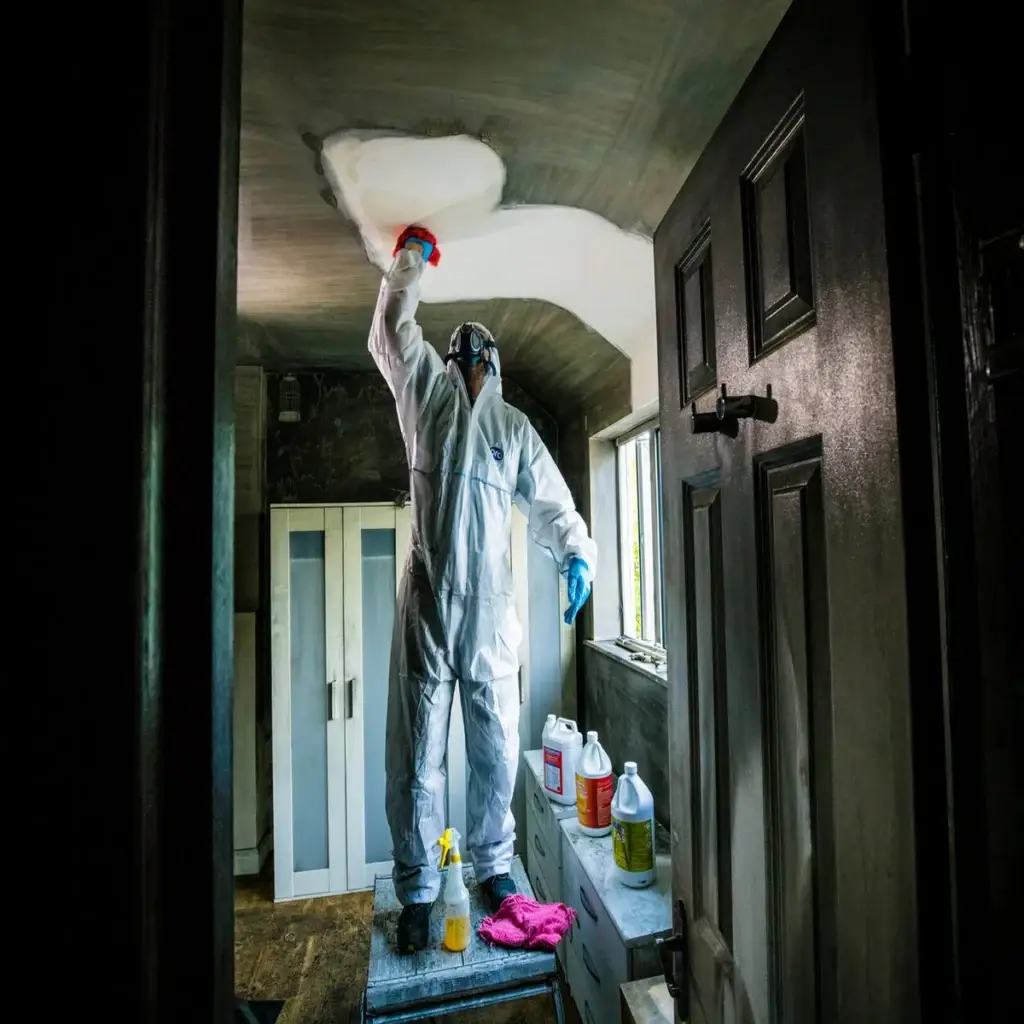
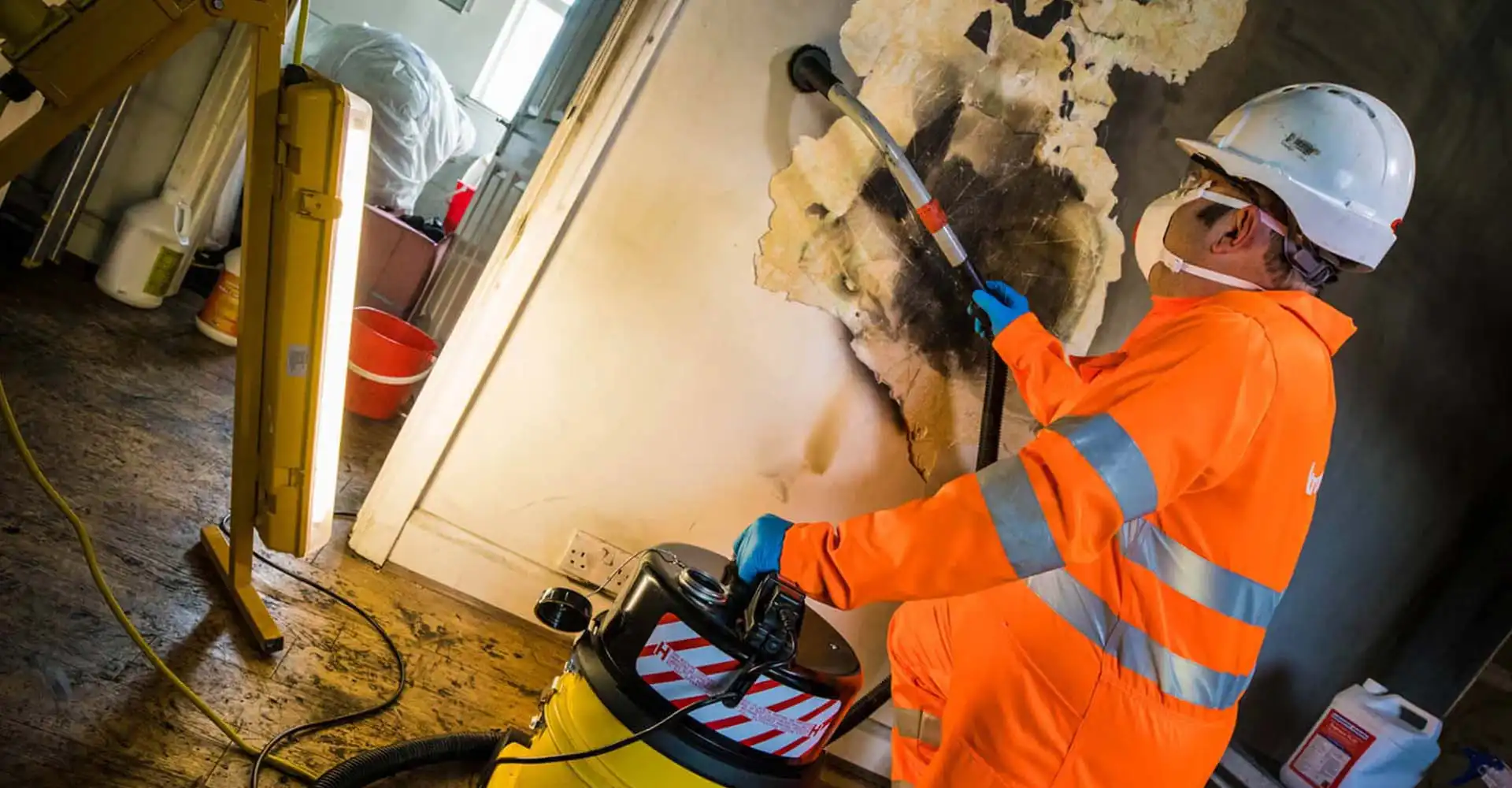
The team began with a structured four-stage remediation process across the affected areas. A HEPA-filtered vacuum was used as part of the surface-treatment process, followed by specialist cleaning of the affected materials.
The remediation was completed across the visible growth and the surrounding treatment zone, with the aim of addressing contamination on the surfaces rather than simply cleaning the most obvious patches.
The final stage included Ultra Low Volume (ULV) fogging. This dispersed the treatment as a fine mist through the affected areas to suppress airborne mould spores that could remain after the physical surface-cleaning stages.
The treatment plan needed to do two things: remediate visible microbial growth across the affected areas and reduce the excess moisture within the property. That meant the work could not finish when the surfaces had been cleaned.
Particular attention was given to corners and junctions, where visible growth was present. The treatment area extended one metre beyond the visible mould to provide broader coverage around the affected surfaces rather than stopping at the obvious edge of the growth.
The specification also recognised that mould treatment can leave residual staining even after the microbial growth has been addressed, so some areas could still require redecoration afterwards.
An important part of this project sat outside the rooms being treated. Plastic sheeting and loose bricks against the exterior walls were removed so air could circulate around the building fabric.
Leaving those materials in place could restrict evaporation and hold moisture against the external wall. Removing them gave trapped moisture a route to dry naturally and reduced the potential for moisture to migrate inwards and contribute to cold, damp areas internally.
This was a useful example of why mould remediation is not always confined to the surface where the growth can be seen. The surrounding moisture conditions also need to be considered if the treatment is to form part of a longer-term solution.
Following the initial remediation, the team installed one refrigerant dehumidifier and two air movers. The dehumidifier was used to remove moisture from the air while the air movers increased circulation across damp building surfaces, supporting evaporation and helping the drying process progress more evenly.
This monitoring stage was built into the scope so that drying could be reviewed rather than relying on a fixed period alone. If further drying had been required following the moisture assessment, the next stage could then have been recommended.