Available 24/7 | 0800 088 4170

The electrical fire left extensive soot residue across the warehouse structure and operational infrastructure. Contamination affected ceilings, walls, lighting systems, cable runs and other warehouse surfaces, while stored contents remained throughout the building.
That combination made access and contamination control central to the job. High- and low-level surfaces both required treatment, but the stock could not simply disappear from the work area. The client's team therefore moved contents in stages so technicians could gain sequential access to the structure.
High-level cleaning also required powered access equipment and tower systems, adding a working-at-height element to an already complex post-fire environment.
Environmental containment was used to separate the active remediation area from the section intended to remain available to the client. The objective was to reduce the risk of soot and cleaning activity transferring back into areas that had already been treated or were being used operationally.
The phased layout also gave the project a practical sequence: establish the work zone, coordinate stock movement, remove loose soot, complete the detailed surface clean, check the treated area and then progress into the next section.
With no usable site power or water, the restoration also had to be planned to operate independently rather than relying on the warehouse's normal utilities.
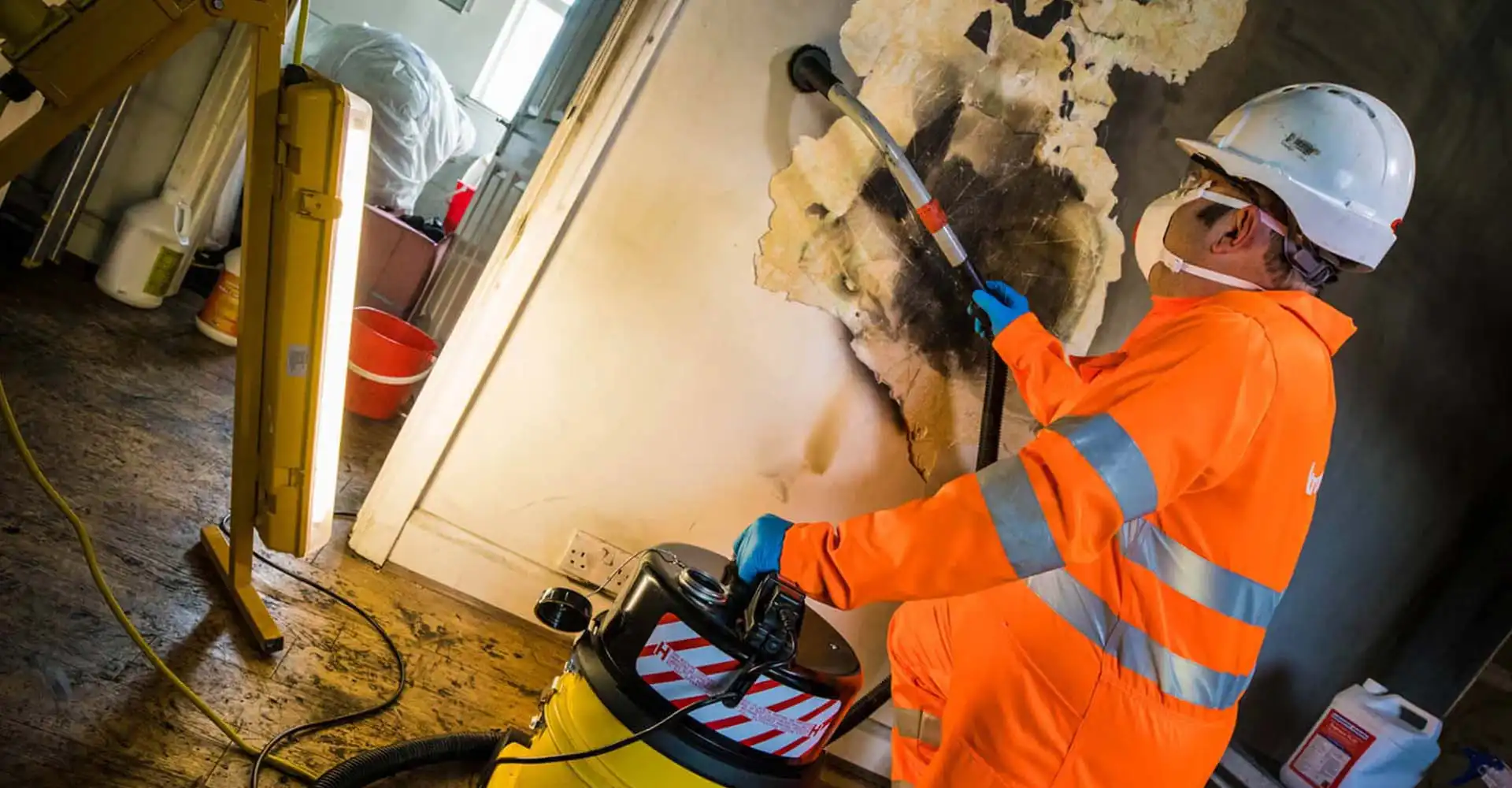
Cleaning began with comprehensive HEPA-filtered vacuum extraction. This targeted loose soot and particulate across ceilings, walls, machinery, cable runs and lighting systems before wet cleaning was introduced. Removing loose carbon first helped reduce the risk of spreading or smearing it during the later stages.
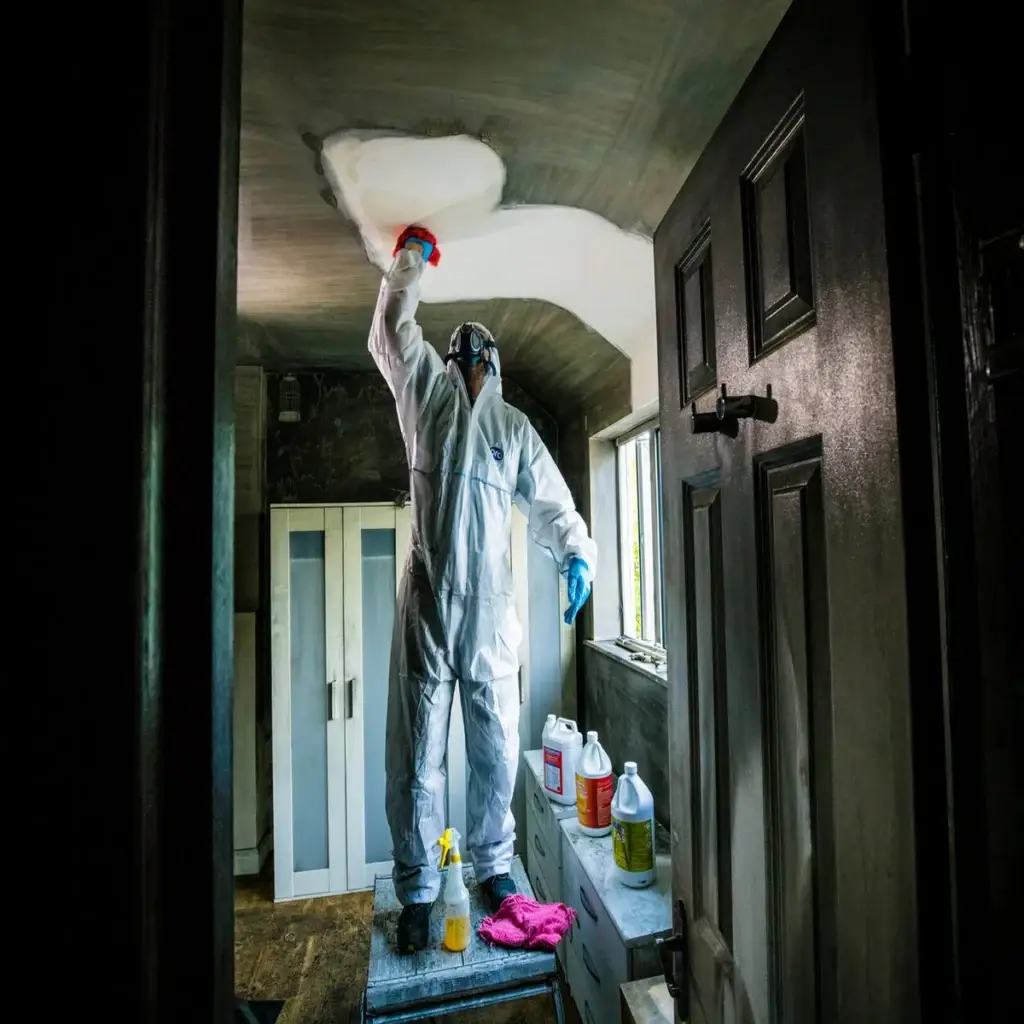
Technicians then carried out a controlled manual wash-down of contaminated hard surfaces using Virosol degreasing solution, green pads and non-abrasive wiping materials. The combination provided mechanical action where required while allowing the team to work carefully around different warehouse surfaces and services.
Powered access equipment and towers enabled the same structured process to be taken to high-level areas. That was important because contamination was not confined to easy-to-reach surfaces: soot had travelled onto elevated structural elements, lighting and cable infrastructure.
Once the loose soot and embedded residue had been treated, white-rag checks were used on cleaned surfaces to identify whether visible residue was still transferring. This provided a simple, practical quality-control step before an area was treated as complete.
The distinction is important: a white-rag check is a visual cleanliness check, not laboratory analysis. For this project it supported the team's inspection of the treated surfaces without overstating the result as independent analytical clearance.
The completed works produced a clear transformation across the treated warehouse areas. Project photography shows heavily soot-affected structural and operational surfaces before cleaning and substantially cleaner ceilings, walls and internal finishes after remediation.
Just as importantly, the restoration strategy was designed around the realities of the client's operation. Dividing the warehouse into sections, coordinating the movement of stock and working independently of the site's unavailable utilities meant the cleaning programme could progress without requiring every operational constraint to be resolved first.
The treated areas were left cleaned following the fire restoration programme, allowing Thames Group to move forward with the recovery of the warehouse and the return of operational space.