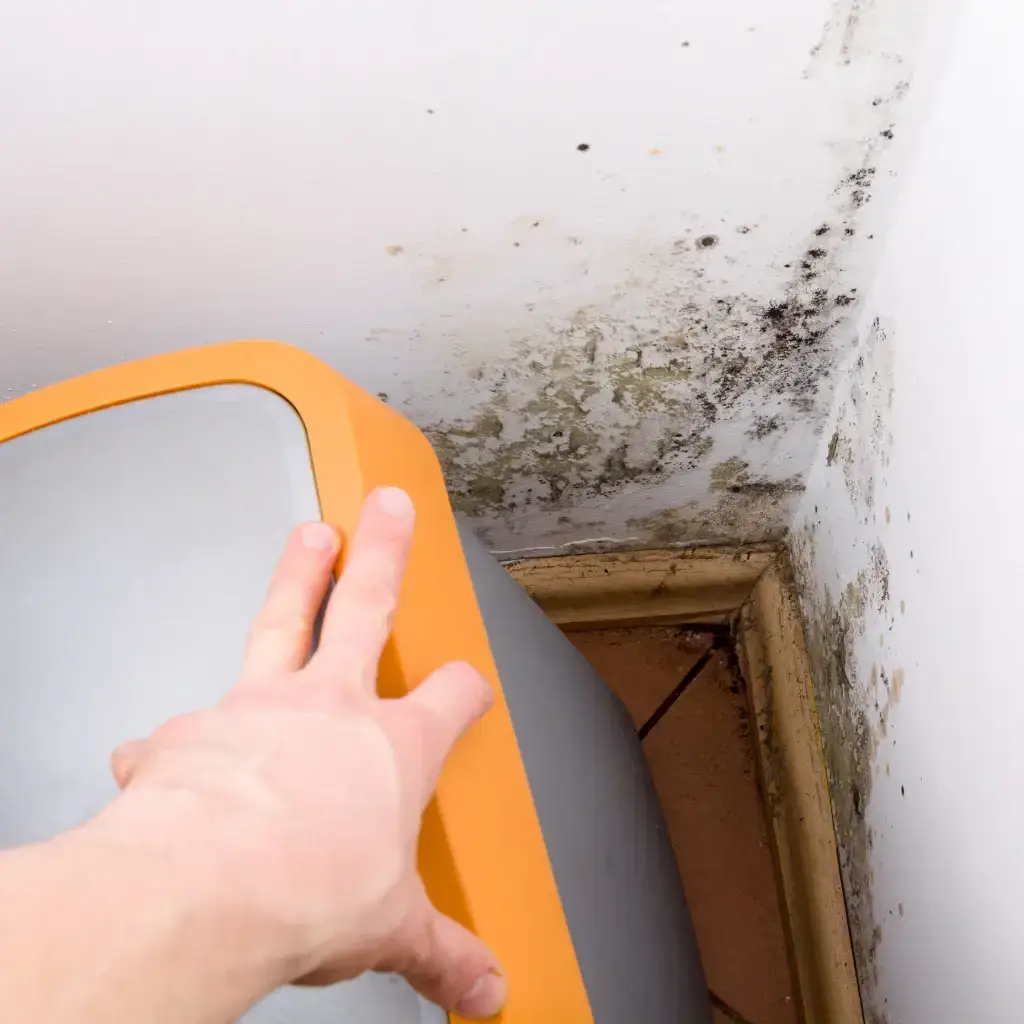
Mould is a pervasive problem in many UK homes, fuelled by our damp climate and issues like poor ventilation and rising humidity. While many types of mould are unsightly, the presence of black mould, often mistakenly called ‘toxic’, is especially concerning, carrying health risks and signalling a deeper moisture problem.
Tackling a small patch of mould yourself can seem straightforward, but it requires a careful, methodical approach to ensure you don’t just bleach the surface, but actively destroy the spores and prevent regrowth.
This guide provides a step-by-step process on how to remove black mould from non-porous surfaces safely, followed by crucial advice on when to call in the certified experts for professional mould removal.
Skip to:
Step 2: Addressing the moisture issues
Step 1: Preparation and safety first
Before you begin, safety is non-negotiable. Disturbing mould releases spores into the air, which can be inhaled and cause respiratory irritation. Toxic mould will also cause further health issues with prolonged exposure.
Ventilation: Open windows and doors to ensure maximum airflow, but close off the affected room from the rest of the house to prevent spores from spreading (e.g., close internal doors).
Personal Protective Equipment (PPE): Always wear gloves, safety goggles, and, critically, an N95 or P100 respirator mask to filter airborne spores.
Isolate the Area: Cover nearby porous items (like furniture or carpets) with plastic sheeting.
Step 2: Identify and address moisture sources
Surface cleaning is useless if you don’t fix what caused the mould in the first place. Mould needs moisture to thrive, so before touching the mould, identify the source:
Leaking Pipes: Check behind appliances and under sinks.
Condensation: Common in bathrooms, kitchens, and poorly insulated areas.
Penetrating Damp: Check for damaged exterior brickwork, missing roof tiles, or blocked guttering.
If you cannot immediately resolve the moisture source (e.g., a burst pipe or deep structural issue), do not proceed with DIY cleaning.
Should I get a professional damp survey?
A professional damp survey is an investment that should be considered if you’re suffering from black mould issues in your property. Yes, it’s an additional cost but you will quickly get far more back in return. Accurately determining the root cause of the mould growth and correctly treating it will ensure you have a mould free property moving forward.
Step 3: Choose your cleaning solution
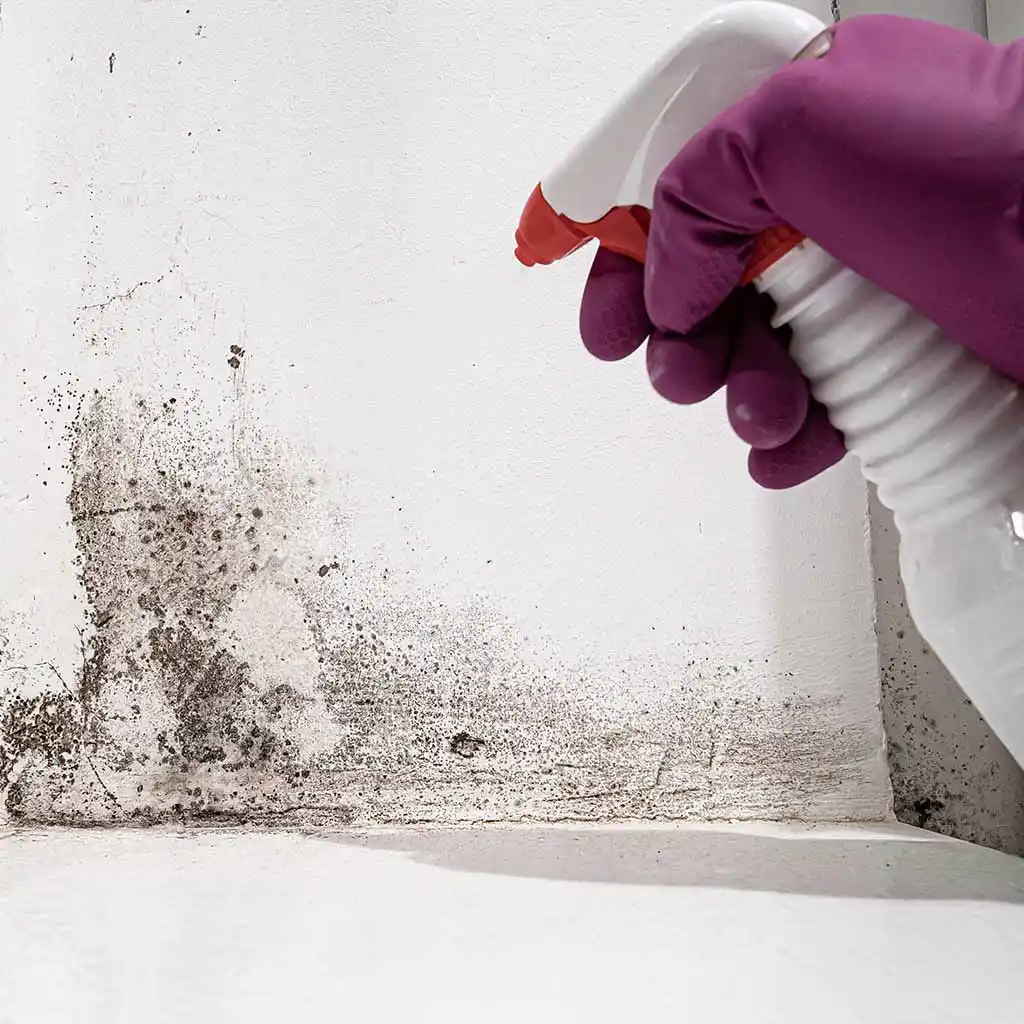
DIY methods should focus on killing the mould root, not just bleaching the colour. Do not use bleach alone, as it can often only kill mould on non-porous surfaces and may not penetrate porous materials like wood or drywall, potentially encouraging deeper growth. look to buy and use only the best black mould killers.
Recommended DIY solution
White Vinegar: Apply undiluted white vinegar to the affected area using a spray bottle. Vinegar is a mild acid that can kill around 82% of mould species. Allow it to sit for at least an hour before scrubbing.
Hydrogen Peroxide: A more aggressive option. Use a 3% solution, spray it directly onto the mould, wait 10-15 minutes, and then scrub.
Detergent: For very light surface mould, a simple solution of mild soap or detergent and warm water is often enough to physically wipe the spores away.
Should I hire a professional for mould removal?
For areas larger than 10 square feet it is recommended that you hire a professional. If the mould is over porous surfaces this is even more of a reason to consult with a specialist and hire a reputable mould remediation company. Mould spores when disturbed during cleaning can spread and contaminate other surfaces, resulting in a much more severe mould infestation.
Professional mould removal service providers like Ideal Response have the tools, knowhow and experience to safely carry out a mould remediation service. A professional service includes multiple stages to ensure long-lasting results:
- HEPA vacuuming to remove surface and airborne spores
- Fungicidal washdown of all contaminated surfaces and surfaces within the immediate vicinity.
- ULV Fogging to treat the air and surfaces, killing 99.9% of the remaining spores.
- Final checks and inspection to ensure all work has been carried out the highest standard
How does Awaab’s Law affect mould cleaning?
Awaab’s Law came into effect for Social Housing in October of 2025. The new legislation were put in place to provide social housing tenants with more rights in regards to damp and mould and other health hazards. It puts the onus on Social Landlords and Housing Association to provide timely and professional response to these issues.
If you are a landlord or property manager for social housing properties, DIY cleaning is not enough and can result in hefty fines. The correct response to damp and mould issues is to hire a professional to carry out any necessary work.
Step 4: Scrubbing and removal
Using a soft brush, cloth, or sponge dampened with your chosen solution, gently scrub the affected area.
Scrubbing technique: Work in small, controlled motions to minimise the release of spores. Avoid aggressive brushing which can damage the surface.
Rinsing: Once the mould is gone, wipe the area with a clean cloth soaked in fresh water.
Disposal: Immediately place all used cloths, sponges, and PPE into a heavy-duty plastic bag, tie it securely, and dispose of it in the outside bin.
Step 5: Specialist drying
This is arguably the most important step for preventing regrowth.
After cleaning, the area must be dried completely. Use dehumidifiers, fans, and open windows to draw moisture away. If the affected area remains damp for more than 48 hours, the mould is likely to return. Professional support is recommended for property drying as it is a complex process that requires careful planning and regular checks. Drying a property too quickly can sometimes result in other issues, so doing it right the first time around is ideal.
Another reason why professional drying is recommended is because drying is a broad term for the process but in reality there are many ways to dry a property. The type of damp you’re treating, the substrate affected and other factors must all be considered when carrying out a drying programme to ensure long-lasting results.
To learn more about property drying, check out our Mould Remediation & Structural Drying case study.
When DIY Wont work: Professional black mould remediation
While the steps above are effective for small, superficial patches of surface mould (less than a square metre), attempting to remove large-scale mould or mould on porous materials (like plasterboard, insulation, or wood) using DIY methods is ineffective and hazardous.
Professional mould remediation specialists who operate under strict health and safety protocols go far beyond surface cleaning. They use industrial-grade air filtration (HEPA filtration) to capture airborne spores, physically remove contaminated porous materials, and apply professional-grade biocides to thoroughly eradicate the contamination at the source. If the mould covers a wide area, returns quickly after cleaning, or is the result of a hidden structural water leak, the risk of inadequate removal is too high. You risk both your health and the integrity of your property.
If you are dealing with a recurring issue, have sensitive health conditions, or if the mould covers an area larger than a standard bath towel, it’s time to call in certified experts. They will address the underlying moisture source and ensure the property is fully decontaminated.
Black mould removal FAQs
Is black mould (Stachybotrys chartarum) actually toxic or dangerous?
While the term “toxic mould” is often sensationalised, black mould (and other common household moulds) produces mycotoxins, which can be harmful. Inhaling mould spores can cause significant health risks, including allergic reactions, severe respiratory irritation, asthma flare-ups, and sinus congestion. It is essential to treat any visible mould as a health hazard and remove it safely.
Does using bleach effectively kill and remove black mould?
No. Using household bleach alone is generally not recommended. Bleach kills mould on non-porous surfaces (like tiles or glass), but it often fails to penetrate porous materials (like drywall or wood). On these surfaces, bleach typically kills the surface layer but leaves the mould roots to continue growing beneath, meaning the mould will quickly return. Solutions like white vinegar or hydrogen peroxide are often more effective for surface cleaning because they can penetrate the surface structure better.
What is the most common cause of black mould growth in UK homes?
The primary cause is excess moisture combined with poor ventilation. Mould spores are everywhere, but they only colonise areas where the relative humidity is consistently above 70%. Common sources of excess moisture include chronic condensation (especially in kitchens and bathrooms), poor insulation, faulty ventilation systems, and, most critically, unresolved water leaks or penetrating damp issues.
When should I stop DIY cleaning and call a professional mould remediation expert?
You should call a professional if the mould meets any of these criteria:
-
Large Scale: The mould covers an area larger than one square metre (roughly the size of a standard bath towel).
-
Porous Materials: The mould is on porous materials like drywall, plasterboard, insulation, or carpet.
-
Recurring Issues: The mould returns quickly after you have cleaned it, indicating a deep, unresolved moisture source.
-
Hidden Growth: You smell a musty odour but cannot see the mould, suggesting it is hidden within wall cavities or under floors.
How do professional mould remediation services prevent the mould from coming back?
Certified professionals (like those accredited by the IICRC) don’t just clean; they perform remediation. This involves:
-
Source Identification: Using specialised equipment to find and fix the root cause of the moisture.
-
Containment: Using negative air pressure and HEPA filters to stop spores from spreading during cleaning.
-
Physical Removal: Safely removing and disposing of contaminated porous materials that cannot be saved.
-
Drying and Structural Treatment: Applying structural drying techniques and professional-grade biocides to prevent future re-growth.

Chris Hedges - Head of Marketing
With over 25 years' experience, Chris is adept at defining and driving strategy, while also enjoying hands-on operational delivery. He believes in an equal blend of creativity and analytical scrutiny, always finding inventive ways to achieve objectives, underpinned by evidence. Chris’s philosophies are simple: don't overcomplicate, always prioritise customer experience, and bend the rules just enough to cut through the noise and drive momentum and growth.