In the UK, construction sites getting wet isn’t a matter of if, it’s a matter of when. Between winter rains, storms, burst mains, and occasional wet trades, even the best-prepared site can quickly become saturated and require specialist drying.
Consider a new residential development in London: a single burst water main during a heavy rainfall left multiple floors and voids soaked overnight. The result? Delays to flooring installation, failed screed moisture tests, and a frustrated client on a tight schedule.
Water on a site doesn’t just stop work, it creates cascading problems, including mould growth, timber warping, compromised finishes, warranty disputes, and costly rework. With UK rainfall increasing over the last decade by around 6%, professional construction drying has become a critical part of managing risk and keeping projects on track.
In this blog, we’ll explain how wet sites affect builds, the dangers of leaving moisture untreated, and how professional drying protects your schedule, budget, and reputation.
Skip to:
Why construction sites get wet (even with weather protection)
The risks of not drying a wet site properly
Why professional construction drying is essential
What a full construction drying programme includes
Why do construction sites get wet (even with weather protection)?
Even sites with scaffolding, tarpaulins, or temporary roofing can get wet. Common causes include:
1. Temporary coverings failing
Wind-torn tarpaulins or damaged roof sheeting can allow rain to penetrate. On a site in Birmingham last winter, poorly secured scaffolding sheeting let water pour onto a newly installed floor screed, delaying trades by a week.
2. Wet trades introducing moisture
Activities like plastering, screeding, or concrete curing generate high levels of moisture. Without adequate drying, this moisture becomes trapped in walls and floors.
3. Burst pipes and water main leaks
Even a small leak can saturate floors, insulation, and voids within minutes. Sites with partially completed plumbing are especially vulnerable.
4. Poor ventilation during winter
Cold temperatures slow evaporation. Windows and vents often remain closed, trapping moisture and increasing the risk of mould.
5. Hidden pooling in subfloors and voids
Water can collect unseen under floors or in cavity walls. Left unchecked, these hidden pockets can cause long-term damage.
What are the risks of not drying a wet site properly?
Failing to dry a site correctly can create expensive and long-lasting problems:
- Failed moisture tests: Flooring and plaster manufacturers often require RH readings <75%. Failed tests halt trades and create disputes.
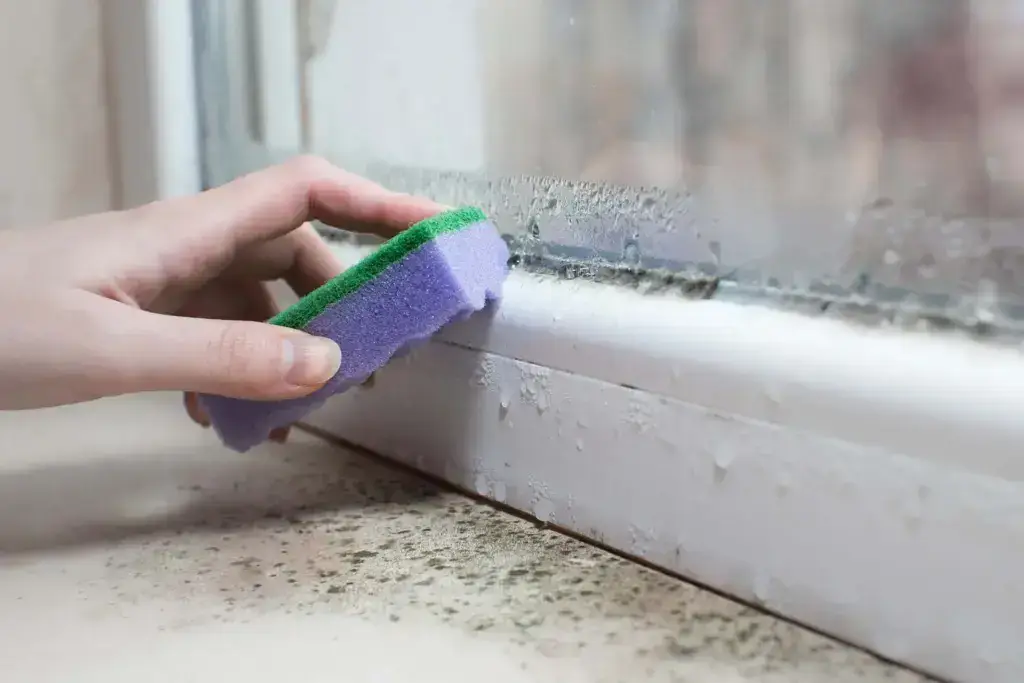
- Mould growth: Spores can begin developing in 48 hours, especially in winter.
- Timber warping and shrinkage: Joists, stud walls, and flooring may twist, warp, or crack.
- Plaster and paint failure: Adhesion issues, blistering, or staining occur on damp surfaces.
- Voided warranties: NHBC, Premier Guarantee, and LABC require moisture compliance for coverage.
- Costly rework: Replacement of flooring, plaster, or insulation can run into thousands, plus delayed labour costs.
Why is professional construction drying essential?
Some contractors rely on natural ventilation, hoping the site will dry on its own. In winter, this approach is risky: cold air holds less moisture, and trapped damp can cause serious issues.
Professional specialist drying offers:
- Controlled, rapid moisture reduction: Dehumidifiers and heat systems reduce moisture safely.
- Targeted drying of deep structural moisture: Walls, floors, cavities, and insulation are monitored and treated.
- Documented moisture readings: Evidence for insurers, warranty providers, and client handovers.
- Reduced programme delays: Drying early allows trades to continue safely, keeping the build on schedule.
- Lower long-term risk: Prevents mould, rot, and structural damage.
What a full construction drying programme includes
1 Detailed moisture survey:
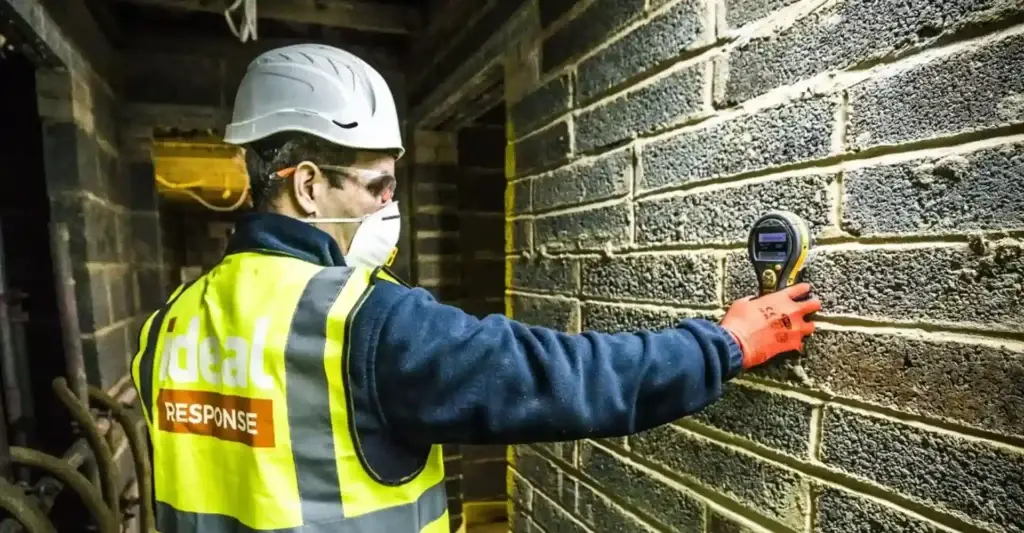
Thermal imaging, Tramex readings, and cavity inspections reveal hidden saturation.
2 Tailored drying plan:
Depending on the site, we deploy:
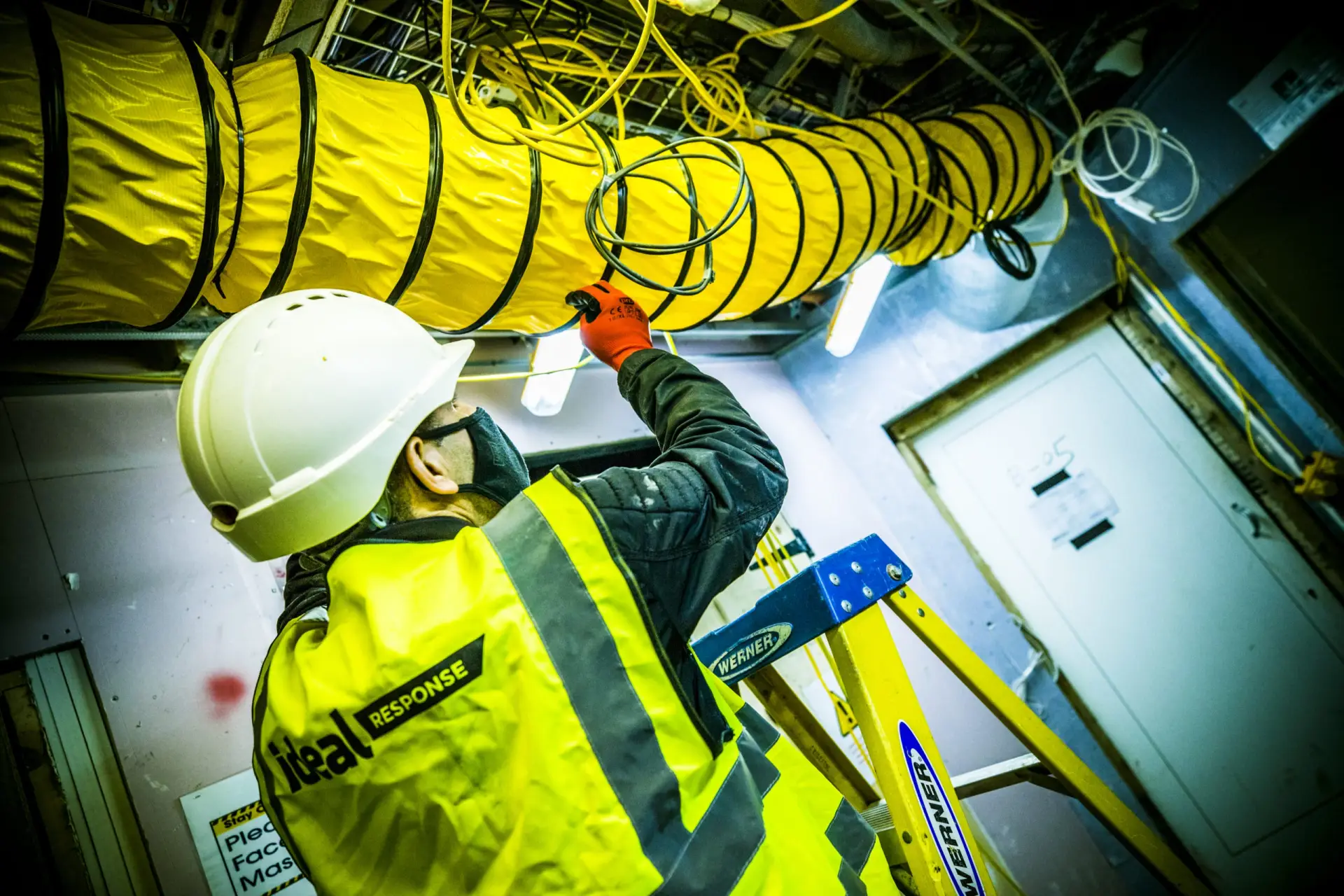
- Desiccant dehumidifiers (ideal for winter)
- Indirect heating systems
- Air movers
- Targeted ‘tented zones’
3. Installation & monitoring
Continuous monitoring ensures moisture levels drop efficiently and safely.
4. Final certification
We provide insurance- and warranty-ready reports suitable for:
- Main contractor handover
- Flooring installation
- Client packs
- Insurers
5. Optional secondary services
Mould remediation, odour control, and contaminated water removal.
Discover how Ideal Response helped to dry a large construction site in Hemel Hempstead which saved the client tens of thousands of pounds in potential LADs and avoided further reputational damage. Read the case study: Construction drying for major development in Hemel Hempstead.
Real costs of wet construction sites
Weather-related delays cost the UK construction sector £3 billion annually. Even minor water ingress can lead to:
- Labour downtime
- Failed screed RH tests
- Flooring failures
- Warranty disputes
- Rework costs
Professional drying protects your investment and often saves tens of thousands by preventing delays, damage, and compliance issues.
Don’t let moisture derail your build
Wet conditions don’t just delay a build, they quietly erode its quality, increase your costs, and put your entire programme at risk. Every day a site remains wet means labour wasted, materials compromised, and deadlines slipping closer to penalty territory.
The reality is simple; modern construction methods aren’t designed to tolerate prolonged moisture and insurers, warranty providers, and clients no longer accept ‘the weather’ as an excuse.
That’s why professional drying isn’t a luxury. It’s a cost-saving, risk-reducing, programme-protecting decision.
Ideal Response works with contractors, developers, and principal contractors across the UK to:
- Recover water-damaged builds quickly
- Prevent delays to handover and PC/CCC dates
- Protect materials like screed, timber, plasterboard, and insulation
- Provide insurer- and warranty-approved moisture documentation
- Restore safe, workable site conditions
With 24/7 rapid response, nationwide coverage and decades of specialist experience, our team ensures you don’t just ‘deal with’ a wet site, you overcome it.
If you’re facing water delays, rising moisture readings, or failing drying curves, now is the moment to act.
Call our specialist drying team 0800 088 4170
FAQs: Construction drying in the UK
How long does it take for a construction site to dry out in the UK?
Drying times vary hugely depending on temperature, ventilation, saturation level and construction materials. In typical UK winter conditions (5 – 10°C, high humidity), natural drying can take 6 – 12 weeks, sometimes longer for concrete slabs.
With professional drying systems, such as desiccant dehumidifiers, indirect heating and targeted air movement, the same job can often be completed in 7 – 21 days, depending on the moisture content of the building fabric.
Rule of thumb UK benchmarks:
- Concrete slabs: Must reach the manufacturer’s moisture requirement (typically <75% RH at 20°C).
- Plaster & skim: Normally 2 – 4 weeks naturally, or 4 – 10 days with controlled drying.
- Timber: Should reach 16 – 18% moisture content before boarding or sealing.
Why do construction sites stay wet for so long in winter?
UK winter conditions are notoriously difficult for drying. You’re often fighting against:
- Cold temperatures that slow evaporation
- High outdoor humidity (frequently 80 – 95% RH)
- Reduced air movement in partially sealed structures
- Ongoing wet trades (plastering, screeding, concrete curing)
Most sites assume opening windows will help, but in winter it normally introduces more moisture, not less.
This is why controlled drying systems are essential – they allow consistent evaporation regardless of outdoor conditions.
Can a wet construction site delay handover or fail building control inspections?
Yes, and it happens more often than contractors admit.
Wet building materials can cause:
- Blistering paint and failed finishes
- Mould growth behind plasterboard
- Warped timber and failed flooring adhesion
- Reduced structural integrity
- Long-term moisture problems for the end client
NHBC requires that properties are built in a ‘dry condition’, and excessive moisture can result in delayed sign-off or rejected warranty claims.
A professional drying certificate helps avoid disputes with building control, warranty providers and clients.
What are the signs that a construction site needs professional drying?
Common red flags include:
- Slow-drying plaster or skim
- Condensation forming on windows or steel
- Musty smells or visible mould
- Timber readings above 20% MC
- A screed floor that fails a moisture test
- Paint or adhesive failures
- Trades complaining they ‘can’t get the job done’ due to damp conditions
If any of these appear, the site almost certainly needs controlled drying.
What equipment is used for construction drying in the UK?
Professional drying solutions typically include:
- Desiccant dehumidifiers (ideal for winter conditions)
- Refrigerant dehumidifiers
- Indirect-fired heaters (Dri-E, oil or gas)
- Air movers and circulation fans
- Positive pressure and negative pressure systems
- Remote moisture monitoring
- Thermal cameras and moisture mapping systems
Desiccant systems are most effective in low temperatures, a key reason they are heavily used on UK winter build programmes.
Will construction drying affect my materials or curing process?
Not when done correctly.
A controlled drying programme ensures all materials, timber, plaster, screed, concrete and coatings, remain within manufacturer-approved drying rates.
Professional drying teams never ‘over-dry’ or force-accelerate curing in a way that could cause shrinkage, cracking or structural issues.
All reputable providers follow manufacturer tolerances, NHBC guidelines, and BS 5250:2021 – Management of Moisture in Buildings.
How much does professional construction drying cost in the UK?
Costs vary depending on the building size, saturation level and equipment required.
Typical ranges:
- Small residential property: £800 – £2,000
- Medium commercial / block unit: £2,000 – £6,000
- Large construction site: £6,000 – £20,000+
Delays due to moisture often cost significantly more than drying itself, especially when multiple trades are held up.
Professional drying is almost always cheaper than programme slippage.
Can Ideal Response provide moisture reports for insurers and surveyors?
Yes. Ideal Response provides:
- Moisture maps
- Detailed readings across all materials
- Photographic evidence
- Daily or weekly monitoring logs
- Final drying certificates
These documents are accepted by building control, warranty providers, insurers, surveyors and project managers across the UK.

Chris Hedges - Head of Marketing
With over 25 years' experience, Chris is adept at defining and driving strategy, while also enjoying hands-on operational delivery. He believes in an equal blend of creativity and analytical scrutiny, always finding inventive ways to achieve objectives, underpinned by evidence. Chris’s philosophies are simple: don't overcomplicate, always prioritise customer experience, and bend the rules just enough to cut through the noise and drive momentum and growth.