Pigeons are a familiar sight across towns and cities in the UK, and at first, a couple of birds on your roof may not seem like a cause for concern.
However, once pigeons begin nesting, the situation can change quickly.
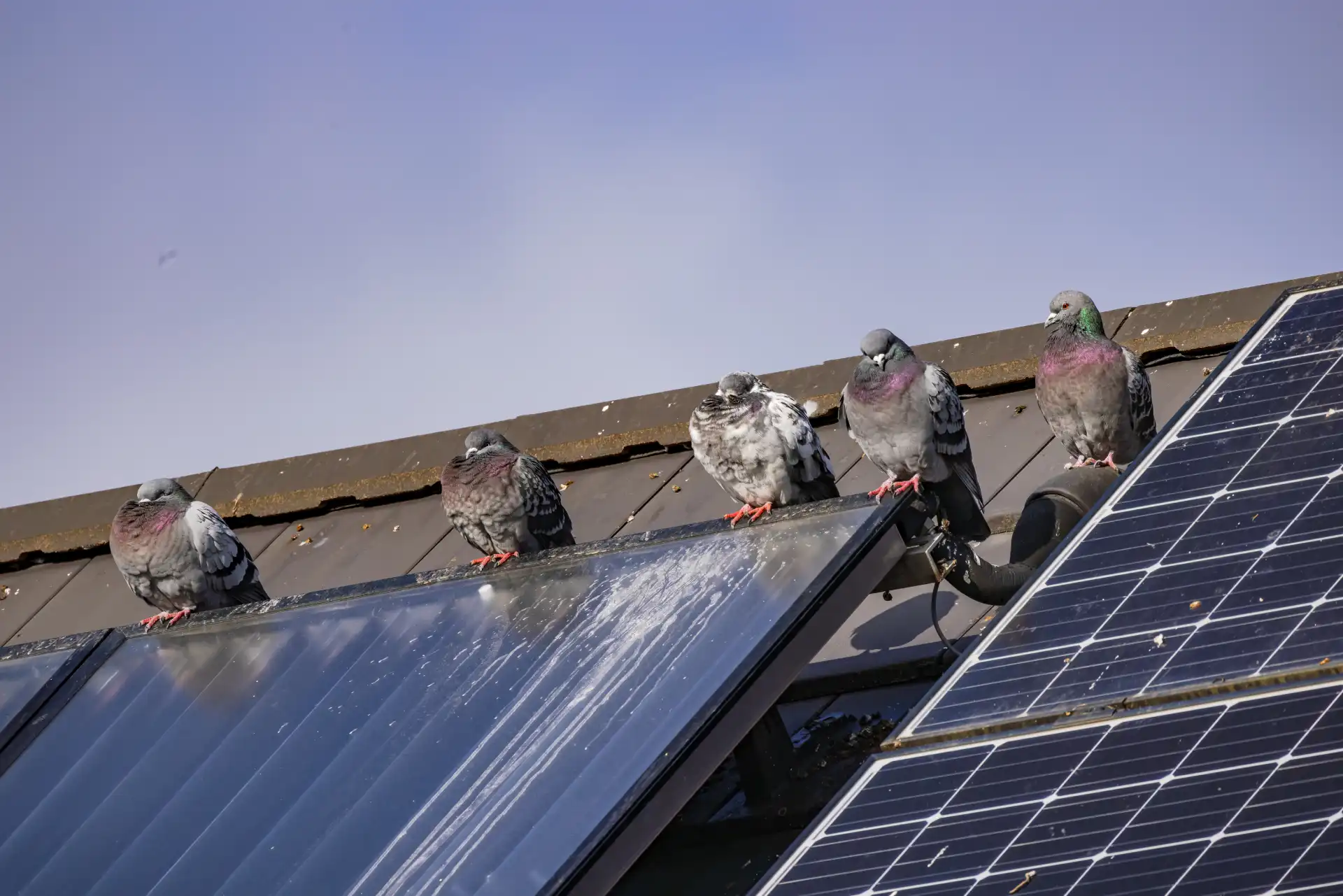
Roofs, loft spaces and especially solar panels provide sheltered, elevated environments that pigeons actively seek out. Once a nesting spot is established, birds will often return repeatedly and bring others with them.
What starts as a minor nuisance can quickly develop into a persistent contamination and property issue, particularly if left untreated.
Skip to:
Quick summary: What you should know
Why pigeons choose roofs and solar panels
The hidden problems pigeon nesting can cause
The hidden cost of ignoring pigeon nesting
Pigeons under solar panels: A growing UK problem
Why DIY pigeon removal often falls short
When to consider professional pigeon guano cleaning
Quick summary: What you should know
If pigeons are nesting on your roof or solar panels:
- They are likely to return to the same location repeatedly
- Nesting leads to rapid guano build-up and contamination
- Solar panels create ideal hidden nesting areas
- DIY deterrents rarely solve the problem long-term
- Early action can prevent costly cleaning and damage
Why pigeons choose roofs and solar panels
Pigeons are highly adaptable and thrive in urban environments. They are drawn to roofs and solar panels because they provide:
- Shelter from wind and rain
- Protection from predators
- Elevated, undisturbed nesting areas
- Warmth from buildings and solar infrastructure
Solar panels are particularly attractive because they create a protected void underneath, making them one of the most common nesting locations in modern UK properties. Once pigeons settle, they tend to return year after year.
The hidden problems pigeon nesting can cause
While pigeons may seem harmless, nesting activity can create serious and often underestimated problems.
Rapid guano build-up
Pigeon droppings accumulate quickly and can:
- Stain roofs, patios and balconies
- Create slip hazards
- Attract further bird activity
Property damage
Pigeon guano is acidic and, over time, can damage:
- Roofing materials
- Paintwork and render
- Metal fixtures and fittings
Noise and disturbance
Nesting pigeons often create persistent noise, particularly in lofts or above living spaces.
Health and hygiene concerns
Pigeon guano can contain bacteria and fungal spores, which may affect air quality — especially in enclosed or poorly ventilated areas.
The hidden cost of ignoring pigeon nesting
One of the most common mistakes property owners make is assuming pigeon activity is just a nuisance.
In reality, the longer nesting is left untreated, the more difficult and costly it becomes to resolve.
Over time:
- Guano builds up in large quantities, especially beneath solar panels
- Gutters and drainage systems can become blocked
- Roofing materials may begin to deteriorate
- Contamination spreads beyond the original nesting area
What could have been a straightforward clean can develop into a more complex and costly restoration issue.
Pigeons under solar panels: A growing UK problem
With the rapid increase in solar panel installations across the UK, pigeon nesting beneath panels has become one of the most common property issues reported by homeowners. The challenge is that the problem is often hidden.
By the time it becomes noticeable:
- Significant guano build-up may already be present
- Debris may be collecting around roof edges
- The airflow beneath panels can be restricted
In some cases, this can begin to affect the efficiency and long-term performance of the solar system.
Because access beneath panels is limited, safe cleaning typically requires specialist equipment and experience.
Why DIY pigeon removal often falls short
It’s completely understandable that many property owners try to resolve pigeon problems themselves first.
Common DIY approaches include:
- Reflective deterrents such as CDs or foil
- Plastic predator decoys
- Noise or ultrasonic devices
- Attempting to block access points
While these methods can sometimes disrupt pigeon activity temporarily, they rarely solve the root of the problem.
Pigeons are highly adaptable birds. Once they become familiar with a location, particularly one that offers shelter and safety, they tend to ignore or quickly adjust to deterrents.
More importantly, DIY approaches do not address:
- Existing nests and debris, which continue to attract birds
- Guano contamination, which builds up over time
- Hidden nesting areas, especially beneath solar panels
In many cases, partial or unsuccessful attempts can actually make the situation worse, as birds relocate slightly but remain on the property.
Without fully removing the nesting environment and contamination, the problem is likely to return, often more established than before.
When to consider professional pigeon guano cleaning
While early-stage activity may appear manageable, there is a clear point where professional bird dropping removal becomes the most effective and safest option.
You should consider specialist cleaning services when:
- Pigeons have begun actively nesting on your roof or property
- There is visible build-up of guano or debris
- Birds are accessing hard-to-reach areas such as solar panels
- Nesting is affecting loft spaces or internal areas
- There are signs of blocked gutters or water overflow
- Previous attempts to remove pigeons have not worked
At this stage, the issue is no longer just about bird presence, it becomes a contamination and property condition problem.
Professional cleaning ensures that:
- All affected areas are properly accessed and treated
- Contamination is fully removed, not just reduced
- The risk of recurrence is significantly lowered
Acting at the right time can prevent the need for more extensive restoration work later.
How professional pigeon guano cleaning works
Effective pigeon guano cleaning is a structured process that goes far beyond simply removing visible droppings.
It involves a combination of safe access, contamination control and preventative measures to ensure the problem is properly resolved.
Safe removal of contaminated materials
The first step is the controlled removal of all guano and nesting debris.
This is carried out using appropriate protective equipment to minimise exposure to harmful particles and to prevent contamination spreading to other areas of the property.
Particular care is taken in confined or enclosed spaces, such as lofts or beneath solar panels.
Deep cleaning and decontamination
Once bulk contamination has been removed, all affected surfaces are thoroughly cleaned.
This process targets:
- Residual bacteria and fungal spores
- Staining and organic contamination
- Odours caused by long-term guano build-up
The aim is not just to improve appearance, but to restore the area to a safe and hygienic condition.
Specialist access to roofs and solar panels
One of the most challenging aspects of pigeon guano cleaning is access.
Rooflines, solar panels and high-level areas require:
- Specialist equipment
- Safe working practices
- Experience working in restricted or elevated spaces
This ensures that all contamination, including hidden build-up beneath panels, is properly addressed.
Preventative bird proofing
Once cleaning is complete, preventing pigeons from returning is critical.
Depending on the property, this may involve:
- Installing discreet proofing systems around solar panels
- Blocking common nesting access points
- Implementing long-term deterrent solutions
Without this step, there is a high likelihood that pigeons will return and the problem will repeat.
Conclusion: A small problem that rarely stays small
Pigeons nesting on roofs and solar panels are often underestimated in the early stages. What may seem like minor bird activity can quickly develop into a persistent and increasingly costly problem.
Once pigeons establish a nesting site, they tend to return repeatedly, leading to ongoing guano build-up, contamination and potential damage to your property.
Across the UK, the rise in solar panels has made this issue more common than ever, with many property owners only realising the scale of the problem once it has become difficult to manage.
The key is acting early.
Addressing nesting before contamination spreads can:
- Prevent damage to roofing materials and solar panels
- Avoid more complex and costly cleaning
- Protect the condition and value of your property
If pigeons are nesting on your roof or beneath your solar panels, Ideal Response provides professional pigeon guano cleaning and specialist support across the UK.
Contact Ideal Response today to resolve the issue properly and prevent it from getting worse.
Frequently asked questions: Pigeons nesting on roofs and solar panels
Are pigeons nesting on my roof something I need to deal with immediately?
Yes. While it may seem minor at first, pigeons can establish nesting sites very quickly. The longer they remain, the more guano builds up and the more difficult the problem becomes to resolve.
Why do pigeons choose roofs and solar panels?
Roofs and solar panels provide shelter, warmth and protection from predators. The space beneath solar panels is particularly attractive because it creates a secure, hidden nesting area.
Can pigeon droppings really damage my property?
Yes. Pigeon guano is acidic and, over time, can damage roofing materials, paintwork and metal surfaces. It can also block gutters and drainage systems if left to build up.
Is pigeon guano a health risk?
Pigeon droppings can contain bacteria and fungal spores. In enclosed areas such as lofts, this can affect air quality and create an unhealthy environment if not properly cleaned.
What happens if I ignore pigeons nesting on my property?
If left untreated, nesting can lead to significant guano accumulation, unpleasant odours, blocked gutters and potential damage to your roof or solar panels. The longer it is left, the more complex and costly the clean-up can become.
Do pigeons come back after you remove them?
Yes. Pigeons are creatures of habit and often return to the same nesting locations unless preventative measures are put in place.
Will DIY deterrents stop pigeons nesting?
DIY deterrents may work temporarily, but pigeons often adapt to them. If nesting has already begun, deterrents alone are unlikely to fully resolve the issue.
Can pigeon guano affect solar panel performance?
Yes. A build-up of guano and debris can restrict airflow and contribute to dirt accumulating on panels, which may reduce efficiency over time.
How much does pigeon guano cleaning cost in the UK?
Costs vary depending on the extent of contamination, access requirements and whether areas such as solar panels are affected. Heavily contaminated sites typically require more specialist cleaning.
When should I call a professional pigeon cleaning company?
You should consider professional help as soon as nesting is established, guano is visible or access is difficult. Early intervention is usually quicker, safer and more cost-effective.

Chris Hedges - Head of Marketing
With over 25 years' experience, Chris is adept at defining and driving strategy, while also enjoying hands-on operational delivery. He believes in an equal blend of creativity and analytical scrutiny, always finding inventive ways to achieve objectives, underpinned by evidence. Chris’s philosophies are simple: don't overcomplicate, always prioritise customer experience, and bend the rules just enough to cut through the noise and drive momentum and growth.