If you have noticed a tide mark appearing on your ground floor walls or a persistent musty smell in your home, you may be dealing with rising damp. Unlike other forms of moisture ingress, rising damp is a specific structural issue that requires a professional damp survey and intervention to prevent long-term damage to your property and health. A quick fix wont work, rising damp requires a complete solution to prevent reoccurrence.
In this guide, we explore what causes rising damp, how to identify it, and the professional steps required to remediate it. You’ll also learn about the other types of damp in order to help you identify what’s really going on inside your property.
Skip to:
What is rising damp?
Rising damp occurs when ground water is sucked up through the porous materials of a building, such as bricks, stone, and mortar, via a process called capillary action. This leads to “tide marks”, visual damp patches that start at the bottom of ground floor walls and typically rises to around 1m high.
Most modern buildings are equipped with a Damp Proof Course (DPC) or a Damp Proof Membrane (DPM) designed to act as a barrier. However, in older properties or cases where the DPC has been “bridged” by high external ground levels or debris, moisture begins to climb the walls, usually reaching a height of about one metre.
Common causes of rising damp
Understanding the root cause of rising damp is essential for a permanent fix. It is rarely a result of a single factor but rather a combination of structural age and environmental changes:
Absence of a physical DPC: Many properties built before the late 19th century were constructed without a physical Damp Proof Course. In these heritage buildings, the masonry sits directly on the earth, allowing moisture to travel upward through the lime mortar and brickwork unhindered.
Failure of an existing DPC: While materials like slate, bitumen, or lead were used as DPCs in the early 20th century, they are not indestructible. Over decades, building settlement can cause slate to crack, or bitumen to become brittle and degrade, creating gaps where moisture can “seep” through.
Bridging of the DPC: This is perhaps the most common cause in modernised homes. “Bridging” occurs when the protective barrier is bypassed by:
Raised exterior ground levels: Paving a new driveway, building a patio, or accumulating soil in flower beds above the level of the DPC.
Internal plastering: If new salt-contaminated plaster is applied so that it touches a damp solid floor, it can pull moisture up past the DPC.
Wall cavity debris: Mortar droppings or rubble falling into the wall cavity during construction can create a “bridge” for water to travel from the damp outer leaf to the dry inner leaf.
High water tables and hydrostatic pressure: In areas with high groundwater levels, the constant pressure against the foundations can accelerate capillary action, forcing water into even the smallest microscopic pores of the building material.
Inappropriate modern renders: Applying non-breathable cement renders or “tanking” slurries to the exterior of an old building can trap moisture within the wall. Instead of evaporating outward, the moisture is forced upward, exacerbating the rising damp effect inside the property.
What are the different types of damp?
It is easy to misdiagnose moisture issues. While rising damp is a specific ground-level problem, your property may be suffering from other forms of dampness:
-
Penetrating damp: Unlike rising damp, this can occur at any level of a building. It is caused by water “penetrating” through the envelope of the property, often due to structural defects like leaking gutters, cracked render, porous bricks, or damaged roofing. Penetrating damp is also often referred to as water ingress.
-
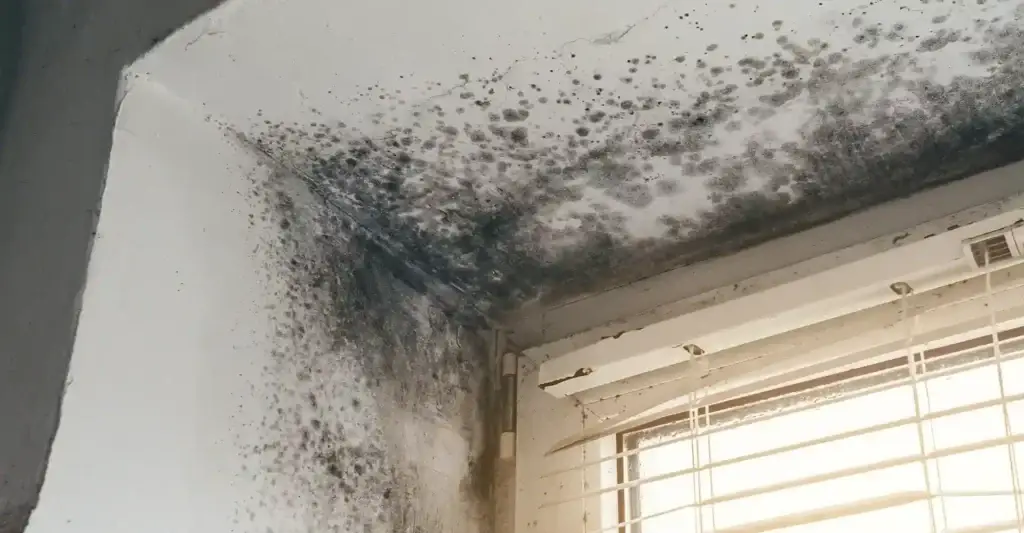
Condensation damp: The most common form of damp, caused by poor ventilation, is condensation damp. When warm, moist air (from cooking, bathing, or breathing) hits cold surfaces, it turns into water droplets. Over time, this leads to black mould growth on walls, window frames, and behind furniture.
-
Traumatic damp: This refers to dampness caused by a sudden, singular event, most commonly a burst pipe or plumbing leak. It is often intense and localised, requiring immediate leak detection and industrial drying to prevent secondary damage like rot.
What are the common signs of rising damp?
If you are sure the issue is rising from the ground up, look out for these key indicators:
-
Tide marks: A horizontal yellowish or brownish stain on the wall, usually appearing up to 1 metre above the floorboards.
-
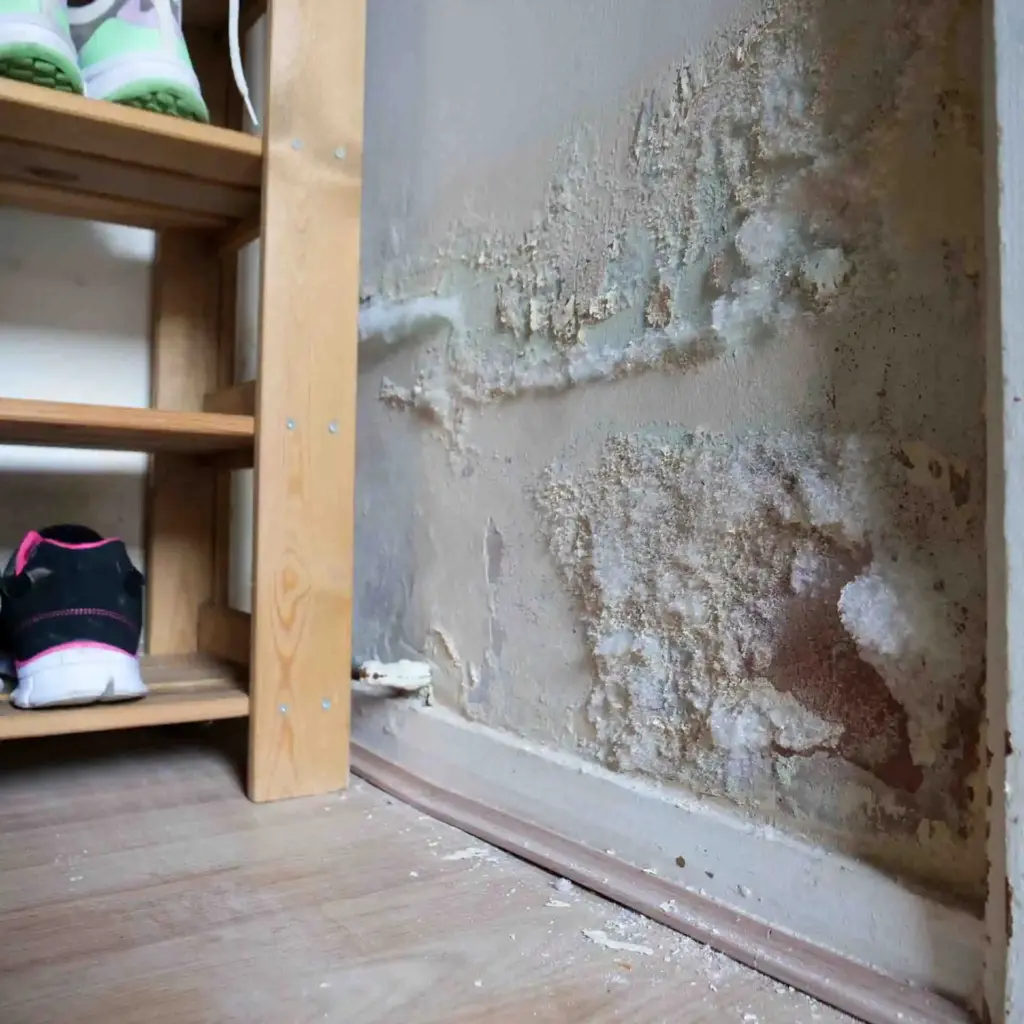
Salts on walls (Efflorescence): As the water evaporates, it leaves behind white, powdery hygroscopic salts (Efflorescence) that continue to attract moisture from the air.
-
Peeling wallpaper & skirting boards: You may notice wallpaper peeling away at the bottom of the wall or skirting boards that feel soft, show signs of rot, or appear distorted.
-
Musty odours: A persistent “earthy” or damp smell is often the first sign that moisture is trapped within the building fabric.
-
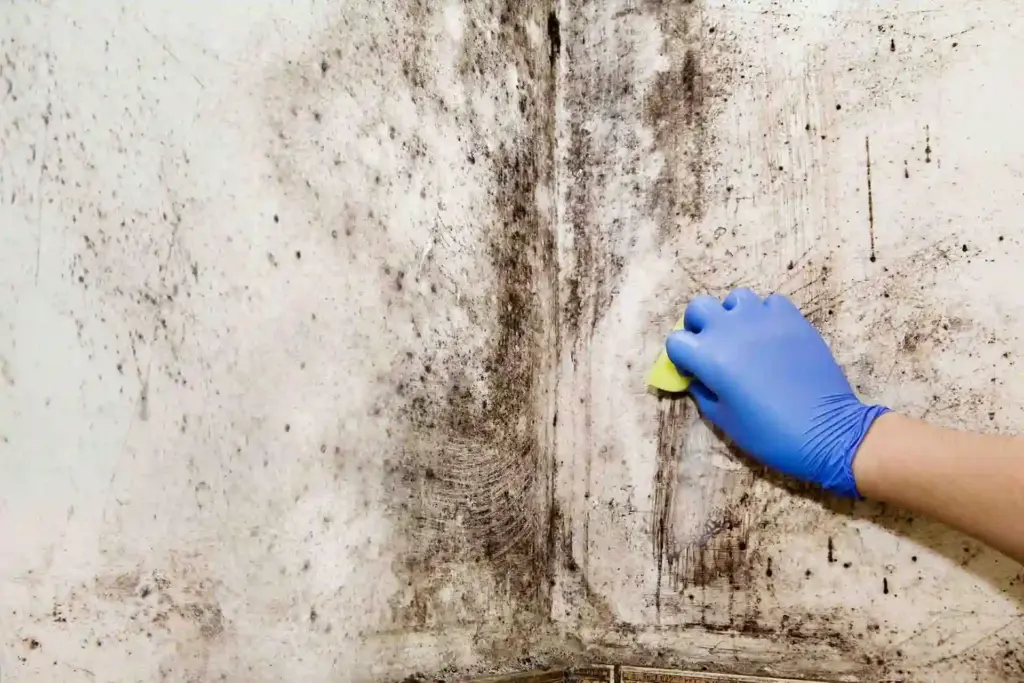
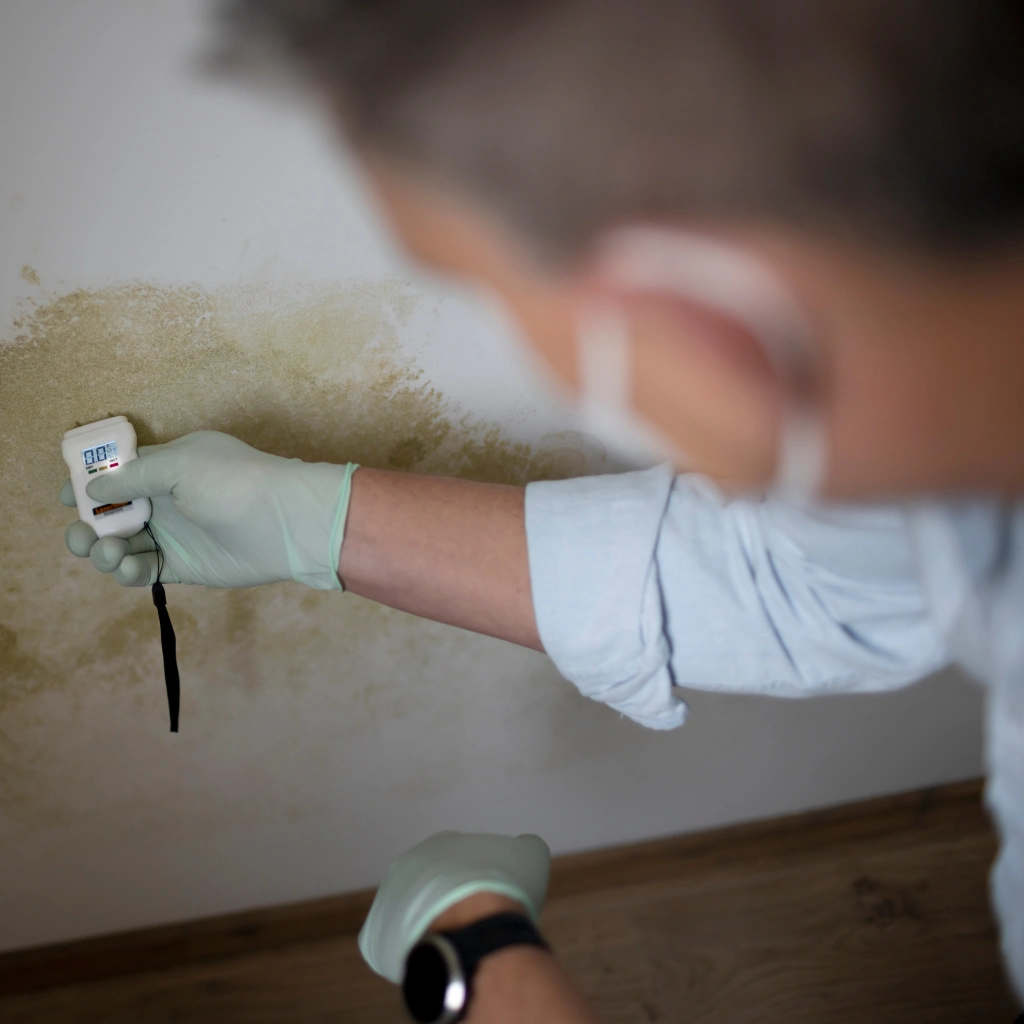
Mould growth: While mould is more common with condensation, rising damp provides the damp environment necessary for mould colonies to thrive. If you find mould in your bedroom or living room, it’s vital to seek professional mould removal immediately.
What are the risks of damp?
Structural risks
Leaving rising damp untreated is not just an aesthetic issue. Structural integrity is at risk as the moisture weakens mortar and timber, potentially leading to wet or dry rot. Drying internal structures is a complex task and requires specialised equipment to do successfully. For under floor or internal structures, injection drying is often the best approach. Click the link to learn more.
Health risks
Furthermore, the damp environment is a primary catalyst for mould outbreaks. Exposure to mould spores can lead to respiratory issues, especially for children, the elderly, or those with pre-existing conditions. For residents in the capital, our London damage restoration hub provides rapid access to experts who can assess these risks.
How do you treat rising damp?
Treating rising damp isn’t as simple as painting over the stain. Effective remediation involves:
-
Professional survey: Identifying the source of the moisture is the first step. Is the DPC failed, or is it being bridged? A professional damp survey will help to identify the the root cause of the damp and provide you with a comprehensive report and actionable recommendations.
-
DPC injection/repair: A chemical damp proof course may need to be injected into the walls to create a new water-repellent barrier.
-
Specialist drying: Once the source is stopped, the building fabric must be professionally dried using industrial dehumidifiers and air movers. Specialist drying will safely dry your property without causing any further structural issues which can occur if done incorrectly.
-
Mould remediation: If the dampness has led to a mould outbreak, professional mould remediation is essential.
Summary: Protecting your property & health
Rising damp is a complex issue that requires a technical solution rather than a cosmetic cover-up. By understanding the specific causes, from DPC bridging to material degradation, property owners can take proactive steps to safeguard their property. A successful restoration not only stops the moisture at its source but also ensures the building is professionally dried and treated for secondary issues like mould. Addressing these problems early is the most effective way to maintain a healthy, stable, and valuable home.
Contact our team today if you have concerns of your property and the possibility of rising damp. We provide comprehensive damp surveys, specialist drying and professional mould remediation. We’re available 24/7, 365 days a year, ready to offer you our service whenever you need them.
Call our emergency response team 0800 088 4170
Rising damp FAQs
Can rising damp happen on the first floor?
No. By definition, rising damp is the upward movement of ground water through porous masonry via capillary action. It typically reaches a maximum height of 1 metre above ground level. If you have damp patches on higher floors, it is likely a result of penetrating damp (e.g., a roof leak or failed pointing) or condensation.
Is rising damp covered by buildings insurance?
In most cases, standard buildings insurance does not cover rising damp. Insurers generally view it as a maintenance issue or gradual deterioration rather than “sudden and accidental damage.” However, if the damp is a secondary result of a burst pipe (traumatic damp), you may be covered. Always check your specific policy wording.
How do I tell the difference between rising damp and condensation?
Rising Damp: Usually leaves a visible “tide mark” on the lower wall, often accompanied by white salt deposits. It is present regardless of weather or internal humidity.
Condensation: Often presents as black spotty mould (Aspergillus or Stachybotrys) and is usually found in corners, behind furniture, or around cold window frames. It often fluctuates based on seasonal temperatures and indoor activities like cooking or drying clothes.
Can I just paint over rising damp with "damp-proof" paint?
We strongly advise against this. Applying waterproof paint over rising damp traps the moisture inside the wall. Because the water cannot evaporate outward, it will continue to rise higher or spread sideways into floor joists, potentially leading to dry rot. You must treat the source of the moisture before applying any decorative finishes.
Are the white crystals on my wall dangerous?
The white, fluffy powder you see is known as efflorescence (hygroscopic salts). While the salts themselves are not toxic, they are a “red flag” for a significant moisture problem. These salts attract moisture from the air, keeping the wall damp even if the initial leak is fixed. Specialist salt-neutralising treatment is required during the re-plastering phase.
How long does it take for a wall to dry out after treatment?
As a general rule of thumb, masonry dries at a rate of roughly one month per inch of wall thickness. For a standard 9-inch solid brick wall, this could take up to nine months. However, professional structural drying services can significantly accelerate this process using industrial-grade dehumidifiers and air movers.
Does rising damp cause health problems?
Yes. A damp environment is a breeding ground for mould spores and dust mites. Prolonged exposure can lead to respiratory infections, allergic reactions, and the worsening of asthma. If you notice mould growth alongside your damp issue, you should seek professional mould removal immediately.
Is a chemical DPC injection permanent?
Modern BBA-approved DPC injection creams are designed to be a long-term solution, often lasting 20–30 years or the lifetime of the property, provided they are installed correctly and no “bridging” of the barrier occurs later through landscaping or internal renovations.

Tahlia Ibrahim - Delivery Manager
Tahlia has over four and a half years of in-depth experience across various facets of the disaster recovery industry. Having progressed through roles in marketing and sales to her current position, Tahlia possesses a comprehensive understanding of the entire business operation, from initial client contact to meticulous service delivery. A certified BioSweep Specialist, she excels in advanced odour elimination techniques, ensuring thorough restoration.