Available 24/7 | 0800 088 4170

Available 24/7 | 0800 088 4170
After flooding, many properties appear to dry quickly. Surfaces feel dry, humidity drops, and the visible signs of water disappear. But in many UK buildings, this creates a false sense of security.
Floodwater frequently becomes trapped inside walls, floors, and structural voids, areas standard drying methods cannot reach effectively. Left untreated, this hidden moisture can lead to mould growth, material failure, odours, and long-term damage.
Injection drying is a specialist flood drying technique designed to solve this exact problem.
This guide explains what injection drying is, when it is required, and why it is often essential for proper recovery after flooding.
Skip to:
What is injection drying?
Why standard flood drying isn’t always enough
When is injection drying required?
How injection drying works in practice
Injection drying vs strip-out: A smarter approach
Injection drying in UK homes
Injection drying for businesses and commercial properties
Insurance and injection drying
How Ideal Response delivers specialist injection drying
Warning signs that hidden moisture may still be present
Final thoughts: Injection drying solves the problems you can’t see
FAQs
Injection drying is a controlled structural specialist drying method used to remove moisture trapped within enclosed building elements following flooding or water damage.
Instead of relying solely on surface airflow, injection drying introduces dry air directly into wet cavities, allowing moisture to be drawn out from within the structure itself. It is commonly used to dry:
Injection drying allows properties to be dried thoroughly and efficiently, without unnecessary demolition.
Traditional flood drying relies on air movement within rooms combined with dehumidification. While this is effective for exposed surfaces, it has limitations.
In many UK properties, moisture can remain trapped behind finishes, beneath floors, or inside wall cavities where air simply does not circulate.
When this happens, problems often emerge weeks or months later, including:
Injection drying is used specifically when moisture cannot escape naturally, even though the property looks dry.
Injection drying is not used in every flood situation. It is required when moisture testing confirms water has penetrated concealed areas.
This commonly includes situations where:
Importantly, appearance alone cannot confirm whether injection drying is needed. A professional damp survey and moisture investigation is essential.
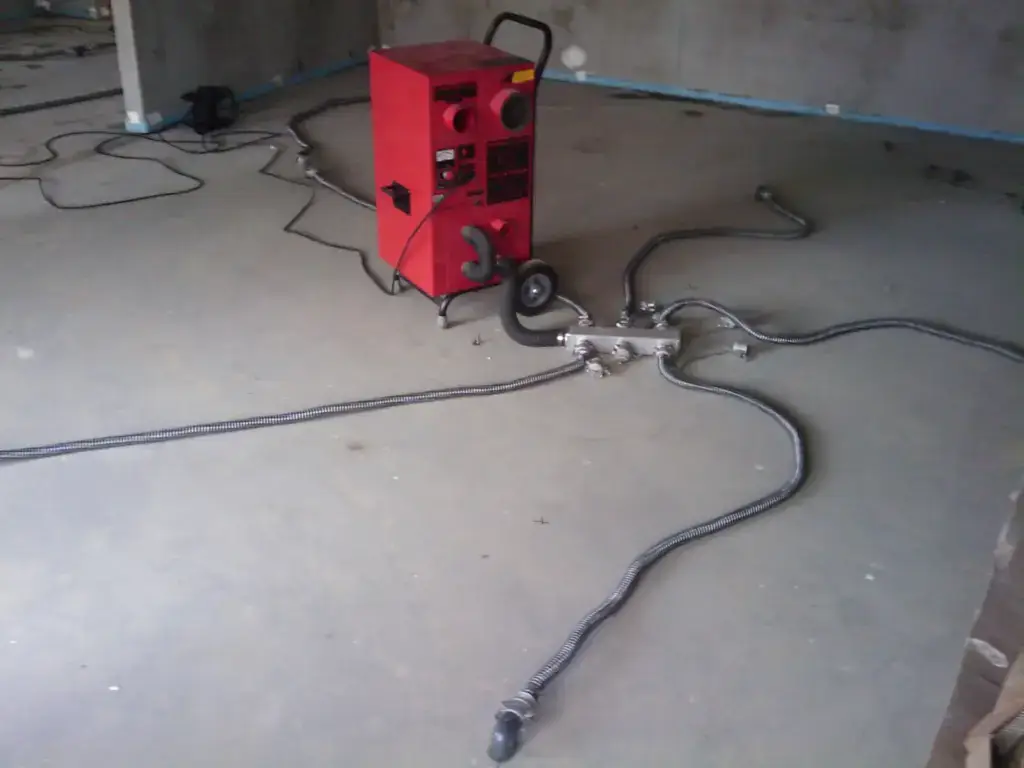
Injection drying follows a structured, evidence-based process designed to dry materials safely and efficiently.
Specialist equipment is used to identify trapped moisture, map affected areas, and determine the most effective drying strategy.
Small access points are created to allow controlled airflow into cavities or voids. This minimises disruption and avoids unnecessary strip-out.
Dry air is introduced into the structure while moisture-laden air is extracted. Dehumidifiers are used to maintain stable drying conditions.
Moisture levels are regularly monitored and drying systems adjusted to ensure materials dry evenly and safely.
Drying continues until target moisture levels are achieved, allowing reinstatement or reoccupation to proceed confidently.
Without injection drying, accessing trapped moisture often means removing walls, floors, or finishes, increasing cost, disruption, and reinstatement time.
Injection drying is frequently chosen because it:
This makes it particularly valuable in occupied homes, commercial properties, and sensitive or high-value buildings.
Many UK homes are well-suited to injection drying due to common construction types, including:
Injection drying allows these properties to be dried without extensive disruption, making it an effective solution for lived-in homes.
For businesses, flooding affects more than the building, it affects operations. Injection drying supports faster recovery by:
It is widely used in offices, retail units, healthcare environments, and industrial premises. Check out our Construction Drying for Major Development case study to see how our team of experts successfully restored safe humidity levels to an ongoing development project.
Insurers and loss adjusters increasingly recognise injection drying as a cost-effective and appropriate drying method where standard drying would be insufficient.
Professional documentation and moisture monitoring:
Early specialist drying often prevents more extensive and costly repairs later.
Ideal Response provides professional injection drying services across the UK as part of comprehensive flood and water damage restoration.
Support includes:
This ensures drying is thorough, targeted, and defensible.
Even after drying, trapped moisture may remain if injection drying was not used. Common warning signs include:
A professional moisture assessment can confirm whether further drying is required.
Flood damage doesn’t end when surfaces feel dry.
Injection drying addresses the moisture hidden within walls and floors, the moisture that causes mould, decay, and long-term damage if left untreated. Used at the right time, injection drying:
Take the next step
If your property has flooded or you suspect moisture may still be trapped within the structure, contact Ideal Response for a professional moisture assessment and specialist injection drying support.
Early, targeted drying is the difference between a clean recovery and recurring problems.

Chris Hedges is Head of Marketing at Ideal Response and the author of every article published on this site. With over 25 years of senior marketing experience across property, legal, and professional services sectors, Chris brings a clear, evidence-led approach to writing about fire damage, flood restoration, and specialist property remediation. His philosophy is simple: cut through the noise, respect the reader's time, and give people the information they actually need.
Explore more articles about damage restoration, specialist cleaning and what we do



If you’re dealing with fire damage, flooding, or an environmental incident, our team is ready to respond. No matter if you have a question or have an emergency that you need help with, call:
If you’d prefer to drop us a message, use our main contact form and upload any pictures of the incident. Would you like us to call you? Fill out the short ‘Request a call back’ form.


