
Fly Tipping Removal
- Business Customers
- Domestic Customers
Fly tipping can have an immediate and lasting impact on the safety, compliance and reputation of a property. Across the UK, thousands of incidents of illegally dumped waste cost private landowners, councils and public authorities millions of pounds each year in clearance, maintenance and enforcement.
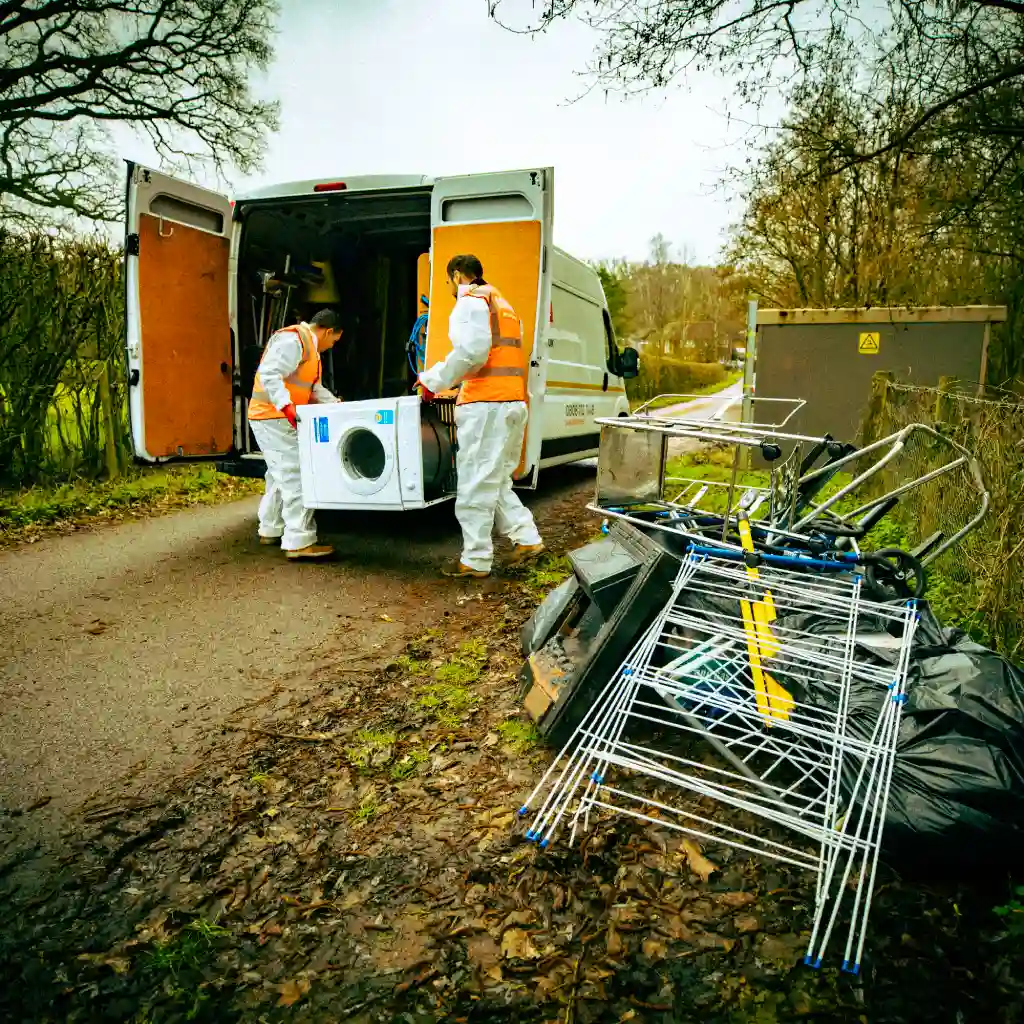
At Ideal Response, we deliver professional fly tipping removal services across London and the Home Counties, supporting commercial property owners, facilities managers and public sector organisations with fast, compliant and fully documented clearance solutions. Our experienced teams understand that no two fly tipping incidents are the same.
Alternatively, call us on 0800 088 4170
Why property owners nationwide recommend Ideal Response
Discover why property owners nationwide trust Ideal Response for expert, damp surveys, hoarder cleaning, mould removal, and flood or fire restoration. Our clients consistently praise our rapid response, technical precision, and compassionate service that makes recovery stress-free.
EXCELLENTTrustindex verifies that the original source of the review is Google. Dave was a very helpful and friendly man would highly recommend himPosted onTrustindex verifies that the original source of the review is Google. Absolutely rapid response time, cleared out flooded house is record time. Dave and Miguel, cracking guys!Posted onTrustindex verifies that the original source of the review is Google. Words cannot describe how happy I am with the service provided. From the very first interaction with Kash to the end, I couldn’t have asked for more. Kash was so compassionate and helpful and despite it being a Sunday night, I had everything booked in for the very next morning. Steve and Dave were the team at my property and they were so professional, discreet yet extremely personable, keeping me informed throughout and going above and beyond anything I could have imagined. I’m so thankful for everything they did for me, it is phenomenal! Couldn’t have asked for a better service or better people. Thank you!Posted onTrustindex verifies that the original source of the review is Google. I can’t recommend the team at Ideal Response enough! Kash was lovely and so helpful with getting a clean booked promptly, and Dan and Sam did a phenomenal job of cleaning the flat out and helping to get everything organised. Dan went out of his way to keep me updated through the whole process, and was always reassuring. The whole team have been nothing but professional and compassionate, and truly transformed the space. Forever grateful for their hard work and wouldn’t hesitate to recommend to anyone!Posted onTrustindex verifies that the original source of the review is Google. Steve and Dan were absolutely brilliant from start to finish. They came out quickly, assessed the damage, and got straight to work installing dehumidifiers and lifting the flooring to help dry my house out. They explained everything clearly, kept me updated throughout, and were so respectful of my home. Their professionalism, efficiency, and friendly attitude made a really stressful situation so much easier to deal with. You can tell they genuinely care about doing a proper job. I’m so grateful for their hard work and would highly recommend them to anyone needing help with water damage or drying services. Thanks again, Steve and Dan — you were amazing! 🙌Posted onTrustindex verifies that the original source of the review is Google. Steve & Josh provided first class help and service so grateful thank you.Posted onTrustindex verifies that the original source of the review is Google. Steve and Dave were excellent from start to finish, from phoning ahead of time to let me know when they would be arriving..To keeping me informed about each stage of the process. They were good at communicating and were very reassuring and they did an excellent job.Posted onTrustindex verifies that the original source of the review is Google. The team were amazing! Steve and Dave did a fantastic job of clearing my relative’s house after he died and we discovered he’d been a serial hoarder. They were really professional but also understanding and supportive which made a real difference to an otherwise very distressing situation. And thanks also to Kash in the office for organising the visit so promptly. I’ve been telling all my friends about Ideal Response and wouldn’t hesitate to recommend them to anyone in a similar situation.Posted onTrustindex verifies that the original source of the review is Google. Steve was fantastic, would use again !Verified by TrustindexTrustindex verified badge is the Universal Symbol of Trust. Only the greatest companies can get the verified badge who has a review score above 4.5, based on customer reviews over the past 12 months. Read more
Expert fly tipping clearance throughout the South East
Illegal dumping of waste isn’t just unsightly, it’s a serious hazard. From public health risks to environmental contamination and legal liability, fly tipping can escalate quickly if left unchecked. Ideal Response provides professional, fully compliant fly tipping removal for landowners, councils, commercial properties, and public sector organisations across London and the Home Counties.
- Trusted expertise: Our licensed teams handle all types of fly tipped materials, from household waste to construction debris and hazardous items, ensuring your property is cleared safely and in line with UK regulations.
- Rapid response: Fly tipping often requires immediate attention to reduce safety risks, prevent repeat dumping, and protect the local community. We mobilise quickly with the right equipment and team for the job.
- Compliant & documented: All waste is transported by licensed carriers to authorised facilities, with full waste transfer notes, photographic evidence, and audit-ready reporting.
- Environmentally responsible: We prioritise segregation, recycling, and safe disposal to minimise environmental impact while fully complying with environmental law.
- Peace of mind: From initial assessment to final clearance, we manage the entire process, restoring your land safely, efficiently, and legally.
Legal responsibilities for fly tipping
Fly tipping is a criminal offence, but responsibility for clearing illegally dumped waste usually rests with the landowner. Under the Environmental Protection Act 1990, private landowners must ensure waste is removed and disposed of lawfully, even if they were not responsible for the dumping.
Failure to act can result in enforcement action, fines, prosecution, environmental damage and increased repeat incidents.
Organisations also have a legal Duty of Care to ensure waste is handled by licensed carriers and taken to authorised facilities. Using unlicensed contractors can expose landowners and businesses to serious liability.
Ideal Response provides fully compliant fly tipping removal, including licensed transport, authorised disposal and complete documentation such as Waste Transfer Notes and hazardous consignment notes where required.
Types of fly tipping we remove
Fly tipping varies in scale, material type and risk level. Our teams are trained to remove and dispose of all common forms of illegally dumped waste safely and compliantly.
Household & bulky waste
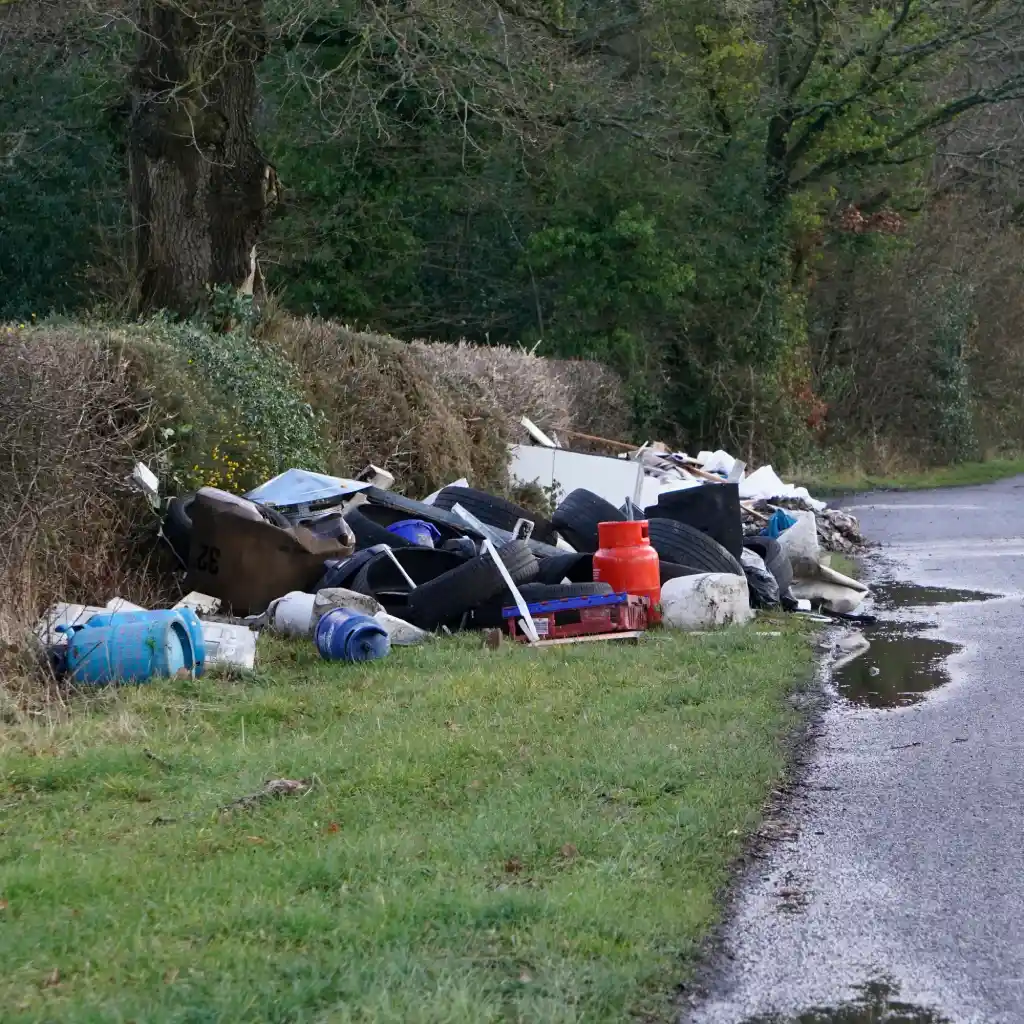
Sofas, mattresses, white goods and black bag waste that create fire, pest and safety risks.
Construction & demolition waste
Rubble, plasterboard, timber, insulation and mixed building materials frequently dumped on vacant or development land.
Commercial & trade waste
Business refuse, packaging and mixed commercial waste requiring correct segregation and disposal.
Hazardous & controlled waste
Asbestos-containing materials, chemicals, oils or clinical waste requiring specialist handling and regulated disposal.
Roadside & rural fly tipping
Waste dumped on verges, access roads, agricultural land or public-facing areas where safety and environmental considerations are critical.
Emergency & large-scale fly tipping clearance
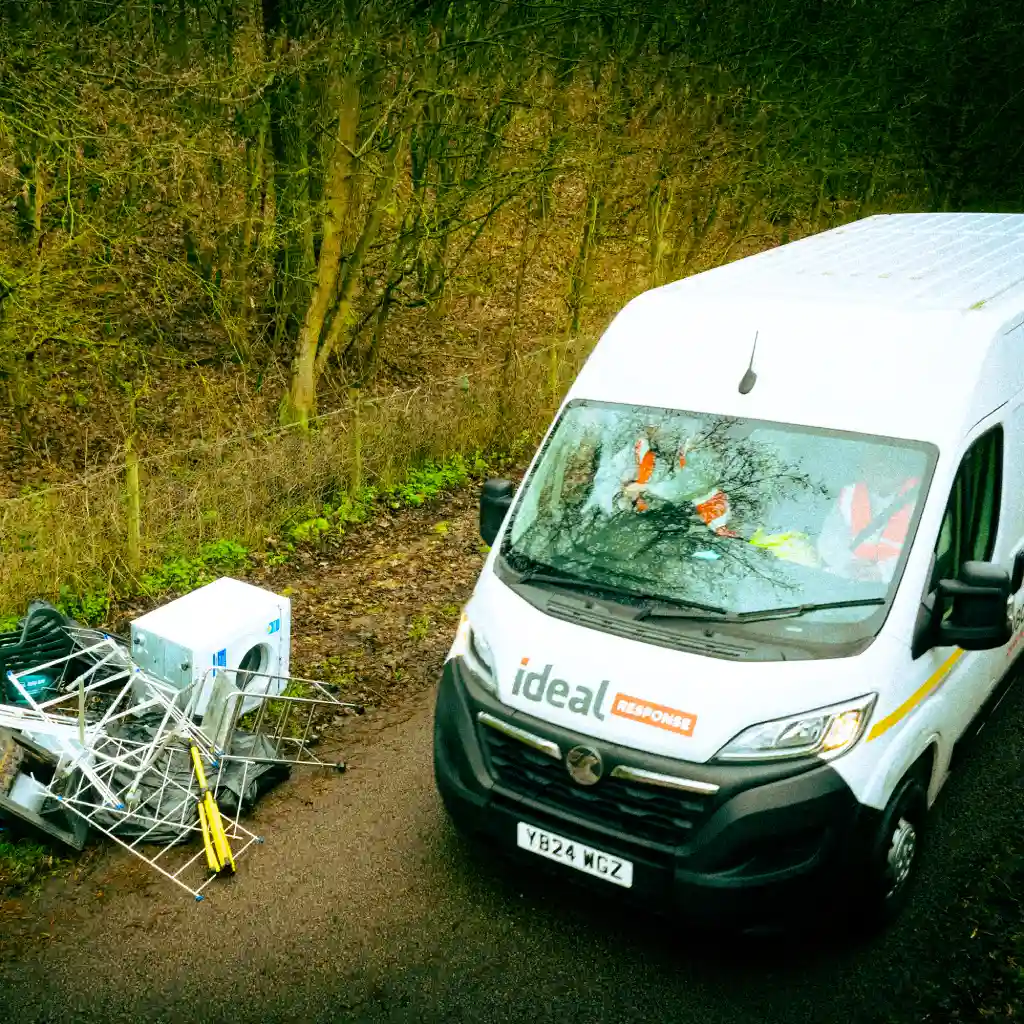
Some fly tipping incidents require urgent or coordinated response due to location, scale or risk.
Emergency fly tipping removal
Where waste obstructs access routes, presents fire or contamination risks, or impacts public-facing sites, rapid mobilisation is essential. We assess risk quickly and implement safe, compliant removal procedures.
High-volume & complex clearance
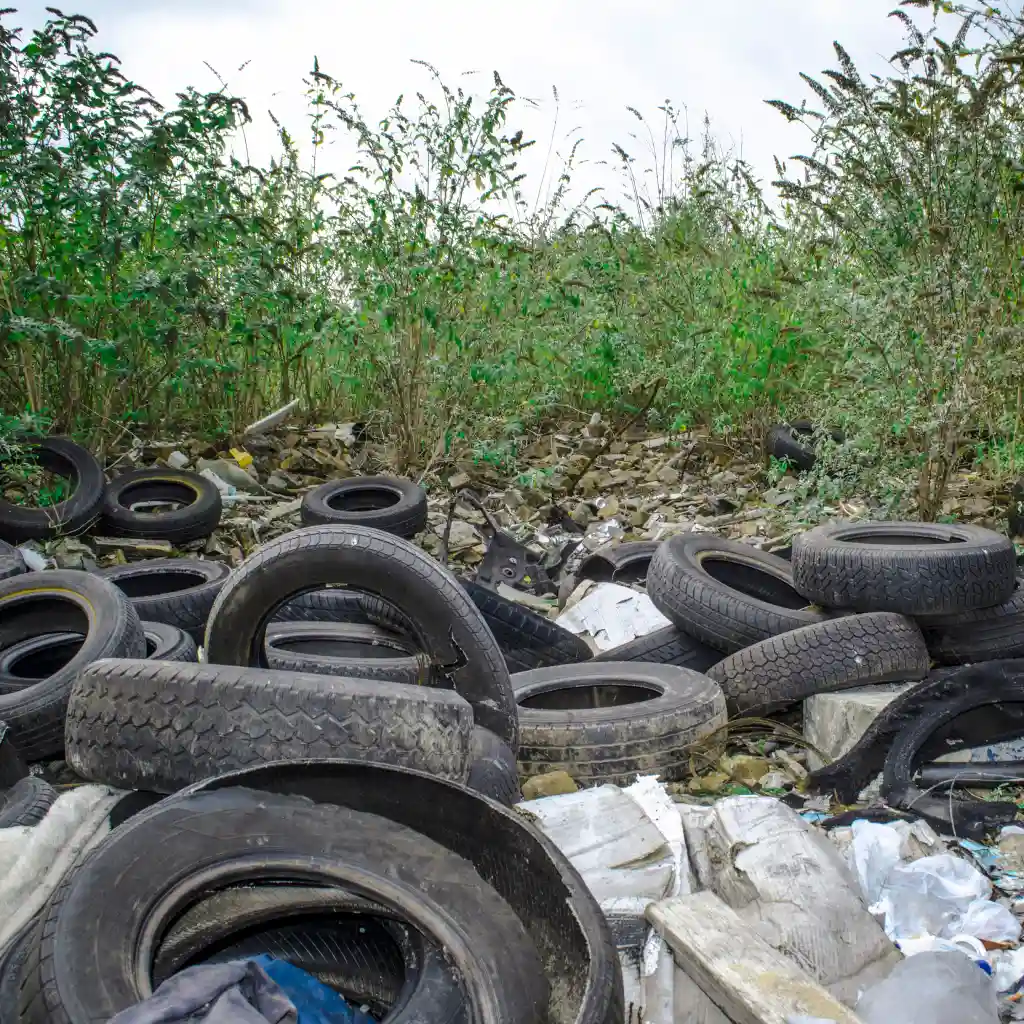
Large-scale illegal dumping may involve multiple waste streams, heavy materials or hazardous content. We deploy appropriately trained teams and equipment to manage significant clearance safely and efficiently.
Sensitive locations
We regularly operate on active commercial sites, housing estates and public access areas, prioritising safety, controlled working methods and minimal disruption.
Our fly tipping removal process
We follow a structured, compliant and safety-led approach to every fly tipping incident. From initial enquiry through to licensed disposal and documentation, our process ensures waste is removed efficiently, responsibly and in full accordance with UK environmental regulations.
Step 1
Initial contact
Tell us about the fly tipping incident and the type of site affected. We will ask a few focused questions about the scale of the waste, site access and whether any hazardous materials are suspected.
Where possible, we request photographs so we can assess the situation accurately and provide a clear quotation.
Step 2
Assess and plan
Once instructed, we assess the site and determine the safest and most compliant removal strategy. This includes reviewing risk factors, waste classification and any access or operational constraints.
Where required, we prepare the necessary safety and compliance documentation prior to works commencing.
Step 3
Site preparation
Before removal begins, we secure the working area and implement appropriate safety controls. Waste is assessed and, where necessary, separated to ensure correct handling and environmentally responsible disposal.
This controlled approach reduces risk and supports regulatory compliance from the outset.
Step 4
Removal & licensed disposal
All waste is removed by trained operatives and transported by licensed waste carriers to authorised recycling or disposal facilities.
Any hazardous materials are managed under controlled conditions and disposed of in accordance with UK waste legislation.
Step 5
Final inspection & documentation
Once clearance is complete, we carry out a final inspection to ensure the area is safe, clear and presentable.
We provide Waste Transfer Notes and any required hazardous consignment documentation, giving you a full audit trail and compliance assurance.
Trust us to handle the details – book the fly tipping removal service
Fly tipping removal FAQs
Who is responsible for removing fly tipping?
In most cases, the landowner is responsible for removing illegally dumped waste from private land, even if they were not responsible for the dumping. Local authorities are typically responsible for public land and adopted highways. Under the Environmental Protection Act 1990, waste must be removed and disposed of lawfully using licensed carriers.
How quickly can fly tipped waste be removed?
Response times depend on the scale, location and risk level of the incident. Urgent cases involving safety risks, obstruction or hazardous materials can be prioritised. We assess each situation promptly and provide clear timescales for clearance.
What types of waste can you remove?
We remove household waste, bulky items, construction debris, commercial waste and, where required, hazardous or controlled materials such as asbestos-containing waste. All materials are handled and disposed of in accordance with UK waste regulations.
Do you provide waste transfer documentation?
Yes. All waste is removed by licensed carriers and accompanied by the appropriate Waste Transfer Notes. Where hazardous waste is involved, hazardous consignment documentation is provided to ensure full regulatory compliance and audit traceability.
Can fly tipping involve hazardous materials?
Yes. Some incidents include asbestos, chemicals, oils, fuel containers or other controlled waste. These materials require specialist handling and disposal procedures to prevent environmental contamination and health risks.
What happens if fly tipping is not cleared?
Leaving fly tipped waste in place can lead to environmental damage, pest infestation, fire risk, and further illegal dumping. Landowners may also face enforcement action if waste is not dealt with appropriately.
Do you work with councils and commercial organisations?
Yes. We support private landowners, managing agents, commercial property owners, housing associations and public sector bodies with compliant fly tipping clearance and documentation.
How is fly tipped waste disposed of?
Waste is transported by licensed carriers to authorised recycling or disposal facilities. Materials are segregated where possible to minimise environmental impact and ensure compliance with Duty of Care obligations.
Let’s get your property looking its best
Related reading: Understanding waste management
Alongside our professional fly tipping removal services, Ideal Response provides practical guides and expert insights covering illegal waste management, hazardous waste handling, site compliance, and environmental responsibilities. Our articles help landowners, councils, and facilities managers understand legal obligations, maintain safe sites, and prevent environmental hazards associated with fly tipping.
Get expert support
No matter if you have a question you need to ask or have an emergency that you need help with, call:
0800 088 4170
If you’d prefer to drop us a message, fill out the enquiry form and we’ll get back to you as soon as possible.
Request a call back


