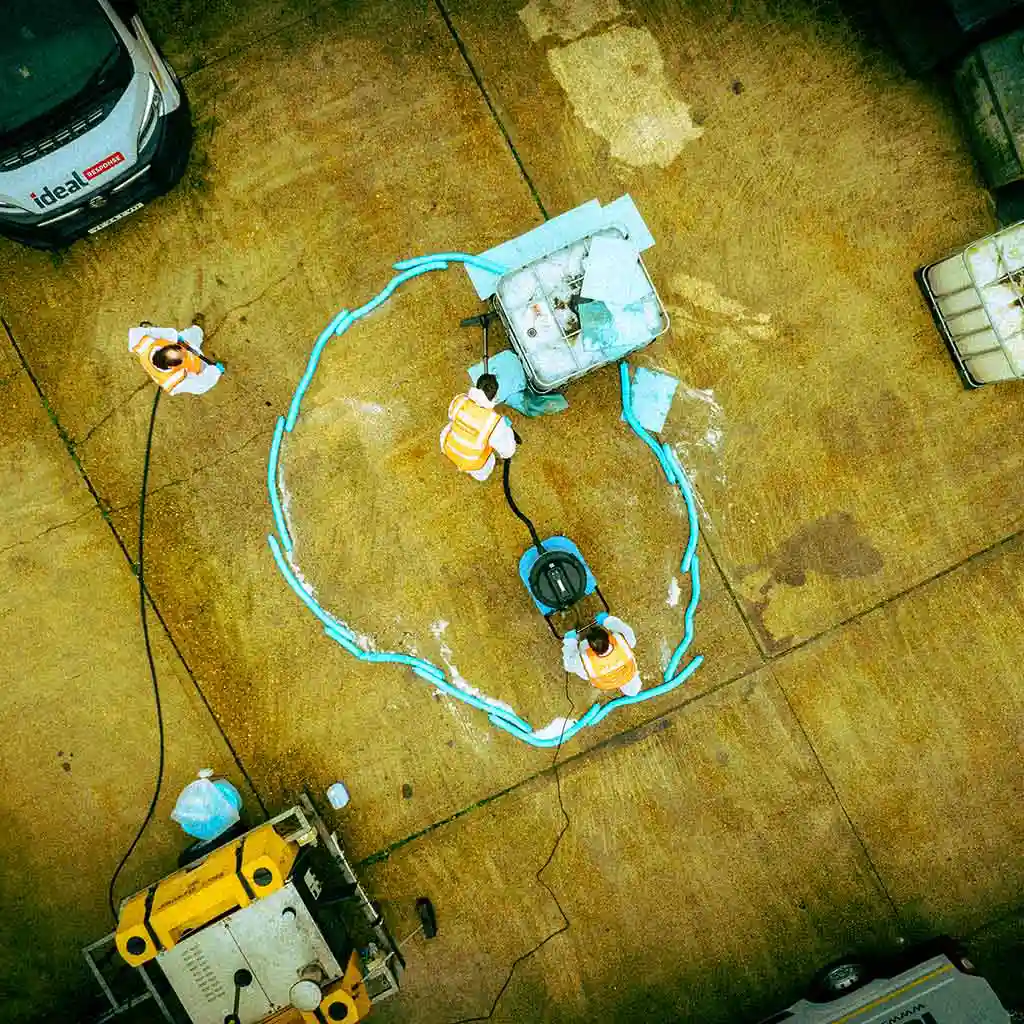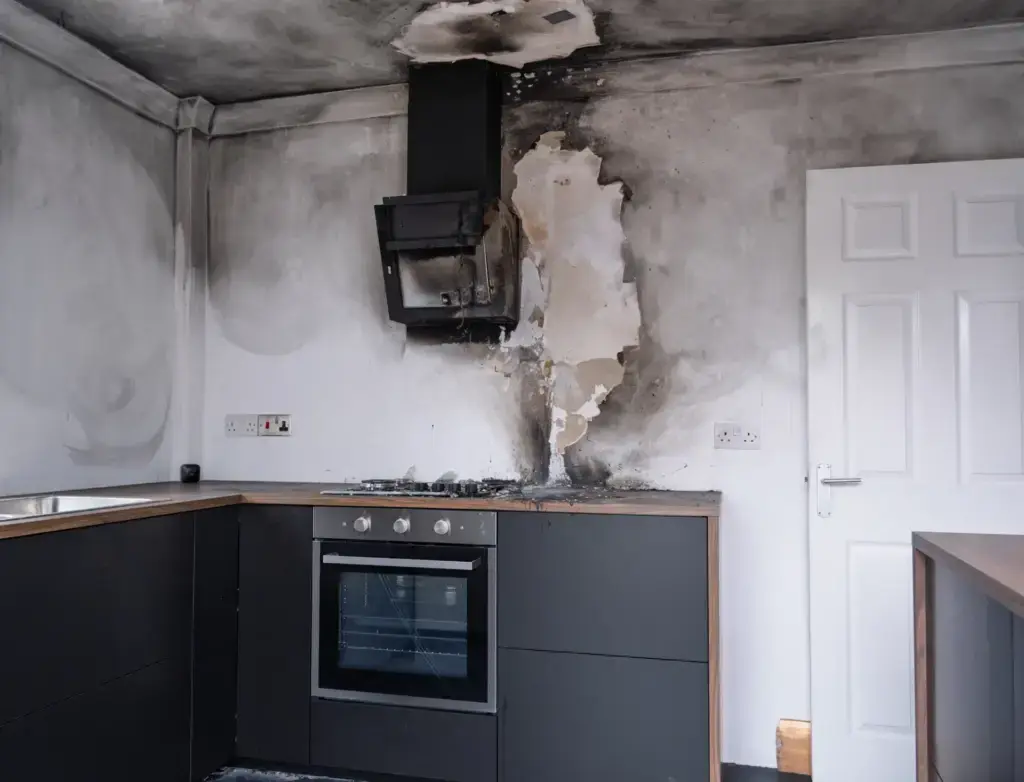
A chemical spill in a commercial building rarely feels like a major incident at first. It might be:
- A container knocked over in a storage area
- Aleak discovered during maintenance
- A small release that appears to be contained quickly
The immediate response is usually fast and well-intentioned – isolate the area, move people away, try to control the situation.
But within a short space of time, the questions start to change:
- Is the building actually safe to occupy?
- Has the contamination spread beyond what we can see?
- Are there legal or reporting requirements?
- What happens next and how serious is this?
This is the point where a small spill becomes something much more complex. Because in reality a chemical spill is not just a clean-up issue, it’s a health, safety and compliance risk that needs to be handled correctly from the outset.
What you’ll learn in this article
You’ll gain a clear understanding of:
- What actually happens after a chemical spill in a commercial environment
- How contamination can spread beyond the initial area
- The health, safety and legal responsibilities involved
- Where internal response typically falls short
- When specialist intervention becomes essential
Skip to:
The first 30 minutes: What actually matters most
The critical question: How far has it really spread?
Why ‘it looks contained’ is often misleading
The compliance pressure most businesses don’t expect
A real-world pattern: How small spills escalate
Why internal clean-up often doesn’t resolve the problem
The moment the incident escalates internally
What a properly managed spill response needs to achieve
Where chemical spill incidents start to cause lasting problems
The first 30 minutes: What actually matters most
In the immediate aftermath of a spill, decisions are often made quickly and under pressure.
At this stage, the priority is not ‘cleaning up’. It’s controlling risk before it escalates.
That means:
- Isolating the area properly (not just informally avoiding it)
- Preventing staff or the public from entering
- Identifying the substance involved, if possible
- Stopping the spill from spreading further, particularly into drains or shared spaces
Under the Control of Substances Hazardous to Health Regulations 2002, organisations have a legal duty to manage exposure to hazardous substances. It starts immediately, not after the situation is understood.
The critical question: How far has it really spread?
Once the immediate risk is stabilised, attention shifts to something far more important which is the extent of contamination. This is where most spills become more serious than expect because chemicals don’t stay neatly contained.
Depending on the substance, contamination may:
- Spread across flooring and into adjacent areas
- Be absorbed into porous materials
- Travel via foot traffic, equipment or cleaning attempts
- Release vapours that affect air quality
The visible spill is often only part of the issue.
Why ‘it looks contained’ is often misleading
This is one of the most common, and costly, assumptions. A spill might appear limited to a small area on the surface. But in reality:
- Liquids can seep beneath flooring
- Residues can remain after surface cleaning
- Airborne contaminants may have already spread
- Cross-contamination may have occurred unknowingly
By the time a spill ‘looks manageable’, it may already require a much more controlled response.
The compliance pressure most businesses don’t expect
Beyond the physical clean-up, there’s another layer many organisations underestimate which is regulatory. responsibility
Depending on the substance and scenario, this may involve:
- Internal incident documentation
- Demonstrating appropriate response procedures
- Environmental considerations (especially if drainage is involved)
- Reporting obligations under RIDDOR, where applicable
Failure to handle this correctly doesn’t just create risk in the moment, it can lead to investigation, liability, and reputational impact later.
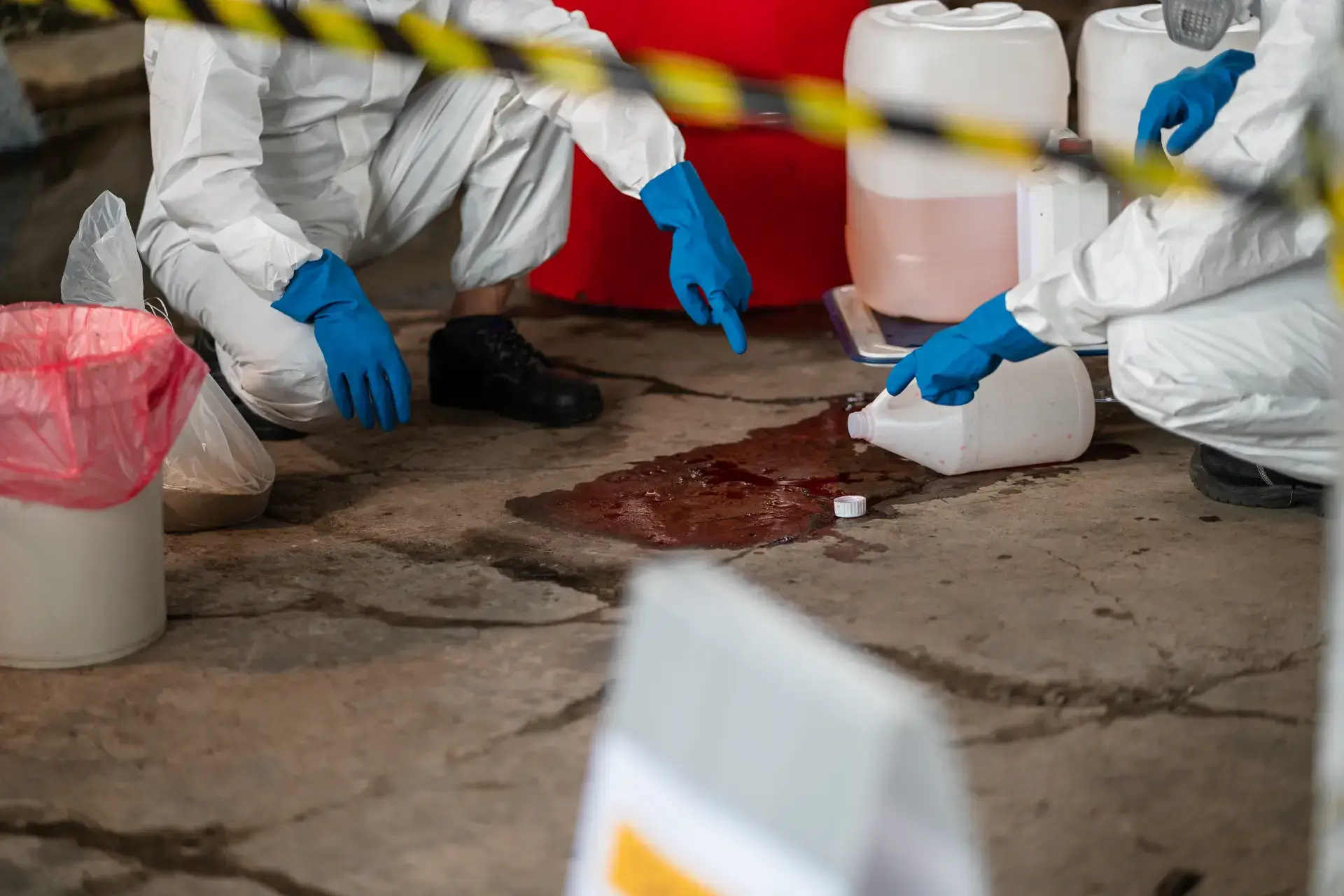
A real-world pattern: How small spills escalate
Across commercial environments, we see the same pattern repeatedly. A spill starts small:
- A container leaks
- A chemical is knocked over
- A minor incident during maintenance
It appears manageable so, it’s handled internally. But over time:
- Contamination spreads through movement and use of the space
- Residues remain in materials
- Odours or irritation develop
- Uncertainty grows around safety and compliance
What could have been resolved quickly becomes a wider operational issue.
Why internal clean-up often doesn’t resolve the problem
It’s completely understandable that teams try to deal with spills themselves. But most internal responses are not designed for:
- Hazardous substance handling
- Contamination beyond visible surfaces
- Correct PPE and safety protocols
- Compliant waste disposal
This often results in:
- Partial clean-up
- Missed contamination
- Increased exposure risk
- A false sense of resolution
In simple terms: the spill is removed but the problem isn’t.
The moment the incident escalates internally
In most commercial environments, there’s a noticeable shift in how a spill is treated. At first, it’s handled as an operational issue- contain it, clean it, move on. But then something changes. It might be:
- Uncertainty about the substance involved
- Concern from staff about safety
- Signs the contamination has spread further than expected
- Questions from management about reporting or liability
At that point, the conversation moves beyond the immediate incident. It becomes a business risk discussion. And the focus changes from:
“Can we deal with this?” to “What are the consequences if we don’t handle this correctly?”
That shift is critical. It’s where many organisations realise the situation requires more than an internal response.
What a properly managed spill response needs to achieve
A chemical spill response isn’t defined by how quickly the visible issue disappears.
In a commercial setting, success is measured differently. It’s about whether the situation has been fully controlled, understood and closed off from future risk.
That means:
- The substance has been correctly identified and assessed
- The extent of contamination is clearly understood
- No harmful residue remains within the environment
- There is confidence the space is safe to use again
- All actions taken can stand up to internal or external scrutiny
In other words, the outcome isn’t just a clean area, it’s a defensible position. This is particularly important in environments where:
- Staff safety is a priority
- Compliance matters
- Or operational continuity is critical
Where chemical spill incidents start to cause lasting problems
The immediate disruption of a spill is usually short-term. What tends to last longer are the consequences of how it was handled. We often see issues develop where:
- Contamination wasn’t fully identified at the outset
- Areas were put back into use too quickly
- Internal clean-up gave a false sense of resolution
- Documentation or reporting wasn’t properly considered
These don’t always cause problems straight away. But over time, they can lead to:
- Recurring safety concerns
- Uncertainty around exposure
- Operational interruptions returning unexpectedly
- Increased scrutiny if questions are later raised
In many cases, the real impact of a spill isn’t the incident itself it’s the lack of clarity and control afterwards.
Conclusion: The incident is only the start
A chemical spill in a commercial building is not just an isolated event. It’s the starting point of a situation that needs to be handled carefully, correctly and completely.
The key takeaways are:
- What you can see is rarely the full extent of the problem
- Contamination can spread quickly and silently
- Legal and compliance responsibilities are immediate
- Internal responses often fall short beyond the initial stage
The difference between a controlled incident and a serious issue comes down to how it’s managed next.
Ideal Response provides specialist chemical spill response services across the UK. Helping organisations contain risk, resolve contamination and return to safe operations with confidence.
Contact the team today for expert support.
Frequently asked questions about chemical spills in commercial buildings
How do we know if a chemical spill is serious enough to escalate?
This is one of the most common areas of uncertainty.
If there is any doubt about:
- The substance involved
- How far it has spread
- Potential health risks
- Or whether it has been fully contained
It should be treated as a situation requiring further assessment.
In commercial environments, the risk of underestimating a spill is usually far greater than overreacting.
Can we continue operating in the building after a spill?
Not safely, at least not without proper assessment.
Even if the spill appears contained, there may still be:
- Airborne contamination
- Residue in materials
- Or unknown exposure risks
Continuing operations too soon can increase both health risks and liability.
What’s the risk of handling a spill internally?
Internal teams can often manage very minor, well-understood spills. However, risks increase significantly where:
- The substance is hazardous or unclear
- Contamination has spread
- Appropriate PPE or training is lacking
The most common issue is not doing anything wrong, it’s not realising what’s been missed.
Do all chemical spills need to be reported?
Not all, but some do.
Reporting requirements depend on:
- The substance involved
- The scale of the incident
- Whether there was exposure or injury
Certain incidents may fall under reporting frameworks such as RIDDOR. If there is uncertainty, it’s important to clarify this early.
How far can contamination actually spread?
Further than most people expect. Contamination can move through:
- Foot traffic
- Equipment
- Airflow
- And absorption into materials
It’s common for the affected area to extend beyond what is initially visible.
What happens if contamination is only partially removed?
This is where longer-term problems tend to develop. You may see:
- Recurring odours
- Ongoing health concerns
- Uncertainty around safety
- Disruption returning after the space is back in use
Partial clean-up often creates a false sense of resolution.
How quickly should a specialist response be arranged?
As soon as there is any uncertainty.
Early involvement helps:
- Limit spread
- Reduce overall impact
- Ensure the situation is handled correctly from the outset
Delays tend to increase both complexity and cost.
What does a business need to demonstrate after a chemical spill?
In many cases, it’s not just about resolving the issue, it’s about being able to show that it was handled properly.
This may include:
- Appropriate response actions
- Risk management
- Safe handling and disposal
- Compliance with relevant regulations
This becomes particularly important if questions are raised later.
Can a spill affect areas that weren’t directly exposed?
Yes. This is very common.
Contamination can spread indirectly through:
- Contact
- Air movement
- Or transfer between surfaces
Areas that appear unaffected may still require assessment.
Why do businesses bring in specialist spill response teams?
Because the priority isn’t just removing the visible issue.
It’s about:
- Ensuring safety
- Managing risk
- Meeting compliance requirements
- And restoring confidence that the environment is fully under control
That level of assurance is difficult to achieve without specialist support.

Chris Hedges - Head of Marketing
With over 25 years' experience, Chris is adept at defining and driving strategy, while also enjoying hands-on operational delivery. He believes in an equal blend of creativity and analytical scrutiny, always finding inventive ways to achieve objectives, underpinned by evidence. Chris’s philosophies are simple: don't overcomplicate, always prioritise customer experience, and bend the rules just enough to cut through the noise and drive momentum and growth.