If you’ve found marks on a wall, a musty smell in a room, or patches that keep coming back no matter how often you clean them, you’re not alone.
One of the most common questions property owners ask is: “Is this damp, or is it mould?”
And it matters more than most people realise. Because while they often appear together, they are not the same problem and getting it wrong is one of the main reasons issues like this:
- Keep coming back
- Spread to other areas
- Become more expensive to fix over time
In this article, you’ll learn:
- The clear difference between damp and mould
- What each one actually looks like in a real property
- What causes them (and why they keep returning)
- How to tell what you’re really dealing with
- and when it’s time to take action
Skip to:
Why damp and mould are so common in UK properties
What damp actually looks like (and why it’s often missed early)
What mould looks like (and what its location is telling you)
What this looks like in a real property (and how it develops over time)
Why it keeps coming back, even after you’ve ‘dealt with it’
The risks of leaving damp and mould unresolved
When it stops being a cleaning job and starts requiring investigation
How damp and mould problems are properly diagnosed
Conclusion: It’s not about what you can see, it’s about what’s driving it
The key difference
At a basic level, the distinction is straightforward: Damp is the moisture problem. Mould is what grows because of it.
But in real properties, it’s rarely that simple and that’s where confusion comes in. Damp refers to excess moisture within the structure of a building. That moisture can come from:
- Condensation forming on cold surfaces
- Water penetrating from outside
- internal leaks or poor ventilation
It can exist quietly for some time, often without being immediately obvious.
Mould, on the other hand, is a living organism. It develops when that moisture is allowed to sit over time, particularly in areas where:
- Airflow is restricted
- Surfaces remain cold
- Humidity levels stay high
In other words, mould is not the root problem it’s a visible warning sign.
Why the difference matters more than you think
Understanding this isn’t just technical, it directly affects how the problem is handled.
If you treat mould as the issue:
- You clean it
- You repaint it
- You try to remove what you can see
But if the damp remains, the conditions for mould are still there, so it comes back. This is why many property owners feel like they’re ‘dealing with the same problem over and over again’.
A simple way to think about it in practice
A useful way to picture it is:
- Damp is happening within the building
- Mould is happening on the surface
So while mould is what draws your attention, damp is what needs to be understood and resolved. This is where damp surveys are worth their weight in gold.
Until that happens, any solution is likely to be temporary.
Why damp and mould are so common in UK properties
There’s a reason this issue comes up so often in the UK. It’s not just about individual properties, it’s about a combination of factors:
- Older housing stock with less modern insulation colder external
- Temperatures creating condensation points
- High levels of rainfall and ambient moisture changes in how homes are heated and ventilated
According to the English Housing Survey, around 4 – 5% of homes in England have a recognised damp problem but the number experiencing condensation-related issues is significantly higher.
In practice, this is something most property owners will encounter at some stage, no matter if they expect to or not.
What damp actually looks like (and why it’s often missed early)
One of the challenges with damp is that it doesn’t always announce itself clearly.
In many cases, it develops gradually and presents as:
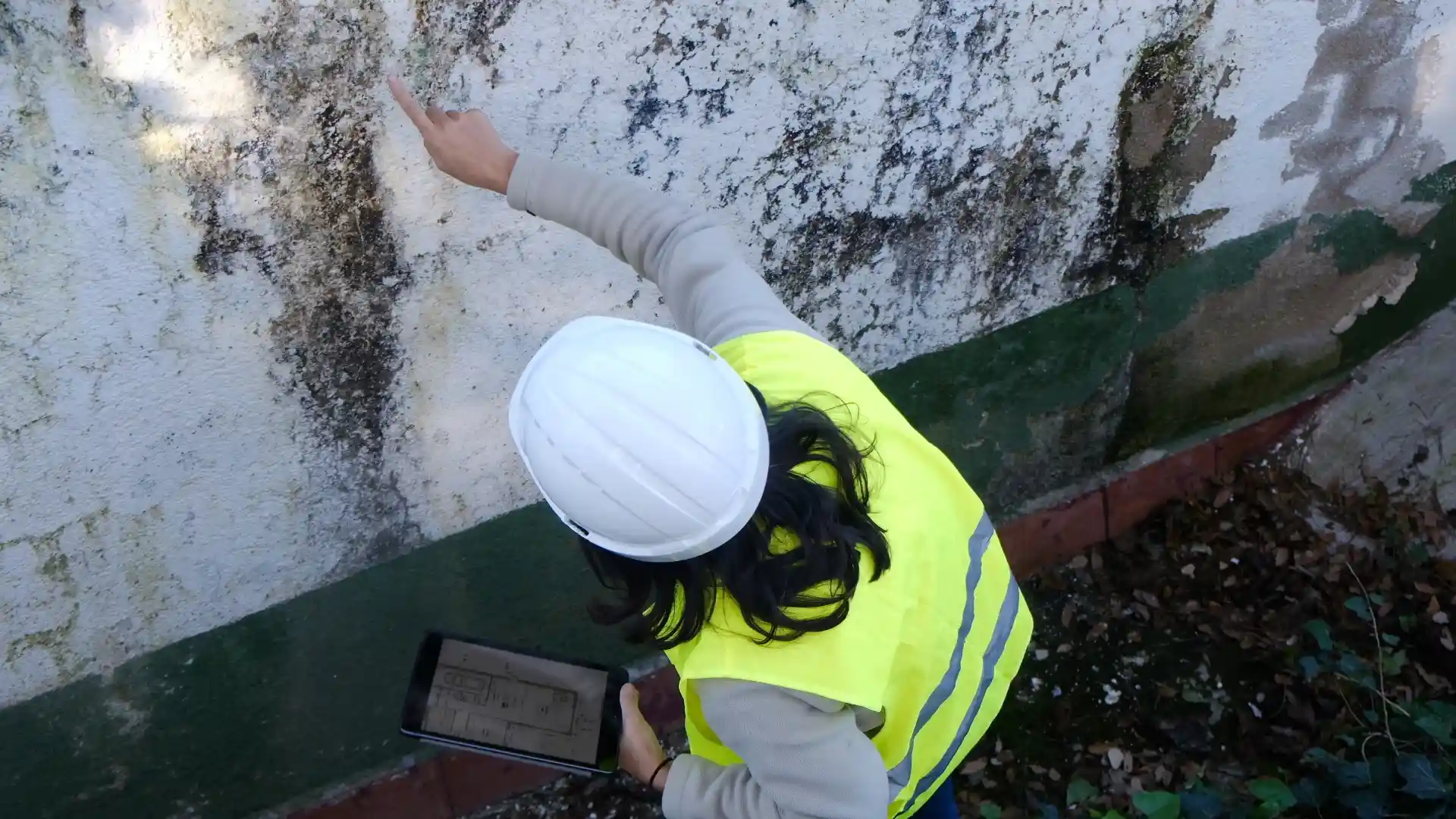
- Slightly darker patches on walls
- Subtle staining or “tide marks”
- Peeling paint or lifting wallpaper
- Areas that feel colder or slightly damp to the touch
It’s often found:
- On external-facing walls
- Around windows and doors
- In corners where airflow is restricted
Early on, it’s easy to dismiss, which is why it’s often overlooked until it becomes more obvious.
What mould looks like (and what its location is telling you)
Mould is usually more visible, but where it appears is just as important as how it looks.
Common signs include:
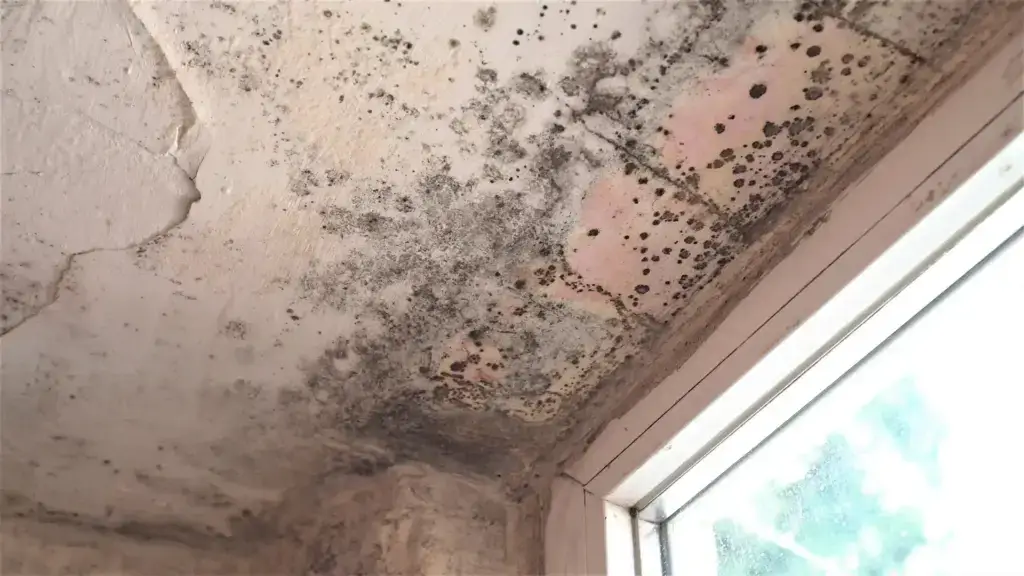
- Black or dark spotting
- Clustered growth in corners
- Spreading patches behind furniture
We regularly see mould in areas such as:
- Behind wardrobes or beds placed against external walls
- Along ceiling lines in bedrooms
- Around window reveals
- In spaces where airflow is naturally limited
These are all places where moisture lingers and where conditions allow mould to establish itself.
What this looks like in a real property (and how it develops over time)
In real scenarios, damp and mould rarely appear in isolation. A typical progression might look like this:
- Condensation forms on a cold surface
- That moisture is absorbed into the material
- Airflow is restricted, preventing drying mould begins to develop
At first, it’s minor. Something that feels manageable. But over time:
- It spreads
- It darkens
- It becomes harder to control
By the time it’s visible in multiple areas, it’s usually been developing for some time and will need professional mould cleaning and removal
Why it keeps coming back, even after you’ve ‘dealt with it’
This is where most frustration comes from. The initial response is logical:
- Clean the affected area
- Repaint or redecorate
- Improve ventilation slightly
And in some cases, that reduces the appearance.
But if moisture is still present, the environment hasn’t changed, so the result is predictable:
- Mould returns
- Staining reappears
- The issue feels ongoing
This isn’t because the solution was wrong, it’s because it didn’t go far enough.
The risks of leaving damp and mould unresolved
Left unchecked, damp and mould tend to worsen rather than stabilise. Over time, this can lead to:
- Increasing spread across walls and ceilings
- Deterioration of plaster, paint and finishes
- Persistent odours that are difficult to remove
- Noticeable changes in indoor air quality
The UK Health Security Agency has identified links between mould exposure and respiratory issues, particularly for more vulnerable individuals.
This is why it’s now treated as a serious environmental issue, not just a cosmetic one.
When it stops being a cleaning job and starts requiring investigation
There’s a clear shift point where surface treatment is no longer enough. You should start looking deeper if:
- Mould returns after cleaning
- Damp patches continue to spread
- The smell persists despite ventilation
- More than one area is affected
At this stage, the focus needs to change from removal to understanding.
How damp and mould problems are properly diagnosed
A proper diagnosis looks beyond what’s immediately visible. It involves:
- Identifying where moisture is entering or forming
- Assessing airflow and ventilation patterns
- Understanding how the property is used
- Evaluating how materials are responding to moisture
This allows the problem to be addressed at its source, not just where it shows up.
Conclusion: It’s not about what you can see, it’s about what’s driving it
Damp and mould are closely linked, but they are not interchangeable. The key points are clear:
- Damp is the underlying moisture issue
- Mould is the visible result
- Treating one without addressing the other leads to repeat problems
Across the UK, this is one of the most commonly misunderstood property issues, often because it appears simple at first.
But the difference between a short-term fix and a lasting solution is understanding what’s really happening beneath the surface.
If you’re unsure what you’re dealing with, Ideal Response provides specialist damp investigation and mould remediation services across the UK, helping identify the cause and resolve the issue properly.
Contact the team today for expert advice.
Frequently asked questions about damp and mould
Why does mould keep coming back in the same place?
Because the conditions in that area haven’t changed.
This is often due to consistent moisture, poor airflow or a cold surface that encourages condensation. Until those factors are addressed, mould will continue to return, even after repeated cleaning.
Can damp be present without visible mould?
Yes, particularly in the early stages.
Damp can exist within walls or materials before mould develops, which is why some issues go unnoticed until they become more advanced.
Is all mould caused by condensation?
Not always. Condensation is a common cause, but mould can also result from:
- Leaks
- Penetrating damp
- Rising damp
Identifying the source is key to resolving it properly.
Why does mould often appear behind furniture?
Because airflow is restricted.
When furniture is placed against walls, especially external walls, it creates a pocket where moisture can build up and remain, creating ideal conditions for mould growth.
Will repainting solve damp or mould issues?
No, not on its own.
If moisture is still present, the problem will usually return through paint or decoration, often quite quickly.
Is damp or mould more serious?
They are different parts of the same issue.
Damp is the cause, and mould is the visible effect, but both need to be addressed to fully resolve the problem.
How quickly can mould develop?
In the right conditions, mould can begin to grow within 24- 48 hours of moisture being present.
Can opening windows prevent mould?
It can help reduce condensation, but it won’t resolve all causes of damp – particularly structural or persistent moisture issues.
When should I seek professional advice?
If the issue is recurring, spreading or the cause isn’t clear, it’s best to investigate properly rather than continue treating symptoms.
Can damp and mould affect property value or lettability?
Yes. Visible damp or mould can impact both perceived condition and desirability, particularly in rental or sale situations.

Chris Hedges - Head of Marketing
With over 25 years' experience, Chris is adept at defining and driving strategy, while also enjoying hands-on operational delivery. He believes in an equal blend of creativity and analytical scrutiny, always finding inventive ways to achieve objectives, underpinned by evidence. Chris’s philosophies are simple: don't overcomplicate, always prioritise customer experience, and bend the rules just enough to cut through the noise and drive momentum and growth.