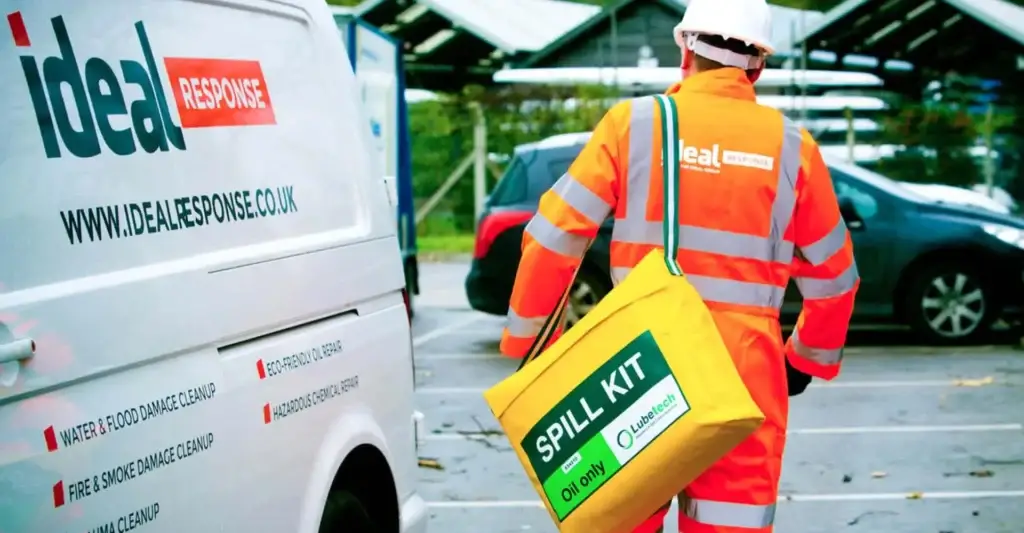
Diesel spills on commercial sites are often underestimated. What starts as a small patch of fuel, during refuelling, from a leaking vehicle or a damaged tank, can quickly spread across surfaces, enter drainage systems or soak into the ground. And in many cases, the real impact isn’t immediately visible.
Across the UK, fuel-related incidents are one of the most common environmental risks on construction sites, industrial premises and logistics operations. The challenge is that even relatively small spills can escalate quickly if they’re not handled correctly.
Within a short space of time, a diesel spill can:
- Spread beyond the original area
- Contaminate drains or surrounding land
- Create safety hazards for staff and visitors
- Trigger regulatory involvement
The key difference between a minor incident and a major problem is often how quickly and effectively the first response is handled.
This article explains what UK businesses must do immediately after a diesel spill, the risks of getting it wrong, and when specialist support becomes essential.
Skip to:
Quick summary: What to do immediately after a diesel spill
Diesel spills in the UK: A serious environmental risk
Where diesel spills commonly occur on commercial sites
Why diesel spills escalate quickly
What happens if a diesel spill is not managed properly?
Why standard clean-up methods are not enough
When to call in specialist diesel spill response and what happens next
Conclusion: Fast action protects your site, your business and the environment
Quick summary: What to do immediately after a diesel spill
If a diesel spill occurs on your site:
- Stop the source of the spill if safe to do so
- Prevent the spread using spill kits or barriers
- Protect drains and watercourses immediately
- Restrict access to the affected area
- Assess the scale and risk of contamination
- Seek specialist support where required
Acting quickly is critical to reducing both environmental impact and overall cost.
Diesel spills in the UK: A serious environmental risk
Fuel spills are not just operational issues, they are environmental incidents. Regulators such as the Environment Agency treat diesel contamination seriously due to its potential impact on land and water.
Key considerations:
- Diesel can spread quickly across hard surfaces
- It can penetrate soil and migrate underground
- Even small quantities can contaminate large volumes of water
- Spills entering drains can affect wider infrastructure
In the UK, failure to manage a spill properly can lead to:
- Enforcement action
- Clean-up liabilities
- Reputational damage
Where diesel spills commonly occur on commercial sites
Understanding risk areas helps explain how often these incidents happen.
Refuelling areas
Spills frequently occur during:
- Manual refuelling
- Transfer between containers
- Overfilling of tanks
Plant and machinery
Leaks from:
- Generators
- Construction equipment
- Heavy vehicles
Can go unnoticed until contamination has spread.
Storage tanks and containers
Faulty or damaged storage systems can result in:
- Slow leaks
- Sudden failures
- Long-term contamination risks
Oil and fuel contamination can also be a concern on construction sites, especially those that may hide some risks, like a buried fuel tank. One of our customers unfortunately punctured a buried fuel tank on site and considering the risk of Liquidated and Ascertained Damages (LADs), they needed a fast response. Read the full fuel spill case study.

Why diesel spills escalate quickly
One of the biggest challenges is how quickly diesel can move.
Rapid surface spread
Diesel spreads thinly and widely, especially on:
- Concrete
- Tarmac
- Paved surfaces
Drainage risk
If diesel enters drainage systems, it can:
- Travel off-site
- Reach watercourses
- Trigger regulatory involvement
Ground contamination
On unsealed surfaces, diesel can:
- Soak into soil
- Spread below ground
- Become much harder to remove
What happens if a diesel spill is not managed properly?
This is where incidents become significantly more serious.
If a spill is not properly contained and addressed:
- Contamination can spread beyond the original area
- Clean-up becomes more complex and costly
- Regulatory bodies may become involved
- Operations may be disrupted
For businesses, this can result in:
- Downtime and site restrictions
- Financial liability for remediation
- Damage to reputation and client relationships
What starts as a small spill can quickly become a larger environmental and operational issue.
Why standard clean-up methods are not enough
It’s common for initial clean-up to involve absorbents or basic spill kits. While these are essential first steps, they are not always sufficient.
Standard approaches typically:
- Remove visible fuel
- Limit immediate spread
But they may not:
- Address contamination within surfaces
- Remove fuel absorbed into materials
- Prevent long-term environmental impact
This is particularly important where:
- Diesel has entered the drainage systems
- Ground contamination is suspected
- Large volumes are involved
When to call in specialist diesel spill response and what happens next
Not every diesel spill can be safely or effectively managed using on-site resources alone. There is a clear point where an incident moves beyond basic containment and requires specialist intervention.
Professional support should be considered where:
- The spill cannot be fully contained using spill kits.
- Diesel has entered drainage systems or the ground.
- The source or full extent of contamination is unclear.
- There is a potential risk to health, safety or the environment.
- Regulatory reporting or external involvement may be required.
At this stage, the focus shifts from initial response to controlled environmental management.
Early specialist intervention is critical. It helps prevent the situation from escalating, reduces long-term impact and ensures the incident is handled in line with best practice.
What professional diesel spill clean-up involves
A professional response goes beyond simply removing visible fuel. It is a structured process designed to address both immediate risks and underlying contamination.
Rapid containment and control
The first priority is to stop the spread of diesel. This may involve:
- Reinforcing containment measures.
- Protecting drainage systems.
- Isolating affected areas.
Acting quickly at this stage significantly reduces the scale of the incident.
Targeted removal of contamination
Diesel is then removed using appropriate methods depending on where it has spread.
This can include:
- Surface cleaning of hard standings.
- Recovery of contaminated materials.
- Treatment of the affected ground where required.
The aim is not just to clean what is visible, but to remove the source of contamination.
Environmental protection measures
Protecting the surrounding environment is a key part of the process. This includes safeguarding:
- Drainage systems
- Nearby land and structures
- Watercourses and sensitive areas
Preventing secondary contamination is often just as important as dealing with the initial spill.
Site clean-up and safe restoration
Once contamination has been addressed, the final stage is returning the area to a safe and usable condition.
This ensures that:
- Risks are removed.
- Operations can resume.
- The site is left in a compliant state.
Conclusion: Fast action protects your site, your business and the environment
Diesel spills on commercial sites are rarely as simple as they first appear. Even small incidents can escalate quickly, particularly if fuel spreads into drainage systems or the ground.
Across the UK, poorly managed spills can lead to:
- Environmental damage
- Regulatory involvement
- Costly clean-up operations
- Disruption to business activities
The key is acting quickly and appropriately. By:
- Stopping the source
- Containing the spread
- Seeking the right support early
Businesses can significantly reduce risk and prevent escalation.
If you are dealing with a diesel spill, Ideal Response provides specialist spill response and environmental clean-up services across the UK, helping businesses manage incidents safely, compliantly and efficiently.
Contact the team today for rapid support and expert guidance.
Frequently asked questions: Diesel spills on commercial sites
What should I do immediately after a diesel spill on site?
Stop the source if it is safe to do so, contain the spread using spill kits and protect any nearby drains straight away. The first response is critical in preventing escalation.
At what point does a diesel spill become a serious issue?
A spill becomes more serious if it spreads beyond the initial area, enters drainage systems or soaks into the ground. At this stage, the situation can escalate quickly and may require specialist intervention.
Do I need to report a diesel spill in the UK?
In some cases, yes. If there is a risk to the environment, particularly watercourses or drainage systems, the Environment Agency may need to be notified.
Can a small diesel spill really cause long-term damage?
Yes. Even small quantities of diesel can contaminate large areas, especially if they enter drains or soak into soil. What looks minor at first can become much more complex over time.
Are spill kits enough to deal with a diesel spill?
Spill kits are essential for initial containment, but they are not always enough to fully resolve contamination, particularly if diesel has spread or penetrated surfaces.
What happens if diesel enters a drain?
Diesel can travel quickly through drainage systems and potentially reach watercourses. This increases environmental risk and may trigger regulatory involvement.
Who is responsible for cleaning up a diesel spill?
In most cases, responsibility sits with the site operator or business in control of the premises at the time of the incident.
Will a diesel spill delay site operations?
It can. If not managed properly, spills can restrict access, create safety risks and delay work until the area is made safe.
When should I call a professional spill response company?
You should consider professional help if:
- The spill cannot be fully contained
- Diesel has entered the drains or the ground
- The extent of contamination is unclear
- There is any risk to health, safety or the environment
Is it cheaper to deal with a spill immediately or later?
Almost always immediately. Early intervention helps prevent the spread of contamination and reduces the likelihood of more complex and costly clean-up work later.

Chris Hedges - Head of Marketing
With over 25 years' experience, Chris is adept at defining and driving strategy, while also enjoying hands-on operational delivery. He believes in an equal blend of creativity and analytical scrutiny, always finding inventive ways to achieve objectives, underpinned by evidence. Chris’s philosophies are simple: don't overcomplicate, always prioritise customer experience, and bend the rules just enough to cut through the noise and drive momentum and growth.