If you’re researching sandblasting services in the UK, you’re probably facing one of three challenges:
- Heavy rust on metal
- Old paint that won’t shift
- A surface that needs proper preparation before coating
Sandblasting, also known as abrasive blasting, is one of the most effective ways to restore, clean, and prepare surfaces. But not all blasting is the same. The wrong material, pressure, or technique can cause costly damage.
This guide explains everything you need to know before starting a sandblasting project, whether you’re managing an industrial site, restoring a vehicle, or renovating brickwork.
Skip to:
Types of sandblasting (and when each should be used)
How professionals choose the right abrasive
When should you use sandblasting?
Common surfaces that can be sandblasted
How much do sandblasting services cost in the UK?
What is sandblasting?
Sandblasting is a process where abrasive material is propelled at high speed onto a surface to remove contaminants such as:
- Rust
- Paint
- Corrosion
- Oil residue
- Scale build-up
- Graffiti
The force strips unwanted layers while leaving the base material ready for painting, coating, sealing, or inspection. Modern sandblasting rarely uses traditional sand due to health risks. Instead, professionals select specific abrasives depending on the surface and desired finish.
Types of sandblasting (and when each should be used)
Choosing the right method is critical. Here’s how professionals approach it.
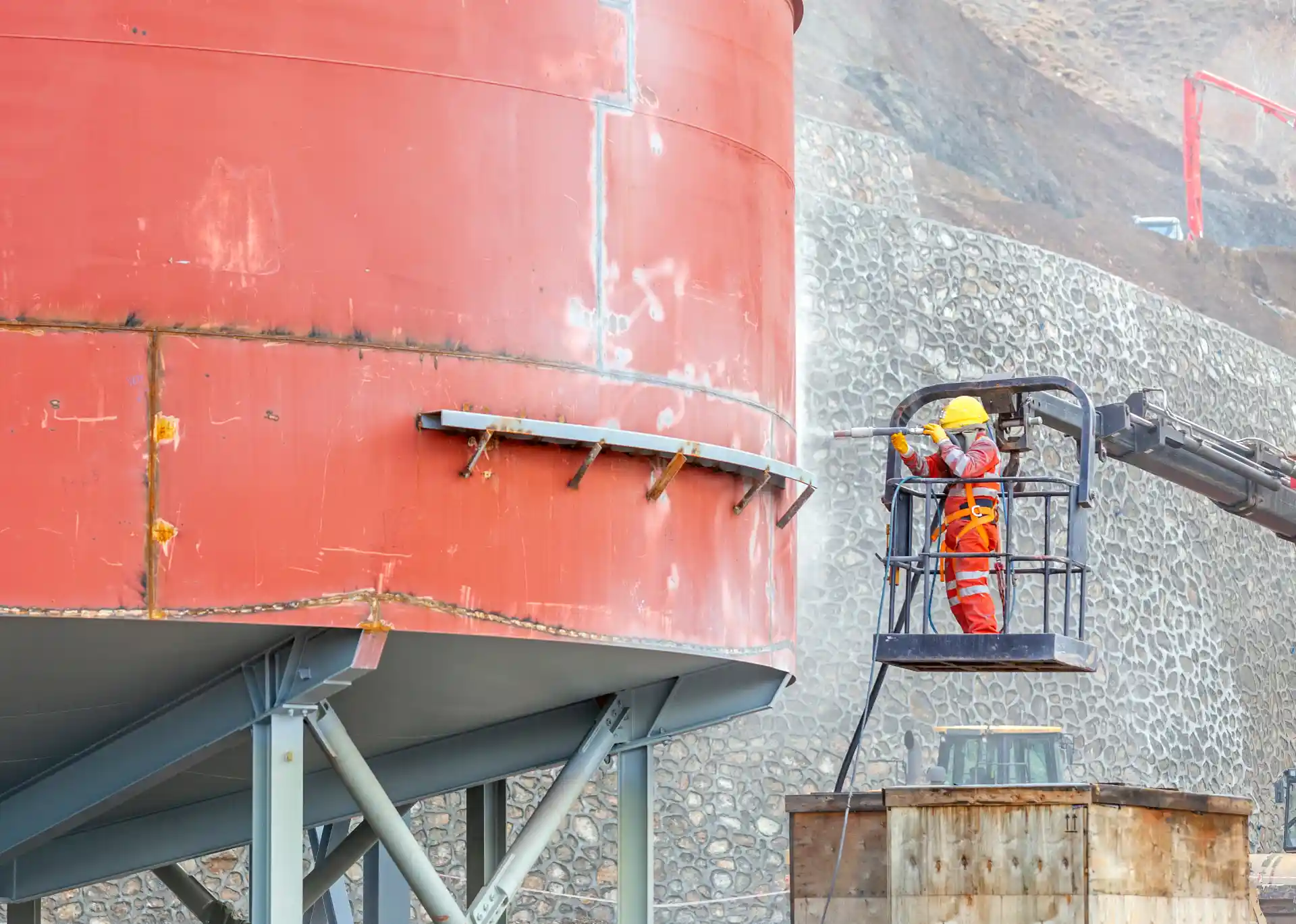
Dry sandblasting
This uses compressed air to propel dry abrasive particles.
Best suited for:
- Heavy rust on steel
- Industrial equipment
- Structural beams
- Thick coatings
Advantages:
- Extremely fast
- Highly effective for deep corrosion
- Ideal for large-scale industrial work
Downside:
- Creates dust
- Requires strict containment and PPE
Wet sandblasting
This mixes water with abrasive material, significantly reducing airborne dust.
Best suited for:
- Brick and masonry cleaning
- Indoor projects
- Historic building restoration
- Environments where dust control is critical
Advantages:
- Cleaner operation
- Reduced heat build-up
- Safer for delicate substrates
Wet blasting has become increasingly popular across the UK due to stricter dust control regulations.
Bead blasting
This uses fine glass beads to produce a smooth finish.
Commonly used for:
- Automotive restoration
- Aluminium components
- Decorative metal finishes
- Aerospace parts
It removes surface contamination without aggressively stripping the base metal.
Soda blasting
This uses sodium bicarbonate (baking soda) as the abrasive.
Ideal for:
- Graffiti removal
- Fire damage cleaning
- Food production environments
- Sensitive restoration projects
It’s gentle, non-toxic, and water-soluble, making clean-up easier.
How professionals choose the right abrasive
There is no ‘one size fits all’ abrasive. Selection depends on:
- Surface material (steel, aluminium, wood, brick, concrete)
- Thickness of contamination
- Desired finish (rough profile vs polished surface)
- Environmental restrictions
- Structural sensitivity
For example:
If you’re removing rust from structural steel, aluminium oxide is often selected because it cuts aggressively and creates a strong surface profile for coatings If you’re cleaning wooden beams, walnut shell blasting may be used because it removes paint without gouging the timber.
This level of decision-making is why professional expertise matters.
When should you use sandblasting?
Sandblasting services are often used when dealing with:
1. Rust removal
Corrosion spreads quickly. Sandblasting removes rust back to bare metal, preventing structural weakening and coating failure.
2. Paint stripping
Mechanical scraping often leaves residue. Abrasive blasting removes paint completely, including in joints and corners.
3. Surface preparation before coating
Paint and protective coatings fail when applied to contaminated surfaces. Sandblasting creates the correct surface profile, improving adhesion and durability.
Industry data shows properly blasted surfaces can extend coating life by up to 30 – 40% compared to untreated substrates.
Common surfaces that can be sandblasted
Sandblasting is suitable for:
- Structural steel
- Machinery
- Car chassis and panels
- Brickwork
- Concrete
- Timber beams
- Marine hulls
- Industrial floors
However, not all surfaces tolerate aggressive blasting. Thin aluminium panels or historic stonework require specialist assessment.
Is sandblasting safe?
When carried out correctly, yes. When done incorrectly, it can be dangerous. Professional sandblasting requires:
- Full respiratory protection
- Eye and face protection
- Containment systems
- Dust extraction or wet suppression
- Correct waste disposal
In the UK, abrasive blasting must comply with HSE guidance, particularly regarding silica dust exposure. Attempting DIY blasting for large or industrial projects is rarely advisable.
How much do sandblasting services cost in the UK?
Costs vary based on:
- Surface size
- Material type
- Accessibility
- Containment requirements
- Abrasive type
- On-site vs off-site work
As a general guide:
Small domestic jobs may cost several hundred pounds, while large industrial or heritage brick & stone cleaning projects can range significantly depending on scale. The most accurate way to determine cost is a site assessment.
Signs you should hire a professional sandblasting company
You should strongly consider professional support if:
- Rust has penetrated the structural metal
- You are preparing steel for protective coating
- The project involves large surface areas
- The site has environmental or dust restrictions
- You’re working on heritage or delicate materials
Improper blasting can:
- Warp metal
- Damage masonry
- Reduce material thickness
- Increase long-term repair costs
Why getting sandblasting right matters
Sandblasting is far more than a cleaning method. It is one of the most important stages in protecting, restoring, and extending the life of assets, whether that’s structural steel, brickwork, machinery, vehicles, or heritage materials.
When carried out correctly, abrasive blasting:
- Removes contamination completely
- Prevents corrosion from spreading
- Creates the ideal surface profile for coatings
- Extends paint and protective system lifespan
- Reduces long-term maintenance costs
But when done incorrectly, it can:
- Warp thin metals
- Damage masonry
- Weaken structural integrity
- Increase repair and recoating costs
- Create serious health and environmental risks
That’s why choosing the correct method, abrasive material, pressure level, and containment strategy is critical.
Before moving forward with any project, take the time to:
- Identify the surface type and structural condition
- Define your objective (removal, restoration, preparation or finishing)
- Consider dust control and UK compliance requirements
- Assess whether the project requires specialist expertise
For industrial, commercial, and large-scale restoration work in particular, professional sandblasting remains the gold standard for reliable, measurable surface preparation. Making the right decision at the start isn’t just about cleaning a surface. It’s about protecting what’s underneath.
Ready to discuss your sandblasting project?
If you’re planning a project and want clarity on the safest and most effective approach, the team at Ideal Response can provide expert guidance tailored to your site and surface type. Whether it’s industrial steel, brickwork restoration, or specialist surface preparation, speaking to experienced professionals early can prevent costly mistakes later.
Contact Ideal Response today to arrange a site assessment or discuss your requirements with a specialist.
Sandblasting FAQs
Do I need to vacate the premises during sandblasting?
It depends on the project size and method used.
For large industrial or internal dry blasting projects, temporary isolation of the work area is often required. Wet blasting or contained systems significantly reduce disruption, and many commercial projects can continue operating with proper planning and zoning.
A professional contractor will assess ventilation, dust control and site layout before work begins.
How soon after sandblasting should a surface be painted?
Immediately. Especially for steel.
Once metal is blasted to bare substrate, it becomes vulnerable to flash rusting, particularly in humid UK conditions. In most professional projects, priming takes place the same day to prevent oxidation. Delays can compromise the longevity of the coating system.
Does sandblasting remove structural strength from metal?
When performed correctly, sandblasting does not weaken structural steel. However, excessive pressure or incorrect abrasive selection can remove more material than necessary. Professional operators measure blast profiles carefully to achieve cleaning without compromising thickness.
This is especially important in load-bearing or engineered components.
Is sandblasting environmentally regulated in the UK?
Yes. Abrasive blasting must comply with environmental and health regulations, particularly concerning:
- Silica dust exposure
- Waste containment
- Run-off control (for wet blasting)
- Disposal of contaminated materials
Professional contractors ensure compliance with UK Health & Safety and environmental standards to avoid penalties or site shutdowns.
What preparation is required before sandblasting begins?
Preparation may include:
- Removing sensitive equipment or coverings
- Protecting adjacent surfaces
- Setting up containment sheeting
- Establishing safe access zones
- Conducting risk assessments
For commercial and industrial sites, this planning stage is critical to prevent operational disruption.
Can sandblasting be done in cold or wet UK weather?
Yes. However, conditions matter.
High humidity increases the risk of flash rust on steel after blasting. In winter months, surface temperature and dew point must be monitored carefully before coating begins. Professional teams factor environmental conditions into project scheduling.
How long does a sandblasted surface last before needing treatment again?
This depends on:
- The environment (marine, industrial, inland)
- The quality of coating applied after blasting
- Exposure to moisture or chemicals
Blasting itself does not ‘wear off’, but long-term durability depends on the protective system applied afterwards.
Is sandblasting suitable for heritage or listed buildings?
It can be but only with specialist techniques.
Low-pressure systems and soft abrasives such as soda or crushed walnut shells are typically used to protect historic masonry. Inappropriate blasting can permanently damage older brick or stone.
Heritage projects require careful assessment before work begins.
What questions should I ask before hiring a sandblasting contractor?
Ask:
- What abrasive will you use and why?
- How will dust be controlled?
- What surface profile will be achieved?
- How soon will coating be applied?
- Are you compliant with UK safety regulations?
The answers reveal experience, professionalism, and technical understanding.

Chris Hedges - Head of Marketing
With over 25 years' experience, Chris is adept at defining and driving strategy, while also enjoying hands-on operational delivery. He believes in an equal blend of creativity and analytical scrutiny, always finding inventive ways to achieve objectives, underpinned by evidence. Chris’s philosophies are simple: don't overcomplicate, always prioritise customer experience, and bend the rules just enough to cut through the noise and drive momentum and growth.