After a fire, the visible damage is often the immediate focus.
Charred materials, soot deposits and structural impact are all clear signs that restoration work is needed. But even once the fire is extinguished and initial cleaning begins, many property owners are left dealing with a more persistent and frustrating issue – the smell of smoke that just won’t go away. It can linger for weeks, months and in some cases, even longer.
This isn’t just unpleasant. It’s a sign that smoke contamination remains within the property, often in places that aren’t immediately visible.
Understanding why smoke odours persist is key to resolving the issue properly.
Skip to:
Quick summary: Why drying matters before handover
What smoke actually does to a property
Why smoke odours are so difficult to remove
Where smoke odours commonly hide
Why standard cleaning isn’t enough
What proper smoke odour removal involves
The risk of leaving smoke odours unresolved
Conclusion: Smoke odours don’t fade, they need to be removed
Quick summary: Why smoke smells don’t disappear
Smoke odours linger because they don’t just sit on surfaces; they penetrate deeply into materials.
Key points:
- Smoke particles are extremely small and spread widely
- Odours are absorbed into porous materials
- Standard cleaning often removes visible soot but not odours
- Heat from the fire drives contamination deep into structures
- Without proper treatment, smells can return over time
What smoke actually does to a property
To understand why odours persist, it helps to understand how smoke behaves during a fire.
Smoke is made up of a complex mix of:
- Gases
- Microscopic particles
- Partially burned materials
As it moves through a property, it doesn’t just settle, it penetrates and bonds with surfaces.
This includes:
- Walls and ceilings
- Carpets and soft furnishings
- Insulation and voids
- Ventilation systems
The result is widespread contamination, often far beyond the immediate fire-affected area.
Why smoke odours are so difficult to remove
Smoke particles are microscopic
Smoke particles are extremely small, allowing them to:
- Travel through gaps and cracks
- Settle in hard-to-reach areas
- Embed deep within materials
This makes them difficult to remove using standard cleaning methods.
Porous materials absorb odours
The following materials can absorb smoke odours like a sponge.
- Plaster
- Wood
- Fabrics
- Carpets
Once absorbed, the smell is not just on the surface, it becomes part of the material.
Heat drives contamination deeper
The heat from a fire expands materials, allowing smoke to penetrate more deeply. As the building cools, these materials contract again, trapping odour-causing particles inside.
Odours can reactivate over time
Even if a property initially smells better after cleaning, odours can return. This often happens when:
- Humidity increases
- Temperatures change
- Materials release trapped particles
This is why smoke odour problems can feel like they “come back” unexpectedly.
Where smoke odours commonly hide
One of the challenges with smoke contamination is that it spreads beyond what is visible.
Common hidden areas include:
- Behind walls and within cavities
- Beneath flooring and carpets
- Inside insulation
- Within HVAC and ventilation systems
- Soft furnishings and upholstery
If these areas are not addressed, odours can persist or reappear.
Why standard cleaning isn’t enough
After a fire, it’s common to focus on cleaning visible soot and debris.
However, standard cleaning typically:
- Removes surface contamination
- Improves appearance
- Reduces some odour temporarily
But it does not:
- Neutralise odour at a molecular level
- Reach deeply embedded contamination
- Address hidden affected areas
As a result, the smell often remains — or returns later.
What proper smoke odour removal involves
Effective odour removal requires a more specialised approach.
Deep cleaning of affected surfaces
Removing soot and residue thoroughly is the first step.
Odour neutralisation
Specialist processes are used to break down odour-causing particles rather than simply masking them.
Treatment of hidden areas
Void spaces, ventilation systems and soft materials must be addressed to prevent odour recurrence.
Controlled environment treatment
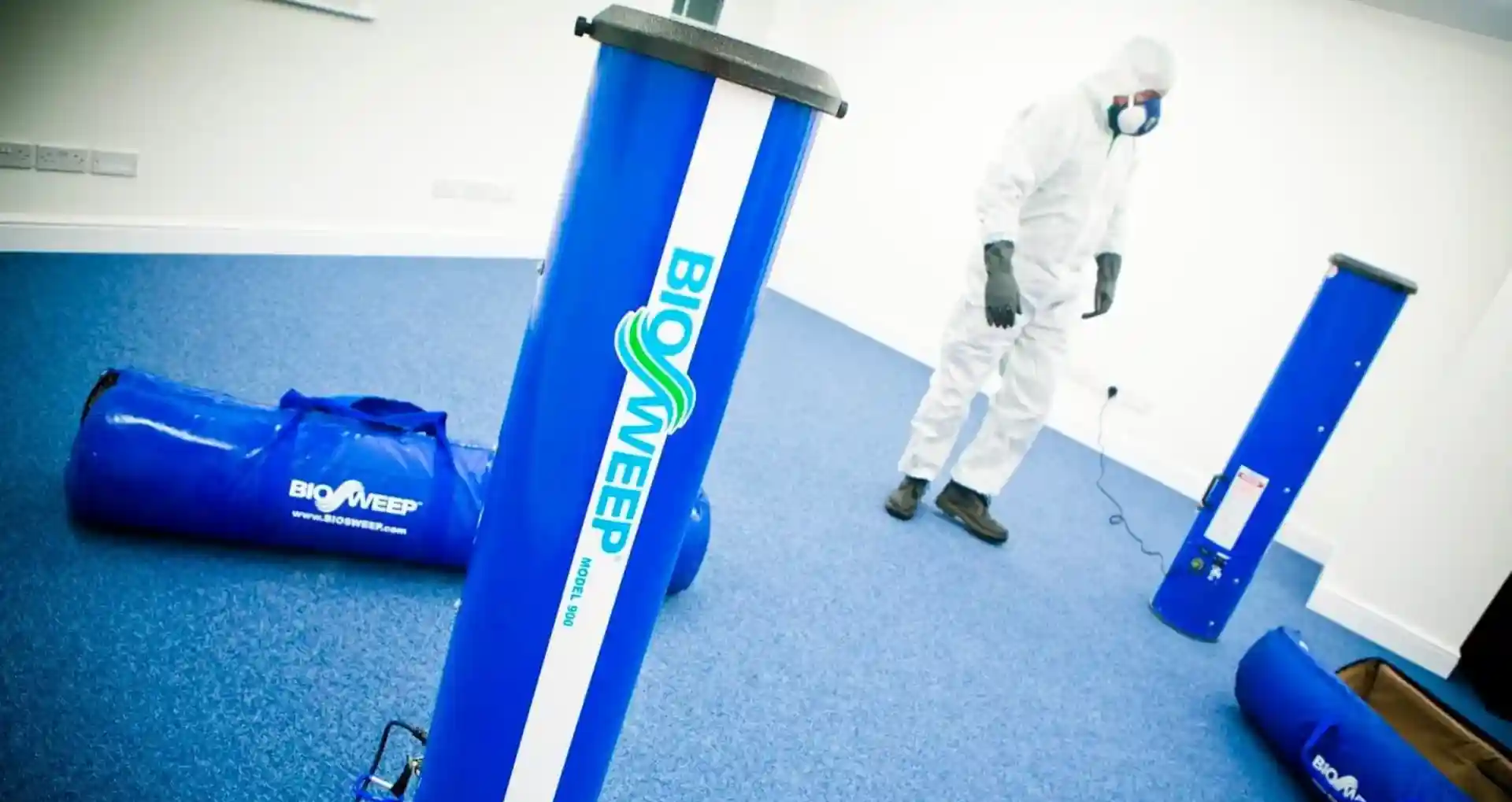
In some cases, advanced techniques are used to treat the air and surfaces within the property as a whole.
Case study
A flat in South Kensington, London, suffered a fire when a lamp fell onto a mattress, igniting the material. The elderly resident was safely rescued by firefighters, but the secondary damage was extensive. While the fire was contained to the bedroom, smoke and soot had spread into neighbouring flats and communal areas.
Discover how the flat was returned to a smoke free condition.
The risk of leaving smoke odours unresolved
Lingering smoke odours are more than just an inconvenience. If not properly addressed, they can:
- Make spaces uncomfortable or unusable
- Affect property value or lettability
- Lead to ongoing complaints in commercial settings
- Indicate deeper contamination within the building
For businesses, this can impact operations. For homeowners, it can make a property feel unliveable.
Conclusion: Smoke odours don’t fade, they need to be removed
One of the most common misconceptions after a fire is that smoke odours will disappear over time. In reality, they rarely do.
Because smoke particles penetrate deeply into materials and structures, the smell often remains long after visible damage has been addressed.
Across UK properties, unresolved smoke odour is a frequent cause of:
- Delayed reoccupation
- Failed restorations
- Ongoing dissatisfaction after fire incidents
The key is understanding that odour is not just a surface issue, it’s a contamination issue.
Proper removal requires the right approach, the right equipment and the right expertise.
If you’re dealing with persistent smoke odour after a fire, Ideal Response provides specialist fire and smoke damage restoration services across the UK, helping return properties to a clean, safe and odour-free condition.
Contact the team today to see how we can support you.
Frequently asked questions: Smoke odours after a fire
Why does my property still smell of smoke even after cleaning?
Because smoke doesn’t just sit on surfaces, it penetrates deep into materials like plaster, wood and fabrics. Standard cleaning may remove visible soot, but it rarely removes the source of the odour.
Will smoke smell eventually disappear on its own?
In most cases, no. While the smell may reduce slightly over time, the underlying contamination remains and can continue to release odours, especially in warmer or more humid conditions.
Why does the smoke smell seem to come back after I thought it was gone?
This is very common. Changes in temperature or humidity can cause trapped smoke particles to be released back into the air, making the smell reappear even after initial cleaning.
Can I live or work in a property that still smells of smoke?
That depends on the level of contamination. A persistent smoke odour usually indicates that residues are still present within the building, which can affect comfort, air quality and usability.
Does repainting or decorating solve the problem?
Not on its own. If surfaces haven’t been properly cleaned and treated first, smoke odours can bleed back through paint over time meaning the problem returns.
What types of materials hold onto smoke odours the most?
Porous materials are the biggest issue, including:
- Carpets and upholstery
- Plaster and drywall
- Wood and joinery
- Insulation and soft furnishings
These materials can absorb smoke deeply, making odour removal more complex.
Is smoke odour worse after certain types of fires?
Yes. Fires involving synthetic materials (such as plastics or furnishings) often produce heavier, more persistent odours compared to simple wood-based fires.
How far can smoke odour spread in a building?
Much further than most people expect. Smoke can travel through:
- Ventilation systems
- Ceiling voids
- Wall cavities
This means areas far from the fire source can still be affected.
Why is it harder to deal with smoke odour after the property is occupied?
Once a building is back in use, access becomes more restricted and disruption increases. Treating odours at that stage is often more complex and time-consuming.
Can smoke odour affect property value or rental potential?
Yes. Lingering smoke smells can deter buyers or tenants and may lead to reduced offers or longer vacancy periods.
What actually removes smoke odour properly?
Effective removal requires:
- Deep cleaning of contaminated surfaces
- Treatment of hidden areas
specialist odour - Neutralisation processes
Masking the smell is not enough, the source must be removed.

Chris Hedges - Head of Marketing
With over 25 years' experience, Chris is adept at defining and driving strategy, while also enjoying hands-on operational delivery. He believes in an equal blend of creativity and analytical scrutiny, always finding inventive ways to achieve objectives, underpinned by evidence. Chris’s philosophies are simple: don't overcomplicate, always prioritise customer experience, and bend the rules just enough to cut through the noise and drive momentum and growth.