Available 24/7 | 0800 088 4170

Unattended death cleaning: Why professional biohazard cleaning is required

There are moments where people expect a situation to be resolved, only to realise it hasn’t been. An unattended death is one of them.

  • Emergency services attend.
  • The necessary procedures are followed.
  • And eventually, the property is released.


But what many people don’t expect is the property is not returned in a condition that is safe to enter, use, or even fully assess.

  • There is no automatic clean-up.
  • No reset of the environment.
  • No clear next step.


For families, landlords and property managers, this creates a difficult position, one that sits somewhere between practical responsibility and emotional weight.

Why this situation requires specialist handling

An unattended death can alter the condition of a property in ways that are not always immediately visible.

Depending on the time before discovery, the environment may be affected by:

  • Biological contamination
  • Fluids absorbed into materials
  • Airborne particles impacting air quality
  • Strong, persistent odours


Guidance from the UK Health Security Agency highlights the need to properly manage environments where biological hazards may be present.

This is why these situations are not treated as standard cleaning but as biohazard incidents requiring specialist response.

The scale of the issue in the UK

While not widely discussed, unattended deaths are not uncommon.

UK emergency services and local authority data indicate that thousands of unattended deaths are attended each year, particularly in:

  • Private homes
  • Rented properties
  • Supported living environments


In many of these cases, properties require specialist cleaning before they can be safely reoccupied.

This is a reality that many landlords and property professionals encounter, often without prior experience.

What you’ll learn in this guide

This guide is designed to give clarity at a time when it’s often missing. You’ll learn:

  • What actually happens inside a property after an unattended death
  • Why contamination often extends beyond what is visible
  • The risks of attempting to manage the situation without specialist support
  • What a professional biohazard response is designed to achieve
  • How properties are returned to a safe, usable condition


Because understanding the process removes uncertainty and helps you make the right decision early.

Skip to:

How the property can be affected

The hidden spread most people underestimate

Where the risk comes from and why it matters

Why even thorough cleaning can fail

What a professional biohazard response is designed to achieve

The cost of getting it wrong

Responsibility, compliance and peace of mind

Conclusion: From uncertainty to a safe, usable environment

How the property can be affected

After an unattended death, the environment begins to change, sometimes quickly, sometimes gradually.

This is not always obvious at first. But over time, the following can occur:

  • Biological materials affecting surfaces and contents
  • Fluids penetrating flooring and underlying structures
  • Odours developing and spreading through the property
  • Air quality deteriorating in enclosed spaces


The key point is the impact is rarely confined to what you can see.

The hidden spread most people underestimate

One of the most common misconceptions is that the issue is contained to a single area.

In reality, contamination can extend into:

  • Subfloor layers beneath carpets or flooring
  • Adjacent rooms through airflow
  • Porous materials such as plaster, wood and fabrics
  • Enclosed spaces where air circulation is limited


By the time the property is accessed, the affected area is often wider than expected.

Where the risk comes from and why it matters

Not every unattended death presents the same level of risk. But many involve environments where exposure should be controlled.

This can include:

  • Bacteria and microorganisms
  • Biological residues
    airborne particles released into the environment


The Health and Safety Executive sets clear expectations around managing environments where biological hazards may be present.

At this point, the issue is no longer about cleanliness, it’s about health and safety.

Why even thorough cleaning can fail

It’s natural to think that a deep clean will resolve the issue. In most cases, it doesn’t.

This is because:

  • Contamination can sit beneath surfaces
  • Standard cleaning products are not designed for biohazards
  • Odours are caused by compounds that require specialist treatment


The result is often:

  • Smells returning
  • Lingering contamination
  • Uncertainty about whether the property is truly safe


This is where many well-intentioned efforts fall short and professional trauma cleaning is required. 

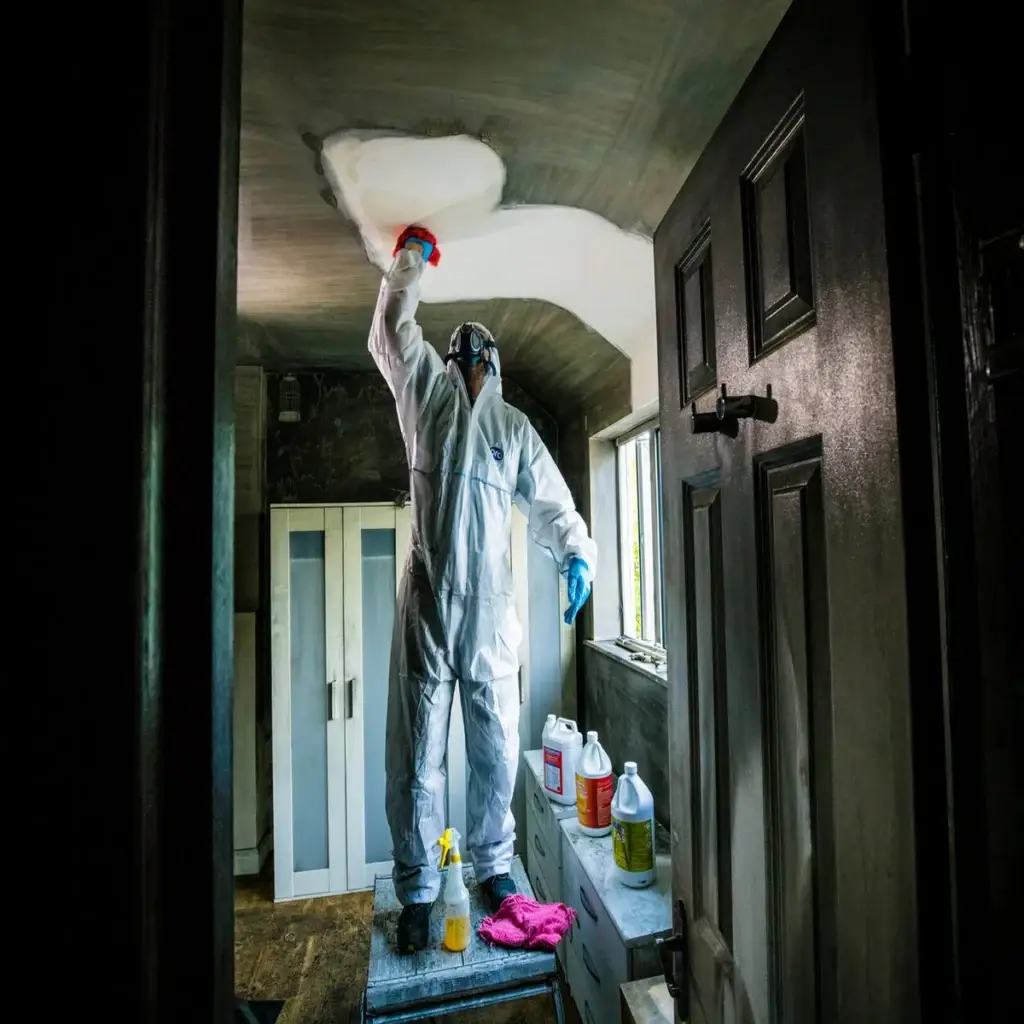
Technician using a fogging machine for odour removal

What a professional biohazard response is designed to achieve

Rather than focusing on steps, it’s more useful to understand the outcome.

A professional biohazard response is designed to:

  • Identify the full extent of contamination
  • Remove hazardous materials safely
  • Treat both visible and invisible risks
  • Restore safe indoor air quality
  • Ensure the property can be used again with confidence


The objective is not just to clean, but to remove risk and uncertainty completely.

Real project example: Trauma & hoarder clean-up in London

Following a bereavement, a family in South West London was left dealing with a severely hoarded property that had also become a trauma scene, making it unsafe to enter. The combination of extensive clutter, biological contamination, and emotional sensitivity meant the situation required both specialist expertise and a highly compassionate approach.

Our specialist trauma cleaning team was deployed to manage the full scope of works, including trauma cleaning, hoarder clearance, and complete decontamination. Working under strict biohazard protocols and wearing full PPE, the team carried out a meticulous, top-to-bottom clean over six days, removing hazardous waste, sanitising all surfaces, and using advanced decontamination methods and fogging to eliminate harmful pathogens.

A key priority throughout was the careful recovery and restoration of sentimental items. Each item requested by the family was located, individually cleaned, and safely returned, ensuring nothing of personal value was lost during the process.

As a result, the property was fully restored from a dangerous biohazard environment into a clean, safe, and habitable home, while providing the family with peace of mind during an extremely difficult time.

Read the full case study
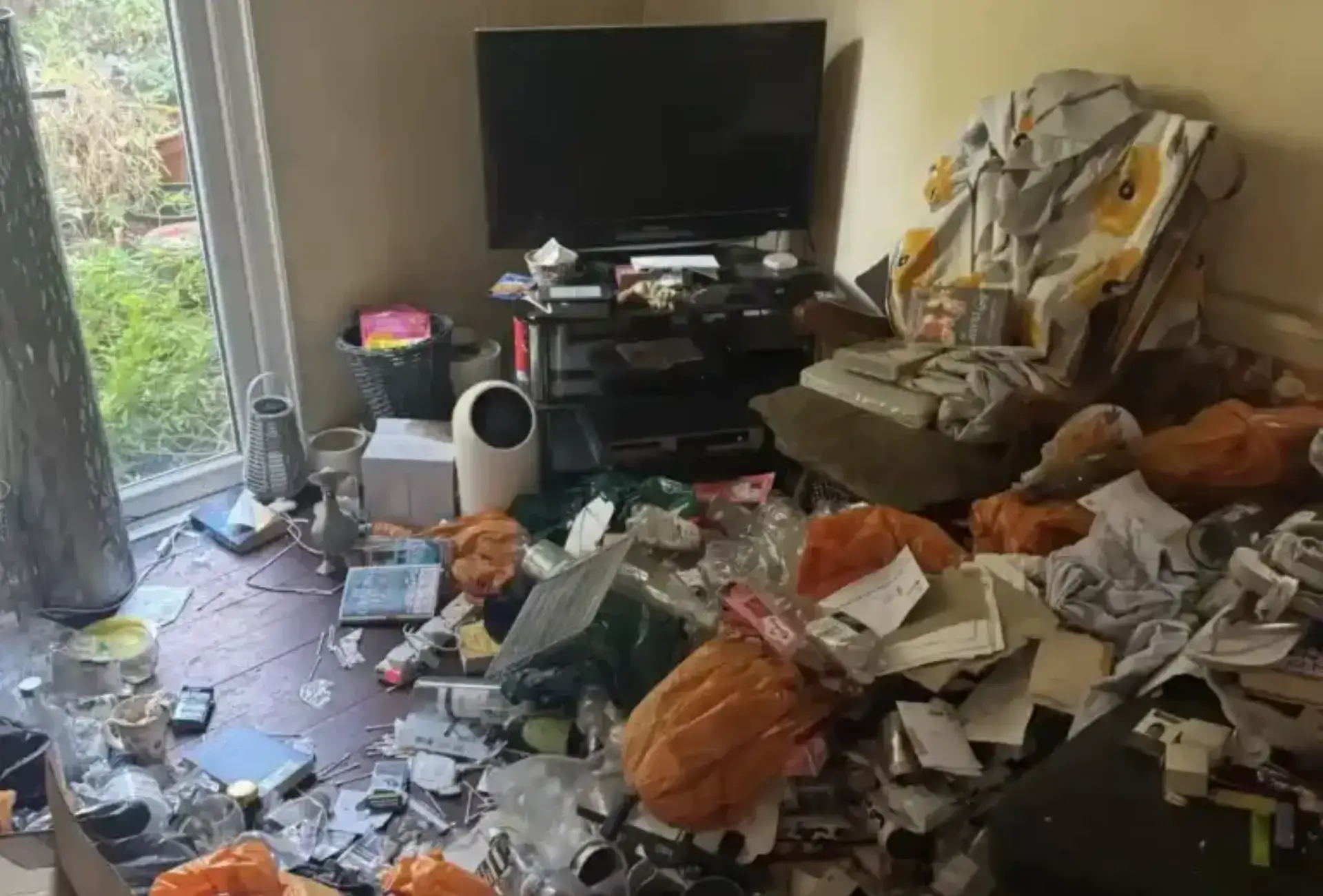
Scene of an undiscovered death and hoarded home

The cost of getting it wrong

This is the part many people only discover later. If an unattended death scene is not properly handled, the consequences can include:

  • Persistent odours that return over time
  • Contamination remaining within materials
  • Delays in re-letting or selling the property
  • Complaints or concerns from future occupants
  • Potential reputational damage


In many cases, a second attempt is more disruptive and costly than resolving it properly the first time.

Responsibility, compliance and peace of mind

For landlords, property managers and businesses, there is also a responsibility to consider. Providing a safe environment is not optional.

UK guidance around health and safety reinforces the importance of properly managing biohazard risks.

Why the way it’s handled matters

This is not just a technical process. It’s often connected to sensitive and emotional circumstances. Professional handling means:

  • Discretion at every stage
  • Respect for the situation
  • Minimal disruption
  • Clear, calm communication


The process should feel controlled and supportive and not overwhelming.

Conclusion: From uncertainty to a safe, usable environment

An unattended death leaves more than just a question of what happened. It leaves a property that needs to be properly understood and carefully handled.

Key points:

  • These situations involve biohazard risks
  • Contamination often extends beyond what is visible
  • Standard cleaning is not sufficient
  • A structured, professional response restores safety and usability


Just like any undiscovered death clean, the goal is to move from uncertainty to a space that is safe, controlled and ready for what comes next.

Ideal Response supports families, landlords and organisations across the UK with specialist unattended death and biohazard cleaning services, delivered with care, discretion and expertise.

Contact the team for confidential advice and support.

Frequently asked questions about hoarder property clearance

What exactly is unattended death cleaning and how is it different from standard cleaning?

Unattended death cleaning involves the safe removal of biological contamination and the restoration of an environment following a death that was not immediately discovered.

Unlike standard cleaning, it deals with biohazards, including bodily fluids, bacteria and contaminants that may have penetrated surfaces or become airborne.

The difference is not just in intensity, but in risk, required expertise and the level of decontamination needed.

Most general cleaning services are not trained, equipped or licensed to handle biohazard environments.

These situations require:

  • Specialist protective equipment
  • Controlled cleaning methods
  • Compliant waste handling procedures


Without this, there is a risk of incomplete cleaning, cross-contamination and potential harm.

There is not always a specific law stating it must be done professionally.

However, there is a clear duty of care to ensure a property is safe for future occupants.

For landlords and businesses, failing to properly address contamination can lead to:

  • Legal liability
  • Regulatory scrutiny
  • Health risks for others


In practice, professional handling is the safest and most responsible option.

Contamination is often more widespread than expected.

It can extend into:

  • Subfloor layers
  • Adjacent rooms via airflow
  • Porous materials such as plaster and wood


What is visible is often only part of the overall picture.

Yes, when the source of the odour is properly treated.

Persistent smells usually occur when:

  • Contamination hasn’t been fully removed
  • Odours are masked rather than neutralised


Professional treatment focuses on eliminating odours at source, not covering them up.

The timeframe varies depending on:

  • How long the property was unattended
  • The extent of contamination
  • The size and layout of the space


Most situations are assessed individually to determine the appropriate response.

Any materials that cannot be safely cleaned are removed and disposed of in accordance with UK regulations for hazardous waste.

This ensures:

  • Safety
  • Compliance
  • Proper environmental handling

Responsibility usually falls to:

  • Property owners
  • Landlords
  • Managing agents
  • Family members


In commercial settings, it may also involve employers or facilities managers.

Yes. Discretion is a fundamental part of professional biohazard cleaning.

This includes:

  • Unmarked vehicles where appropriate
  • Minimal disruption
  • Respectful handling of the situation

As soon as the property is released and it becomes clear that cleaning is required.

Early involvement helps ensure the situation is handled correctly from the outset, avoiding further complications.

Picture of Chris Hedges - Head of Marketing

Chris Hedges - Head of Marketing

Chris Hedges is Head of Marketing at Ideal Response and the author of every article published on this site. With over 25 years of senior marketing experience across property, legal, and professional services sectors, Chris brings a clear, evidence-led approach to writing about fire damage, flood restoration, and specialist property remediation. His philosophy is simple: cut through the noise, respect the reader's time, and give people the information they actually need.

Other articles

Explore more articles about damage restoration, specialist cleaning and what we do

A hand holding a burning match.

Classification of fire in the UK: Causes, dangers & extinguishers

In the UK, fires are classified into six distinct categories to determine the most effective extinguishing method: Class A fires involve solid combustibles like wood and paper, best tackled with water or foam; Class B fires are fuelled by flammable liquids such as petrol, requiring foam, CO2, or dry powder;...

READ MORE

Example of an injection drying setup

Injection drying after flooding: When standard drying isn’t enough

After flooding, many properties appear to dry quickly. Surfaces feel dry, humidity drops, and the visible signs of water disappear. But in many UK buildings, this creates a false sense of security. Floodwater frequently becomes trapped inside walls, floors, and structural voids, areas standard drying methods cannot reach effectively. Left...

READ MORE

Water leaking from ceiling

Escape of water vs flood damage: How insurers decide (and how to protect your claim)

Water damage inside a property can be chaotic, ceilings collapse, flooring swells, electrical circuits become unsafe, and mould can begin forming in as little as 48 hours. Yet the most stressful part for many homeowners and property managers isn’t the water itself. It’s dealing with the insurance process. The outcome...

READ MORE

Get expert support

No matter if you have a question you need to ask or have an emergency that you need help with, call:

0800 088 4170

If you’d prefer to drop us a message, fill out the enquiry form and we’ll get back to you as soon as possible.

Request a call back