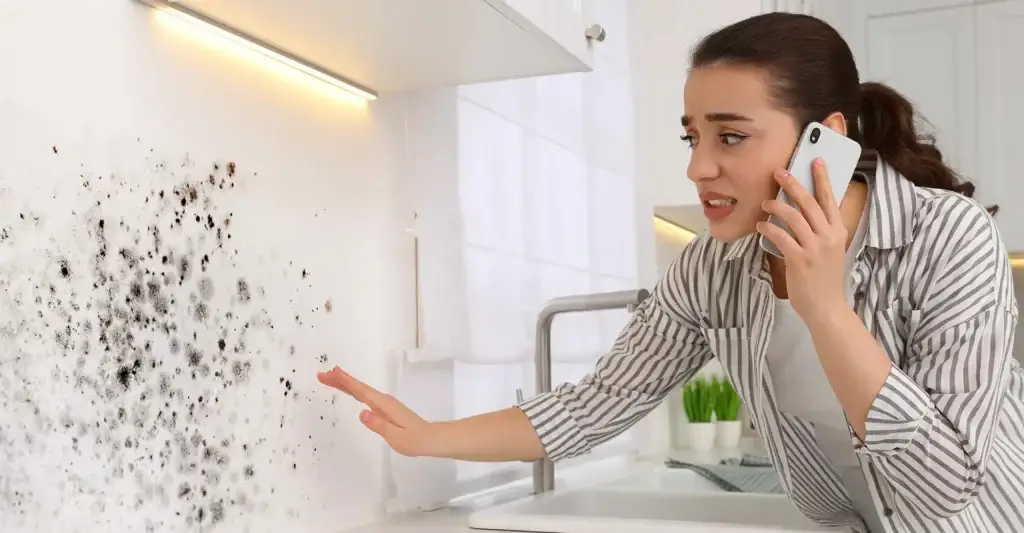
Water ingress isn’t always as obvious as a burst pipe or a flooded basement. Often, it is a slow, silent process that compromises the structural integrity of your building and creates hazardous living conditions before you even notice a puddle. The tricky thing about water ingress is that the signs you expect to see aren’t always the ones that surface.
If you are asking, “How can I identify water ingress?” you likely suspect something is wrong. In this guide, we break down the visible signs, the hidden indicators, and the professional technology used to pinpoint the source of the moisture. By the end of this article you’ll have all the information you need to identify the visual signs, know what step to take and the importance of seeking professional help.
Skip to:
Structural & external indicators
Olfactory signs: Lingering musty odours
Water ingress vs. Internal leaks
Firstly, what is water ingress?
Water ingress is when external water enters into the interior of a property. This can come in the form of penetrating damp and rising damp. It usually occurs due to a failure somewhere on the building exterior. This could be in the form of:
- Cracks on external walls
- Bridged or failed damp-proof-course
- Roof leaks
Unlike internal leaks caused by plumbing failures, water ingress is typically weather-related or caused by structural defects, such as porous brickwork, cracked roof tiles, or faulty seals. If left unaddressed, water ingress leads to timber rot, damaged masonry, and the rapid growth of mould.
1. Visual signs on internal walls
The first signs of water ingress often manifest on your internal surfaces. You should regularly inspect your rooms for:
-
Tide marks and staining: Yellow or brown staining on walls and ceilings is a classic sign of active water penetration.
-
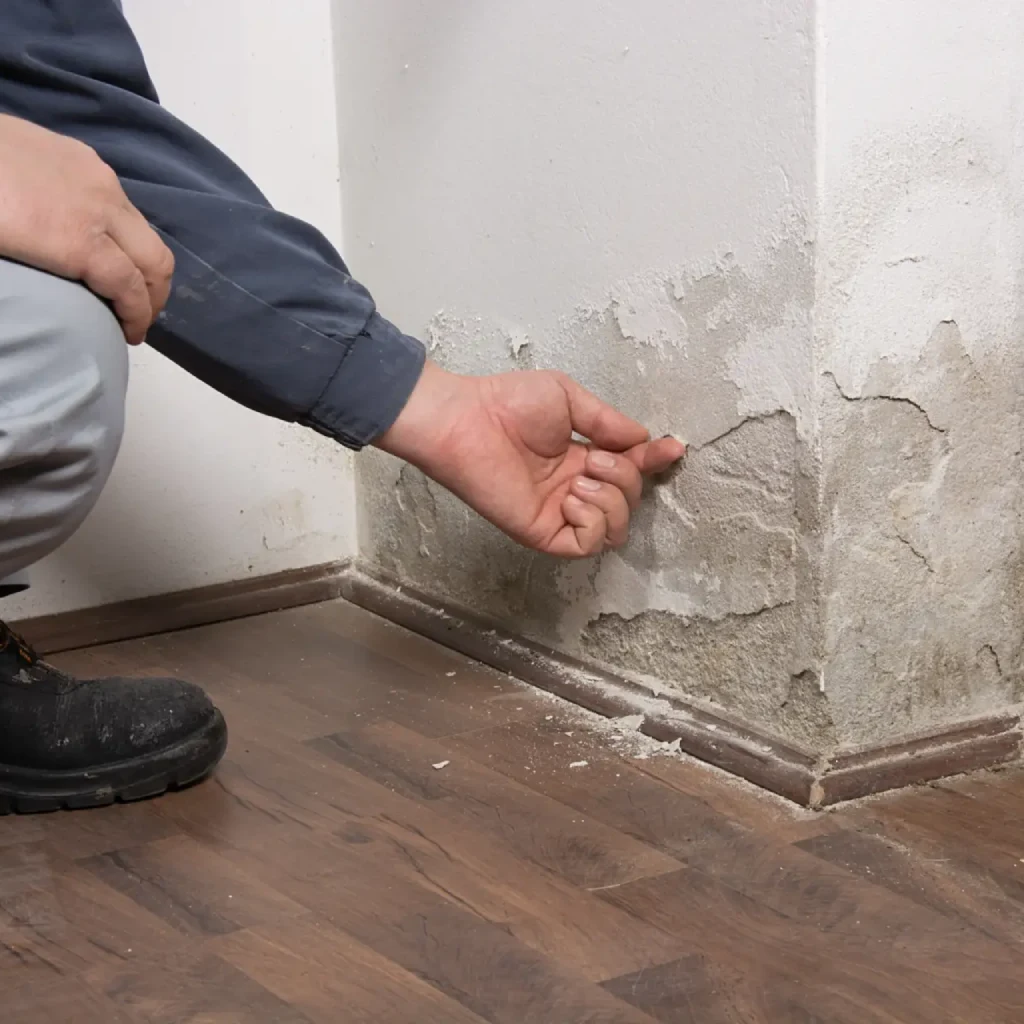
Peeling wallpaper or flaking paint: Moisture destroys the adhesive bond behind wallpaper and causes paint to bubble. You might find yourself asking, why is my wall damp inside? – often, the answer lies in failed pointing, gutter issues, or rising damp.
-
Crumbling plaster: If the plaster feels soft to the touch or is falling away in a powdery residue (efflorescence), water is likely migrating through the masonry.
- Efflorescence (Salty deposits): Salty deposits on ground floor brickwork is a clear indication of capillary action. Capillary action is when groundwater travels through porous materials, defy gravity. The salty white deposit left behind is called efflorescence and shows minerals left as a result of water ingress.
2. Structural and external indicators
Sometimes the evidence is outside. Check your building’s exterior for structural defects or faults:
Damaged brickwork: Look for “spalling” bricks where the surface is flaking off, often caused by the freeze-thaw cycle of water trapped inside the brick.
Efflorescence (Salty deposits): Keep an eye out for brickwork close to the ground that has a white powdery substance. This is a sign that groundwater has risen through your bricks through capillary action and left behind mineral. It can be seen on both external and internal ground floor walls. the type of damp that causes these issues and side effects is rising damp.
Green algae or moss: Excessive biological growth on a specific patch of a wall usually indicates a leaking gutter or downpipe saturating that area.
Faulty flashing: Inspect the seals around windows, doors, and chimneys. Even a tiny gap can allow significant water ingress during heavy UK rainfall.
3. Lingering musty smell
Not all signs of water ingress are visual and luckily your nose is often a better tool than your eyes. A persistent, earthy, or musty odour is a primary indicator of hidden dampness and mould growth. If you can smell it but can’t see it, the water ingress is likely occurring behind a cavity wall, under floorboards, or within the ceiling void. These can be difficult areas to dry without specialised equipment. Injection drying is a tried and testing method that can successfully dry out hard to reach areas like the ones listed in this section.
4. Advanced technology: Thermal imaging
Because water ingress is often hidden behind building materials, “visual” inspections have limitations. This is where professional technology becomes essential.
At Ideal Response, we often utilise a thermal imaging survey for damp. These cameras detect temperature differentials. Because damp areas are typically colder than dry ones, the camera reveals the exact path of the water ingress, even if the wall looks perfectly dry to the naked eye. Thermal imaging cameras can be used for moisture mapping, a technique that combines visual evidence and technical measurements to narrow down and pinpoint water ingress.
Water ingress vs. Internal leaks: Knowing the difference
Its vital to distinguish between water ingress and an internal property leak. Water ingress is typically a gradual issue caused by the weather and usually affects external walls.
Internal property leaks or traumatic damp is a different issue altogether and requires specialist equipment to identify and fix. Catastrophic damp, unlike water ingress, can happen fast. When a pipe bursts it doesn’t stop and the volume of water displaced can be quite extreme. Pipe leaks and plumbing failures are most likely to occur on internal walls and around water sources like taps, washing machines, radiators.
Understanding the difference between water ingress and a plumbing leak can save you both time and money. For water ingress, the best course of action is to hire a professional damp surveyor to conduct a through assessment of your property. For plumbing issues you should hire a leak detection service provider.
The mould problem
Prolonged water ingress will lead to the walls of your property becoming saturated. The high levels of moisture will also lead to damp humid air, which in turn promotes the growth of black mould.
Mould is a problem that can develop in as little 24-hour and return just as quickly if not handled correctly. To ensure prevent mould coming back and spreading even more, professional mould remediation is a must. A professional service provider not only kills mould at the root but helps you identify and rectify the root cause.
The longer the water ingress goes unnoticed and untreated, the more the conditions within your property will foster fungal growth. In this situation mould growth is considered to be a form of secondary damage as it isn’t the primary issue. But, that doesn’t make it any less of a risk to your health and property. Here’s why:
What are the dangers of mould growth?
- Health risks: Mould is a Category 1 Health Risk, meaning it’s presence poses a serious risk to human heath and wellbeing. Mould exposure can lead to such things as respiratory issues, chronic headaches and in some cases death. Awaab’s Law has recently been put into effect because of the recent tragedies caused by prolonged mould exposure. You can visit our Mould Toxicity Symptoms or the Health Risks of Mould articles to learn more.
- Property risks: In order for mould to take root and flourish it requires damp conditions and a food source. Unfortunately for UK property owners, that food source is often floor joists, timber framing and other organic material. Mould eats away at these materials, causing them to become brittle and weakened. Prolonged damp and mould will often result in either dry rot or wet rot. Both of which can cause serious damage to your property and can be an expensive issue to fix.
The hidden dangers of DIY repairs
When a property owner spots a damp patch or a salt stain, the natural instinct is to reach for a tin of damp-proof paint or a bag of filler. While these “quick fixes” may hide the visual evidence for a few months, they often exacerbate the underlying problem, leading to significantly higher repair costs in the future.
1. Treating the symptom, not the source
Applying waterproof coatings to an internal wall doesn’t stop water ingress; it simply traps the moisture inside the structure. If water is entering through porous brickwork or a failed cavity tray, blocking its exit point on the internal face forces the water to migrate further into the building fabric. This can lead to:
-
Rotting timber joists: Trapped moisture often finds its way to floor joists and wall plates, leading to dry or wet rot.
-
Blowing plaster: The pressure of trapped moisture and salt crystallisation (efflorescence) will eventually cause even “specialist” paints to bubble and peel.
2. The risk of interstitial condensation
By incorrectly sealing a wall without addressing the ingress, you risk creating interstitial condensation. This occurs when moisture-laden air is trapped within the layers of the building (between the brick and the plasterboard). Because this dampness is hidden from view, it can cause structural decay for years before it is discovered, often requiring a total “strip-to-shell” restoration.
3. The professional difference: Why “Trace and Access” matters
A DIY approach is limited to what the human eye can see. At Ideal Response, we utilise non-invasive technology to ensure we aren’t just covering a stain, but curing the cause.
-
Thermal imaging: Allows us to track the thermal signature of moisture as it travels through a wall.
-
Hygroscopic salt analysis: Helps us determine if the moisture is “new” (ingress) or “old” (residual salts from a previous issue).
-
Endoscopic inspections: We can view inside cavity walls to check for “bridging” (debris that allows water to jump from the outer leaf to the inner leaf) without removing bricks.
The Bottom Line: If you don’t find the source of the water, the water will eventually find a way back into your home. Professional identification is an investment that protects your property’s long-term market value.
Summary: The silent threat of water ingress
Water ingress is a silent threat to property structural integrity, often manifesting through subtle indicators like tide marks, efflorescence, or musty odours rather than obvious flooding. This guide explores the critical differences between weather-related ingress and internal plumbing failures, highlighting how DIY fixes often trap moisture and lead to secondary damage like black mould and timber rot.
By utilising non-invasive technology such as thermal imaging, hygroscopic salt analysis, and endoscopic inspections, Ideal Response provides a scientific approach to identifying the root cause of damp. Understanding these hidden signs is the first step in protecting your property’s health and long-term market value.
Worried about hidden damp or structural moisture? Don’t let water ingress compromise your property. Contact Ideal Response today to book a professional damp survey and pinpoint the source of the problem with our advanced thermal imaging technology.
Call our emergency response team 0800 088 4170
Water ingress FAQs
What is the difference between water ingress and a plumbing leak?
Water ingress refers to external water entering a property through structural defects, such as cracked masonry, roof damage, or failed seals, and is often weather-dependent. In contrast, an internal plumbing leak is typically caused by pipe failures, boiler issues, or appliance malfunctions and occurs regardless of weather conditions.
What are the most common signs of water ingress on internal walls?
Visible indicators of water ingress include yellow or brown “tide marks,” peeling wallpaper, bubbling paint, and crumbling plaster. You may also notice efflorescence, which is a white, powdery salt deposit left behind when groundwater migrates through porous brickwork via capillary action.
Can you smell water ingress before you see it?
Yes. A persistent, musty, or earthy odour is often the first sign of water ingress. This typically indicates that moisture is trapped in hidden areas such as wall cavities, under floorboards, or within ceiling voids, which can lead to unseen mould growth and structural decay.
How does thermal imaging help identify water ingress?
Thermal imaging technology detects temperature differentials within building materials. Since damp areas are typically colder than dry ones, professional moisture mapping using thermal cameras allows experts to track the exact path of water ingress behind surfaces without the need for invasive “exploratory” demolition.
Is mould caused by water ingress a health risk?
Yes, mould is classified as a Category 1 Health Risk. Prolonged exposure to mould spores resulting from water ingress can cause serious respiratory issues, chronic headaches, and allergic reactions. Under legislation like Awaab’s Law, addressing the root cause of damp and mould is essential for occupant safety.
Why shouldn't I use damp-proof paint to fix water ingress?
Applying damp-proof paint or waterproof coatings to an internal wall only treats the symptom, not the source. This traps moisture inside the building fabric, which can accelerate timber rot in floor joists and lead to “blowing” plaster or interstitial condensation, ultimately resulting in much higher repair costs.
How long does it take for mould to grow after water ingress occurs?
Mould can begin to develop in as little as 24 to 48 hours after surfaces become saturated. Because mould is a form of secondary damage, it will continue to return unless the primary source of water ingress is professionally identified and rectified.

Tahlia Ibrahim - Delivery Manager
Tahlia has over four and a half years of in-depth experience across various facets of the disaster recovery industry. Having progressed through roles in marketing and sales to her current position, Tahlia possesses a comprehensive understanding of the entire business operation, from initial client contact to meticulous service delivery. A certified BioSweep Specialist, she excels in advanced odour elimination techniques, ensuring thorough restoration.