Available 24/7 | 0800 088 4170

Available 24/7 | 0800 088 4170
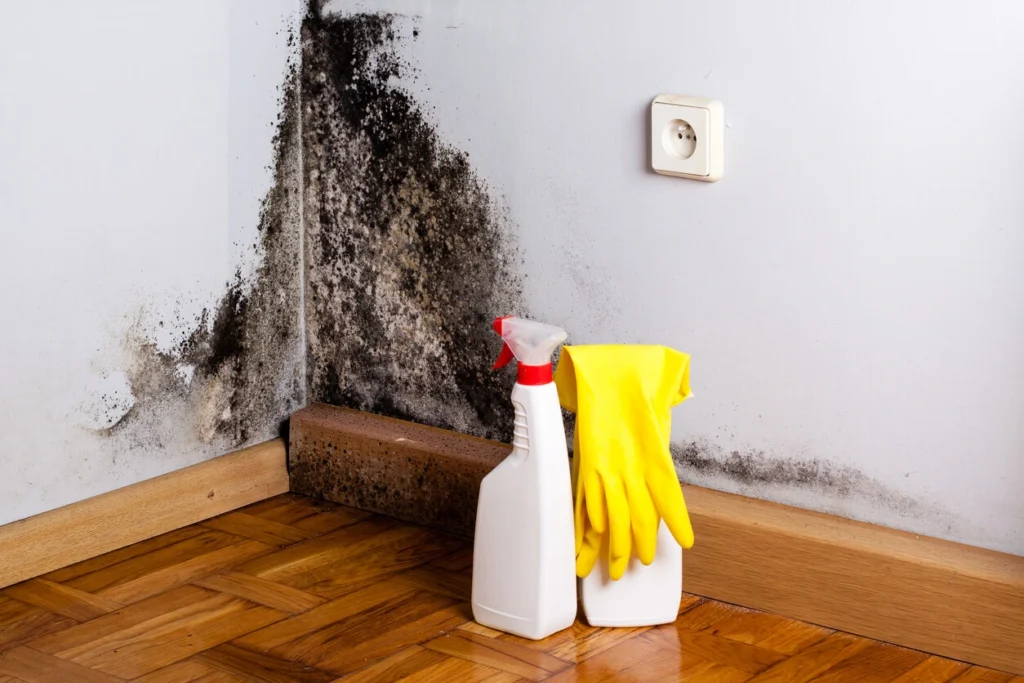
Black mould produces allergens any mycotoxins that can trigger adverse health reaction like respiratory issues, skin irritation and in some cases neurological symptoms. For many UK homeowners and tenants, mould is often seen as a cosmetic nuisance. An unsightly patch of black on a bathroom ceiling or a musty smell in a spare room. However, the reality is far more serious. Understanding what the health risks are of black mould is critical for protecting your family, your tenants, and the structural integrity of your property. In this blog you will learn why professional mould remediation is essential.
In recent years, the conversation around mould has shifted from simple maintenance to a major public health priority, spearheaded by landmark legislation like Awaab’s Law . This guide explores the biological impact of mould exposure and why professional remediation is the only way to ensure a safe breathing environment.
Skip to:
Understanding the biological threat
The primary health risks of black mould
Awaab’s Law
Dangers of DIY cleaning
Mould Removal vs Remediation
Professional mould remediation
FAQs
Moulds, such as Stachybotrys chartarum (often called “black mould”) and Aspergillus , reproduce by releasing microscopic spores into the air. When these spores are inhaled, ingested, or come into contact with the skin, they can trigger a range of physiological responses. Many species also produce mycotoxins which are toxic compounds that can lead to more severe, long-term health complications.
The impact of mould exposure varies depending on the individual’s health, the duration of exposure, and the concentration of spores in the air.
The most common symptoms of mould exposure are respiratory. For healthy individuals, this may manifest as a persistent cough, wheezing, or shortness of breath. However, for those with pre-existing conditions like asthma or Chronic Obstructive Pulmonary Disease (COPD), mould can be life-threatening. Spores act as a constant trigger, leading to frequent and severe attacks that are often resistant to standard inhaler treatments.
Many people suffer from an “allergic bronchopulmonary” reaction. Symptoms often mimic hay fever or a common cold that never goes away, including:
Prolonged exposure to high concentrations of Aspergillus or Penicillium can lead to fungal infections in the sinuses or lungs (Aspergillosis). This is particularly dangerous for immunocompromised individuals, such as those undergoing chemotherapy or living with autoimmune disorders.
While rare in small quantities, prolonged exposure to mycotoxins can lead to “toxic stress.” Symptoms reported by those living in heavily contaminated environments include chronic fatigue, persistent headaches, and even neurological issues.
The tragic death of two-year-old Awaab Ishak in 2020, caused by prolonged exposure to black mould in his social housing home, led to the introduction of Awaab’s Law . This legislation mandates that social landlords must investigate and fix damp and mould issues within strict timeframes. This law highlights a crucial fact: mould is a significant health hazard that cannot be ignored. It has set a new standard for both social and private landlords to ensure that properties are not just habitable, but biologically safe for all occupants. GOV's Awaab's Law Phase 1 Guidance for Social Landlords gives you an indepth look at the changing legislation and the effects it has on both tenants and social housing landlords.
When people ask how to remove black mould, they often reach for household bleach. As we have discussed in our guide to safe mould removal , this is often counterproductive.
Scrubbing mould without proper containment sends millions of spores into the air, significantly increasing the immediate health risk to the person cleaning.
Bleach often only removes the pigment of the mould on porous surfaces like plasterboard, leaving the roots (hyphae) alive to regrow.
DIY methods do nothing to address the airborne spores that remain in the room long after the visible patch is gone.
Because the health risks of black mould are linked to both visible growth and invisible airborne spores, professional intervention is necessary if:
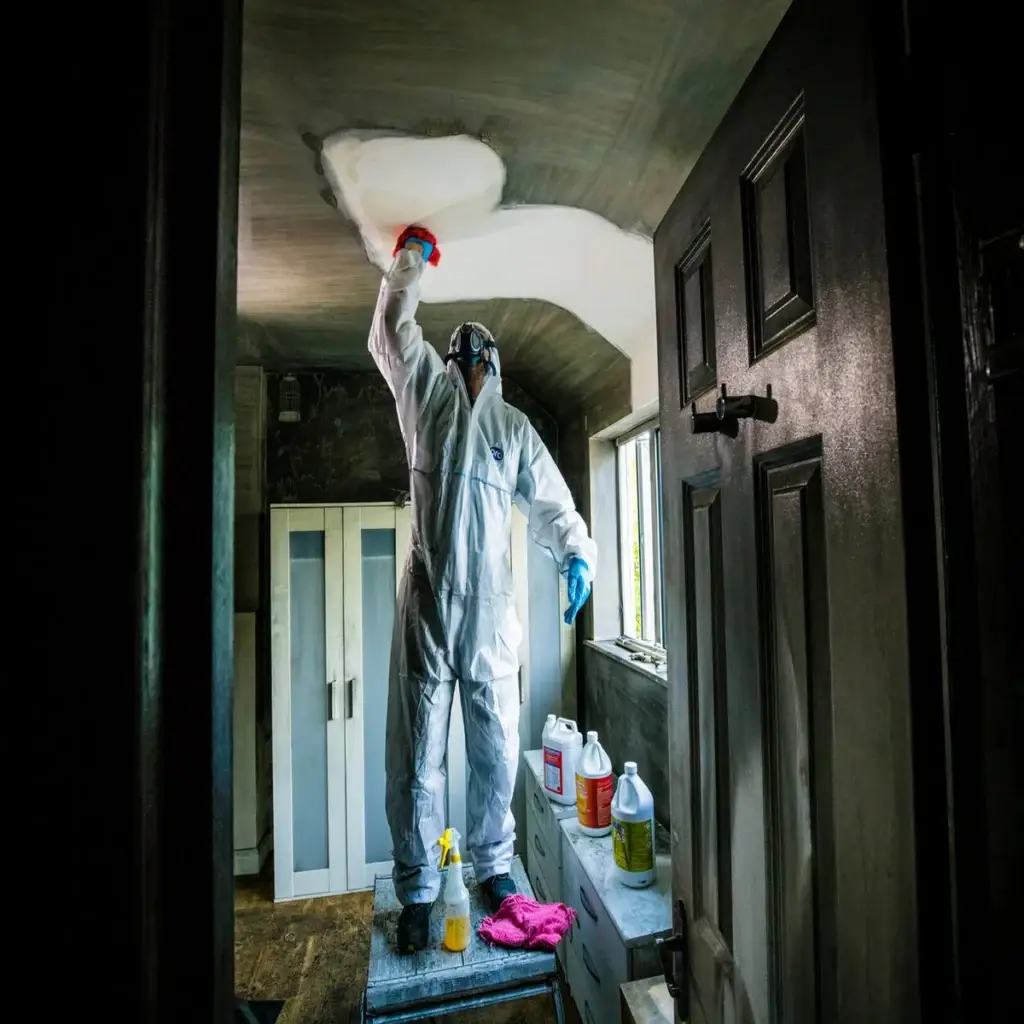
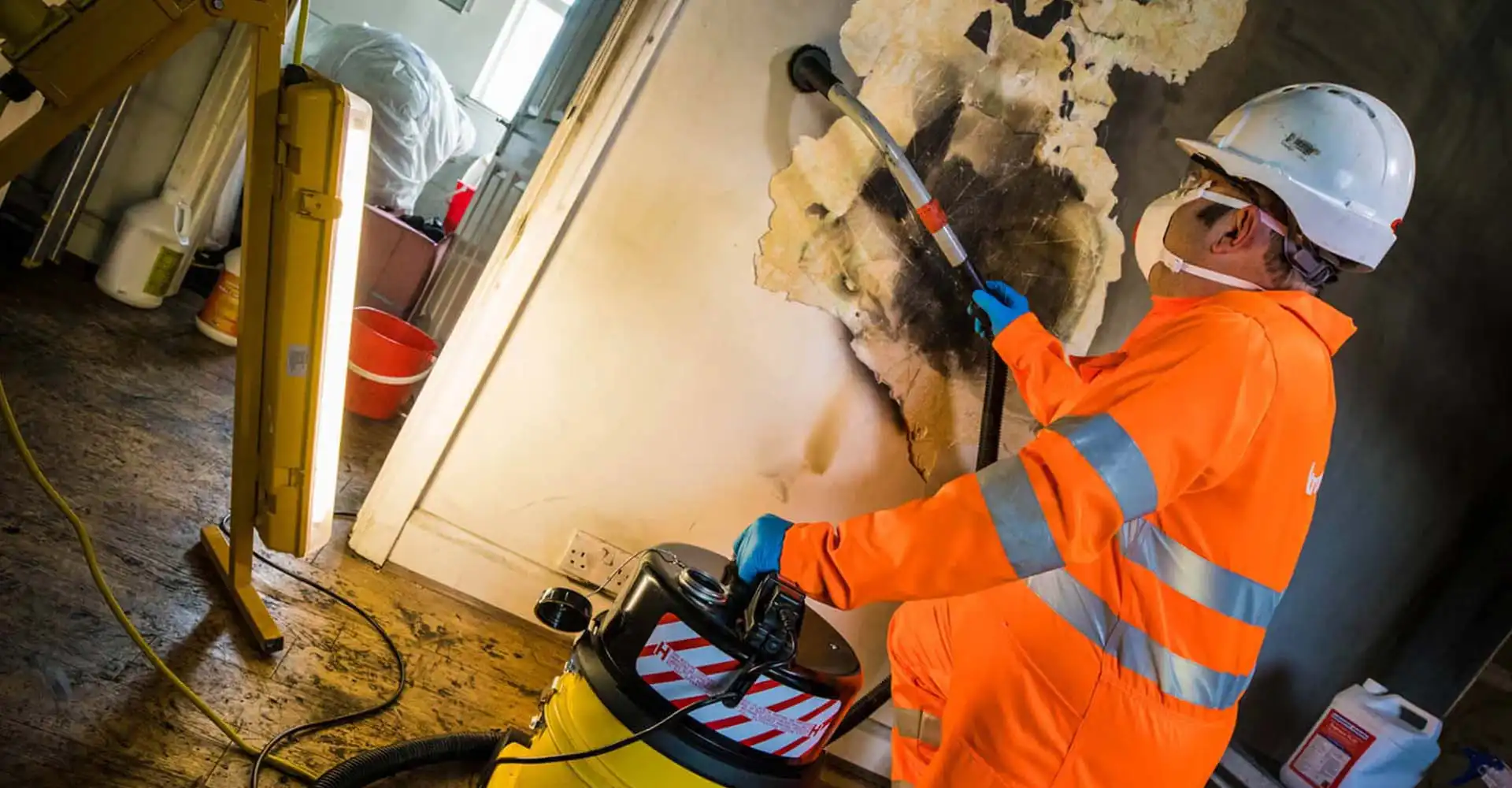
Professional mould remediation follows strict IICRC S520 standards to ensure your safety. This involves high-efficiency HEPA air filtration to scrub the air of microscopic spores, the use of industrial-grade biocides to kill growth at the root, and comprehensive moisture mapping to identify and fix the leak or condensation issue at its source. Don’t risk your health with temporary, superficial fixes. If you suspect a mould problem in your home or commercial property, contact Ideal Response today for a professional assessment and certified remediation to secure a healthy environment for your occupants.
Visit our Mould remediation & Structural Drying case study to learn more about professional mould cleaning and what success looks like from start to completion.
No. Mould removal is the process of removing surface level mould, it does not address the underlying damp issue causing the mould. Mould remediation is a multi-phase process carried out by professionals and trained technicians that treats the underlying issue, kills the mould at the root and removes both surface and airborne spores. Visit our mould removal vs mould remediation blog for deep dive into the key differences.
Attempting to deal with mould on your own will often lead to more issues down the line. The only way to guarantee success is by solving the root cause of the moisture, killing the mould at the root and removing all remaining spores. Professional mould remediation is the best course of action to ensure that all of these criteria are met inside of your property. Contact us today via a webform or call to speak to an expert and get a quote in less than 10 minutes. Ideal Response has been helping UK tenants and property owners deal with mould for over 20 years.
Call our emergency response team 0800 088 4170
| Mould Removal | Mould Remediation | |
|---|---|---|
| Definition | Cleaning visible surface level mould from surfaces | A multi-stage approach that treats the underlying damp issue, kills mould at the root and removes spores |
| Does it require a professional? | No | Yes |
| Does it solve the underlying issue? | No, it only removes surface mould | Yes, identifying the root cause of the mould is a key part of the process |
| When should it be used | For small patches of surface mould with no persistent underlying damp issues | Persistent, recurring mould that spans large areas or has spread to multiple rooms |
| Risk of recurring | Very high | Very unlikely if carried out correctly |
| Average price | £500-£750 | £1,200-£1,500 |
Explore more articles about damage restoration, specialist cleaning and what we do



Chris Hedges is Head of Marketing at Ideal Response and the author of every article published on this site. With over 25 years of senior marketing experience across property, legal, and professional services sectors, Chris brings a clear, evidence-led approach to writing about fire damage, flood restoration, and specialist property remediation. His philosophy is simple: cut through the noise, respect the reader's time, and give people the information they actually need.