
Land health is often overlooked until it becomes a barrier to development or a threat to public safety. Soil contamination represents a significant environmental challenge in the UK, particularly on “brownfield” sites that carry the industrial legacy of our past.
Understanding the lifecycle of contaminated land, from initial discovery to final validation, is essential for homeowners and commercial developers alike. This guide explores the technical, legal, and practical aspects of managing the ground beneath our feet.
Skip to:
Understanding the scope of contaminated soil
Understanding the scope of contaminated soil
At its core, contaminated soil contains substances that are not naturally occurring, or occur at levels significantly higher than background concentrations. These contaminants are generally categorised into three groups:
-
Organic contaminants: Including hydrocarbons (oils/fuels), solvents, and pesticides.
-
Inorganic contaminants: Heavy metals such as arsenic, lead, mercury, and cadmium.
-
Physical ccontaminants: Asbestos-containing materials (ACM), glass, or slag.
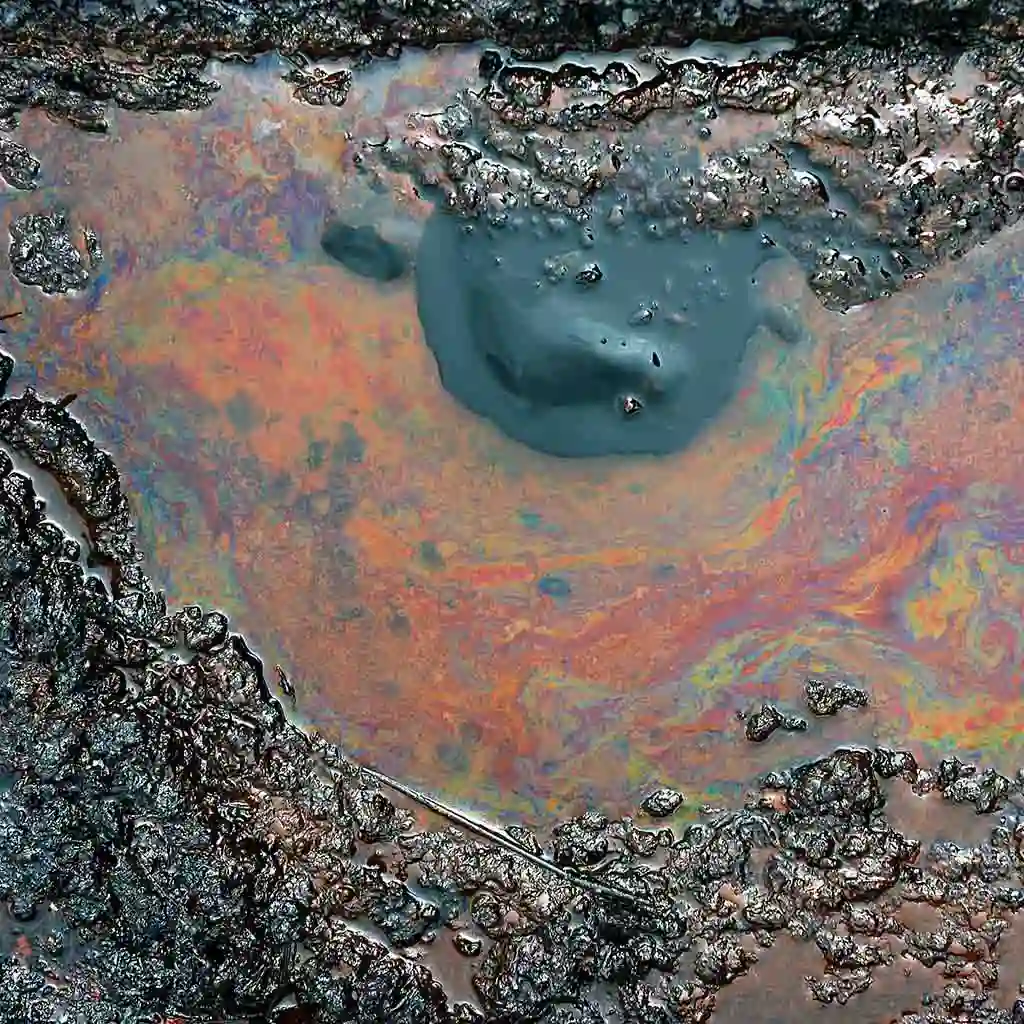
The presence of these materials can lead to “pollutant linkages.” For a site to be legally classified as contaminated land under Part 2A of the Environmental Protection Act 1990, there must be a source (the contaminant), a pathway (how it moves), and a receptor (human beings, controlled waters, or ecosystems). If a spill occurs, such as a heating oil leak, the liquid creates a rapid pathway through the soil profile, requiring immediate oil spill cleaning to break that linkage before it reaches local water tables.
The cost of negligence: UK Fines for soil contamination
The legal framework surrounding soil contamination in the UK is governed by the “Polluter Pays” principle. Failure to manage contaminated land or causing a “pollution incident” can result in severe financial and criminal penalties.
1. Environmental Protection Act 1990 (Part 2A)
Under this act, if land is formally identified as “contaminated land” and the responsible party fails to comply with a Remediation Notice, they can face unlimited fines. For commercial entities, these fines are often structured to reflect the company’s turnover.
2. The Sentencing Council’s Environmental Guidelines
The Environment Agency (EA) doesn’t just fine for the damage caused; they fine based on culpability and risk. Under the “Sentencing Council’s Environmental Offences Definitive Guideline”:
-
Deliberate or reckless breach: For large companies, fines can range from £450,000 to £3 million.
-
Negligent breach: Even where the contamination was accidental but preventable, fines for large organisations typically start at £100,000.
-
Individual liability: Directors can be held personally liable. This includes personal fines and potential custodial sentences of up to 5 years.
3. Clean-up and restoration costs
Fines are often only the beginning. The courts frequently issue “Remediation Orders,” forcing the polluter to pay for the professional clean-up of the site. In areas like Kent and Maidstone, where land value is high, the cost of expert remediation often far outweighs the initial penalty.
4. Civil Liabilities & nuisance
Third-party claims for “private nuisance” can be brought by neighbouring landowners if contaminants (such as migrating oil) cross property boundaries. This is a common and costly issue in the densely populated London area.
Contaminated soil remediation: Technical approaches
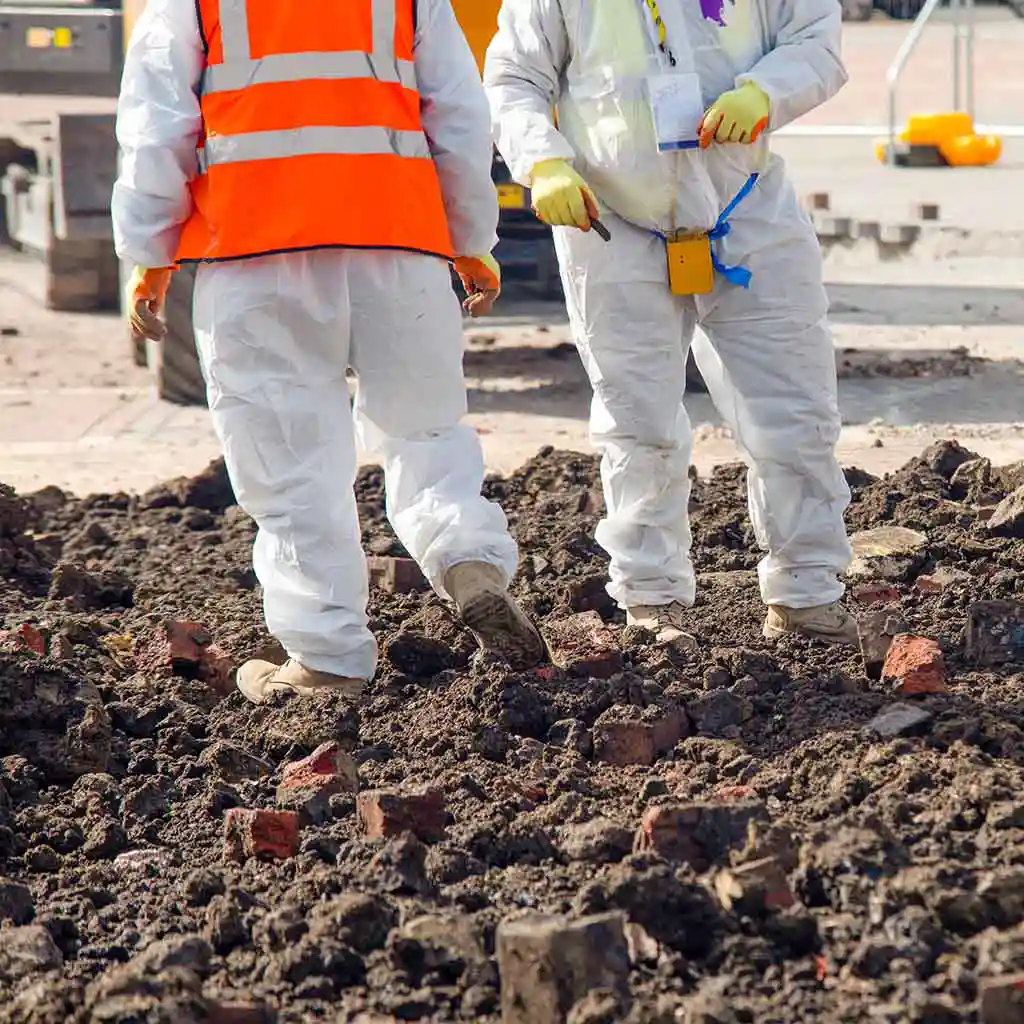
When a risk is identified, contaminated soil remediation becomes the priority. Modern remediation has moved away from simple “excavation” toward more sustainable solutions:
-
In-Situ Chemical Oxidation (ISCO): Injecting chemical oxidants to destroy organic contaminants.
-
Bioremediation: Utilising specialised bacteria to “digest” hydrocarbons.
-
Soil Vapor Extraction (SVE): Using a vacuum system to remove gases from soil pores.
-
Stabilisation: Mixing soil with binding agents to “lock” contaminants in place.
Visit our Fuel Spill & Water Contamination case study to see how our team of experts handled the soil contamination and safely remediated the site.
The process of contaminated soil disposal
In many cases, remediation isn’t enough, and the soil must be removed. Contaminated soil disposal is a complex legal undertaking. You cannot legally transport or dispose of soil without a Waste Transfer Note and a clear classification. This is where WAC (Waste Acceptance Criteria) testing is indispensable.
WAC testing dictates whether the soil can go to:
-
Inert landfill: For clean or very low-level material.
-
Non-hazardous landfill: For standard contaminated soils.
-
Hazardous landfill: For heavily contaminated or “hot” soils requiring specialised containment.
Domestic vs. Commercial impacts
For residents in Canterbury, domestic contamination is often linked to localised accidents like oil tank leaks. Conversely, commercial clients rely on WAC testing services to manage the massive costs of “muck-away.” Misclassifying hazardous soil as non-hazardous is a common trigger for the heavy EA fines mentioned above.
Expert environmental solutions: Ideal Response provides end-to-end support, from rapid oil spill response to technical WAC testing for large-scale disposal projects. Speak to one of our environmental specialists today.
Need help now? Call us on 0800 088 4170
Soil contamination FAQs
Who is responsible for soil contamination under UK law?
Under the “Polluter Pays” principle, the person or business that caused the contamination is primarily responsible. However, if the polluter cannot be found, the current landowner or occupier may become liable for remediation costs and legal fines under Part 2A of the Environmental Protection Act 1990.
What are the fines for soil contamination in the UK?
The UK government can impose unlimited fines for serious environmental breaches. For business-related soil contamination, Magistrates’ Courts can issue fines up to £50,000 and 12 months in prison, while Crown Court convictions can lead to much higher financial penalties and up to five years of imprisonment.
What is WAC testing and why is it required?
Waste Acceptance Criteria (WAC) testing is a mandatory chemical analysis required before soil can be disposed of at a licensed landfill. It determines if the soil is inert, non-hazardous, or hazardous, ensuring the waste meets the specific acceptance criteria of the receiving site to prevent further environmental harm.
How do you treat contaminated soil on-site?
The most effective on-site (in-situ) soil remediation methods include Soil Vapour Extraction (SVE) for volatile compounds, Bioremediation using microorganisms to break down pollutants, and Chemical Oxidation. These methods are often more cost-effective than “dig and dump” as they reduce landfill tax liabilities.
Do I need soil remediation before building in London or Kent?
Yes. Planning authorities in major hubs like London, Canterbury, and Maidstone typically require a Phase 1 Environmental Site Assessment. If contamination is identified, a remediation strategy must be approved and a verification report submitted before the development can be legally signed off.
What is the difference between a Phase 1 and Phase 2 soil survey?
A Phase 1 Desk Study involves reviewing historical records and site walkovers to identify potential risks. A Phase 2 Intrusive Investigation involves taking physical soil samples for laboratory analysis to confirm the presence, type, and concentration of contaminants like heavy metals or hydrocarbons.

Chris Hedges - Head of Marketing
With over 25 years' experience, Chris is adept at defining and driving strategy, while also enjoying hands-on operational delivery. He believes in an equal blend of creativity and analytical scrutiny, always finding inventive ways to achieve objectives, underpinned by evidence. Chris’s philosophies are simple: don't overcomplicate, always prioritise customer experience, and bend the rules just enough to cut through the noise and drive momentum and growth.