Available 24/7 | 0800 088 4170

Available 24/7 | 0800 088 4170
It’s one of the most common household issues in the UK, yet one of the least understood when it comes to cost. A quick Google search turns up everything from £100 ‘clean-ups’ to £3,000+ ‘full remediation packages’. So what’s realistic, and how do you know you’re paying for a permanent fix, not a temporary patch-up? This guide breaks down the true cost of professional mould remediation , explains what that cost actually covers, and shows why professional help is often the smartest financial and health decision you can make.
Skip to:
Average UK costs for professional mould remediation
Why the cost varies
What you’re paying for
Is it worth the cost?
Health & legal context – why action matters
When to bring in a professional immediately
Insurance and compliance
Final takeaway
FAQs
For reference, here’s what most UK homeowners and landlords can expect to pay for professional mould work:
These figures represent typical 2025 UK averages for the cost of mould removal and will vary depending on region, property type, access, and the severity of the mould problem.
No two mould jobs are the same. Costs can shift quite a bit depending on how serious the contamination is and what’s causing it. Here are the main factors that make the biggest difference.
When you hire a professional mould remediation company, you’re not just paying for a deep clean; you’re investing in controlled environmental restoration that removes the contamination, fixes the cause, and prevents it from returning.
A reputable service typically includes:
In short, you’re paying for certainty. This means you get certainty that the root cause has been fixed, the air is clean, and the problem won’t come back.
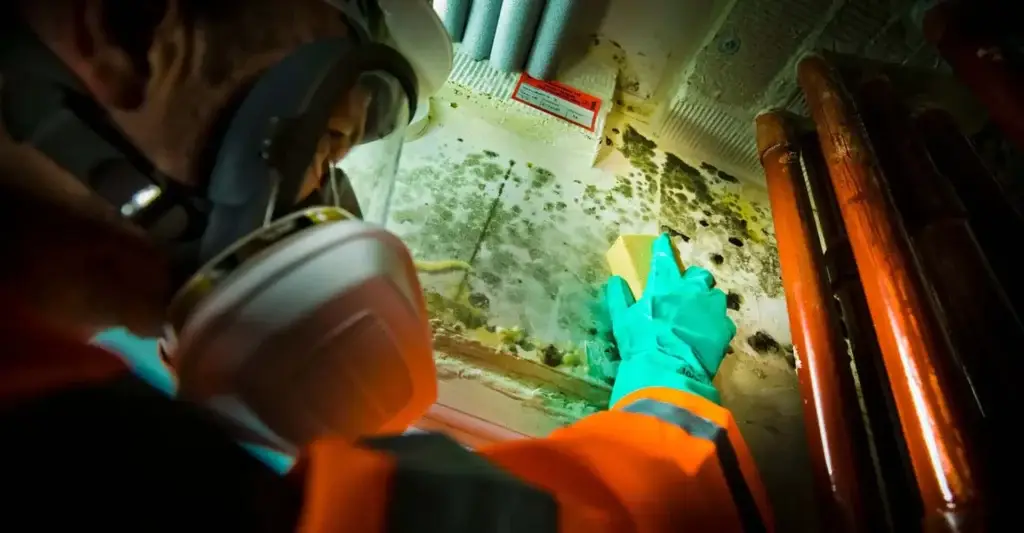
At first glance, DIY mould sprays look cheaper and for very small, surface-level problems, they can help temporarily. But they rarely reach hidden mould or fix the moisture issue that caused it. The result? The mould comes back, often worse than before.
Here’s how DIY cleaning compares to professional mould remediation in real terms.
DIY cleaning:
Professional remediation:
Considering that untreated mould can damage property value, trigger respiratory issues, and lead to repeat cleaning costs, professional remediation almost always pays for itself.
Mould isn’t just unsightly, it’s now recognised as a serious health and housing safety issue in the UK. Taking quick action isn’t optional anymore; it’s a responsibility shared by landlords, homeowners, and tenants alike.
The health impact:
The legal context:
Following the death of two-year-old Awaab Ishak in Rochdale in 2020, the UK government introduced Awaab’s Law, which came into force in October 2025.
Under this law, social landlords must investigate any reported damp or mould issues within 10 working days and carry out necessary repairs within set timeframes.
Although designed for social housing, Awaab’s Law has created a nationwide benchmark for how mould should be handled in all homes. It sends a clear message: ignoring mould is no longer acceptable. Delays can now be considered a breach of duty of care, putting both residents and landlords at legal and financial risk.
To learn more about Awaab’s Law, visit our Awaab’s Law hub which contains information for social landlords, private landlords and tenants.
What it means for you:
Whether you’re a landlord, tenant, or homeowner, professional action is the safest and most responsible response. Tackling mould quickly doesn’t just protect walls and ceilings; it protects health, prevents costly repairs, and ensures compliance with modern UK housing standards. Early intervention demonstrates diligence, safeguards wellbeing, and keeps your property legally sound.
Call an expert if you notice:
The earlier you act, the lower the total cost. To learn more about the professional mould remediation process, visit our Mould remediation & Structural Drying case study. You’ll see what success looks like from start to end.
If mould arises from a sudden incident (burst pipe, flood), your insurer may cover professional remediation. Gradual condensation or ventilation issues are usually excluded, but a professional inspection report often strengthens claims.
Landlords benefit too: proper documentation shows compliance with Housing Health and Safety Rating System (HHSRS) obligations.
Mould isn’t just a surface issue; it’s a cycle of damage, health risk, and hidden cost that only ends when the root cause is professionally fixed.
Professional remediation breaks that cycle for good. It removes contamination safely, restores healthy air quality, and prevents the mould from returning. For most UK homes, one certified treatment is far more cost-effective and far safer than repeating DIY “quick fixes” that never solve the problem.
If you’ve noticed mould coming back after cleaning, or you’re concerned about compliance under Awaab’s Law, now is the time to act. Every week you wait increases the potential for further damage, health symptoms, and repair costs.
Ideal Response have been helping UK home and property owners overcome the stress of mould. If you’re suffering with mould proliferation in your property, contact our team of experts today. You can leave us a webform or give us a call and receive a free quote in less than 10 minutes.

Chris Hedges is Head of Marketing at Ideal Response and the author of every article published on this site. With over 25 years of senior marketing experience across property, legal, and professional services sectors, Chris brings a clear, evidence-led approach to writing about fire damage, flood restoration, and specialist property remediation. His philosophy is simple: cut through the noise, respect the reader's time, and give people the information they actually need.
Explore more articles about damage restoration, specialist cleaning and what we do
If you’re dealing with fire damage, flooding, or an environmental incident, our team is ready to respond. No matter if you have a question or have an emergency that you need help with, call:
If you’d prefer to drop us a message, use our main contact form and upload any pictures of the incident. Would you like us to call you? Fill out the short ‘Request a call back’ form.


