One of the biggest misconceptions about odours is that they’re vague or intangible. They’re not.
Every persistent smell inside a property is caused by volatile organic compounds (VOCs), microscopic chemical particles released from materials, residues or biological sources.
These compounds:
- Travel through the air
- Attach to surfaces
- Continue to be released over time
That’s why odours don’t behave like dirt or dust. You can’t simply wipe them away, because they’re not just sitting on surfaces. They are being continuously generated from a source somewhere within the property.
Skip to:
Why warm weather makes odours noticeably worse
The three most common sources of persistent odours (from a scientific perspective)
Why standard cleaning methods fail (even when done thoroughly)
The real-world impact: Why this becomes a property problem and not just a smell
How odours spread through a property (and why they’re hard to contain)
What actually needs to happen to remove an odour properly
Real project example: Cigarette smoke odour removal in an Essex flat
Why timing matters more than most people realise
Conclusion: Odours are a chemical problem not a cleaning issue
Why warm weather makes odours noticeably worse
Temperature plays a direct role in how VOCs behave. As heat increases:
- Vapour pressure rises – more odour molecules are released into the air
- Bacterial metabolism accelerates – organic material breaks down faster
- Air movement increases – odours spread more easily between rooms
According to the UK Health Security Agency, microbial growth indoors increases significantly in warmer, humid conditions, particularly where moisture and organic matter are present. This is highly relevant in the UK, where:
- Around 1 in 5 homes report issues with damp or condensation (English Housing Survey)
- Older housing stock often has limited ventilation and insulation challenges
Combine those factors with warmer weather, and you get a rapid increase in odour intensity, even if the underlying issue hasn’t changed.
The three most common sources of persistent odours (from a scientific perspective)
While smells vary, most persistent odours fall into three underlying categories.
1. Microbial growth (damp, mould, bacteria)
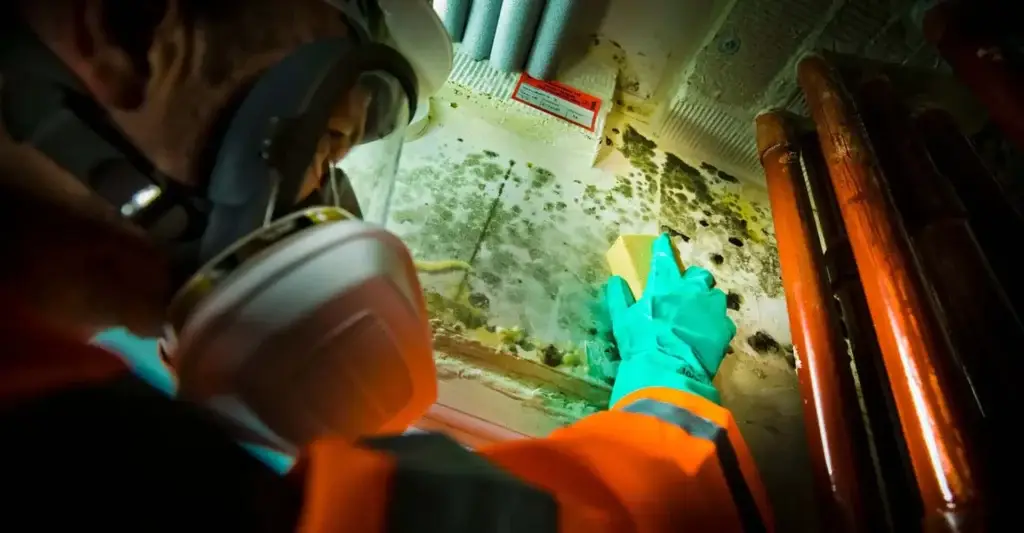
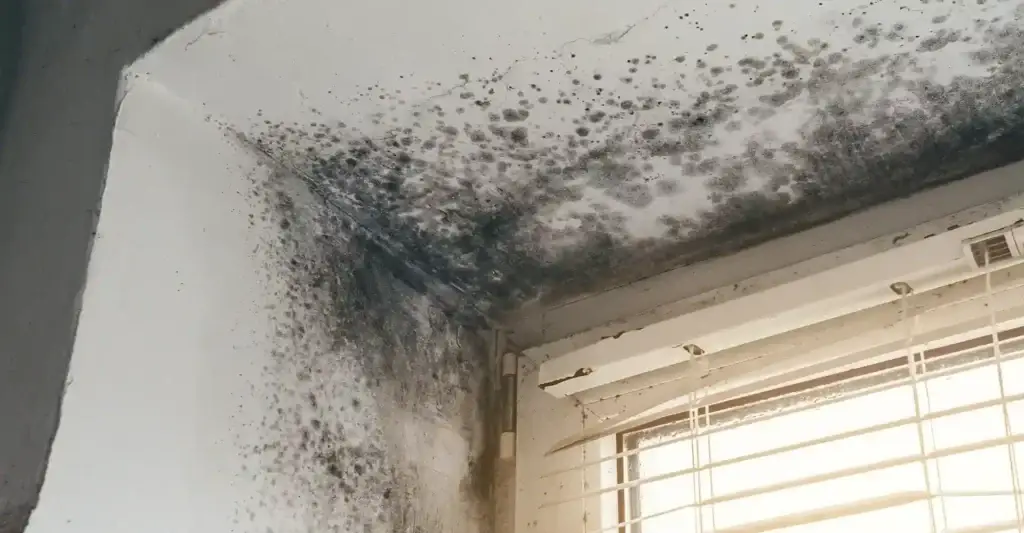
When moisture is present, microorganisms begin to grow and break down organic material.
This process releases:
- Microbial VOCs (mVOCs)
- Gases responsible for musty, earthy smells
These compounds are particularly difficult to remove because they:
- Penetrate porous materials
- Continue to be generated as long as moisture remains
This is why guidance linked to Awaab’s Law focuses not just on visible mould, but on environmental conditions within properties.
The smell is not the issue, it’s evidence of ongoing biological activity.
2. Absorbed organic contamination
Materials like carpets, plaster and wood act as sinks for odour compounds.
They absorb:
- Cooking residues
- Smoke particles
- Biological contamination
- Waste-related compounds
Over time, these compounds become embedded and are slowly re-released.
This is known as off-gassing. It explains why:
- A room smells fine after cleaning
- Then smells again hours later
Nothing new has appeared, the material is simply releasing what it already contains.
3. Residual damage from previous incidents
After events such as:
Odour-causing compounds can remain even after visible cleaning.
For example:
- Smoke leaves behind hydrocarbon residues
- Water damage can trigger bacterial growth within structures
- Biological incidents introduce protein-based contamination
These compounds bond to surfaces and require targeted treatment to remove.
Why standard cleaning methods fail (even when done thoroughly)
From a technical perspective, most cleaning methods fail for one reason – they don’t change the chemical state of the odour source.
Cleaning can:
- Remove surface dirt
- Dilute some compounds
- Temporarily improve air quality
But it cannot:
- Extract deeply embedded VOCs
- Stop microbial activity
- Neutralise chemically bonded residues
That’s why odours return, sometimes stronger, because the underlying process is still active.
The real-world impact: Why this becomes a property problem and not just a smell
Persistent odours are not just unpleasant, they influence decision-making.
Research across property and behavioural psychology consistently shows that smell is one of the fastest ways people assess an environment.
In practice, that means:
- Prospective tenants may reject a property within seconds
- Customers form negative impressions immediately
- Occupants perceive a space as unclean, regardless of its actual condition
In commercial terms, that can translate to:
- Longer void periods
- Reduced rental or sale value
- Reputational impact for businesses
How odours spread through a property (and why they’re hard to contain)
Odours rarely stay in one place. Once VOCs are released, they:
- Travel through air currents
- Settle onto other surfaces
- Become reabsorbed elsewhere
This creates a secondary problem which is cross-contamination. For example:
- A source in one room can affect adjacent rooms
- Soft furnishings can absorb odours and reintroduce them later
- Ventilation systems can distribute odour compounds
This is why treating only the ‘smelly room’ often fails.
What actually needs to happen to remove an odour properly
From a technical standpoint, successful odour removal requires three things:
1. Source identification
Not where the smell is strongest, but where it originates.
2. Source removal or treatment
This may involve:
- Removing contaminated materials
- Treating affected surfaces
- Addressing moisture or environmental conditions
3. Molecular Neutralisation
Using processes that:
- Break down VOCs
- Alter their chemical structure
- Prevent further release
Without all three, the problem is only partially resolved.
Real project example: Cigarette smoke odour removal in an Essex flat
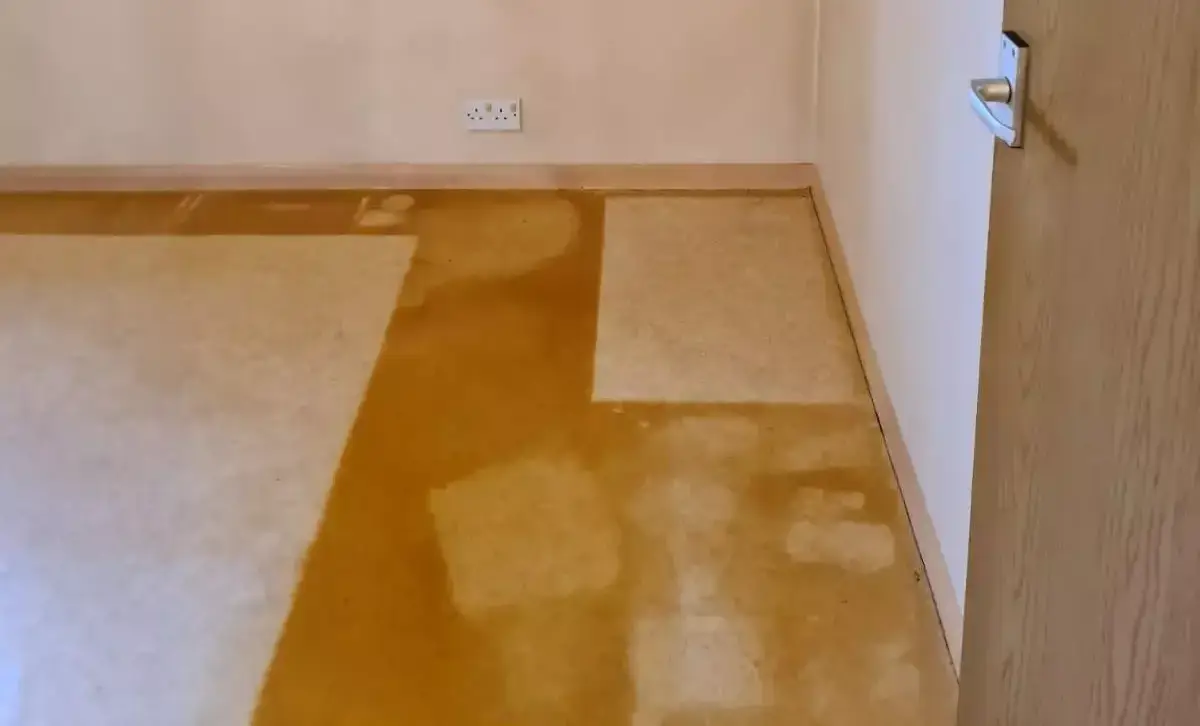
Following the passing of a long-term smoker, a one-bedroom flat in Essex was left heavily affected by decades of indoor cigarette use, with a deeply embedded and persistent smoke odour throughout the property. The smell had penetrated walls, ceilings, soft furnishings, and flooring, making the space unsuitable for occupation or letting without specialist intervention.
Our team was instructed to carry out a full odour remediation process, focusing on the complete elimination of tobacco-related smells rather than surface cleaning alone. Initial works involved removing heavily contaminated materials and preparing all affected surfaces for treatment.
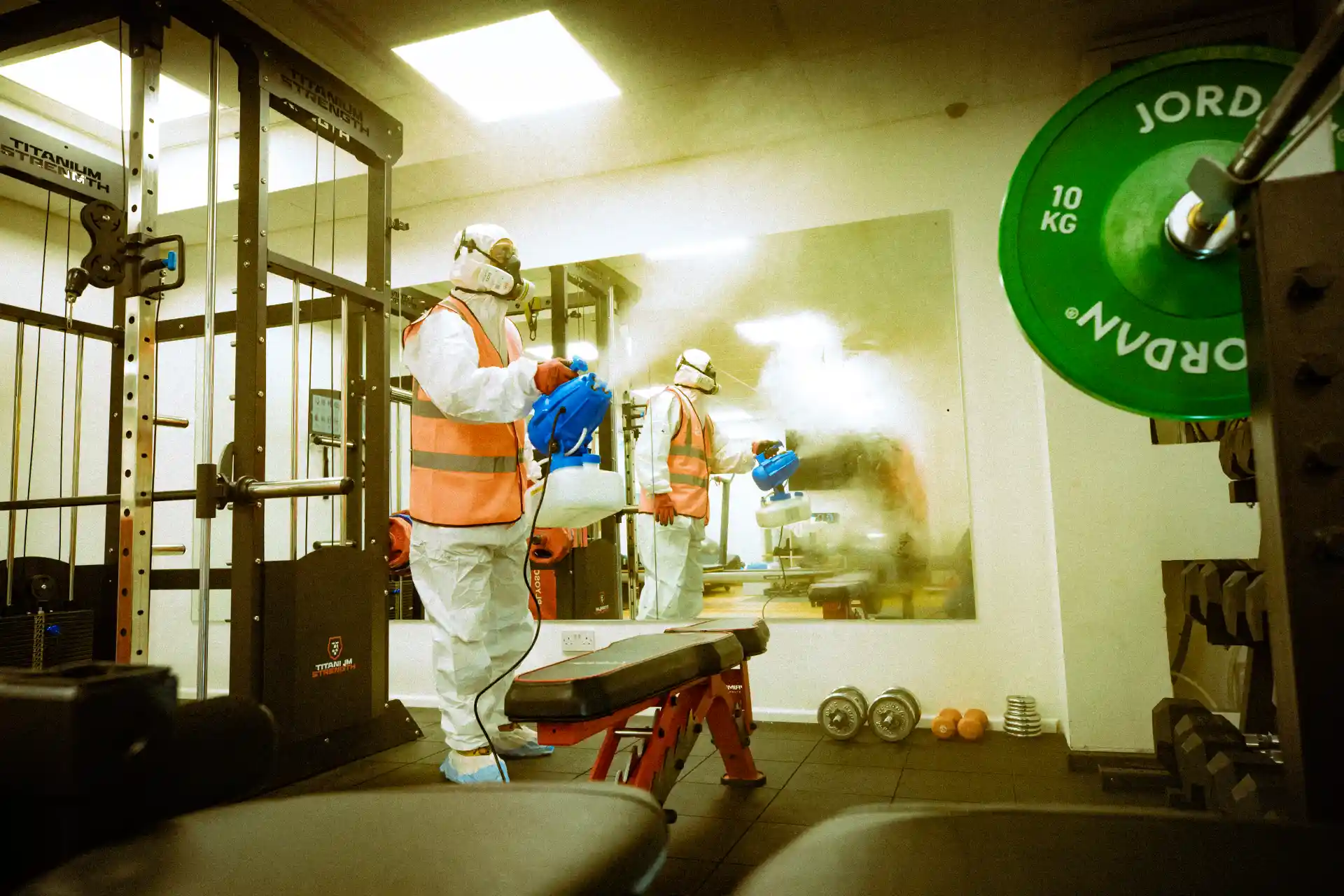
We then applied specialist smoke odour neutralisation techniques designed to break down and remove odour molecules embedded within porous materials. This included targeted chemical treatment and advanced fogging methods to reach hidden and hard-to-access areas of the property.
Air purification systems were also used throughout the process to continually filter and improve indoor air quality, ensuring no residual odour remained once treatment was complete.
As a result, the property was successfully restored from a heavily smoke-affected environment to a fresh, neutral-smelling space suitable for refurbishment and reoccupation.
Why timing matters more than most people realise
Odour problems are progressive.
The longer they remain:
- The more materials become affected
- The more compounds are absorbed
- The wider the spread becomes
This increases both:
- Complexity
- Cost of resolution
Early intervention doesn’t just solve the problem, it limits how far it develops.
Conclusion: Odours are a chemical problem not a cleaning issue
The key shift is understanding persistent property odours are not caused by dirt or surface-level issues. They are caused by:
- Chemical compounds
- Biological activity
- Or embedded contamination
And those processes don’t stop on their own. They need to be identified, treated, and fully resolved.
Ideal Response provides specialist odour removal services across the UK, addressing the source of contamination and restoring properties to a safe, usable condition.
Frequently asked questions about persistent property odours
What are VOCs and why do they cause smells?
VOCs (volatile organic compounds) are chemical gases released from materials or biological sources. They are responsible for most indoor odours.
Why do smells get worse when it’s warm?
Heat increases the rate at which VOCs are released and accelerates bacterial activity, making odours stronger and more noticeable.
Can odours be permanently removed?
Yes, but only if the source is identified and treated. Masking or surface cleaning will not resolve the issue.
Why does a property smell clean at first, then smell again later?
Because materials release absorbed odour compounds over time, a process known as off-gassing.
Are odours linked to damp and mould?
Often. Microbial growth produces gases that create musty smells, particularly in properties with moisture issues.
Can smells spread to other rooms?
Yes. Odour compounds travel through air and can be absorbed into other materials, spreading the problem.
When should professional help be considered?
When the source is unclear, the smell persists, or cleaning has failed to resolve the issue.

Chris Hedges - Head of Marketing
Chris Hedges is Head of Marketing at Ideal Response and the author of every article published on this site. With over 25 years of senior marketing experience across property, legal, and professional services sectors, Chris brings a clear, evidence-led approach to writing about fire damage, flood restoration, and specialist property remediation. His philosophy is simple: cut through the noise, respect the reader's time, and give people the information they actually need.