Available 24/7 | 0800 088 4170

Fire damage emergency in England? What to do in the First 24 hours to protect lives and property

If you’re reading this because you’ve just experienced a fire, you are in a time-critical situation.

In England, fire and rescue services attend over 600,000 incidents each year, with more than 140,000 involving fires. Of those, over 61,000 are classed as primary fires, the most serious category, involving homes, businesses, vehicles, and life-risk scenarios. Fire-related fatalities in England remain in the hundreds annually, reinforcing one clear truth: fire damage is never minor, and the aftermath matters just as much as the fire itself.

This guide explains exactly what to do in the first 24 hours after fire damage, why delays make things worse, and when professional fire damage restoration becomes essential.

Skip to:

Why fire damage is still an emergency after the flames are out

The first hour after a fire: What to do (and what not to do)

The critical 24-hour window after fire damage

What happens if fire damage restoration is delayed

When to call a fire damage restoration specialist

Final word: Fire damage is a race against time

Why fire damage is still an emergency after the flames are out

When the fire is extinguished, the damage process is only beginning.

Smoke and soot residues are acidic and corrosive, meaning they immediately start attacking metals, electronics, finishes, and surfaces. Water used by firefighters often penetrates walls, floors, and insulation, creating hidden moisture damage and mould risk. At the same time, toxic particles remain suspended in the air and embedded in materials throughout the property.

Without fast, professional intervention, this secondary damage can exceed the cost of the original fire.

The first hour after a fire: What to do (and what not to do)

Once emergency services confirm it is safe, your actions in the first hour are critical.

What you should do immediately:

  • Follow all instructions from fire authorities regarding re-entry
  • Shut off gas, electricity, and water if advised
  • Photograph and document visible damage for insurance purposes

What you should not do:

  • Do not attempt to clean soot or smoke residue
  • Do not use household cleaning products on fire-affected areas
  • Do not switch on electrics exposed to smoke, heat, or water


Soot spreads easily and improper handling can permanently embed contamination into surfaces.

The critical 24-hour window after fire damage

The first 24 hours determine whether damage is stabilised or compounded.

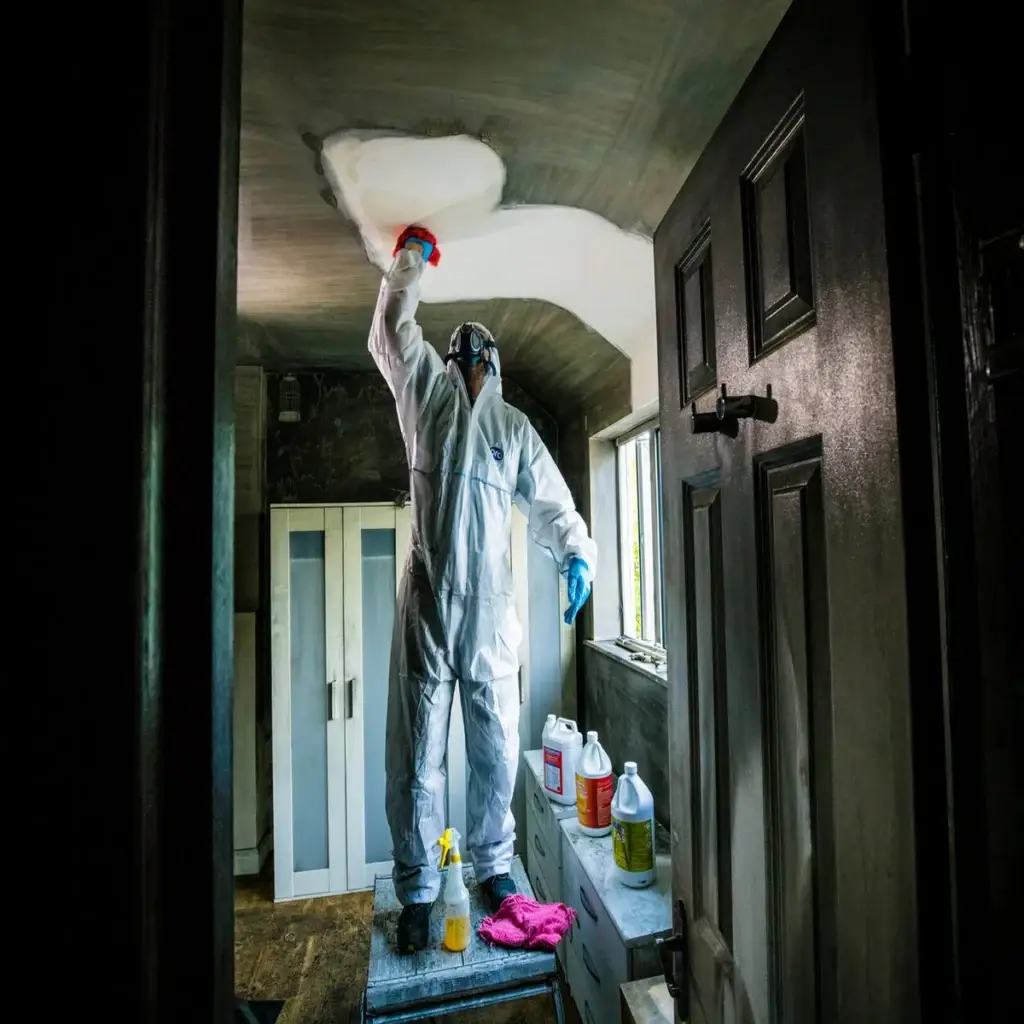
During this window, professional fire damage restoration focuses on:

  • Neutralising acidic soot before corrosion sets in
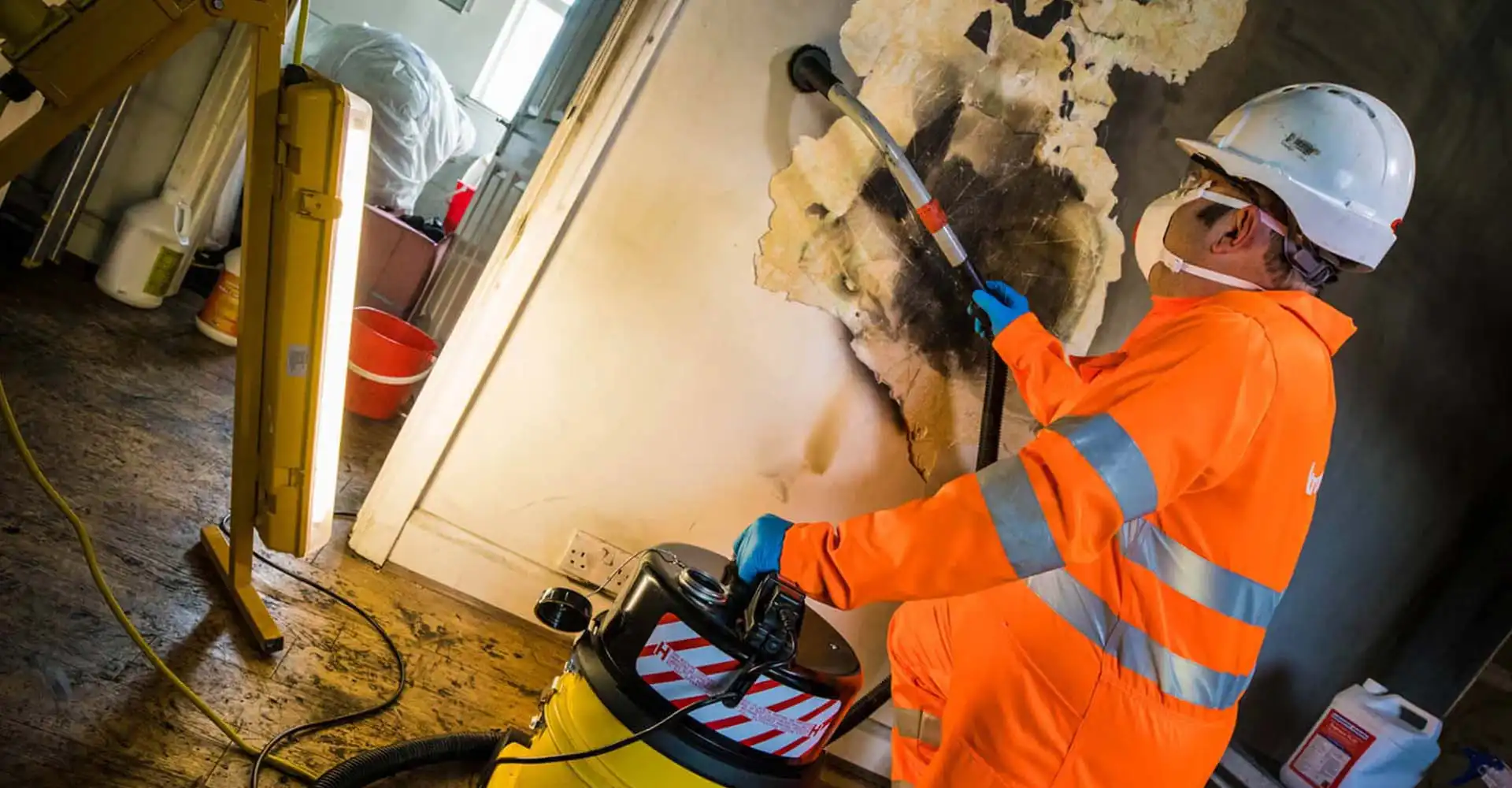
  • Removing smoke residues safely using controlled containment
  • Managing water damage from firefighting efforts
  • Preventing long-term odour absorption and mould growth


Delaying this process allows damage to deepen, odours to lock in, and costs to escalate rapidly.
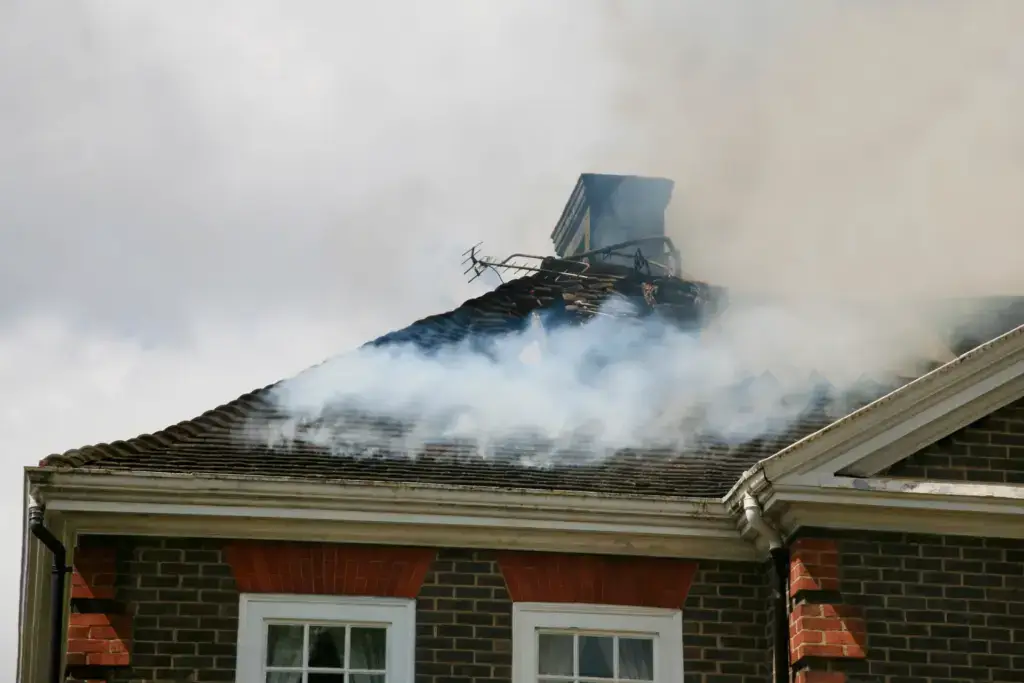
House roof on fire, UK

What happens if fire damage restoration is delayed

Even short delays can cause irreversible consequences. Metals corrode, electrical systems degrade, plaster and insulation weaken, and smoke odours penetrate deeper into building materials. What could have been cleaned or stabilised often becomes a full replacement scenario instead.

This pattern is consistently observed across fire damage cases throughout England.

Health and safety risks after a fire

Fire damage is not just a property issue, it’s a health concern.

Smoke residues and soot particles can cause respiratory irritation, headaches, and long-term exposure risks. Contaminated water and trapped moisture can lead to microbial growth. These hazards are often invisible, which is why professional assessment is essential before reoccupation.

When to call a fire damage restoration specialist

You should seek professional help immediately if:

  • Firefighters used water inside the property
  • Soot or smoke is visible anywhere
  • Smoke odour is still present
  • Electrical systems were exposed
  • Anyone who experiences coughing, irritation, or breathing issues


Fire damage is time-sensitive. Acting quickly protects health, limits damage, and supports insurance claims.

Final word: Fire damage is a race against time

Experiencing a fire is overwhelming. Once the immediate danger passes, it’s natural to want to pause, process, or wait until ‘things feel calmer’. Unfortunately, fire damage doesn’t wait.

In the hours and days following a fire, invisible damage continues to spread, soot corrodes surfaces, smoke residues embed deeper into materials, water damage worsens, and health risks increase. What may look manageable today can become irreversible and far more costly tomorrow.

Across England, fire damage professionals see the same pattern repeatedly: properties that receive fast, professional intervention recover more fully, more safely, and at significantly lower cost than those where action is delayed.

This isn’t about overreacting, it’s about protecting:

  • the health of everyone who enters the property
  • the structural integrity of the building
  • the success of any insurance claim
  • and your ability to return to normal as quickly as possible


If your home or business has suffered fire or smoke damage, the most important decision you make is how quickly you act next.

A professional fire damage assessment gives you clarity, control, and a clear path forward, at a time when uncertainty is the last thing you need.

Fire damage is an emergency. The right response, taken early, makes all the difference.

Alternatively, call our emergency response team 01622 926 505

FAQs

Is fire damage still dangerous after the fire is out?

Yes. Fire damage remains dangerous long after the flames are extinguished. Smoke residue, acidic soot, and contaminated water continue to damage surfaces and can pose ongoing health risks. These hazards are often invisible, which is why professional assessment is essential before considering a property safe again.

Fire damage should ideally be treated within the first 24 hours. Acting within this window significantly reduces permanent staining, corrosion, and odour absorption. Early professional intervention gives the best chance of stabilising the property and limiting long-term damage.

No. Soot and smoke residues require specialist handling. Household cleaning methods often spread contamination, embed acids deeper into materials, and increase health risks. Professional fire damage cleaning uses controlled processes designed to safely remove residues without causing further harm.

Yes. Water used to extinguish a fire frequently penetrates walls, floors, and insulation. Without proper specialist drying and treatment, this can lead to hidden structural damage and mould growth. Fire damage restoration typically addresses both fire and water damage together to prevent secondary problems.

Not necessarily. Even when a building appears structurally sound, air quality issues, toxic residues, and compromised electrical systems can make it unsafe. A professional inspection helps determine whether the property can be occupied safely and what steps are required next.

No. Smoke odour does not fade naturally. Smoke particles become trapped in fabrics, walls, and structural materials and often become more noticeable over time. Effective smoke odour removal requires professional deodorisation methods that eliminate odours at their source rather than masking them.

In many cases, yes. Most insurance policies require prompt action to prevent further damage. Delaying professional restoration or attempting DIY cleaning can complicate claims. Early documentation and professional involvement help protect your position with insurers.

Immediately if there is visible soot, lingering smoke odour, water damage from firefighting, or any uncertainty about safety. Early contact allows damage to be assessed and stabilised before conditions worsen, even if full restoration is planned later.

Fire damage restoration involves chemical neutralisation, air filtration, containment, and safety controls that general cleaning services are not trained to handle. Specialists understand how fire residues behave and how to remove them without spreading contamination or creating health risks.

Delays often lead to permanent damage, persistent odours, increased health risks, and higher restoration costs. Corrosion, staining, and structural deterioration can begin quickly after a fire. Acting early gives the best chance of recovery and reduces long-term impact.

Picture of Chris Hedges - Head of Marketing

Chris Hedges - Head of Marketing

With over 25 years' experience, Chris is adept at defining and driving strategy, while also enjoying hands-on operational delivery. He believes in an equal blend of creativity and analytical scrutiny, always finding inventive ways to achieve objectives, underpinned by evidence. Chris’s philosophies are simple: don't overcomplicate, always prioritise customer experience, and bend the rules just enough to cut through the noise and drive momentum and growth.

Other articles

Explore more articles about damage restoration, specialist cleaning and what we do

Damp survey being carried out with a moisture meter measuring a wall with bubbling paint.

How much does a damp survey cost and do I need one?

UK Damp survey cost A basic damp survey in the UK typically costs between £250 and £400, with prices varying based on property size, location, and the survey’s depth. You absolutely need a damp survey if your property exhibits signs like unexplained damp patches, mould growth, or a persistent musty...

READ MORE

Black mould along the skirting board and wall.

How to remove black mould: UK Homeowners guide

Finding patches of black mould in your home isn’t just an ugly cosmetic issue, it’s a clear warning sign. It tells you there’s a hidden moisture problem lurking beneath the surface that could be compromising both your health and your property’s structure. This comprehensive guide is designed to empower you,...

READ MORE

Heater on fire near chair

What dangers can result from fire damage?

After a fire, getting back to normal is often first on your mind, but it’s important to make sure the building is safe before trying to continue living or working there. The high temperatures reached during a fire affect every part of the building, so many hazards and dangers can...

READ MORE

Get expert support

No matter if you have a question you need to ask or have an emergency that you need help with, call:

If you’d prefer to drop us a message, fill out the enquiry form and we’ll get back to you as soon as possible.

Request a call back