When a fire is contained, most people expect the worst to be over.
You walk back into the property and focus on the obvious damage which is the room where it started, the visible burning, the areas that clearly need repair. But then something doesn’t add up:
- Rooms untouched by flames smell strongly of smoke
- Soot appears on surfaces far from the fire
- Areas you thought were unaffected start showing signs of damage
That’s usually when the realisation sets in – “How has it spread this far?”
The answer is what catches most property owners off guard – Smoke doesn’t behave like fire, it travels faster, further, and far more aggressively than people expect.
In many cases, the majority of the damage in a property isn’t caused by flames at all, it’s caused by smoke moving through the building in ways you can’t immediately see.
What you’ll learn in this blog
In this article, you’ll get a clear understanding of:
- How smoke spreads through a property after a fire
- Why it reaches areas that appear completely unaffected
- What happens once it settles into materials and surfaces
- Why proper treatment is essential before any reinstatement work begins
Because understanding how smoke behaves is the difference between a surface clean, and properly restoring a property.
Skip to:
Smoke doesn’t just rise, it moves with purpose
Why smoke damage often appears where you least expect it
A typical scenario – How a small fire becomes a whole-property issue
The type of fire changes everything
What happens after the smoke has settled
Why smoke odour becomes one of the biggest problems
The cost of getting it wrong (or only partially fixing it)
Why surface cleaning alone doesn’t work
How smoke damage is properly dealt with
Why acting quickly makes a measurable difference
Conclusion: Smoke travels further and lasts longer than most people expect
Smoke doesn’t just rise, it moves with purpose
Smoke isn’t passive. It’s made up of microscopic particles and gases that actively move through a property as the fire develops. Driven by heat, pressure and airflow, it will:
- Rise rapidly through vertical spaces
- Spread horizontally as temperatures change
- Follow air pathways through the building
This includes:
- Hallways and stairwells
- Ceiling voids and wall cavities
- Ventilation systems
- Gaps around pipes, wiring and fixtures
In practical terms, smoke is constantly searching for space to move into and it usually finds it.
Why smoke damage often appears where you least expect it
One of the most misunderstood aspects of fire damage is that smoke doesn’t respect room boundaries.
We regularly see contamination in places that seem impossible at first glance:
- Inside closed cupboards and wardrobes
- In loft spaces above the fire
- Behind walls and within ceiling cavities
- In rooms on entirely different floors
This happens because smoke follows air movement and pressure changes, not what is visible.
So if air can reach it, smoke can too.
A typical scenario – How a small fire becomes a whole-property issue
To understand this properly, it helps to look at how it plays out in reality.
A common situation might involve:
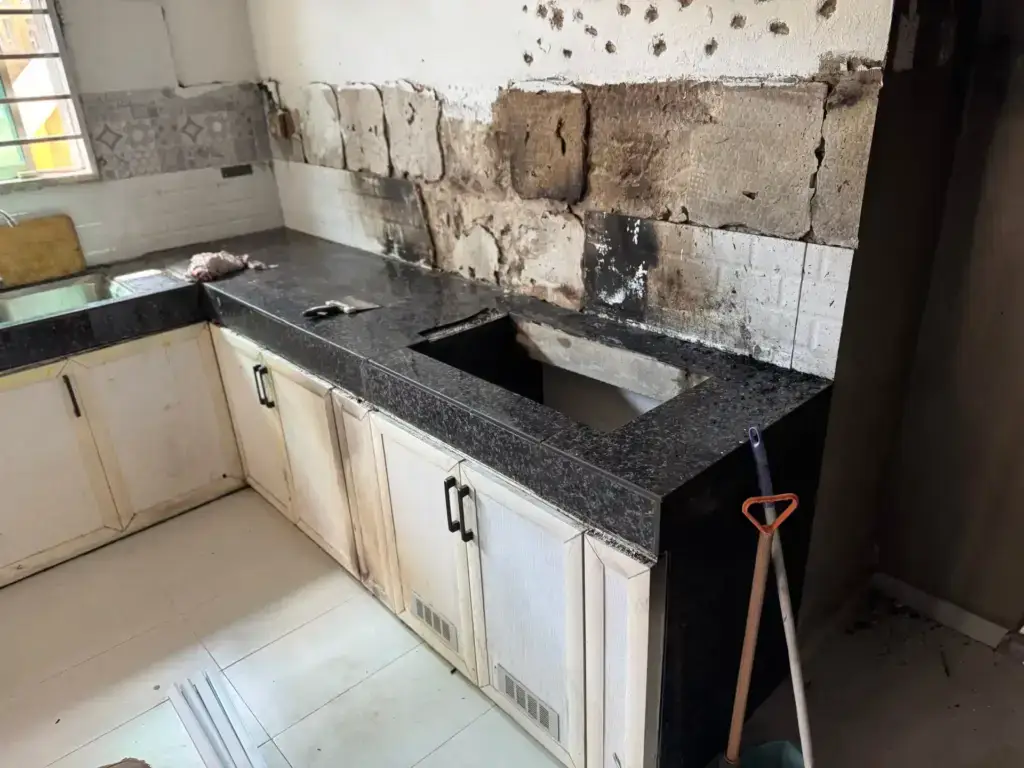
- A small kitchen fire contained quickly
- Visible damage limited to one room
- Initial assumption that the rest of the property is unaffected
But within hours:
- Smoke has travelled into adjoining rooms
- Odour spreads throughout the property
fine soot settles on surfaces far beyond the source
Within days:
- Staining begins to appear
- Smells intensify, especially in warmer conditions
- Previously “clean” areas show signs of contamination
What started as a contained incident becomes a whole-property restoration issue.
Why does the type of fire change everything?
Not all smoke behaves the same way. The materials involved in a fire have a major impact on how smoke spreads and how difficult it is to remove.
For example:
- Slow, smouldering fires produce heavy, oily soot that sticks and smears
- Fast, high-temperature fires produce fine particles that travel further and embed deeper
- Synthetic materials (common in modern homes) create more complex and persistent residues
This is why two fires that look similar at first can result in very different levels of damage.
What happens after the smoke has settled?
Even after the fire is out, the damage process continues.
Smoke particles begin to:
- Settle onto every available surface
- Penetrate porous materials such as plaster, wood and fabrics
- React chemically with finishes and metals
Over time, this leads to:
- Staining and discolouration
- Corrosion of surfaces and fixtures
- Persistent odours that worsen rather than fade
This is why properties can deteriorate further after the fire has been extinguished.
Why is smoke odour one of the biggest issues?
Smell is often the most difficult issue to resolve and the most underestimated. This is because smoke odour:
- Embeds deeply into materials
- Bonds at a molecular level
- Is re-released when temperatures rise or airflow changes
So even if a property looks clean, it can still smell strongly of smoke weeks or months later. This is one of the main reasons people feel like they’ve cleaned everything but it still smells. A smoke odour removal service is ideal in this instance.
The cost of getting it wrong (or only partially fixing it)
One of the biggest risks is assuming the problem has been dealt with when it hasn’t.
If smoke damage isn’t properly addressed:
- Odours return after redecoration
- Staining bleeds through new paint
- Hidden contamination continues to affect the environment
- Additional work is required later and often at greater cost
In many cases, the second attempt at fixing the problem is more disruptive than doing it properly the first time.
Why doesn’t surface cleaning solve the problem?
It’s natural to focus on visible areas:
- Wiping walls and surfaces
- Repainting affected rooms
- Airing out the property
But smoke contamination goes far deeper. Without proper smoke damage cleaning and restoration:
- Residue remains embedded in materials
- Odour persists beneath surfaces
- Contamination continues to affect the property
This is why many properties that appear ‘cleaned’ still have underlying issues.
How should you deal with smoke damage?
Effective restoration is about complete contamination removal, not just appearance. This involves:
- Identifying how far smoke has travelled
- Treating both visible and hidden areas
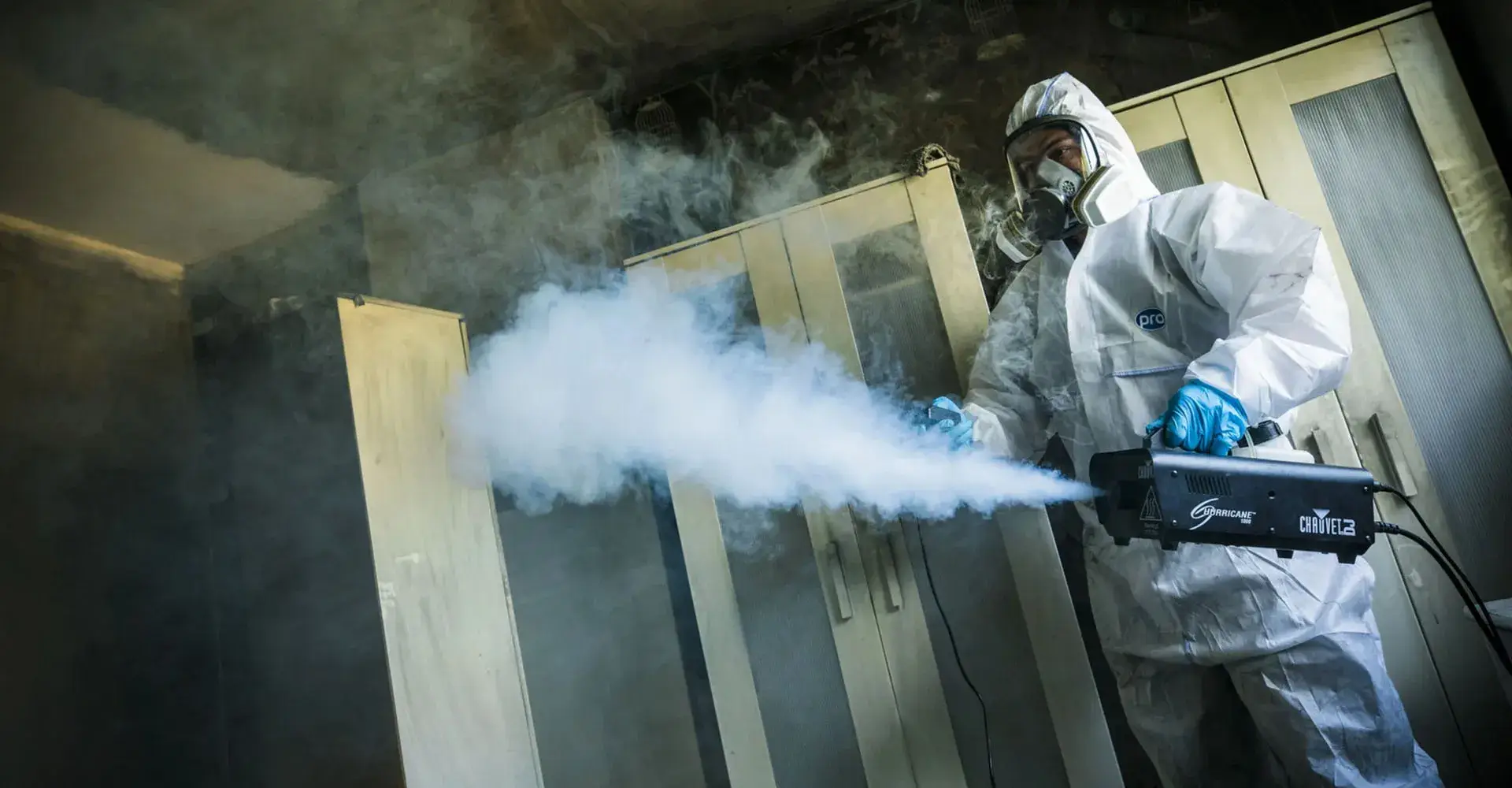
- Removing soot using specialist techniques
- Neutralising odours at source
- Addressing secondary damage such as moisture
The goal is to return the property to a safe, stable condition ready for reinstatement. See how we successfully remediate a London property after a fire in our Rapid Fire Damage Clean-Up case study.
Why acting quickly makes a measurable difference
Time has a direct impact on outcomes. The longer smoke residue is left:
- The more it bonds to surfaces
- The harder it becomes to remove
The greater the risk of permanent damage
Early intervention can:
- Reduce overall damage
- Improve restoration success
- Shorten recovery timelines
In many cases, speed directly affects what can be saved.
Conclusion: Smoke travels further and lasts longer than most people expect
After a fire, it’s easy to focus on what you can see. But smoke damage tells a different story.
The key points are clear:
- Smoke spreads rapidly through both visible and hidden areas
- It can affect entire properties, even from small fires
- Odour and contamination often go deeper than expected
- Surface cleaning alone is rarely enough
Understanding how smoke spreads is essential to dealing with it properly.
Ideal Response specialises in smoke and fire damage restoration across the UK, removing contamination, eliminating odours and preparing properties for safe reinstatement. Contact the team today to take the next step.
Call our emergency response team 0800 088 4170
FAQs about smoke damage and how it spreads
Can smoke damage spread even if the fire was small?
Yes and it’s very common.
Even small fires can produce enough smoke to travel throughout a property, particularly in enclosed or poorly ventilated spaces.
How quickly does smoke spread through a house?
In many cases, smoke can spread throughout a property within minutes, depending on airflow and layout.
Why do rooms far from the fire still smell of smoke?
Because smoke particles travel through air pathways and settle in materials, even in areas with no visible fire damage.
Is smoke damage always visible? No.
Some contamination is invisible but still present, particularly in early stages or on certain surfaces.
Can smoke damage return after cleaning?
Yes, if it hasn’t been fully removed.
Odours and staining can reappear if underlying contamination remains.
Does repainting solve smoke damage?
No. Without proper treatment, staining and odours often return through paint.
Can smoke get inside walls and ceilings?
Yes. Smoke can travel through cavities, voids and structural gaps, affecting hidden areas.
How do professionals remove smoke odour properly?
By treating the source of contamination using specialist techniques, rather than masking the smell.
When should smoke damage be professionally assessed?
As soon as possible after a fire, even if the damage appears limited.
Is smoke damage covered by insurance?
In many cases, yes, but it depends on the policy and circumstances.

Chris Hedges - Head of Marketing
With over 25 years' experience, Chris is adept at defining and driving strategy, while also enjoying hands-on operational delivery. He believes in an equal blend of creativity and analytical scrutiny, always finding inventive ways to achieve objectives, underpinned by evidence. Chris’s philosophies are simple: don't overcomplicate, always prioritise customer experience, and bend the rules just enough to cut through the noise and drive momentum and growth.