Available 24/7 | 0800 088 4170

The incident began when a power bank that was charging exploded and caught fire. The fire brigade extinguished the fire and it remained contained to a single guest room, but smoke and soot spread across the room.
The hotel described the physical damage to the room and furniture as limited, while the soot contamination was much more extensive. By the time Ideal Response arrived, hotel staff had removed the contents, giving the team clear access to the structure and decorated surfaces that required cleaning.
The initial instruction was deliberately focused: carry out an emergency fire clean, assess the condition of the room as work progressed and establish whether any further days or disposal would be required.
The objective was not to carry out reinstatement or repainting. Ideal Response's role was to remove the loose and adhered soot contamination from the structure and leave the painted surfaces ready for a separate decorating contractor.
That distinction created a clear handover standard. The team needed to clean thoroughly enough for redecoration to follow, while also assessing whether the contamination extended beyond what could reasonably be completed during the emergency attendance.
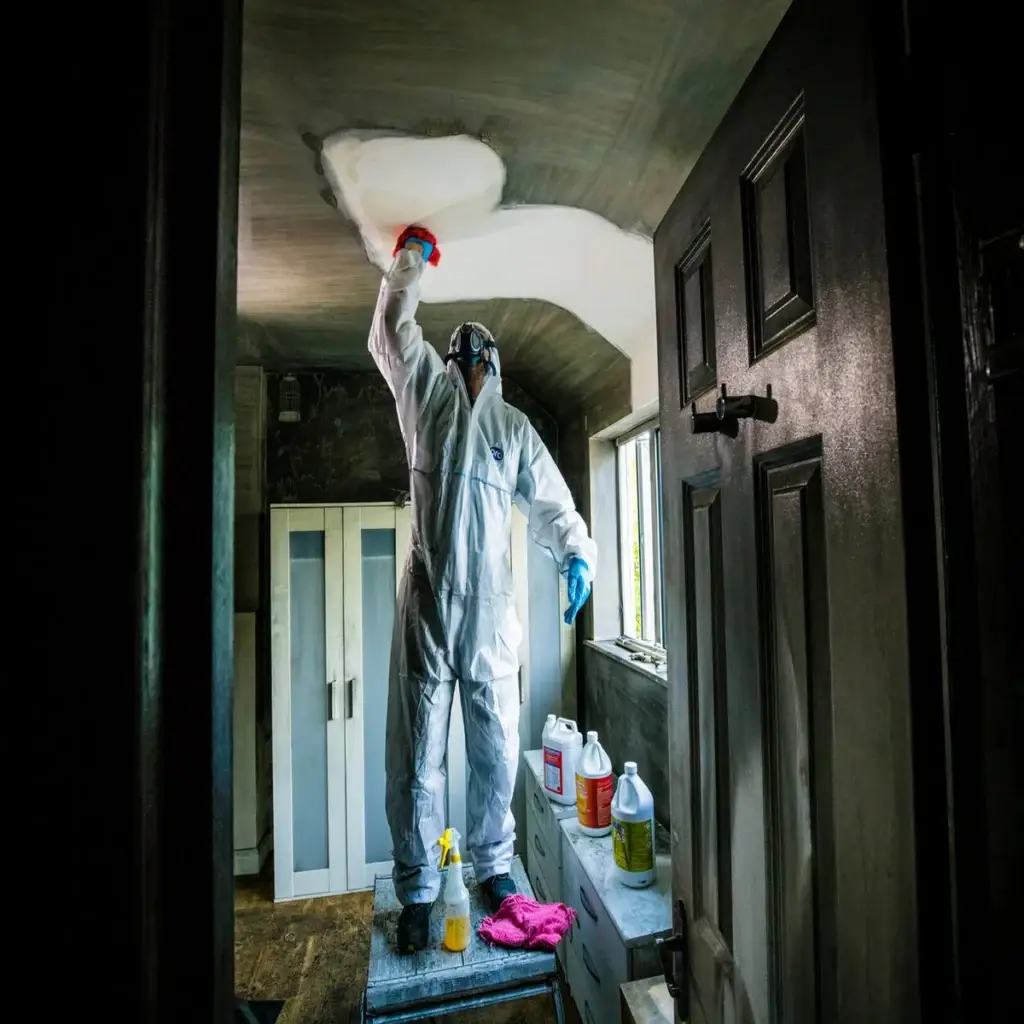
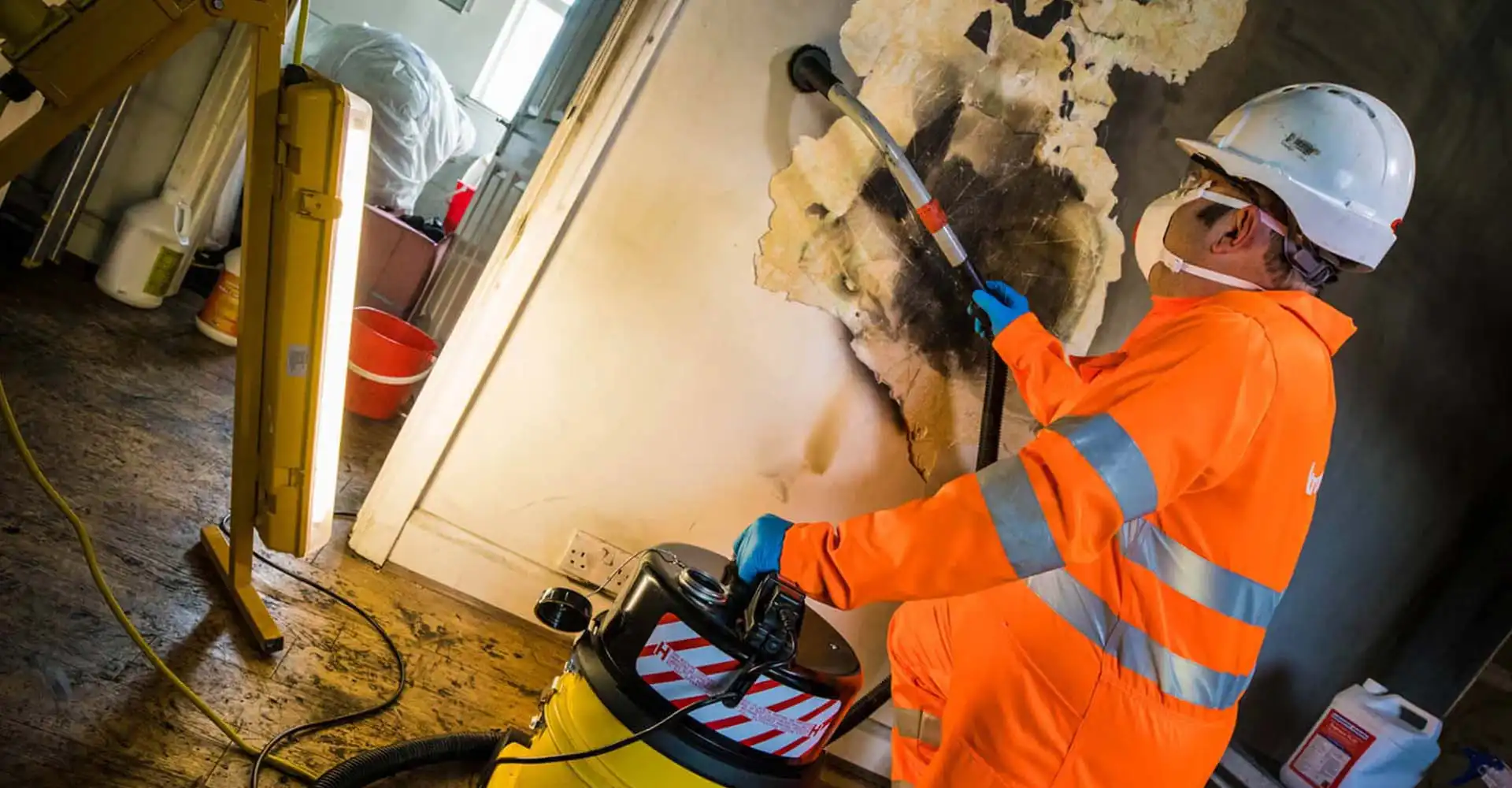
Because soot can be spread by poor cleaning technique, the room was approached in stages rather than immediately wet-wiping every surface. The two-person team first focused on controlled dry removal before progressing to surface cleaning and neutralisation.
HEPA-filtered vacuuming was used to remove loose soot and reduce the risk of redistributing fine particulate around the room. On surfaces requiring a gentler first pass, soot sponges were used before wet cleaning, helping lift dry deposits without unnecessarily smearing them into the finish.
The team then used a multi-stage wash, dwell, cleanse and rinse process with an alkaline cleaning solution in the pH 10–12 range. The alkaline treatment was selected to counter the acidic nature of fire residues while the staged process gave the technicians control over how the remaining deposits were loosened and removed.
Cleaning was confined to the affected room and its structure. No contents cleaning or waste removal was required, and power and water were available throughout the visit.
The original emergency scope allowed for the possibility that further work might be identified once cleaning began. That was important because the visual extent of soot does not always show how readily deposits will release from different finishes.
By combining cleaning with an on-site assessment, the technicians could judge the response from the actual surfaces rather than committing the hotel to additional days in advance. In this case, the agreed fire-cleaning scope was completed during the single attendance and no waste disposal was needed.
The two-person team completed the fire and soot clean in one day. The affected structure was brought to the agreed redecoration-ready stage, allowing the hotel to move on to the decorating phase rather than extending the specialist cleaning programme.
The room was subsequently returned to use. The hotel was also sufficiently satisfied with the response for Ideal Response to be added to its preferred supplier list for future work.