Pigeon droppings on commercial buildings are often dismissed as a minor nuisance. In reality, accumulated pigeon guano can quickly become a serious issue for property owners, landlords and facilities managers.
Across the UK, pigeons thrive in towns and cities where buildings provide ideal roosting and nesting locations. Flat roofs, ledges, signage and sheltered balconies offer perfect resting places, allowing droppings to accumulate over time.
What may start as a few isolated marks can quickly develop into widespread contamination affecting entrances, roofs and external surfaces. For busy commercial properties, this creates hygiene concerns, potential safety risks and an unprofessional appearance for visitors and customers.
Professional pigeon guano removal helps restore affected areas safely while protecting both the building and the people who use it.
Skip to:
Quick summary: Pigeon guano on commercial buildings
Why pigeon guano is a growing problem for UK commercial properties
Key statistics about pigeon guano in the UK
Health and hygiene risks associated with pigeon droppings
How pigeon guano can damage buildings
When professional pigeon guano removal is necessary
Preventing pigeons from returning
Why commercial property managers use professional cleaning services
Conclusion: Addressing pigeon guano before it causes serious problems
Quick summary: Pigeon guano on commercial buildings
Pigeon guano build-up is a common issue for commercial properties across the UK, particularly in urban environments where pigeons regularly roost on buildings.
Key points to understand:
- The UK is estimated to have over 18 million urban pigeons.
- Each pigeon can produce around 10 – 12 kg of droppings per year.
- Pigeon guano contains uric acid, which can corrode building materials including stone, brick and metal.
- Large accumulations can create slip hazards, hygiene risks and unpleasant odours.
- Professional cleaning is often required when contamination is extensive or located at height.
For businesses and property managers, addressing pigeon guano early helps protect buildings, maintain safe environments and prevent costly long-term damage.
Why pigeon guano is a growing problem for UK commercial properties
Urban pigeons have adapted extremely well to modern environments. Buildings provide elevated nesting areas that closely resemble the cliff faces pigeons naturally prefer.
Once pigeons identify a suitable roosting location, they tend to return repeatedly. Over time, this leads to increasing accumulations of droppings in the same areas. For commercial property managers, this can result in:
- Staining of building façades and entrances
- Unpleasant odours in outdoor areas
- Blocked gutters and drainage systems
- Slip hazards around access routes
- A negative first impression for customers or visitors
Where large numbers of pigeons gather, droppings can accumulate surprisingly quickly and that’s when a professional bird dropping removal service is required.
Key statistics about pigeon guano in the UK
Pigeon-related contamination is more common than many property owners realise.
- The UK population of feral pigeons is estimated at more than 18 million birds.
- Each pigeon can produce up to 12 kg of droppings annually.
- Droppings contain uric acid, which is highly corrosive to many building materials.
On commercial buildings where pigeons roost daily, this can result in large volumes of contamination building up over time.
Without intervention, the resulting staining and deterioration can become difficult and costly to remove.
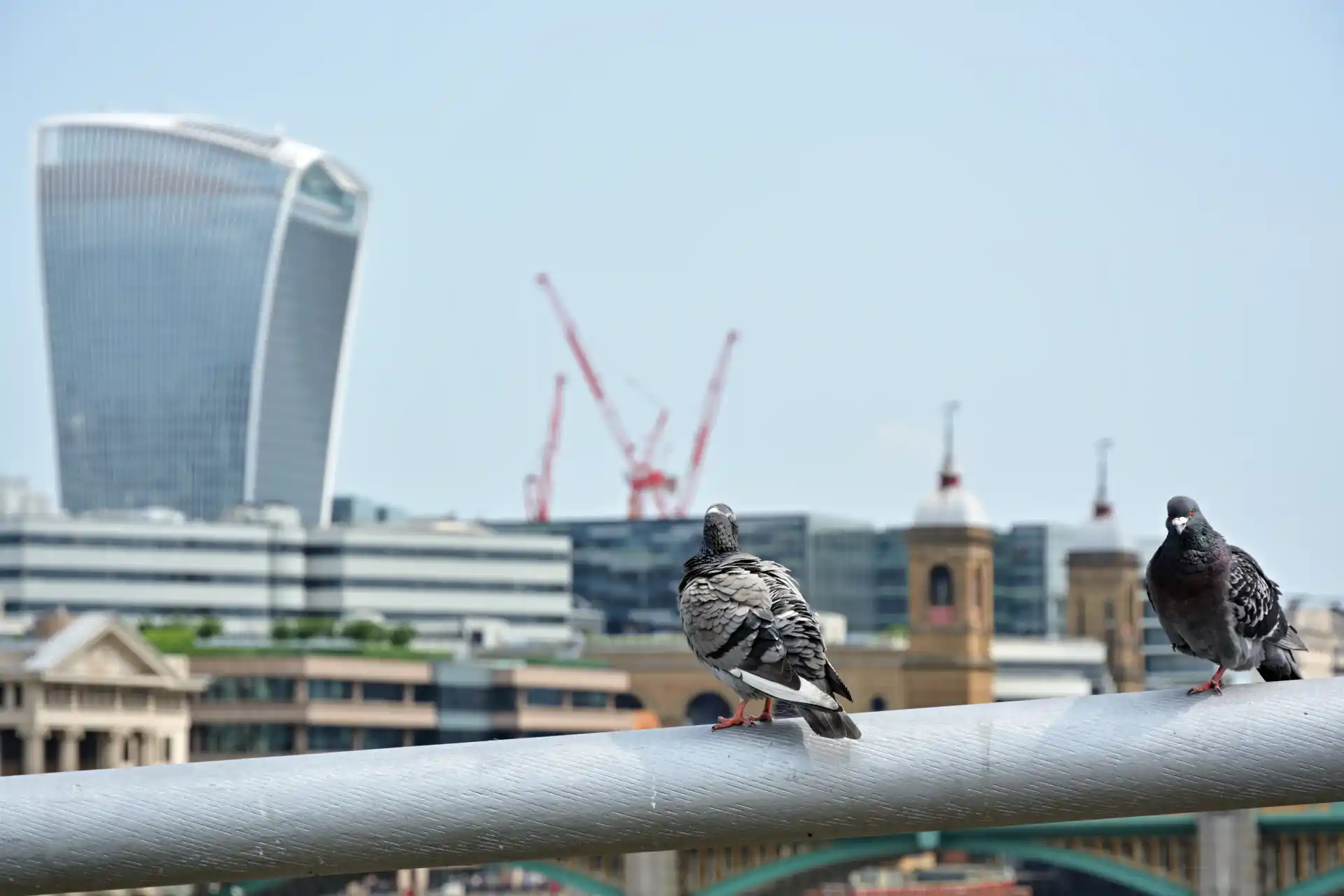
Health and hygiene risks associated with pigeon droppings
Pigeon droppings can contain bacteria and fungal spores that may present health risks when large accumulations are disturbed. As guano dries, it can break down into fine dust particles. When disturbed during maintenance or cleaning, these particles may become airborne. For commercial properties such as offices, warehouses, retail units and hospitality venues, this raises concerns around:
- Workplace hygiene
- Employee safety
- Public access areas
- Building maintenance standards
Professional pigeon guano cleaning helps ensure contaminated areas are handled carefully and restored safely.
How pigeon guano can damage buildings
One of the most overlooked issues associated with pigeon droppings is the damage they can cause to building materials.
Because guano contains uric acid, repeated exposure can gradually corrode or stain surfaces including:
- Brickwork and mortar joints
- Natural stone façades
- Painted surfaces
- Metal railings and fixtures
- Roofing materials
- Signage and shopfronts
In addition, droppings can combine with nesting materials and debris to block gutters and drainage systems.
Over time, these issues can lead to costly maintenance problems if contamination is not removed promptly.
When professional pigeon guano removal is necessary
Small amounts of pigeon droppings may appear manageable, but large accumulations often present significant safety and contamination risks.
Professional cleaning is typically required when:
- Droppings have accumulated heavily
- Contamination is located on roofs or high ledges
- Large areas of the building are affected
- Entrances or public walkways are contaminated
- Maintenance staff would need to work at height
In these situations, specialist cleaning teams use controlled techniques and appropriate protective equipment to remove contamination safely.
A good example of this is when a heritage site undergoing restoration needed a safe and stable surface for scaffolding installation. However, a large build-up of bat and bird guano, combined with hay and masonry debris, made it impossible for work to proceed safely. Given the biological hazards and strict regulations, the client required a specialist team with the right expertise, equipment, and safety protocols. That’s when Ideal Response stepped in to help. Read the full bird and bat guano removal case study.
Preventing pigeons from returning
Once pigeon guano has been removed, property managers often consider preventative measures to discourage birds from returning.
Common pigeon deterrent measures
These may include:
- Pigeon spikes installed on ledges and signage
- Netting systems to block nesting areas
- Deterrent systems designed to discourage roosting
Combining professional cleaning with preventative measures can significantly reduce the risk of recurring contamination.
Why commercial property managers use professional cleaning services
Facilities managers and landlords frequently rely on professional pigeon guano removal services to deal with contamination safely and effectively. Professional cleaning ensures:
- Droppings are removed safely
- Affected areas are properly disinfected
- Building surfaces are protected
- Entrances and walkways remain safe for visitors
For commercial properties with regular foot traffic, maintaining cleanliness and safety is essential for both reputation and compliance.
Conclusion: Addressing pigeon guano before it causes serious problems
Pigeon guano is a common challenge for commercial buildings across the UK. With millions of pigeons living in urban areas and each bird producing significant amounts of droppings every year, contamination can quickly build up on roofs, ledges and entrances.
Left untreated, pigeon droppings can lead to building damage, hygiene risks and an unprofessional appearance for businesses operating within the property.
While small deposits may sometimes be manageable, larger accumulations, particularly on commercial buildings, often require specialist cleaning to ensure contamination is removed safely and thoroughly.
Ideal Response provides professional bird dropping removal services across the UK, helping property owners, landlords and facilities managers restore contaminated areas while protecting their buildings from further damage.
If pigeon droppings are affecting your property, contact Ideal Response today to arrange an assessment and expert advice on safe removal. Acting early can prevent further damage and help keep your building clean, safe and welcoming.
FAQs: Pigeon guano removal for commercial buildings
Why is pigeon guano a problem for buildings?
Pigeon guano can stain surfaces, damage building materials and create hygiene concerns in areas used by employees or the public.
Can pigeon droppings damage brickwork or stone?
Yes. Because pigeon droppings contain uric acid, they can gradually corrode brick, stone, metal and painted surfaces.
Are pigeon droppings dangerous to health?
Large accumulations can contain bacteria and fungal spores. When disturbed, dried guano may release particles into the air.
Why do pigeons keep returning to the same building?
Pigeons are creatures of habit and tend to return to familiar roosting locations where they feel safe and sheltered.
How quickly can pigeon droppings build up?
In areas where pigeons roost regularly, droppings can accumulate rapidly over weeks or months.
Can rain wash away pigeon droppings?
Rain may dilute fresh droppings but rarely removes built-up guano and can sometimes spread contamination across surfaces.
Can pigeon droppings block gutters?
Yes. Droppings often combine with feathers and nesting materials, which can block gutters and drainage systems.
Is professional cleaning always required?
Small deposits may sometimes be cleaned carefully, but large accumulations or difficult access areas are best handled by professionals.
How do professionals remove pigeon guano safely?
Specialist teams use protective equipment and controlled cleaning techniques designed to remove contamination while protecting building surfaces.
Can pigeon problems be prevented after cleaning?
Yes. Bird deterrent systems such as spikes or netting can help prevent pigeons returning to the same areas.

Chris Hedges - Head of Marketing
With over 25 years' experience, Chris is adept at defining and driving strategy, while also enjoying hands-on operational delivery. He believes in an equal blend of creativity and analytical scrutiny, always finding inventive ways to achieve objectives, underpinned by evidence. Chris’s philosophies are simple: don't overcomplicate, always prioritise customer experience, and bend the rules just enough to cut through the noise and drive momentum and growth.