Available 24/7 | 0800 088 4170

Available 24/7 | 0800 088 4170
Water that soaks into floors, walls and screed keeps causing damage long after the surface looks dry. Ideal Response is a specialist drying company for homes, commercial buildings and construction sites across the UK: our drying technicians measure moisture throughout and issue a drying certificate when the target is reached.
This page covers: Floor and joist drying · Construction drying · Pressure and injection drying · Drying certificate
| Material | Typical target |
|---|---|
| Sand and cement screed underresilient flooring | 75% relative humidity or below (BS 8203) |
| Timber joists and floorboards | Back to the levels of unaffected timber in the same building |
| Plaster and masonry | Readings matching unaffected areas of the same material |
| Concrete slabs | To the flooring manufacturer's stated limit |
| Drying method | How it works | Best for |
|---|---|---|
| Dehumidification | Removes moisture from the air somaterials release theirs | Most rooms and buildings |
| Injection drying or pressure drying | Pushes dry air into voids and underfloors | Floor joists, screeds under timber, wall cavities |
| Heat-assisted drying | Raises material temperature to speedevaporation | Dense materials and cold sites |
| Construction drying | Combines heat, air handling anddehumidification at scale | New builds and refurbishments |

“On a large development, a calendar alone cannot tell you when a building is ready for the next trade. Repeated moisture readings create a measurable picture of progress so drying equipment can be concentrated where it is still needed.”
| Situation | Typical time on site |
|---|---|
| Lightly affected room | 3–5 days |
| Saturated house | 2–4 weeks |
| Construction site | Planned to build the programme |
Standards we work to: BDMA practice guidance, BS 8203 moisture levels for flooring
Thermal imaging, moisture meters and hygrometers show where water sits.
Injection and pressure drying reach water trapped under floors without lifting them.
Dehumidifiers and air movers matched to the building and conditions.
Screeds, slabs and plaster dried to the levels trades need, scheduled around the build.
Readings taken throughout; a certificate issued when dry.
Commercial and industrial desiccant and LGR dehumidifiers, air movers and heaters, sized to the building.
Mopping up and opening windows removes surface water, not the water that has soaked into the building. Without specialist drying you risk:
Rain, leaks or site accidents can hold up a build. We dry construction sites across the UK so the next trades can start on time.
Our methods follow recognised UK moisture levels for building materials. See: specialist drying for construction.
Drying is finished when materials reach a measured target, not after a set number of days. Typical targets we work to:
Cost depends on how wet the building is, the materials, the drying method and how long equipment needs to stay. You receive a drying plan and quote after the survey.
We dry the structure, and our leak detection team can find a hidden source first if needed. We do not carry out repairs, plastering or flooring. Once dry, the building is ready for the next trade.
| Cost factor | Why it matters |
|---|---|
| Moisture load | How much water and how deep it has soaked in |
| Materials | Screed, timber and masonry dry at different rates |
| Method | Injection or pressure drying for floors and joists |
| Duration | Equipment hire and monitoring time |


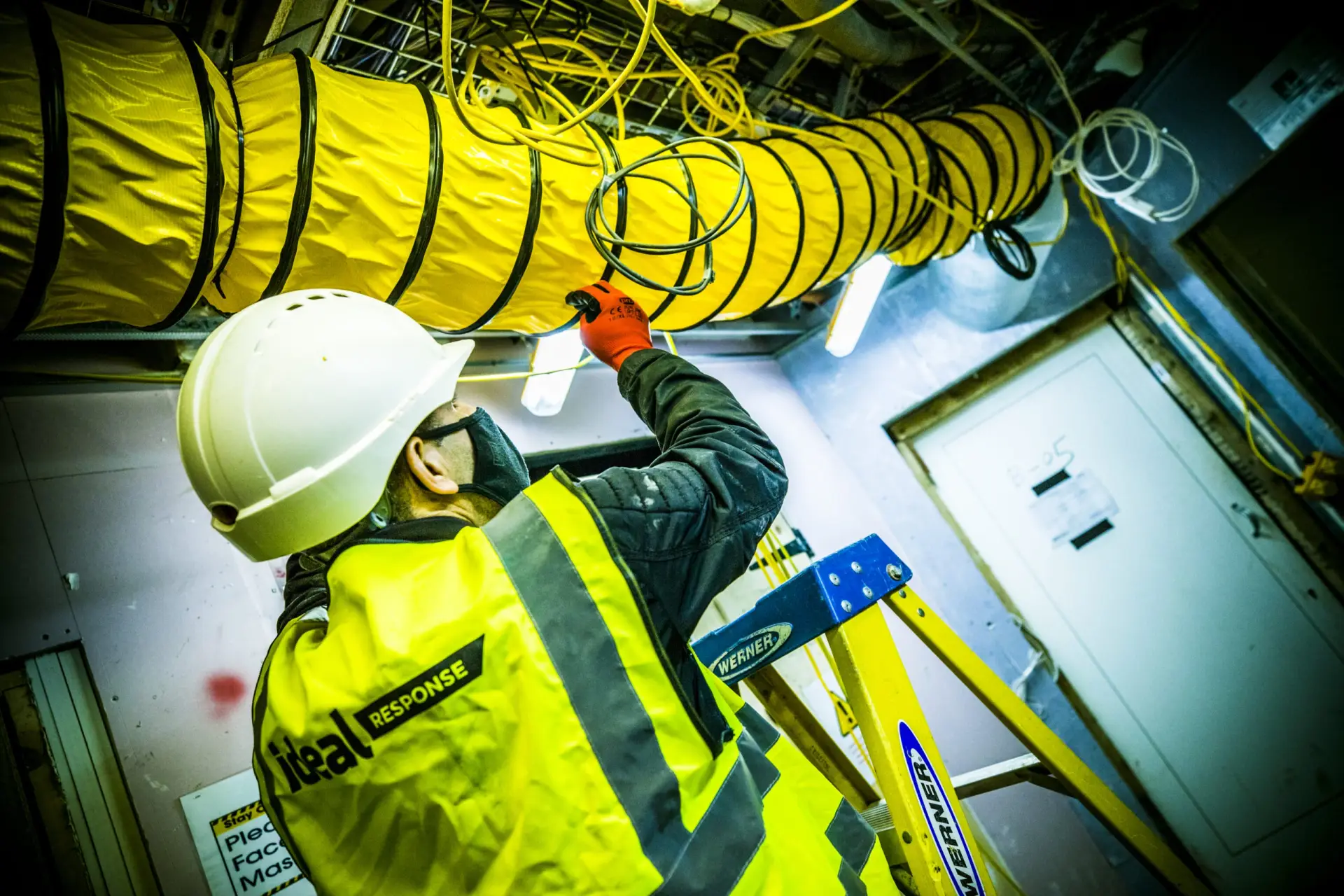
Ideal Response technicians on site in Hemel Hempstead to dry the property prior to work commencing.
For an emergency, call us. Otherwise send a few details and photos, and the team will get back to you
Available 24/7
We’ll use your details to respond to your enquiry. View our Privacy Policy