Knowing how to remove soot from walls correctly is the difference between a successful restoration and permanent property damage. Soot is not typical dirt; it is a complex mixture of carbon particles, chemicals, and resins created by incomplete combustion. Because soot is often acidic and oily, improper cleaning can smear the particles deeper into the wall’s pores, causing permanent staining and lingering odours. Failure to completely remove soot can also lead to further secondary damage occurring over time. In most cases professional remediation is the best and safest option for your health and properties long-term condition.
In this guide, we outline what are the most effective methods to clean soot off walls and when the complexity of soot damage requires professional soot and ash cleaning or fire damage cleaning and restoration.
Skip to:
The most effective soot removal methods for walls
Why DIY soot removal often fails
Important tips & considerations for soot removal
What is the most effective method to clean soot off walls?
The most effective method for soot removal is dry cleaning before any liquid-based solutions are applied. Soot particles are extremely fine; adding water or household detergents prematurely can turn the dry powder into a thick, oily sludge that bonds to the paint or plaster.
1. Dry Chemical Sponges (The Essential First Step)
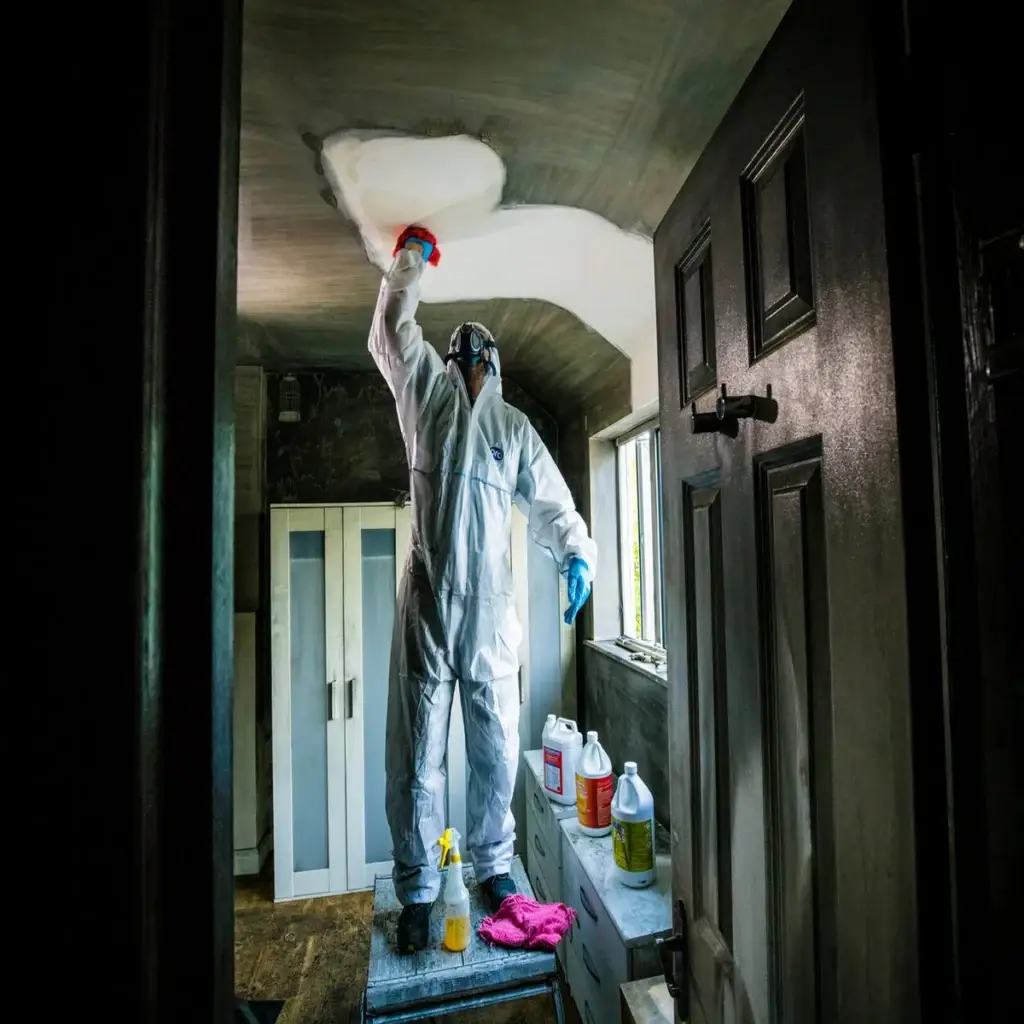
For most fire-damaged properties, the gold standard is the use of specialised dry chemical sponges (also known as soot sponges).
The Technique: Do not “scrub.” Use a light, downward dabbing or wiping motion.
The Goal: These sponges lift the soot particles away from the surface rather than pushing them in. Once the sponge becomes saturated with black residue, use a clean side or replace it.
2. HEPA Vacuuming
Before any physical contact, use a vacuum with a HEPA filter. Holding the nozzle slightly away from the wall can extract loose particles. Standard household vacuums should be avoided, as they often lack the filtration necessary to trap soot, potentially exhausting the particles back into the room and worsening the smoke damage after a small fire.
3. Degreasing and Liquid Cleaning
Only once as much dry soot as possible has been removed should you proceed to wet cleaning. Using a professional-grade degreaser or a TSP (trisodium phosphate) solution can help break down the oily resins. This is often necessary for commercial fire damage restoration, where synthetic materials may have burned.
Why DIY soot removal often fails
While small areas of light soot might be manageable, the risks of a DIY approach are significant:
Secondary Damage: Smearing soot makes it almost impossible to remove without stripping the wall back to the substrate.
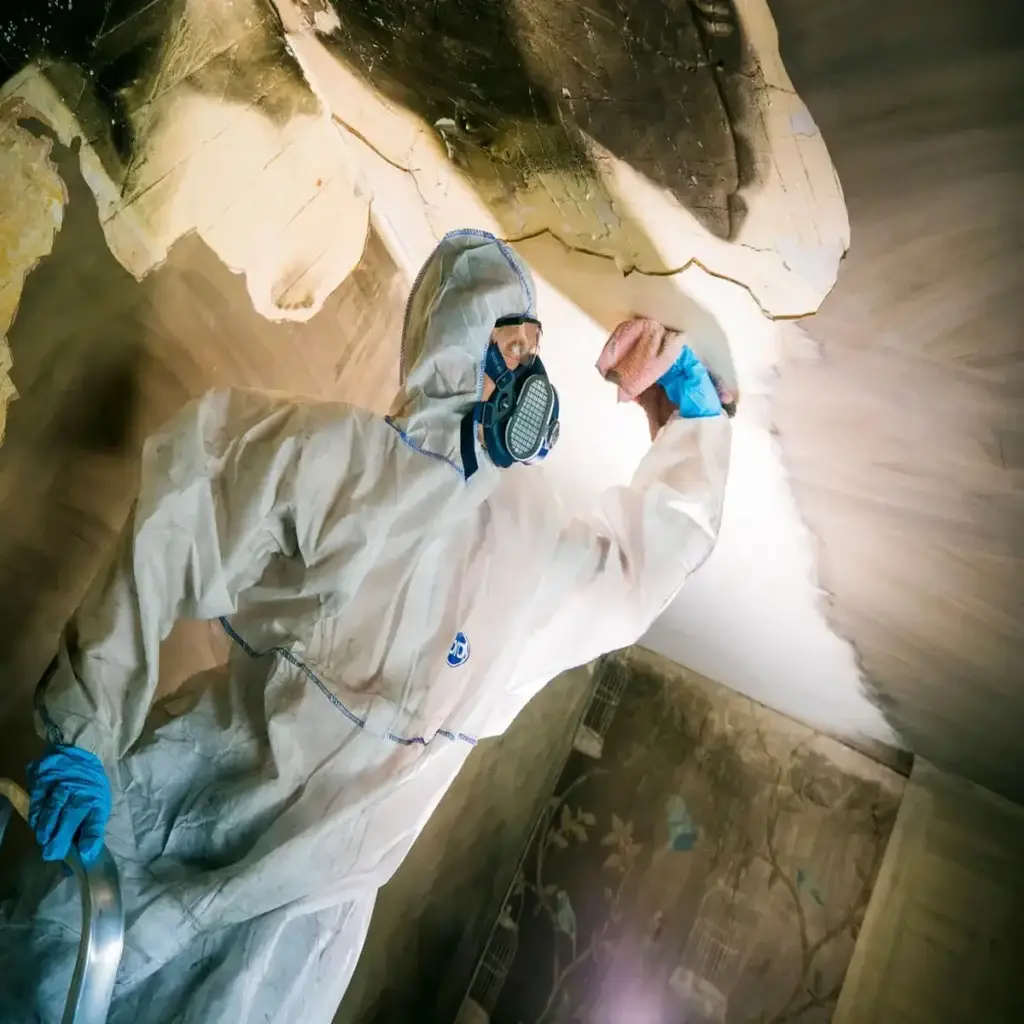
Health Hazards: Soot contains carcinogens. Without industrial-grade PPE and air scrubbing, you risk inhaling fine particulates.
Odour Encapsulation: Cleaning the surface doesn’t always remove the smell. Professional fire damage restoration involves thermal fogging or ozone treatment to neutralise odours at a molecular level. Lingering smoke odour is not only unpleasant it can also lead to negative health effects and structural issues within your property.
Important tips & consideration for soot removal
- Ventilation & air quality: Soot and ash are acidic and in many cases carcinogenic, posing serious risks to respiratory health and overall wellbeing. Ensuring that the affected area is well ventilated and fresh air is allowed to circulate will help with the soot removal process.
- Gently does it, avoid excess pressure: When carrying out the dry and wet portion of the soot removal process it is important not to add to much pressure. Excessive pressure will push soot and ash particles further into the poires of the surfaces, making it more difficult to remove. The best approach is to gently wipe the surfaces multiple times with clean sponges and rags, rather than trying to remove all the soot at once.
- Seek professional help: The best approach is to always consult a professional when it comes to soot and ash damage or any fire related incident. Having access to the correct equipment and knowhow can make all the difference when removing soot from walls. Professionals are experienced in carrying out the process and ensuring that no traces of soot remain and no lingering odours are allowed to persist.
Technical consideration for property owners
If you are dealing with a fire in the workplace, the scale of the soot distribution is likely much wider than what is visible. Soot travels through HVAC systems and settles behind voids and furniture.
Professional assessment
A professional technician will assess the type of soot, whether it is “Dry Soot” (from high-heat wood fires) or “Oily Soot” (from plastics and furnace puffs). Each requires a distinct chemical approach to ensure the wall is returned to a pre-loss condition. Ideal Response has over 20 years experience providing UK property owners, insurers and loss adjusters with professional soot and ash removal. We have carried out extensive assessments and safety restored countless properties back to a safe pre-incident condition.
Conclusion: Removing soot from walls
Understanding how to remove soot from walls starts with the realisation that “less is more” during the initial phase. Avoid the urge to use wet cloths immediately. By utilising dry sponges and HEPA filtration, you protect the underlying structure.
For significant soot coverage or lingering smoke odors, professional remediation is the only way to ensure the property is safe and habitable.
If your property has suffered smoke or soot damage, contact Ideal Response for expert fire damage restoration and industrial cleaning services.
Call our emergency response team 0800 088 4170
How to remove soot from walls FAQs
How do you remove soot from walls without smearing it?
To remove soot without smearing, you must use a dry cleaning method first. Use a specialised dry chemical sponge (soot sponge) and apply light, vertical dabbing motions rather than a circular scrubbing action. Scrubbing or using water prematurely pushes the oily carbon particles deeper into the paint pores, creating a permanent stain.
What is the best cleaner for soot on walls?
The most effective chemical cleaner for soot is Trisodium Phosphate (TSP) mixed with warm water, but this should only be used after all loose soot has been removed with a dry sponge. For oily soot caused by burning plastics or kitchen fires, an industrial-grade degreaser is required to break down the chemical resins that bond the soot to the surface.
Can you vacuum soot off walls?
Yes, but only if you use a vacuum equipped with a HEPA filter. Standard household vacuums often have filters that are too porous; they will suck up the soot and immediately exhaust it back into the room, spreading the contamination. Use a brush attachment and hold it slightly away from the wall to avoid “pressing” the soot into the surface.
Why does soot smell even after cleaning?
Soot is porous and carries “smoke odors” trapped within its carbon particles. Even if a wall looks clean, microscopic particles can remain trapped in the drywall or behind skirting boards. Professional fire damage restoration is often required to neutralise these odors using thermal fogging or ozone treatment.
Is it safe to clean up soot from a fire yourself?
Small amounts of “candle soot” are generally safe for DIY cleaning. However, soot from a property fire contains hazardous chemicals, including dioxins and furans, which are carcinogenic. For any significant soot damage, professional cleaners use high-level PPE and air scrubbers to prevent the inhalation of toxic particulates.
Will sugar soap remove soot from walls?
Sugar soap can be effective for cleaning very light, non-greasy soot residues after dry-sponging has been completed. However, for the heavy, oily residue typical of smoke damage after a small fire, sugar soap may not be strong enough to lift the resins, and a professional degreaser or TSP is recommended instead.
Can you paint over soot?
No. You should never paint directly over soot. The oils in the soot will bleed through the new layer of paint, and the carbon particles will prevent the paint from adhering properly, leading to peeling. The wall must be professionally decontaminated and then sealed with a specialised “smoke-seal” primer before redecorating.

Tahlia Ibrahim - Delivery Manager
Tahlia has over four and a half years of in-depth experience across various facets of the disaster recovery industry. Having progressed through roles in marketing and sales to her current position, Tahlia possesses a comprehensive understanding of the entire business operation, from initial client contact to meticulous service delivery. A certified BioSweep Specialist, she excels in advanced odour elimination techniques, ensuring thorough restoration.