Available 24/7 | 0800 088 4170

Smoke damage after a small fire: What most property owners miss

A small fire in a home or commercial property can feel like a close call. Once the flames are extinguished and the visible damage appears limited, many property owners assume the worst is over. However, smoke damage often spreads far beyond the area where the fire occurred.

Even minor fires can release microscopic soot particles and smoke gases that travel through a property, settling on surfaces, entering ventilation systems and penetrating porous materials such as plaster, fabrics and timber.

In many cases, the long-term damage caused by smoke can be more widespread than the fire itself. Understanding how smoke behaves after a fire helps property owners identify hidden contamination and restore their property safely.

Skip to:

Quick summary: Smoke damage after small fires

Fire incidents in the UK: Why smoke damage is so common

Why smoke spreads further than the fire

The hidden damage smoke can cause

Why smoke odours are so difficult to remove

When professional smoke damage cleaning is needed

How professional smoke damage restoration works

Conclusion: Why smoke damage should never be ignored

Quick summary: Smoke damage after small fires

Even a small fire can produce significant smoke contamination.

Key things to understand:

  • Smoke spreads rapidly through properties via air currents.
  • Soot particles can settle on walls, ceilings, furniture and ventilation systems.
  • Smoke residues can cause persistent odours and surface damage.
  • Acidic soot can corrode metals and electronics over time.
  • Professional smoke damage cleaning may be required to fully restore the property.


Many smoke contamination issues are not immediately visible after a fire.

Fire incidents in the UK: Why smoke damage is so common

House fires remain a regular occurrence across the UK.

According to national fire statistics:

  • UK fire and rescue services attend over 150,000 fire-related incidents every year.
  • Around 37,000 of these occur in residential buildings.
  • Kitchen fires account for nearly half of accidental house fires.


Even when fires are contained quickly, smoke produced during the incident can travel through large areas of a building. As a result, smoke damage restoration is often required even after relatively small fires.

Why smoke spreads further than the fire

Smoke behaves differently from flames. While fire tends to remain localised, smoke is carried through a building by heat and air movement.

Hot smoke rises quickly and can spread through:

  • Stairwells
  • Ceiling voids
  • Ventilation ducts
  • Open doorways
  • Loft spaces


As smoke cools, soot particles settle onto surfaces across the property. This means rooms far from the original fire may still become contaminated.

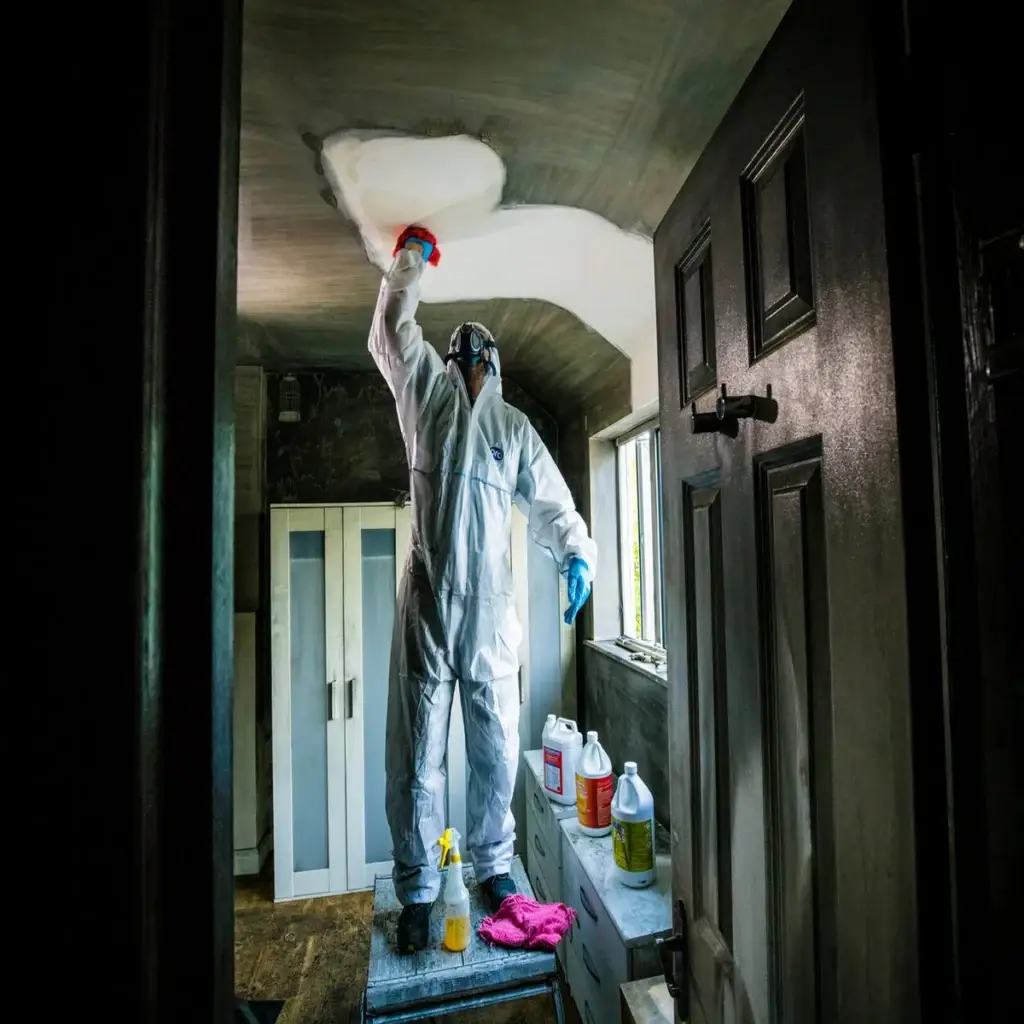
Bubbled and smoked up ceiling after a kitchen fire

The hidden damage smoke can cause

Smoke contamination is often underestimated because it is not always obvious immediately after a fire and will require professional smoke damage cleaning.

Surface contamination

Soot particles settle onto walls, ceilings and furniture, leaving dark stains and greasy residues.

Persistent smoke odours

Smoke gases penetrate porous materials such as carpets, curtains and upholstery, creating lingering smells.

Damage to electronics

Fine soot particles can enter electrical devices and appliances, potentially causing corrosion or faults.

Corrosion of metals

Smoke residues often contain acidic compounds that gradually damage metal surfaces.

Because these effects can develop over time, proper smoke damage assessment is important following any fire incident.

Why smoke odours are so difficult to remove

One of the most common issues after a fire is the persistent smell of smoke.

Smoke odours are caused by microscopic particles and gases that embed themselves within building materials and furnishings.

Standard cleaning methods often fail because they only treat surface contamination.

In reality, smoke particles can penetrate:

  • Plaster and paint
  • Soft furnishings
  • Insulation materials
  • Timber structures


Removing smoke odours effectively usually requires specialist smoke odour removal cleaning methods and equipment designed to neutralise smoke residues.

When professional smoke damage cleaning is needed

Some minor smoke residues can be cleaned using conventional methods, but many situations require professional assistance.

Professional smoke damage restoration is often recommended when:

  • Smoke odours remain after basic cleaning
  • Soot contamination is visible on surfaces
  • Smoke has spread throughout multiple rooms
  • Ventilation systems may be affected
  • Delicate materials or historic features are involved


Specialist cleaning techniques can help remove contamination while protecting the underlying materials.

How professional smoke damage restoration works

Professional smoke damage cleaning typically involves several stages.

Property inspection

Specialists assess the extent of smoke contamination and identify hidden affected areas.

Soot and residue removal

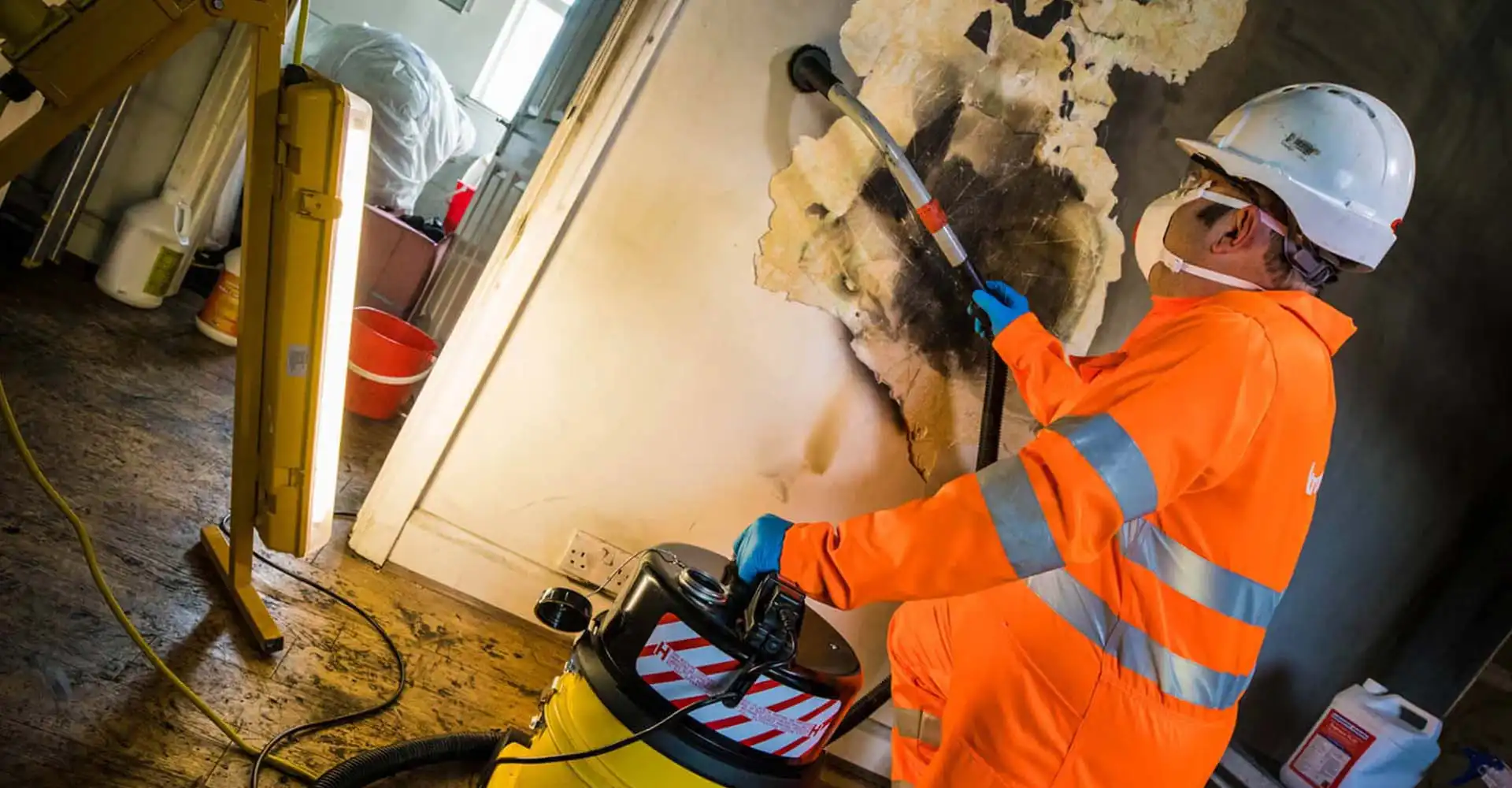
Specialist cleaning methods remove soot from walls, ceilings and surfaces.

Odour neutralisation

Advanced odour removal techniques break down smoke molecules embedded within materials.

Air filtration

High-efficiency air filtration systems remove airborne soot particles and improve indoor air quality.

This process helps restore properties safely after smoke contamination.

Conclusion: Why smoke damage should never be ignored

A small fire may appear to cause only limited damage, but the smoke produced during the incident can travel far beyond the original source.

Soot particles and smoke gases can spread through entire properties, contaminating surfaces, ventilation systems and furnishings. Over time, these residues may lead to persistent odours, surface staining and even corrosion of materials and electronics.

In the UK, thousands of residential fires occur every year, many of them relatively small kitchen or electrical fires. Yet even these minor incidents can leave behind widespread smoke contamination that is not immediately visible.

For property owners, identifying and addressing smoke damage early is the best way to prevent long-term issues. Professional smoke damage restoration specialists can assess the extent of contamination, remove soot residues and neutralise persistent odours using specialist equipment and cleaning techniques.

If your property has experienced a fire, even a small one, contact Ideal Response for expert smoke damage assessment and restoration services. Acting quickly can prevent hidden smoke damage from becoming a much larger problem.

Frequently asked questions about smoke damage after a fire

Can a small fire really cause significant smoke damage?

Yes. Even a small fire can produce large amounts of smoke and soot particles. These microscopic particles spread quickly through air currents and can contaminate walls, ceilings, furniture, ventilation systems and other rooms in the property. In many cases, smoke damage affects a larger area than the fire itself.

Smoke can travel throughout an entire building within minutes. Warm smoke rises and spreads through stairwells, loft spaces, ceiling voids and ventilation systems. This means rooms that were never directly affected by flames may still require smoke damage cleaning.

Smoke odours linger because tiny smoke particles and gases embed themselves in porous materials such as carpets, upholstery, plaster, insulation and timber.

Standard cleaning methods often remove surface residues but do not eliminate the embedded smoke particles that cause persistent odours.

Smoke residues can contain fine soot particles, chemicals and irritants that affect indoor air quality. These contaminants may cause throat irritation, headaches or respiratory discomfort if they remain inside the property.

Professional smoke damage cleaning helps remove these residues and restore safe indoor conditions.

Yes. Smoke particles are extremely fine and can enter electronic devices such as televisions, computers and kitchen appliances. Over time, soot contamination may lead to corrosion or malfunction. For this reason, electronics should often be inspected after a fire.

Yes. Smoke particles are extremely fine and can enter electronic devices such as televisions, computers and kitchen appliances. Over time, soot contamination may lead to corrosion or malfunction. For this reason, electronics should often be inspected after a fire.

Repainting can temporarily hide soot stains but it does not remove the underlying contamination. Smoke residues may continue to produce odours or eventually bleed through paint if the surface has not been properly cleaned and sealed beforehand.

Without specialist treatment, smoke odours can persist for weeks or even months. The smell continues because smoke particles remain trapped within porous materials inside the property. Professional smoke odour removal techniques can neutralise these particles and eliminate the smell.

Professional smoke damage restoration typically involves:

  • Specialist soot and residue removal
  • Deep cleaning of contaminated surfaces
  • Odour neutralisation treatments
  • Air filtration to remove airborne particles


These techniques are designed to remove smoke contamination rather than simply masking the smell.

In many cases, smoke damage resulting from a fire is covered by standard buildings or contents insurance policies. However, the exact level of cover depends on the individual policy and insurer. Professional restoration companies often work alongside insurers to help assess and restore fire and smoke damage.

It is best to contact a professional restoration company if:

  • Smoke odours remain after cleaning
  • Soot contamination is visible on surfaces
  • Multiple rooms are affected
  • Ventilation systems may contain smoke particles
  • Delicate materials or furnishings have been contaminated


Early professional intervention can help prevent smoke damage from becoming more severe.

Picture of Chris Hedges - Head of Marketing

Chris Hedges - Head of Marketing

With over 25 years' experience, Chris is adept at defining and driving strategy, while also enjoying hands-on operational delivery. He believes in an equal blend of creativity and analytical scrutiny, always finding inventive ways to achieve objectives, underpinned by evidence. Chris’s philosophies are simple: don't overcomplicate, always prioritise customer experience, and bend the rules just enough to cut through the noise and drive momentum and growth.

Other articles

Explore more articles about damage restoration, specialist cleaning and what we do

Several pigeons on a household roof with soiled solar panels due to droppings

What to do if pigeons are nesting on your roof or solar panels

Pigeons are a familiar sight across towns and cities in the UK, and at first, a couple of birds on your roof may not seem like a cause for concern. However, once pigeons begin nesting, the situation can change quickly. Roofs, loft spaces and especially solar panels provide sheltered, elevated...

READ MORE

Suffering from toxic mould.

Mould toxicity symptoms: Recognising the health risks & steps to take

For many in the UK, a patch of damp on a wall is seen as a minor maintenance issue. However, as medical research and evolving safety standards have shown, the reality is far more dangerous. Understanding mould toxicity symptoms is no longer just about property care, it is a critical...

READ MORE

York, UK during the 2012 floods

Water damage with no insurance in the UK: How to recover, repair and rebuild

Suffering water or flood damage without insurance can be devastating. From soaked walls and damaged belongings to the stress of uncertainty, it can feel impossible to know where to start. But here’s the truth: even if you’re uninsured, you don’t have to face recovery alone. With professional help, clear planning,...

READ MORE

Get expert support

No matter if you have a question you need to ask or have an emergency that you need help with, call:

0800 088 4170

If you’d prefer to drop us a message, fill out the enquiry form and we’ll get back to you as soon as possible.

Request a call back