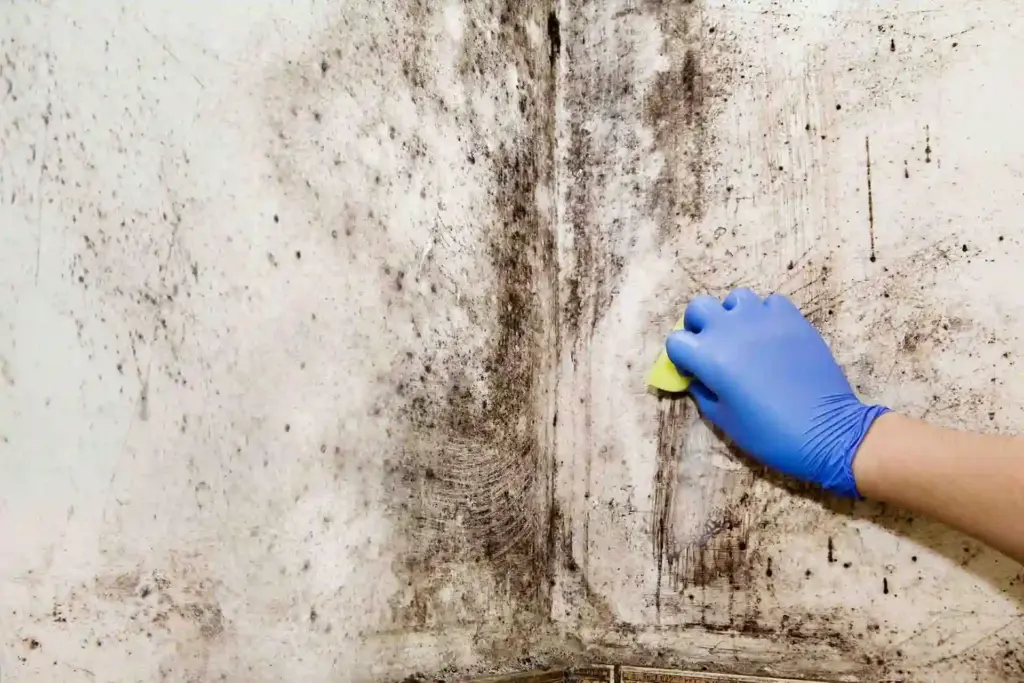
Hoarder properties are often misunderstood.
From the outside, they can appear to be a matter of excess belongings or poor organisation.
But in reality, many situations reach a point where the issue is no longer about clutter, it’s about safety.
- Rooms become inaccessible
- Exits are blocked
- Air quality deteriorates
- Hidden risks begin to develop beneath the surface
According to the Fire Kills Campaign, cluttered environments significantly increase fire risk, particularly where escape routes are restricted. What might look like a private living situation can quickly become a serious property and safety concern.
What you’ll learn in this guide
In this article, you’ll understand:
- How hoarder properties develop into high-risk environments
- The hidden hazards most people don’t initially see
- How safe, structured clearance is carried out in the UK
- What happens after the property is cleared and how to move from a difficult situation to a controlled resolution
Because dealing with a hoarder property isn’t just about removing items, it’s about restoring safety, control and usability.
Skip to:
How hoarding situations develop (and why they’re often missed)
Not all hoarder properties are the same
The hidden risks that aren’t immediately obvious
Who typically needs hoarder property clearance?
Why trying to clear it yourself can backfire
What a safe, structured clearance actually looks like
What gets revealed once the property is finally cleared
The restoration stage: Making the property usable again
Real project example: Compassionate hoarder clean-up in Gateshead
The legal and responsibility angle most people don’t consider
How hoarding situations develop (and why they’re often missed)
Hoarding rarely happens suddenly.
It tends to develop gradually, often without drawing attention. In many cases:
- Items are accumulated faster than they are removed
- Certain rooms become ‘storage spaces’
- Access becomes slightly restricted, then more so over time
Because the change is incremental, it’s easy for it to go unnoticed, especially from outside the property.
Estimates suggest that 2 – 5% of the UK population may be affected by hoarding behaviours, meaning this is far from a rare issue.
The challenge is that by the time action is taken, the situation is often already complex.
Not all hoarder properties are the same
One of the biggest misconceptions is that all hoarder properties are extreme. In reality, there is a wide spectrum.
Mild cases may involve:
- Cluttered rooms
- Limited usable space
- Early access restrictions
Moderate cases may include:
- Blocked pathways or rooms
- Visible environmental issues such as dust or mould
- Reduced functionality of key areas
Severe cases can involve:
- Complete inaccessibility of parts of the property
- Significant fire risk
- Structural strain or hidden damage
- Contamination or biohazards
Understanding where a property sits on this spectrum is key to handling it properly.
The hidden risks that aren’t immediately obvious
While the volume of items is the most visible issue, it’s rarely the biggest risk. The more serious concerns are often hidden beneath the surface.
These can include:
- Fire risk from large volumes of combustible materials
- Blocked escape routes, making evacuation difficult
- Poor air quality from dust, mould or contaminants
- Structural pressure on floors from excessive weight
- Biological hazards in more advanced cases
The National Fire Chiefs Council has identified hoarding environments as a contributing factor in domestic fire incidents, particularly where access and escape are restricted.
What looks like a storage issue can quickly become a serious safety concern.
Who typically needs hoarder property clearance?
Hoarder property situations are usually handled by:
- Family members trying to support a relative
- Landlords dealing with tenancy issues
- Housing associations managing property standards
- Local authorities responding to environmental health concerns
- Estate managers preparing properties for sale or re-letting
Each group faces a slightly different challenge, however, no matter what, each situation must be resolved safely, efficiently and appropriately.
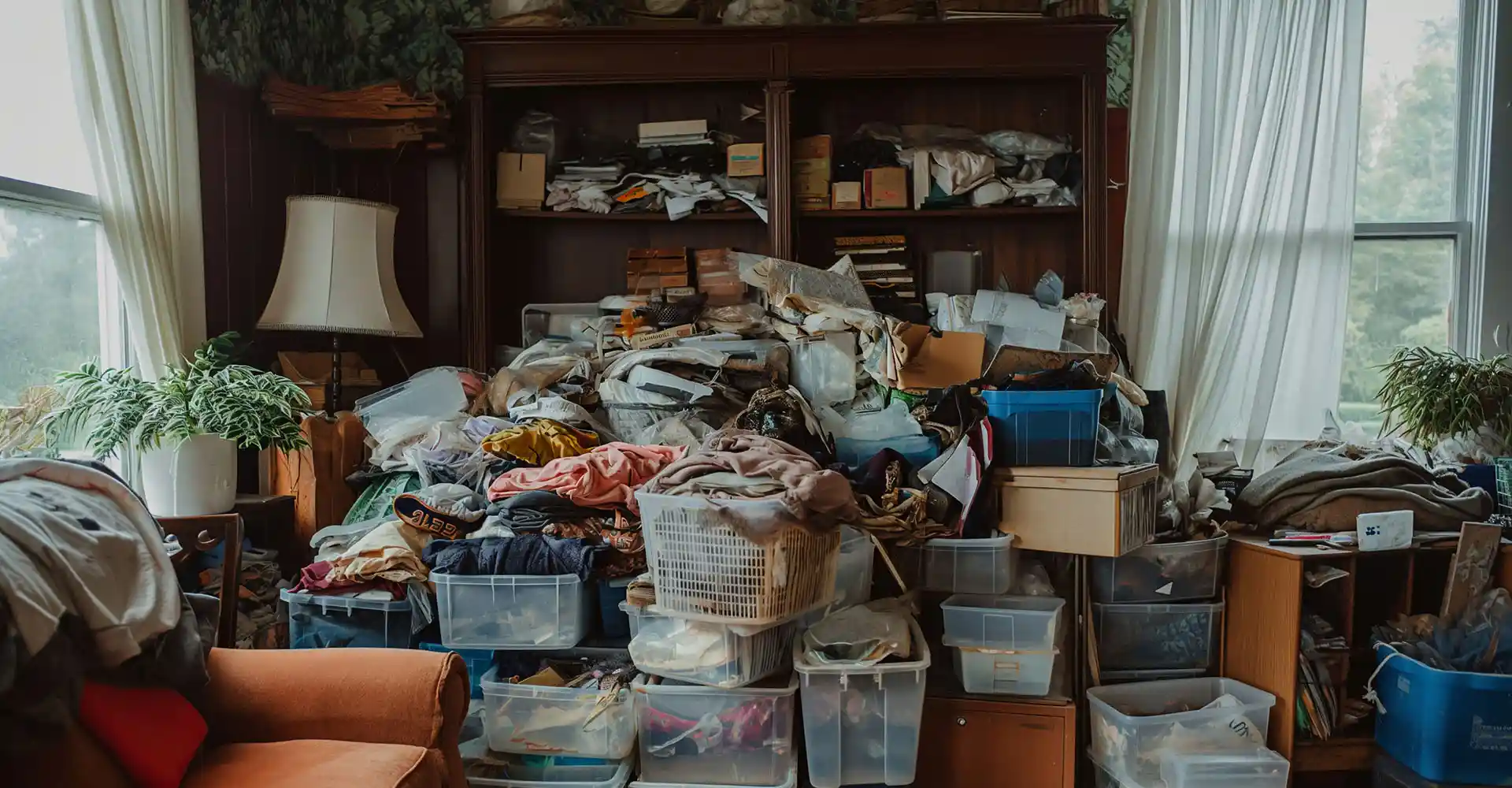
Why trying to clear it yourself can backfire
It’s completely understandable that people attempt to deal with the situation themselves. But this is where problems often escalate. Without a structured approach, clearance can lead to:
- Injury from unstable or shifting materials
- Exposure to dust, mould or contaminants
- Emotional distress when handling personal belongings
- Accidental disposal of important or valuable items
There’s also the practical challenge which is once you start, it can quickly become overwhelming. This is why many DIY attempts stall part-way through and require a hoarder cleaning service.
What a safe, structured clearance actually looks like
Professional clearance isn’t about removing everything as quickly as possible. It’s about working through the property in a controlled, manageable way.
This typically involves:
- Assessing the scale and risks before starting
- Creating safe access routes through the property
- Working methodically from one area to another
- Separating waste from items that may need to be retained
The difference is that it’s not a reactive approach, it’s carefully planned.
What gets revealed once the property is finally cleared
One of the most important, and often underestimated, stages comes after the bulk of the contents have been removed.
Because this is the point where the true condition of the property is exposed.
Until then, much of the environment has been hidden.
Once cleared, it’s common to uncover:
- Embedded contamination within floors, walls and surfaces
- Long-standing mould growth in areas with no previous airflow
- Strong, absorbed odours that have built up over time
- Damage to flooring, including warping or staining
- Deterioration of plaster, paintwork and fixtures
In some cases, issues have developed gradually over years without being visible. This is where expectations often shift.
What initially seemed like a clearance job becomes something more complex, because the property itself now needs attention.
Why this stage matters more than most people expect
For landlords, property managers and families, this stage is often where key decisions are made.
Questions typically arise such as:
- Is the property safe to enter and use?
- Can it be re-let or sold in its current condition?
- What additional work is actually required?
Without addressing what’s uncovered at this stage, the property may still:
- Present health risks
- Retain strong odours
- Or fail basic standards for occupancy
The gap between ’empty’ and ‘ready to use’
There’s a common assumption that once a property is cleared, it’s effectively ready for its next use.
In reality, there is often a clear gap between empty and safe, clean and usable.
Bridging that gap is what determines whether the situation is fully resolved, or simply moved to the next stage.
The restoration stage: Making the property usable again
After clearance, the focus shifts to restoring the environment. This stage is about:
- Deep cleaning all exposed surfaces
- Removing contamination safely
- Neutralising odours at source
- Addressing mould or damp issues
The goal is to return the property to a condition where it is safe, hygienic and ready for the next step.
(That next step may involve reinstatement or refurbishment, which is not something we get involved with here at Ideal Response)
Real project example: Compassionate hoarder clean-up in Gateshead
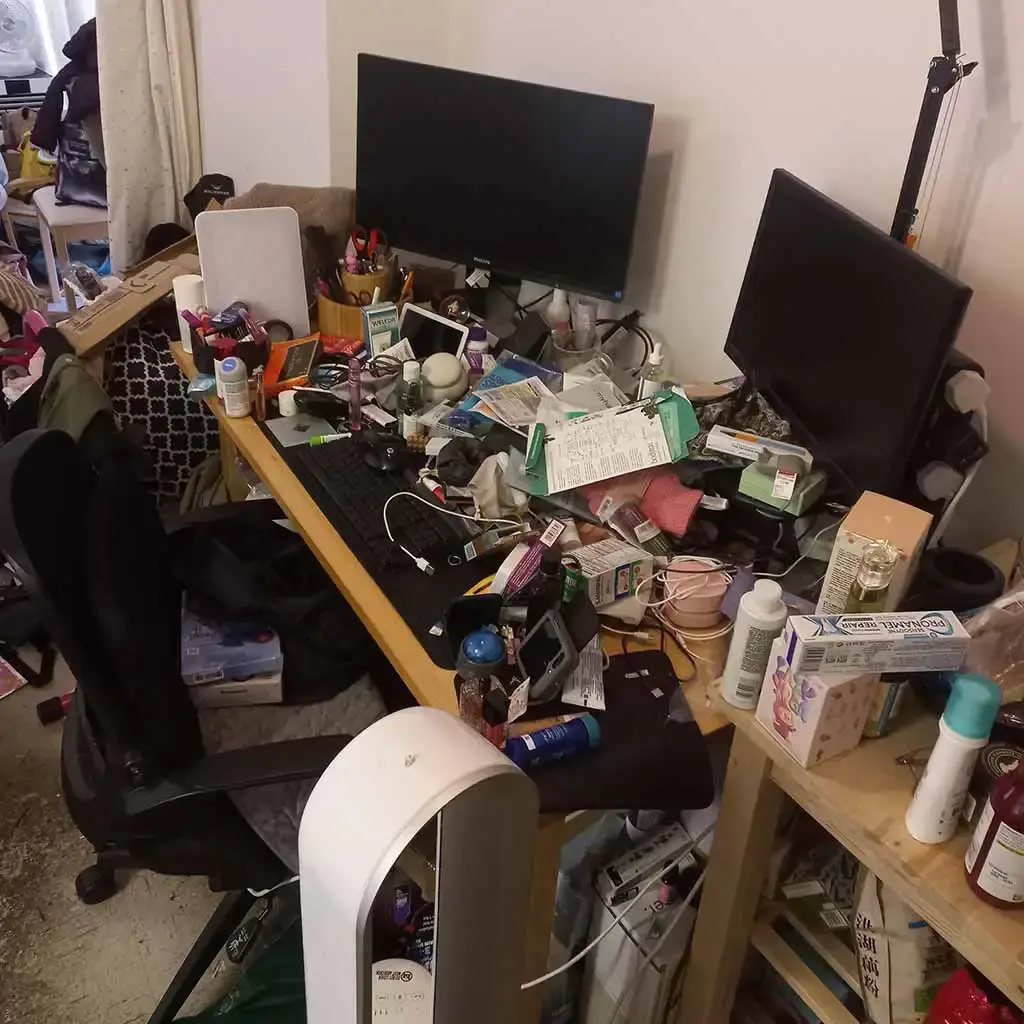
A family in Gateshead contacted our team after a relative’s property had become severely impacted by long-term hoarding, leaving the home unsafe, heavily cluttered, and extremely difficult to access. The situation had created significant health and safety concerns, including blocked access routes, accumulated waste, and potential contamination risks.
Our specialist hoarding response team attended the property and delivered a carefully planned, phased clearance approach, working sensitively throughout to respect the occupant and family’s wishes. Using full PPE and specialist waste handling procedures, the team systematically cleared rooms while maintaining a discreet and compassionate approach.
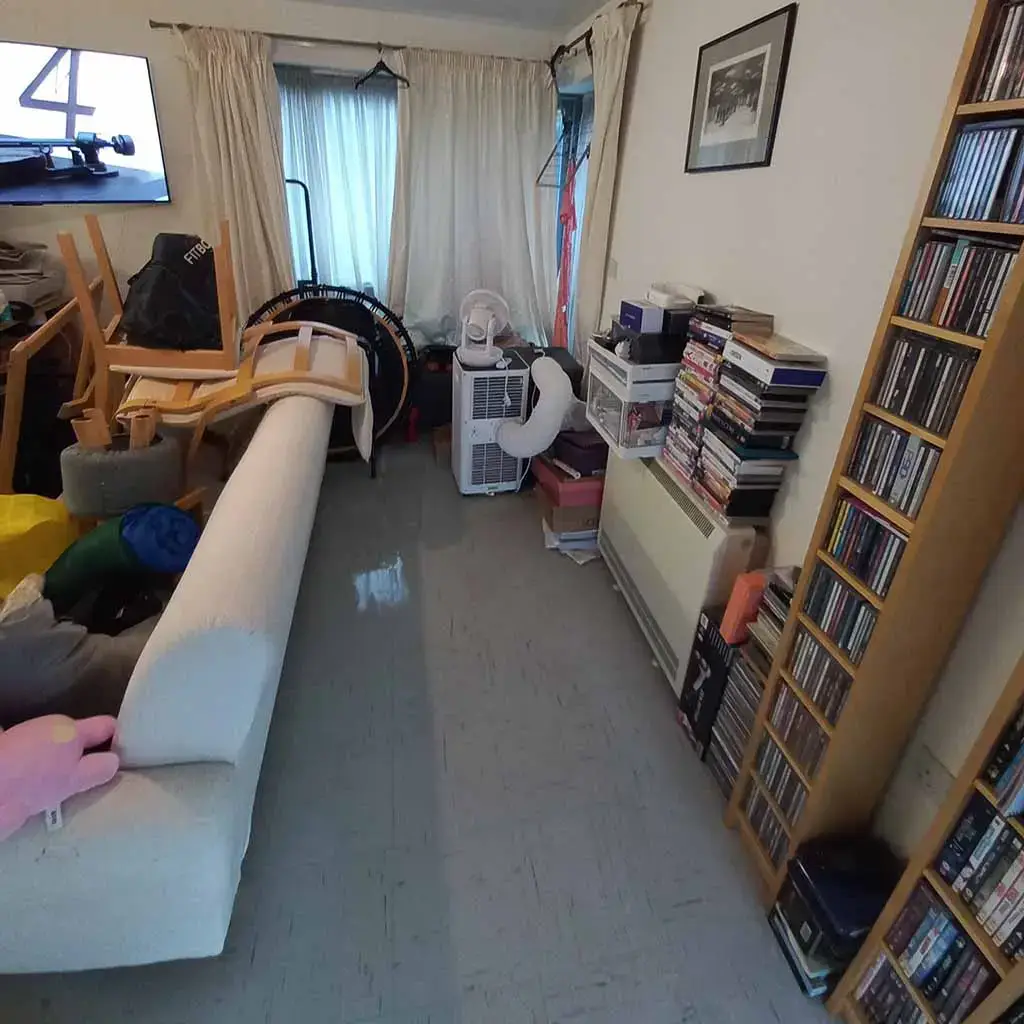
Once the property was fully cleared, a thorough decontamination process was carried out, including professional cleaning and odour treatment, restoring safe and habitable conditions.
As a result, the property was transformed from a hazardous environment into a clean, safe, and usable home for the family.
The legal and responsibility angle most people don’t consider
In some situations, hoarder properties can involve legal or regulatory considerations.
This might include:
- Landlord responsibilities for property condition
- Environmental health involvement
- Fire safety compliance
- Tenancy enforcement issues
Guidance from the Health and Safety Executive reinforces the importance of managing risk in environments that present hazards to occupants or workers. Handling the situation properly isn’t just practical, it can also be a matter of responsibility.
Why sensitivity and discretion matter so much
This is one area where the approach really matters. Hoarder properties are often connected to:
- Mental health challenges
- Vulnerable individuals
- Family situations
Handled insensitively, the process can feel:
- Intrusive
- Overwhelming
- Distressing
Handled correctly, it creates:
- Clarity
- Structure
- A sense of progress
That balance is what turns a difficult situation into a manageable one.
Conclusion: From overwhelming to under control
Hoarder properties can feel difficult to approach, especially at the start. But with the right understanding and a structured approach, they can be resolved safely and effectively.
The key points are clear:
- These are often complex environments with hidden risks
- The scale of the issue is not always immediately obvious
- Clearance needs to be controlled, not rushed
- Restoration is what ultimately makes the property usable again
The process is not just about removing what’s there, it’s about bringing the property back under control.
Ideal Response supports families, landlords and organisations across the UK with specialist hoarder property clearance and specialist cleaning services.
Contact the team for confidential, expert support.
Frequently asked questions about hoarder property clearance
How common are hoarder properties in the UK?
Hoarding behaviours are estimated to affect around 2 – 5% of the UK population, meaning thousands of properties may be impacted to some degree.
While not all cases reach extreme levels, many require some level of intervention.
Are hoarder properties considered dangerous?
They can be.
Risks often include fire hazards, blocked exits, poor air quality and hidden structural issues — particularly in more advanced cases.
Can a hoarder property be cleared without professional help?
In mild cases, it may be possible.
However, where there are safety risks, access issues or contamination, professional clearance is typically the safer and more effective option.
How long does it take to clear a hoarder property?
This depends on the scale and condition of the property.
Smaller cases may take a day or two, while more complex situations can take several days or longer.
What happens to personal belongings during clearance?
Items are usually assessed and separated during the process.
Where appropriate, important or sensitive items can be retained rather than removed.
Does clearing the property fix everything?
No. Clearance removes contents, but further cleaning and restoration are often required to address underlying issues.
What are the most common hidden problems found after clearance?
These often include contamination, odours, mould growth and damage to surfaces or materials.
Who is responsible for arranging hoarder property clearance?
This can include property owners, landlords, housing providers, local authorities or family members.
Is the process handled confidentially?
Yes.
Professional services prioritise discretion and sensitivity throughout.
Can the property be fully restored after clearance?
Yes.
With the right approach, most properties can be returned to a safe, usable condition and prepared for future use.

Chris Hedges - Head of Marketing
Chris Hedges is Head of Marketing at Ideal Response and the author of every article published on this site. With over 25 years of senior marketing experience across property, legal, and professional services sectors, Chris brings a clear, evidence-led approach to writing about fire damage, flood restoration, and specialist property remediation. His philosophy is simple: cut through the noise, respect the reader's time, and give people the information they actually need.