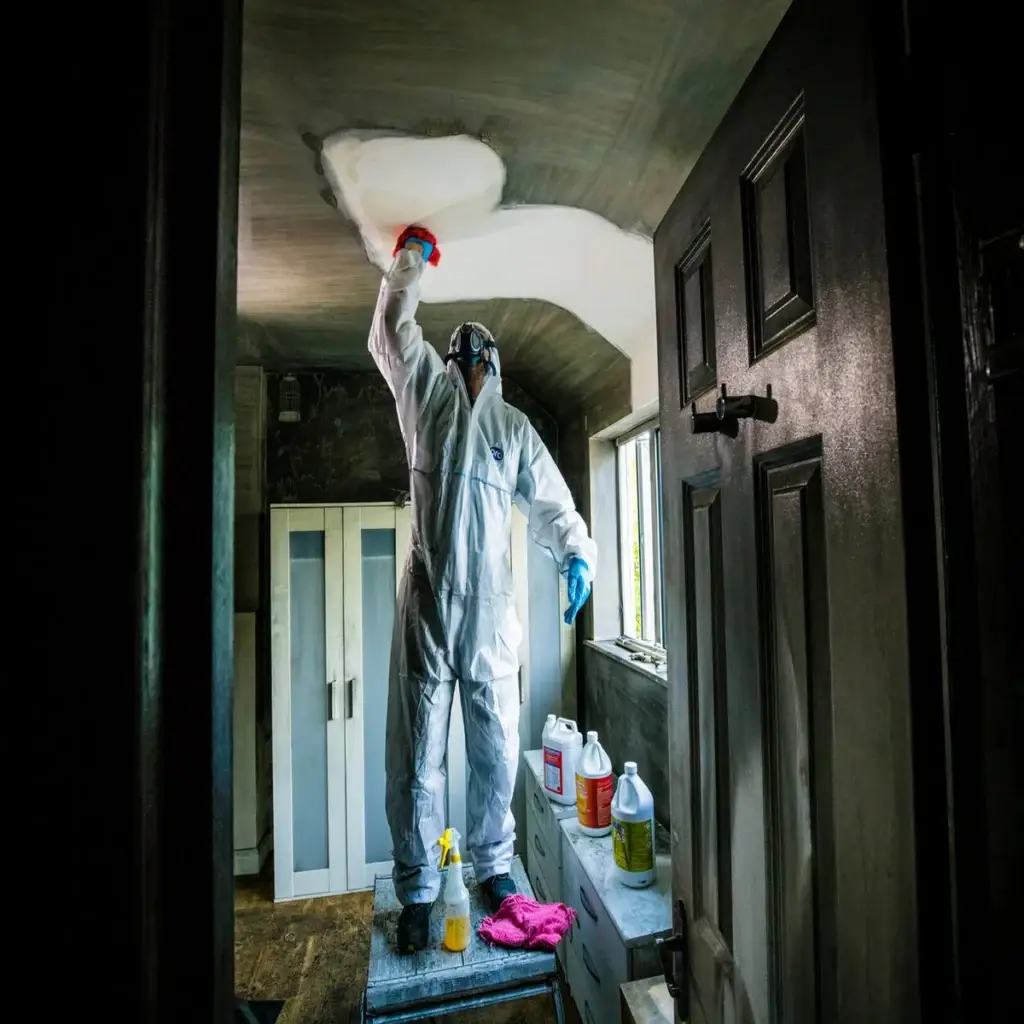
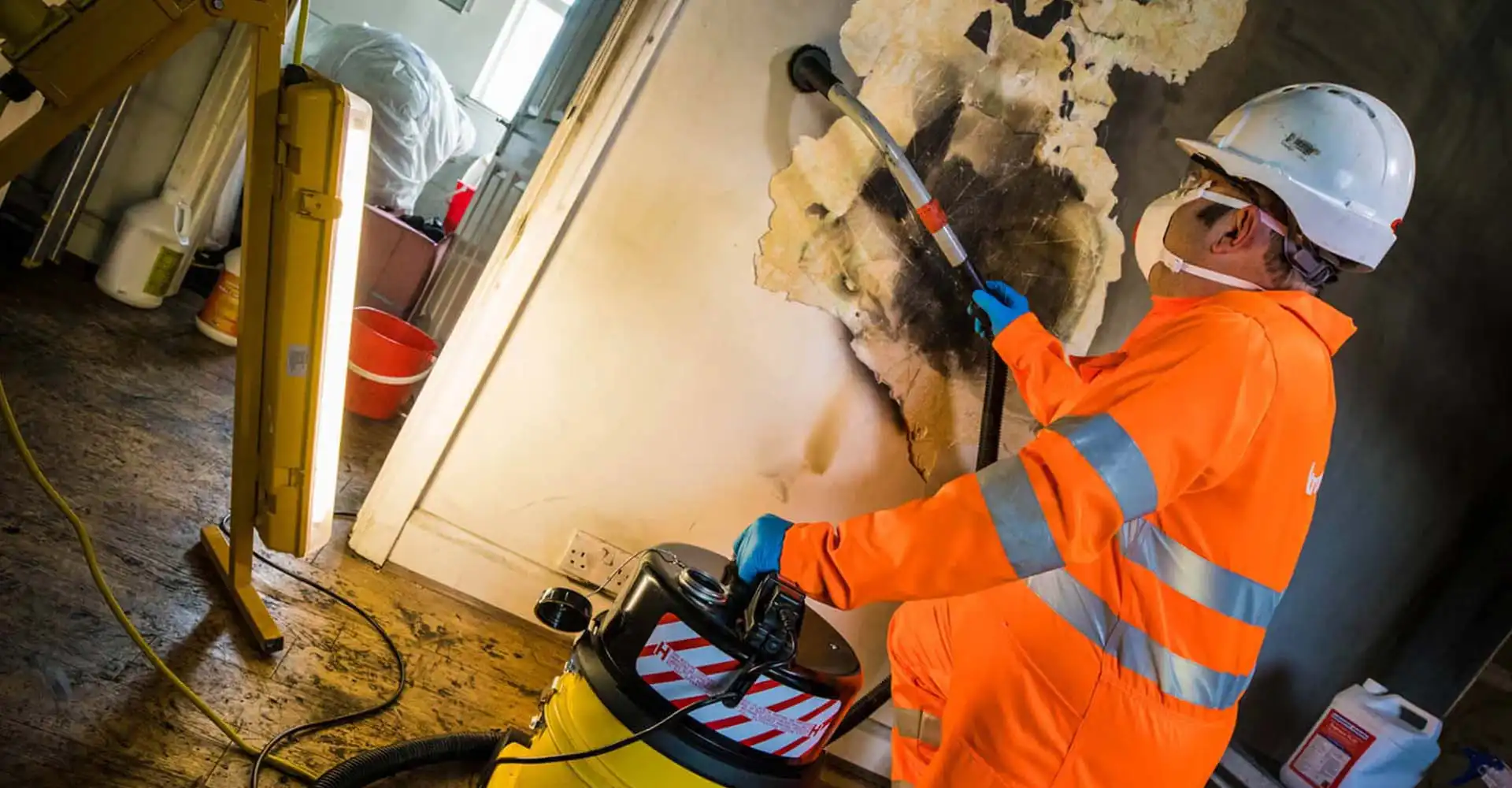
Available 24/7 | 0800 088 4170

Available 24/7 | 0800 088 4170
Black mould is more than a smudge on the wall; it is a biological contaminant that can compromise the health of your family and the structural integrity of your property. In the UK, our unique climate makes black mould removal a common necessity for homeowners and landlords alike. However, there is a significant difference between cleaning a surface and true remediation. Following the implementation of Awaab’s Law , the standards for property safety have never been higher. This guide explores the complexities of mould, the dangers of DIY attempts, and the gold-standard process for permanent removal.
Skip to:
What is black mould?
Recognising the signs of black mould
Risks of DIY black mould removal
Professional remediation standards
Awaab’s Law
Choosing a mould removal professional
FAQs
Before starting the process of black mould removal, it is vital to understand what you are dealing with. While many people use the term “black mould” to describe any dark fungal growth, it typically refers to Stachybotrys chartarum .
This specific genus thrives on moisture-heavy, cellulose-rich materials like plasterboard, wallpaper, and wood. Unlike lighter surface moulds, black mould produces mycotoxins that can lead to severe respiratory issues and allergic reactions. To understand the wider context of fungal growth, read our guide on what mould is and why it grows in UK homes.
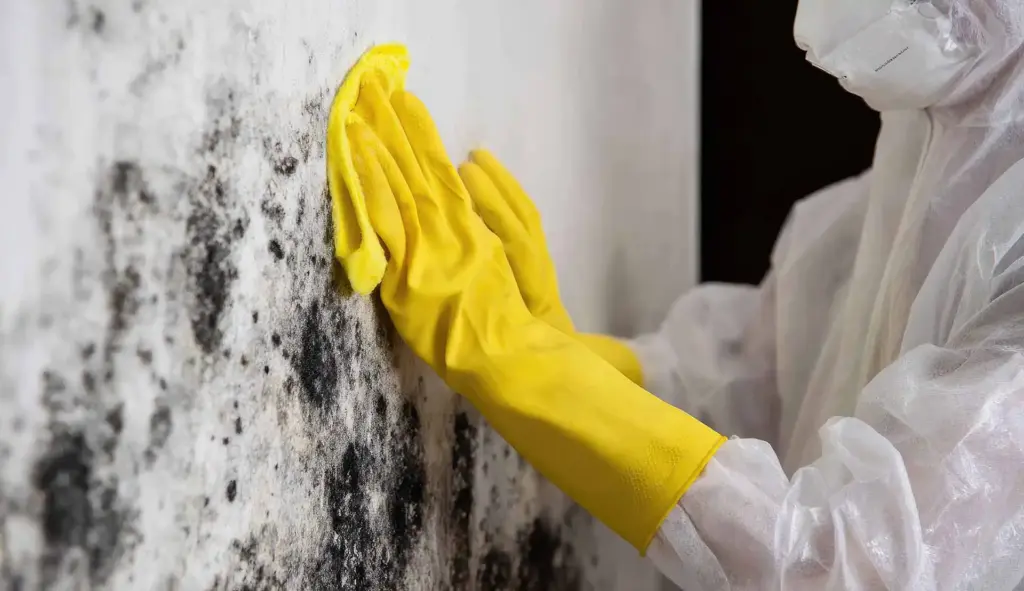
Mould often hides behind the scenes long before it becomes visible on your skirting boards or ceilings. Recognising the early warning signs is the first step in preventing a small issue from becoming a structural disaster. Key indicators include:
For a deeper dive into the red flags, view our article on the top 5 signs of mould in your home.
Need an urgent assessment? Ideal Response provides 24/7 expert support for residential and commercial properties. Book your damp and mould survey here.

When faced with a patch of mould, the natural instinct is to reach for a bottle of bleach. However, DIY black mould removal can often exacerbate the problem.
If you are considering a DIY approach, ensure you understand the limitations and safety protocols of at-home removal before you begin.
To ensure black mould removal is permanent and safe, professional restoration companies follow the IICRC S520 Standard. This is not a “deep clean”; it is a clinical decontamination process designed to return a property to a “Condition 1” (normal fungal ecology) status.
The UK government’s introduction of Awaab’s Law has made black mould removal a legal priority. Landlords are now under strict timelines to investigate and remediate damp and mould issues that pose a risk to health. This legislation underscores that mould is not a “lifestyle choice” by tenants, but a structural and health-and-safety failure that requires professional intervention.
To learn more about your rights or obligations, see our comprehensive guide to Awaab’s Law.
If you are dealing with a recurring mould issue, or if the growth covers an area larger than one square metre, DIY methods are no longer appropriate. You need a team that understands the technical science of mould cleaning and removal .
Ideal Response provides 24/7 emergency support across London, Kent, and the Home Counties. We don’t just clean the surface; we decontaminate your environment and address the root cause, ensuring your home or business remains a safe, healthy place to be.
Don’t wait for the problem to grow. Contact Ideal Response today for a professional mould assessment and a permanent removal solution.

Chris Hedges is Head of Marketing at Ideal Response and the author of every article published on this site. With over 25 years of senior marketing experience across property, legal, and professional services sectors, Chris brings a clear, evidence-led approach to writing about fire damage, flood restoration, and specialist property remediation. His philosophy is simple: cut through the noise, respect the reader's time, and give people the information they actually need.
Explore more articles about damage restoration, specialist cleaning and what we do
If you’re dealing with fire damage, flooding, or an environmental incident, our team is ready to respond. No matter if you have a question or have an emergency that you need help with, call:
If you’d prefer to drop us a message, use our main contact form and upload any pictures of the incident. Would you like us to call you? Fill out the short ‘Request a call back’ form.