Available 24/7 | 0800 088 4170

Available 24/7 | 0800 088 4170
A house fire is one of the most disruptive events a homeowner or tenant can experience. Beyond the immediate shock and safety concerns, the aftermath often involves navigating a complex insurance claims process. In the UK, this process is governed by your policy terms, Financial Conduct Authority (FCA) rules, and industry standards designed to ensure fair treatment of policyholders. Understanding how fire damage insurance claims work can make a significant difference to the speed, success, and value of your settlement. This guide explains the entire process step-by-step, with practical UK-specific insights to help you avoid delays, underpayment, or claim rejection.
Skip to:
First priority: Safety and securing the property
Contact your insurance provider immediately
Why grease is the real risk factor
Documentation: The most important part of your claim
The role of the loss adjuster
Repairs, restoration, and temporary accommodation
How settlement works (payment structure)
Common reasons fire claims get delayed in the UK
Your rights as a UK policyholder
Practical tips to strengthen your fire insurance claim
Conclusion: What UK homeowners really need to understand about fire insurance claims
FAQs
Before any insurance claim begins, safety is the absolute priority.
In the UK, you must not re-enter a fire-damaged property until the Fire and Rescue Service confirms it is safe. Fire can weaken structural elements, contaminate air quality, and create hidden electrical hazards. Once the property is declared safe:
According to UK fire recovery guidance, insurers also expect you to take ‘reasonable steps’ to prevent further loss once the incident has occurred. Failing to do so can reduce your claim payout under ‘duty to mitigate loss’ conditions.
Once you are safe, the next step is to notify your insurer as soon as possible.
Most UK home insurance policies require ‘prompt notification’ of fire damage. Delays can complicate your claim or, in extreme cases, lead to disputes.
When you call your insurer, you will usually:
You do not need to give a full detailed assessment at this stage, just factual information.
UK insurers typically assign a loss adjuster within a few days to inspect the damage and begin assessing the claim.
Most standard UK home insurance policies include fire damage as a core insured peril. Typically covered under a combined buildings and contents policy…
Buildings insurance covers:
Contents insurance covers:
Fire damage is generally included unless specifically excluded (rare in standard policies). Most UK policies also include:
However, the extent of cover depends on whether your policy is:
One of the biggest factors affecting UK fire claims success is evidence quality.
Insurers rely heavily on documentation to assess damage, value losses, and validate the cause of the fire. You should collect:
Photographic evidence
Inventory list
Fire brigade report
Additional evidence
In fact, UK insurers often require detailed contents schedules before settlement can progress. A lack of documentation is one of the most common reasons for delays or reduced settlements.
After a fire claim is opened, your insurer will typically appoint a loss adjuster. Their role is to:
It is important to understand that the loss adjuster works for the insurer, not for you. This does not mean they are unfair, but their role is to validate the insurer’s liability under the policy terms.
Many UK policyholders choose to appoint an independent loss assessor to represent their interests, particularly for major fire damage claims.
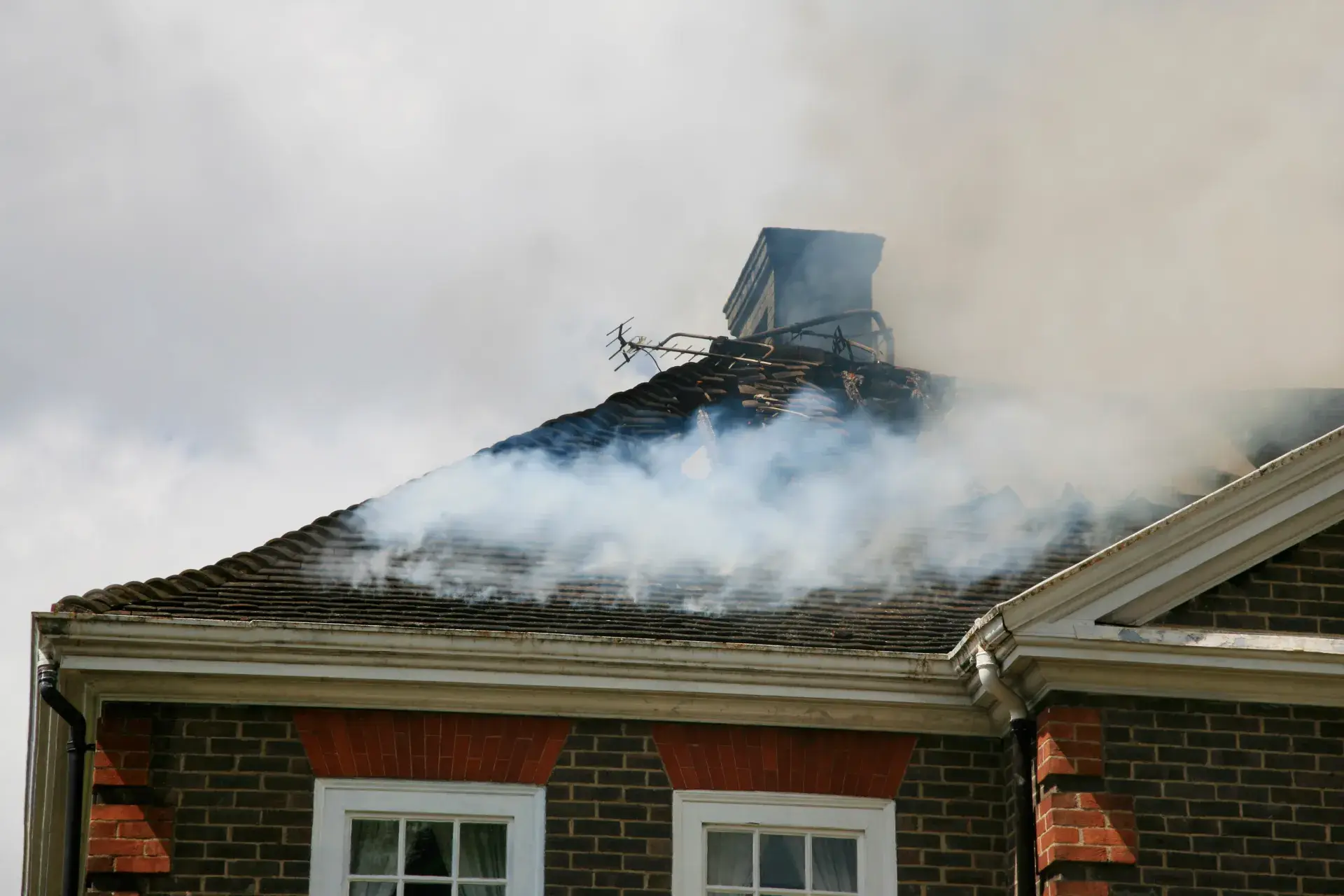
Once the claim is validated, the insurer will typically:
Arrange emergency works
This may include:
Approve repairs
Insurers may:
Provide temporary housing
If your home is uninhabitable, insurers often cover:
UK insurers commonly cover these costs under ‘alternative accommodation’ provisions, depending on policy limits.
Fire damage claims are rarely paid in a single lump sum. Instead, they are typically structured in stages:
If your policy is ‘reinstatement value’ you may receive:
This staged approach ensures funds are used correctly for rebuilding.
Even valid claims can take time. Common issues include:
Major fire claims in the UK can take 6 – 12 months or longer to fully resolve.
Under FCA regulations, UK insurers must:
If you disagree with a decision, you can:
The Ombudsman is independent and can order compensation if your insurer has acted unfairly.
To improve your outcome:
Most importantly, communicate clearly and consistently with your insurer.
A fire insurance claim in the UK is not a single action but a structured process involving multiple stages, checks, and professional assessments. From the moment the Fire and Rescue Service declares a property safe, the claim moves into a regulated insurance framework governed by your policy wording and FCA consumer protection rules.
Across the entire process, several key themes consistently determine outcomes:
First, speed matters
Notifying your insurer immediately ensures the claim is validated early and emergency support (such as temporary accommodation or boarding-up services) can be arranged without delay.
Second, evidence is critical
As highlighted throughout this guide and reinforced in the FAQ section, insurers rely heavily on documentation, photos, inventories, receipts, and fire brigade reports. Without this, even valid claims can be delayed or reduced.
Third, understanding the role of professionals is essential
Loss adjusters act on behalf of insurers to assess damage and verify costs. While independent, their findings heavily influence settlement value. This is why many UK policyholders consider appointing a loss assessor for complex or high-value fire claims.
Fourth, policy limits and wording directly affect payouts
Whether you receive ‘new for old’ replacement or depreciated value depends entirely on your cover type. Underinsurance can also reduce payouts proportionally, even in fully valid claims.
Fifth, timelines are often longer than expected
As noted in the FAQs, simple claims may settle within a few months, but serious fire damage can take 6 – 12 months or longer due to structural surveys, rebuild scheduling, and contents valuation disputes.
Finally, if disputes arise, UK policyholders are not without protection. The Financial Ombudsman Service exists to independently review complaints where insurers may have treated customers unfairly or failed to follow FCA standards.
A successful fire insurance claim in the UK depends less on the fire itself and more on how well you document, report, and manage the claim afterwards.
By acting quickly, keeping thorough records, understanding the roles of insurers and adjusters, and knowing your rights under UK financial regulation, you significantly improve your chances of a fair and full settlement.
If you are currently dealing with a fire damage claim, or want to avoid costly mistakes during the process, do not navigate it alone or rely solely on insurer guidance.
Small errors in documentation, valuation, or communication can cost thousands of pounds and significantly delay rebuilding your home.
Get expert support for your fire damage claim today and make sure you receive everything you are entitled to under your policy. Call us and speak to one of our experts.

Chris Hedges is Head of Marketing at Ideal Response and the author of every article published on this site. With over 25 years of senior marketing experience across property, legal, and professional services sectors, Chris brings a clear, evidence-led approach to writing about fire damage, flood restoration, and specialist property remediation. His philosophy is simple: cut through the noise, respect the reader's time, and give people the information they actually need.
Explore more articles about damage restoration, specialist cleaning and what we do
If you’re dealing with fire damage, flooding, or an environmental incident, our team is ready to respond. No matter if you have a question or have an emergency that you need help with, call:
If you’d prefer to drop us a message, use our main contact form and upload any pictures of the incident. Would you like us to call you? Fill out the short ‘Request a call back’ form.