If you have noticed water droplets on your windows or a musty smell in your rooms, you are likely dealing with the most common form of moisture issue in the UK: condensation. While it might seem like a minor inconvenience, failing to address it can lead to persistent condensation damp, which can damage your property and your health.
But what is condensation, and how does it differ from other moisture problems? In simple terms, condensation occurs when warm, moist air comes into contact with a cold surface (like a window or an external wall), turning back into liquid water.
Skip to:
The common signs of condensation
The dangers of condensation damp
The common signs of condensation
Unlike a structural leak, which often appears as a concentrated drip or a single damp patch, condensation is usually systemic and atmospheric. Look for these specific indicators:
-
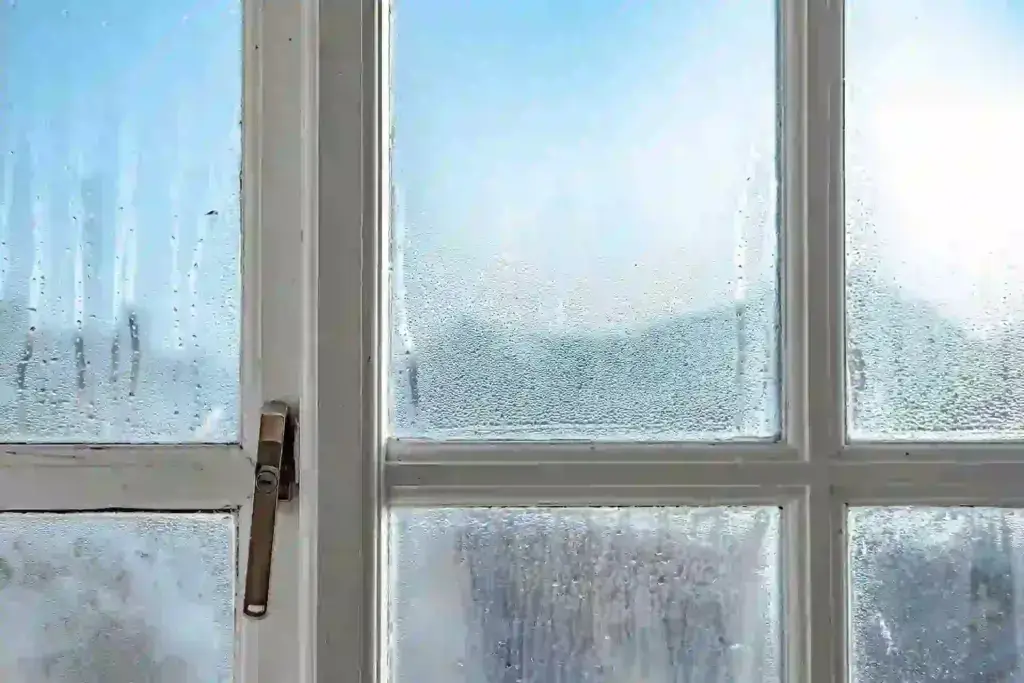
Window sweating: Persistent water pooling at the base of glazing that eventually rots wooden frames or causes “tacky” PVC.
-
Atmospheric dampness: A heavy, humid feeling in the air, especially in “wet rooms” like kitchens and bathrooms.
-
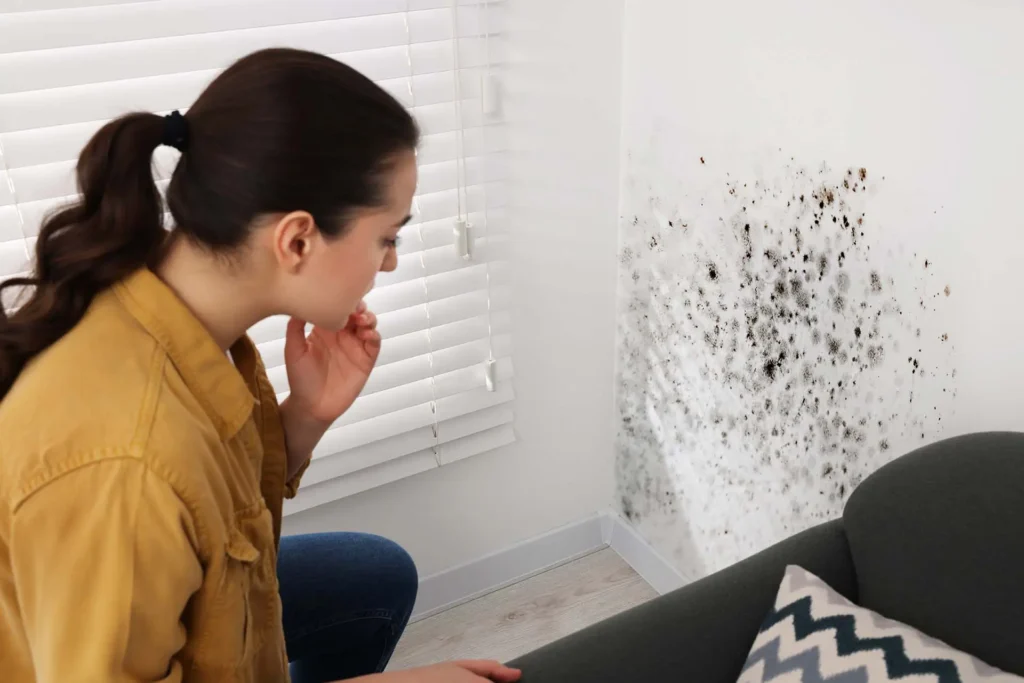
Black mould growth: The appearance of Stachybotrys chartarum (black mould) on cold surfaces, typically external walls, corners of ceilings, or directly behind wardrobes where air circulation is restricted. Check out our black mould blog to learn more about it’s causes, the risks and solutions.
-
Deteriorating decor: Peeling wallpaper that starts from the top of the wall or “salting” on plaster surfaces.
The dangers of condensation damp
When condensation is left unmanaged, it transitions from a nuisance into a genuine hazard. The two primary expensive outcomes involve your physical health and your property’s structural integrity.
Toxic mould growth
The most immediate and visible danger of condensation is the rapid proliferation of mould. When warm, moisture-laden air settles on a cold surface, it provides the perfect ecosystem for mould to thrive.
-
Spore colonisation: Once a colony is established, it releases millions of microscopic spores into your breathing air.
-
Hidden infestations: Mould often grows undetected behind heavy furniture or under floorboards where condensation is trapped and air is stagnant.
-
Mycotoxins: Certain strains, such as Stachybotrys chartarum, can produce mycotoxins that are particularly harmful to children, the elderly, and those with pre-existing respiratory conditions. Visit our Mould Toxicity Symptoms blog to learn more about the health implications of mould exposure.
Health implications and structural impact
Inhaling these spores can lead to chronic coughing, wheezing, and skin irritations. Beyond health, the moisture ingress weakens plasterboard and creates the damp conditions required for wood-rotting fungi to take hold, potentially leading to costly timber replacements.
Understanding the different types of damp
To solve a moisture problem, you must first identify the source. Using the wrong treatment on the wrong type of damp is a common and expensive mistake.
-
Condensation: Caused by internal humidity and poor ventilation.
-
Rising damp: Ground water moving upward through masonry. If you suspect this, consult our guide on rising damp causes, signs, and solutions.
-
Penetrating damp: Water entering through the building “envelope” (e.g., a roof leak or failed pointing).
For a complete breakdown, see our guide on common types of damp issues in homes. It is important to note that while our leak detection services focus on plumbing or structural breaches, condensation requires a focus on thermodynamics and airflow.
Simple fixes for condensation
Addressing the root cause involves balancing Heating, Insulation, and Ventilation.
-
The 20-minute flush: Open windows at opposite ends of the house for 20 minutes daily to purge humid air.
-
Consistent ambient heat: Keep a low, consistent temperature to prevent walls from hitting the “dew point.”
-
Mechanical ventilation: Ensure extractor fans are powerful enough for the room size and consider PIV (Positive Input Ventilation) systems.
-
Professional diagnosis: If mould is already present, cleaning it with bleach is a temporary fix. A professional damp report can provide the data needed to determine if the moisture has penetrated deep into the building substrate.
- Mould remediation: If your property is already experiencing mould proliferation caused by condensation damp, the best course of action to hire a professional mould removal expert. Once all traces of mould have been removed you can safely deal with the root cause without fear of it returning.
Additional info: The dew point is the temperature at which air becomes saturated with moisture. Relative Humidity measures how close the air is to that saturation point at its current temperature. As air cools, its capacity to hold water decreases, causing Relative Humidity to rise. When the air temperature, or the temperature of a surface the air touches, drops to the dew point, excess moisture converts from gas to liquid, resulting in condensation. The most common areas for condensation to appear are windows and exterior walls.


Summary: The benefit of professional support
In summary, condensation is a manageable issue, but only if addressed with the right technical knowledge. By understanding that it is a symptom of high humidity and poor ventilation, you can take control of your home’s environment. If you are battling persistent condensation damp, remember that masking the smell or painting over the mould will not solve the problem. Professional diagnosis and targeted ventilation are the only way to ensure a dry, healthy home.
Ideal Response are experts in damp surveys and identifying the root cause of damp issues in UK properties, both domestic and commercial. Contact our team today to discuss the issues you’re facing and get a quote for a professional damp survey.
A notable success story
We were contacted by a prominent property developer to help solve the moisture problem they had at a major development. In the Construction Drying for Major Development case study you will learn how our team successfully dried a development with over 32 apartments all with over 85% relative humidity.
Need help now? Call us on 0800 088 4170
Condensation FAQs
What is the main cause of condensation in my home?
Condensation occurs when warm, moist air meets a cold surface, such as a window or an external wall. Common daily activities like cooking, showering, drying clothes indoors, and even breathing release moisture into the air. If the property lacks adequate ventilation, this moisture stays trapped and turns back into liquid water when it cools.
Is condensation a sign of a water leak?
Not necessarily. Condensation is an atmospheric issue caused by humidity and temperature imbalances. However, if you notice localised damp patches that don’t seem to correlate with cold surfaces or weather changes, you may have a hidden pipe failure.
How can I tell the difference between condensation and rising damp?
-
Condensation: Usually appears as water droplets on windows or black “speckled” mould on walls and ceilings. It can occur at any height.
-
Rising damp: Typically limited to the ground floor, rarely rising more than one meter above floor level. It often leaves a “tide mark” on the wall and can cause salt deposits (white powder) to appear.
Can condensation cause health problems?
Yes. Persistent condensation leads to the growth of black mould (Stachybotrys chartarum). The spores released by mould can trigger or worsen respiratory conditions such as asthma, allergies, and bronchitis, particularly in children and the elderly.
When should I get a damp survey?
The most effective way to reduce window condensation is to lower the humidity in your home:
-
Use extractor fans in kitchens and bathrooms.
-
Open windows slightly to allow for “trickle” ventilation.
-
Avoid drying laundry on radiators.
-
Maintain a consistent, low-level heat throughout the house to keep surfaces above the “dew point.”
Does double glazing prevent condensation?
If you have tried improving ventilation but damp patches, musty smells, or mould growth persist, you should book a professional damp report. A specialist survey uses thermal imaging and moisture meters to identify the exact source of the moisture, whether it is penetrating damp, condensation, or a plumbing leak.

Chris Hedges - Head of Marketing
With over 25 years' experience, Chris is adept at defining and driving strategy, while also enjoying hands-on operational delivery. He believes in an equal blend of creativity and analytical scrutiny, always finding inventive ways to achieve objectives, underpinned by evidence. Chris’s philosophies are simple: don't overcomplicate, always prioritise customer experience, and bend the rules just enough to cut through the noise and drive momentum and growth.