A conservatory fire that spread through the house
Project insight
This project shows the value of separating salvage, strip-out and specialist cleaning rather than treating a fire-damaged home as one uniform problem. The condition of each material and area determined the response: remove what could not reasonably be retained, recover important possessions where possible, and clean salvageable surfaces before the property moved on to reinstatement.
The fire began in the conservatory after a bag of lithium batteries ignited and then spread through the property. By the time the fire brigade had extinguished it, the house had suffered extensive smoke, soot and structural damage.
Before specialist cleaning could begin, a gas engineer determined that the gas system required replacement, while an electrician installed a temporary power supply for the restoration equipment. Samples were also taken for urgent asbestos testing before the strip-out and cleaning progressed.
Recovering what could be saved
The team worked with the family to identify possessions that could be recovered before damaged contents were removed. Jewellery and important documents were among the items successfully salvaged.
Furniture, clothing, carpets and other heavily fire- and smoke-damaged contents that could not be retained were removed, with multiple skips used during the clearance.
Stripping the property back to a cleanable structure
The kitchen, flooring and damaged fixtures were stripped out to remove fire-affected materials. Some walls and ceilings were also too badly damaged to retain and required removal.
Not every part of the house needed the same approach. The bathrooms were salvageable, so the team carried out detailed soot and smoke cleaning rather than stripping them out.
Detailed soot cleaning and smoke-odour treatment
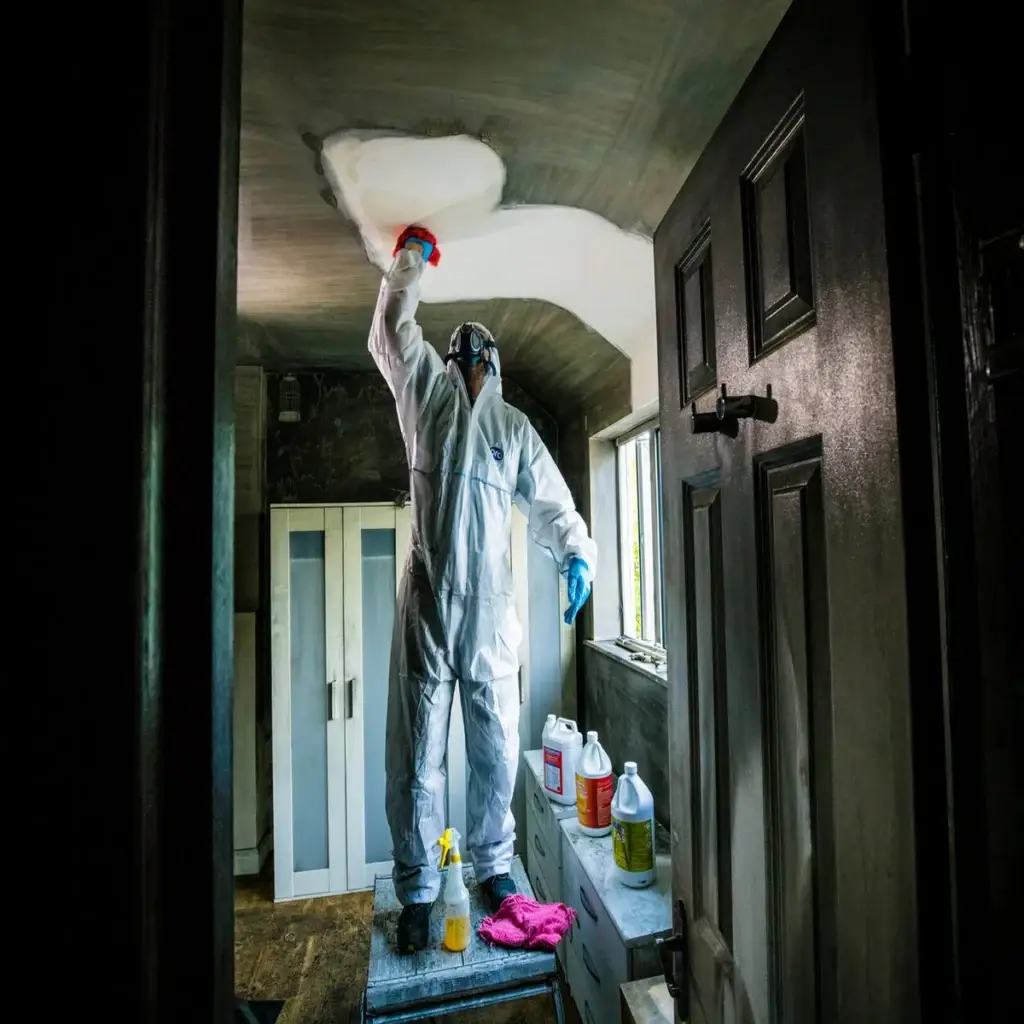
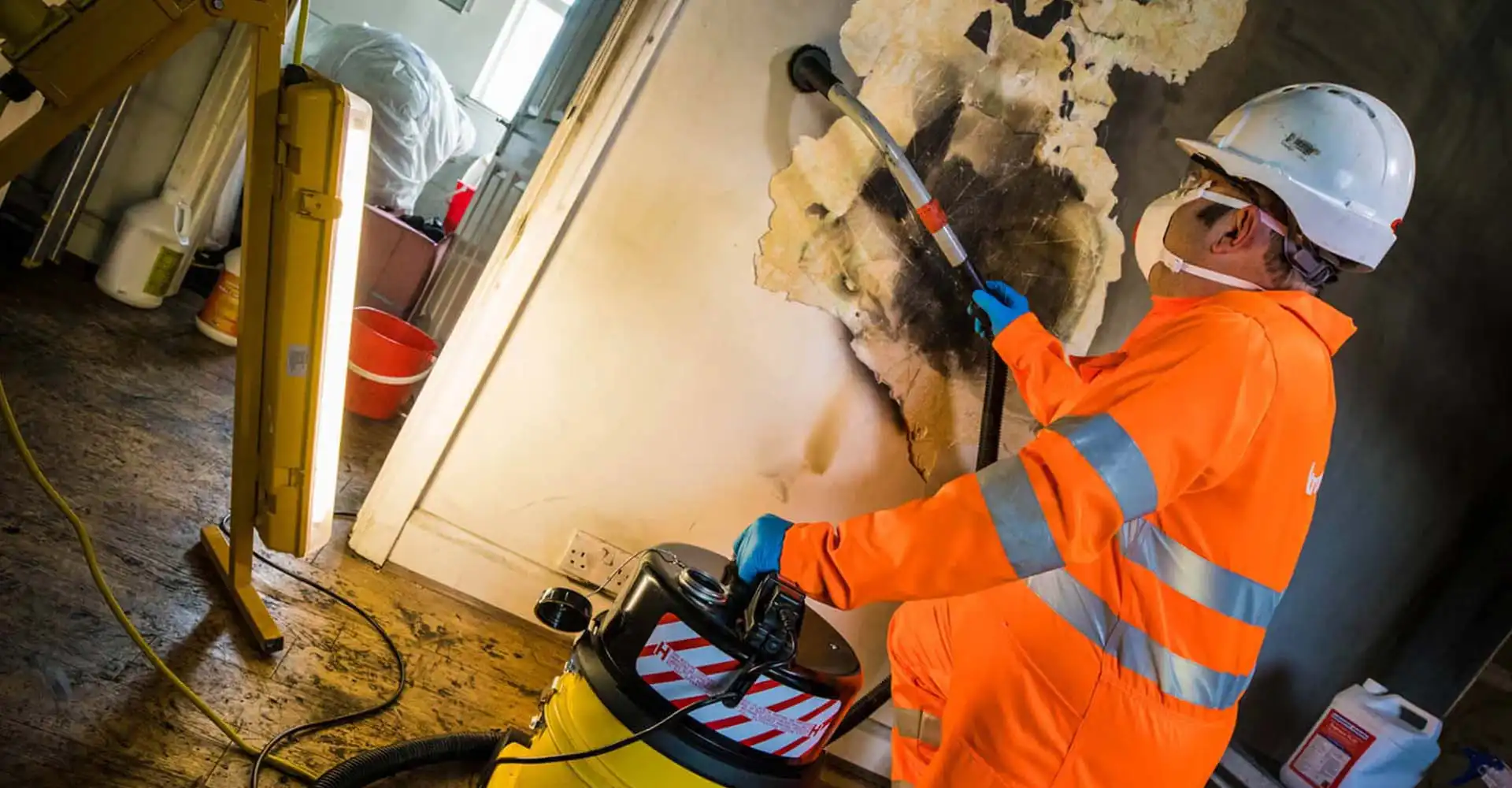
Once damaged materials and contents had been removed, specialist cleaning chemicals and soot sponges were used across walls, ceilings, doors, rails and stairs to remove fire residues.
Air scrubbing and decontamination equipment were also used as part of the smoke-odour treatment, addressing both visible contamination and residual smoke odour.
The fire damage restoration process
With extensive fire, smoke and soot damage throughout the property, the work was carried out in a controlled sequence so the team could first establish safe working conditions, recover important possessions and then prepare the building for reinstatement.
Step 1Making the property safeBefore cleaning and strip-out began, the utilities and condition of the property were assessed. A gas engineer identified that the gas system required replacement, temporary electrical power was installed for the restoration equipment, and samples were taken for urgent asbestos testing.
Step 2Recovering important possessionsThe team worked with the family to identify items that could be saved before clearance progressed. Jewellery and important documents were among the possessions successfully recovered from the property.
Step 3Removing fire-damaged contents and materialsFurniture, clothing, carpets and other heavily affected contents that could not be retained were removed. The kitchen, flooring, damaged fixtures and sections of walls and ceilings were also stripped out where the level of fire damage meant they could not reasonably be salvaged.
Step 4Cleaning areas that could be retainedThe response was not simply a complete strip-out. Areas considered salvageable, including the bathrooms, were retained and subjected to detailed fire, smoke and soot cleaning.
Step 5Removing soot from remaining surfacesSpecialist fire-cleaning chemicals and soot sponges were used across remaining walls, ceilings, doors, rails and stairs to remove fire residues from surfaces being retained.
Step 6Treating residual smoke odourAir scrubbing and decontamination equipment formed part of the final treatment, targeting the residual smoke odour left by the fire before the property progressed to rebuilding.
A two-week programme ready for rebuilding
The cleaning and restoration phase was completed in two weeks, including work through a bank holiday weekend. By the end of the programme, damaged materials had been stripped out, salvageable areas cleaned and the house reduced to a clean shell ready for rebuilding.
The project required different decisions in different parts of the property: some materials had to be removed completely, while other areas and possessions could be retained through careful cleaning and recovery.
Why fire restoration is not simply a strip-out
Toufik Bouraine
Fire Damage Specialist
“After a serious house fire, the quickest-looking option is not always to remove everything. The important part is deciding what is genuinely beyond recovery and what can be cleaned or salvaged. On this property, that meant stripping heavily affected materials while treating areas such as the bathrooms differently and recovering important personal possessions before clearance progressed.”