Available 24/7 | 0800 088 4170

The response combined spill removal, specialist cleaning and controlled waste-water recovery. The team worked in PPE, used DOFF and jet-washing equipment to treat the concrete, and pumped oily water generated by the clean into an IBC rather than allowing contaminated run-off to spread.
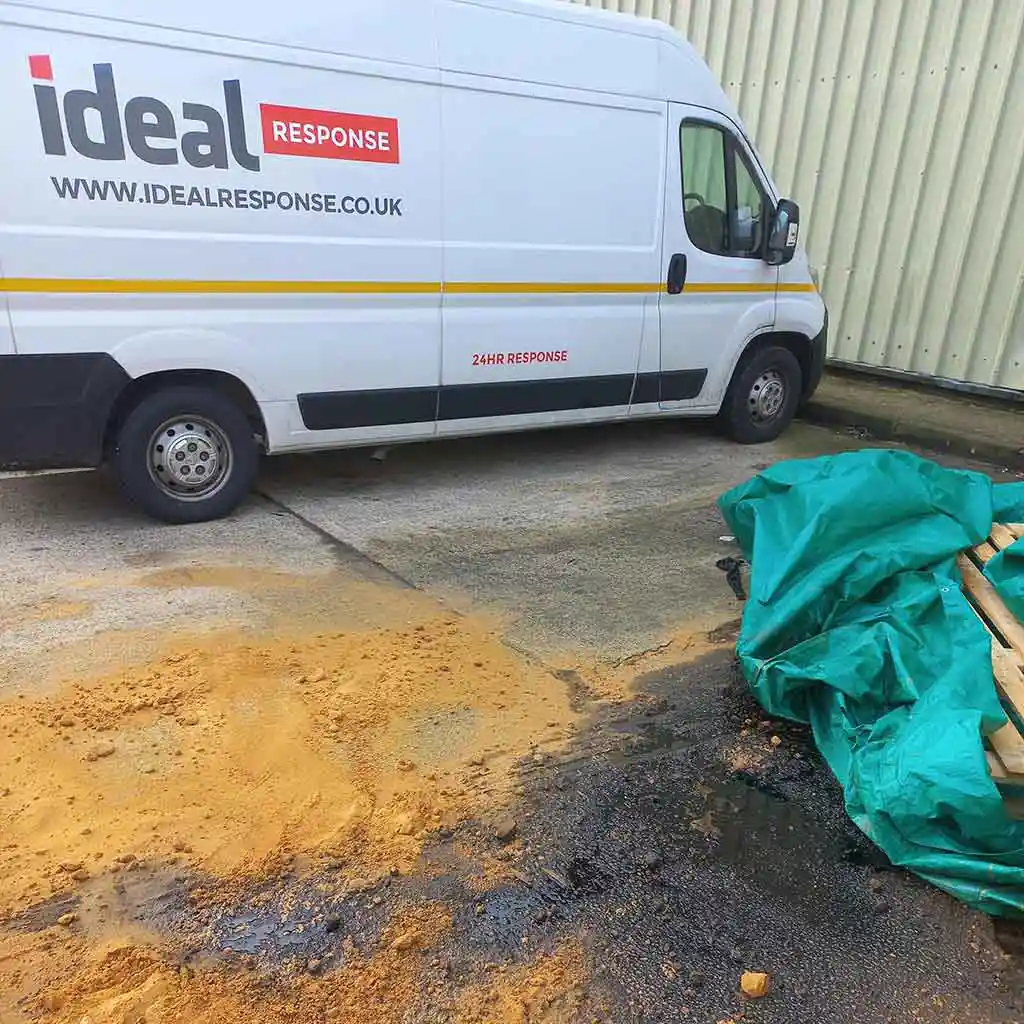
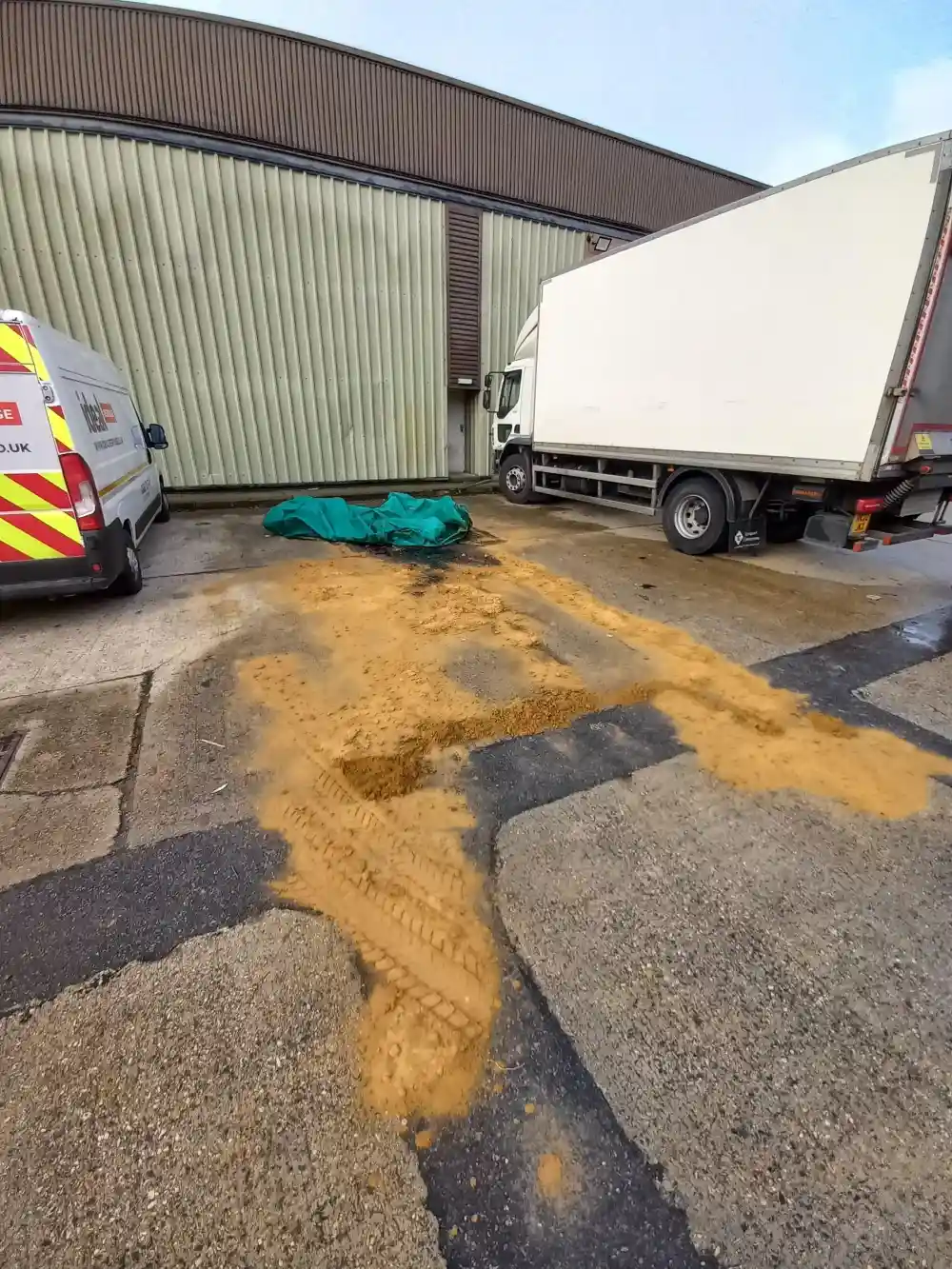
The spill was concentrated beneath and around the lorry. Sand had been used to surround and absorb the free oil, leaving a broad area of oil-saturated material across the hardstanding.
The project photographs show why speed mattered. Beneath the sand, the concrete had already darkened where oil had penetrated the porous surface. The longer that absorption continues, the harder it becomes to achieve complete stain removal.
The response therefore had two immediate priorities: remove the contaminated sand and loose oil safely, then treat the concrete itself without allowing oily cleaning water to migrate across the site.
Cleaning an oil spill is not complete if the process simply moves contamination from the concrete into uncontrolled run-off. The scope specifically required oily water generated during the works to be pumped into an IBC.
That detail is an important part of the environmental control on this project. It allowed the team to clean the hardstanding while keeping contaminated liquid contained for subsequent management, rather than relying on dilution or allowing wash-water to travel towards other parts of the site.
Potential migration towards drainage was treated as a risk to control throughout the response; there is no need to overstate that by claiming the oil had entered the drainage system.
The remediation was completed during a single site visit on 13 February 2026, minimising disruption to Cennox's operations.
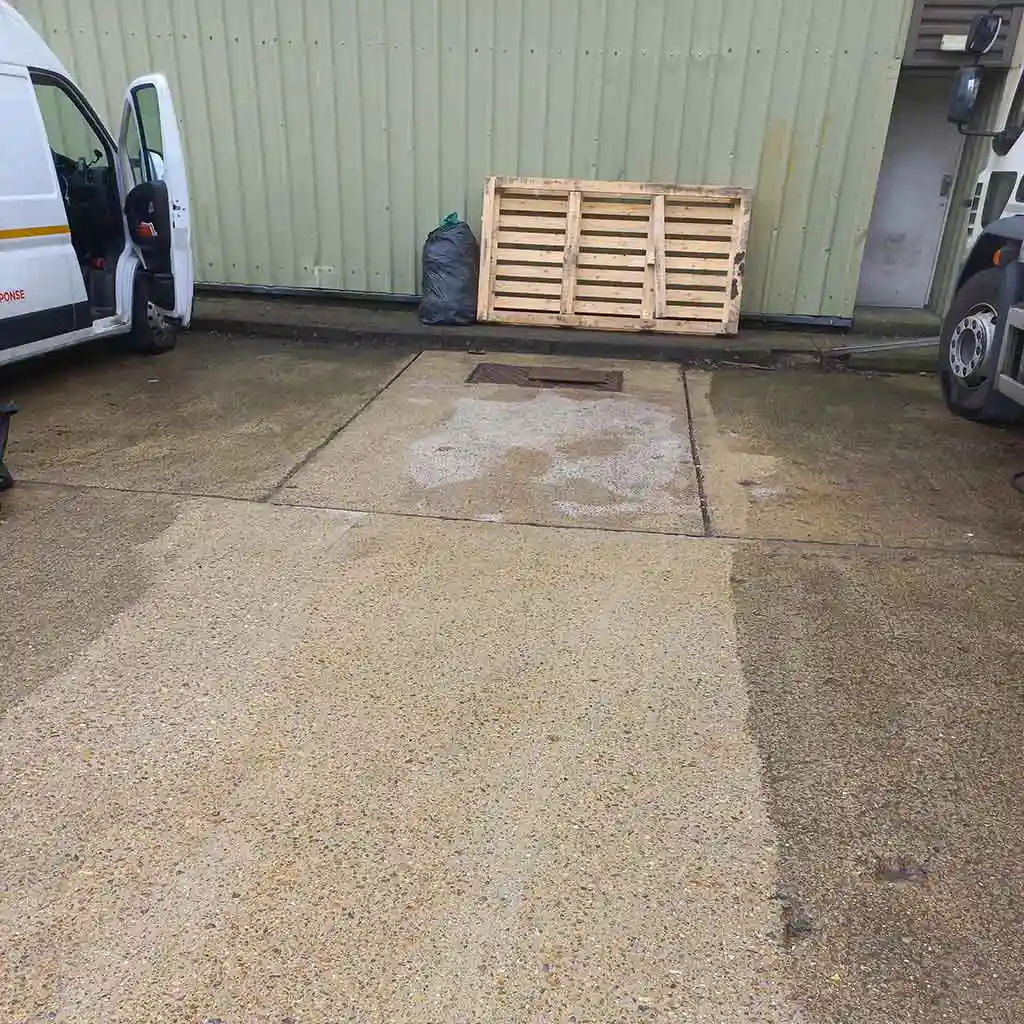
The visual change is clear across the project photography. Before treatment, a large dark oil-affected area is visible beneath the vehicle and across the surrounding concrete, with saturated sand spread around the spill. After remediation, the concentrated dark contamination has been removed and the hardstanding is substantially cleaner.
Some residual tonal staining remained in the porous concrete. That was consistent with the expectation set before the work began: once oil has been absorbed into a surface, complete cosmetic stain removal cannot always be guaranteed. The project therefore focused on controlled remediation and achieving the best practicable improvement rather than making an unrealistic promise.
The site was returned to operational use the same day, with the existing project record noting high customer satisfaction with both the speed of the response and the visual quality of the result.
The technicians began with a site risk assessment and manual removal of the oil-saturated sand and loose contaminated material. That waste was segregated for controlled disposal before deeper cleaning began.
A specialist enzyme-based hydrocarbon treatment was then applied to the affected concrete to work on oil residues held within the substrate. The surface was subsequently treated using the DOFF system, which combines high temperature with low pressure to lift contamination from porous material while limiting the aggressive mechanical impact associated with conventional high-pressure cleaning alone.
Jet-washing capability was also available as part of the equipment plan for the site, allowing the team to adapt the cleaning sequence to the condition of individual areas.